A row of illuminated two-story brick houses with front porches and mature trees photographed at twilight.

Heat Pump Repair in Warren, MI

Tell us about the job

Takes about a minute. No obligation.

RepairHeat PumpMacomb County, MI
Step 1 of 2

What ZIP code is the job in?

Macomb County sees real storm damage

Macomb County logged 142 severe weather events between 2015 and 2024, including 99 damaging wind events, 26 hail events, and a tornado. An outdoor heat pump unit sits outside through all of it, exposed to wind-driven debris and hail.


A unit that still runs can still be hurt

Hail can dent the fins around the coil and bent fins block airflow even when the fan still spins. Wind can drive branches or debris into the cabinet. A heat pump that took a hit during a storm is worth having looked at, whether or not it seems to be working right now.

8 months
October through May, your system heats
3 months
June through August, it cools
21°F
the average winter night it heats against
81°F
the average summer afternoon it cools against
Isometric cutaway illustration of a single-story house with a dark gabled roof, showing interior rooms with ductwork leading to an indoor air handler and an outdoor condenser unit connected by lines on the ground outside.
Your system heats October through May and cools June through August.

NOAA nClimDiv, 1991–2020 normals

Electricity here runs 20.25 cents a kilowatt-hour, well above most of the country.

A heat pump struggling to keep up spends more hours drawing power at that rate.

September and May are when a weak heat pump gets found out

Cooling runs June through August
Heat runs October through May
99 damaging wind events from 2015 to 2024

A struggling heat pump doesn't quit outright, it just runs longer to get the house to temperature. Every extra hour it runs is more power drawn at a rate that's already high here. That cost shows up on the electric bill weeks before the unit ever breaks down for good. If the heat pump has been running more than it used to, or the house still doesn't feel right, have it checked now instead of waiting for it to fail. A repair now costs less than a season of it working harder than it should to do the same job.

If the last storm touched your outdoor unit, get it checked

A heat pump that took hail or wind debris can keep running while the coil fins underneath are bent. That shows up as a repair later instead of now. If the outside unit has been through a storm, have someone look at it before you judge it by whether it still turns on.

Find a contractor
A man in a dark gray t-shirt and tan work pants, seen from behind, carries a canvas tool bag up porch steps toward a dark front door, with a potted plant beside the porch.
A gray air-source heat pump mounted on a concrete pad next to a house with gray vinyl siding, surrounded by gravel and flanked by green shrubs and white hydrangea flowers.

A machine that works twice as hard wears twice as fast

A heat pump runs in both directions all year, so its parts see more duty cycles than a furnace or an air conditioner that only works half the year. The reversing valve is usually first to show it. It switches the refrigerant flow every time the system changes between heating and cooling, and after enough cycles the valve can stick, leaving the system stuck in one mode or blowing air that's the wrong temperature. The outdoor coil takes a beating too, since it's outside through every freeze and thaw. Frost builds up on it in cold weather, and the unit depends on a defrost cycle to clear it. When that defrost control or sensor fails, ice keeps building until airflow is choked off. The compressor is the part nobody wants to hear about, because it's the most expensive to replace and it fails when it's been working harder than it should for a long time, often because of a slow refrigerant leak that went unnoticed. Capacitors and contactors wear out too, from the ordinary strain of starting and stopping the compressor and fan motors thousands of times over the years. None of this means the equipment is bad. It means a system that works twice as hard as a single-season machine needs to be looked at before small problems turn into a failed compressor.

A refrigerant leak gets more expensive the longer it runs

A heat pump low on refrigerant still moves air, so it's easy to let it ride. But the compressor depends on refrigerant to keep itself cool while it runs. Keep running it low and the compressor runs hotter than it should, and that's the part that ends a system for good instead of needing a repair.

Ice on the outdoor coil needs a fix, not more runtime

If the defrost cycle isn't clearing the outdoor coil, running the system harder doesn't melt the ice, it just buries the coil deeper. A choked coil makes the compressor pull refrigerant through a unit that can't shed heat properly. Shutting it down and having someone find out why defrost isn't working costs less than a compressor that cooked itself trying to push through the blockage.

A few things are worth checking before anyone comes out. Look at the thermostat first. If it's set to heat but the system is blowing cool air, or set to cool but nothing's happening at all, check the batteries and the mode setting before assuming the equipment is at fault. Next, check the outdoor unit. If snow or leaves have piled up against the cabinet, airflow gets blocked and the system can't move heat the way it's supposed to. Clear anything stacked against it, but don't chip at ice on the coil, that can bend the fins. Inside, check the air filter. A filter clogged with dust chokes airflow just as surely as a blocked outdoor unit does, and it's the one part a homeowner can swap out without tools. Check the circuit breaker too, since a tripped breaker looks like a dead system but isn't a repair at all. If the unit is running but the house still doesn't feel right after checking all of this, that's the point to stop and call someone.

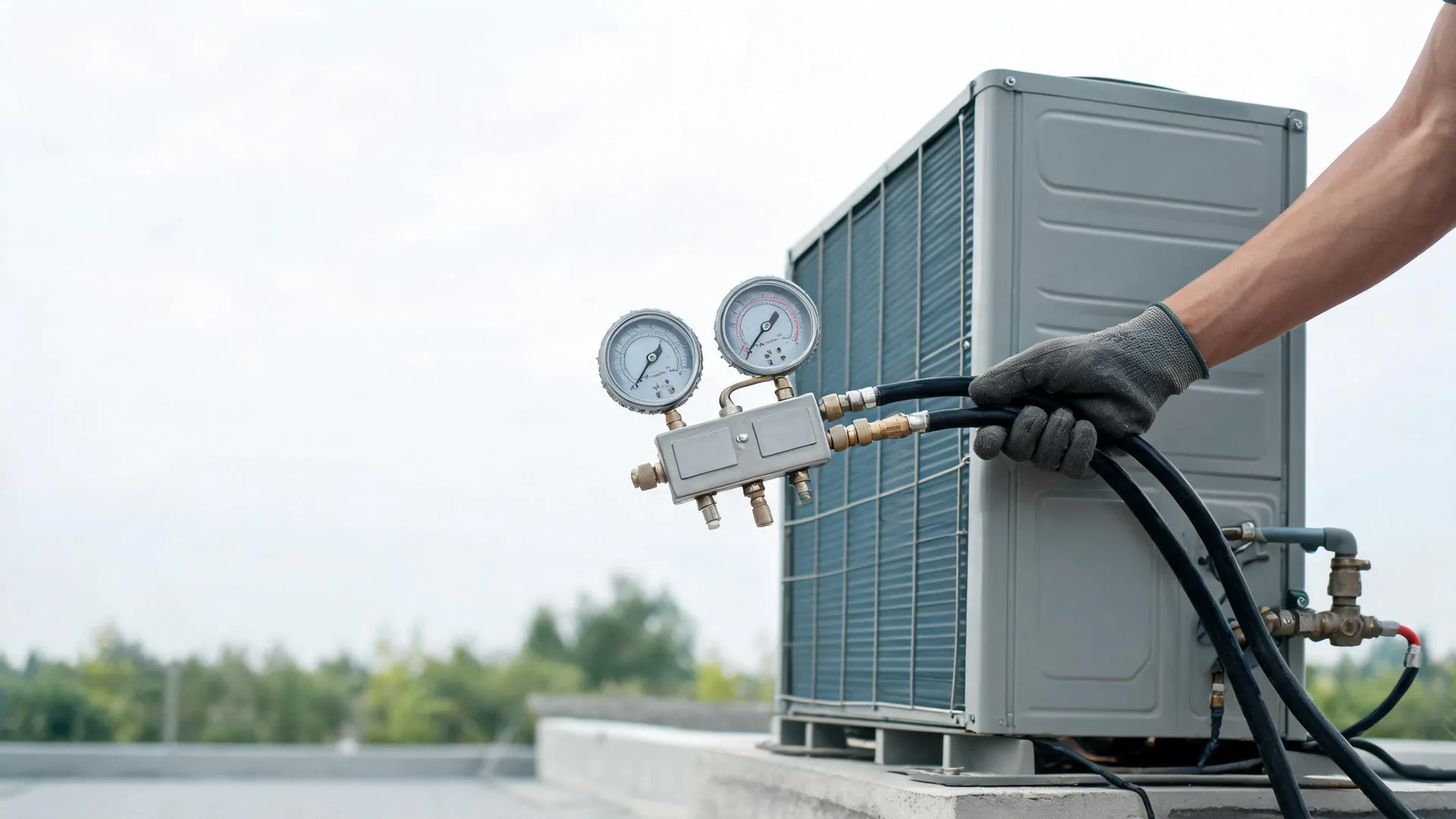
A diagnostic visit starts with questions, not tools. What's the system doing, when does it do it, and did anything change right before it started. Then the tech checks static readings before touching anything: thermostat call, voltage at the unit, pressures on the gauges. From there it's a process of elimination. Refrigerant pressure that's off points toward a leak or a failing metering device. A reversing valve gets tested by watching whether the system actually switches when it's told to, not just whether it hums. Electrical parts like capacitors and contactors get checked under load, since a part can look fine sitting still and still be the one failing under strain. The visit ends with the tech showing you what they found, not just telling you a part number. A diagnosis worth paying for explains why the system is acting the way it is, not just which part to swap.