
Repair or replace a gas furnace in Ann Arbor, MI

Once you send the form, finding a pro is off your list.

Let a pro reach out

Should I repair my furnace or just replace it?

Your furnace quit or started acting up, and now you're staring at a repair bill wondering if it's worth paying or if you should just put that money toward a new system instead. With Ann Arbor winters as hard as they are, you don't want to gamble on a furnace that might fail again in January.

Repair if the furnace is under 15 years old and the fix is minor, replace if it's older or the repair is a major component

A furnace that's 15 years or older and needs a repair costing a real share of what a new one runs is usually not worth fixing. Parts like the heat exchanger or the inducer motor are expensive on their own, and an older unit tends to need something else within a year or two. A younger furnace with a bad igniter, a failed flame sensor or a blown capacitor is almost always worth repairing. Where you live matters here too. Washtenaw County winters run long and cold, so a furnace that limps through a repair now has months of hard use ahead before spring. If your furnace has struggled the last winter or two, factor that history in alongside its age.

A gray furnace cabinet in a basement with sheet-metal ductwork, white PVC vent pipes, and black gas piping against a concrete wall and wood-framed partition on a bare concrete floor.

Running fine

A furnace like this one is doing its job: even heat, no odd noises, no rust creeping up the cabinet. If yours still looks like this and the repair is small, fixing it is usually the right call. No reason to replace a furnace that's still working the way it should.

A gray metal furnace with two white PVC vent pipes stands on a concrete floor beside galvanized sheet-metal ductwork in a basement or utility space with wood framing.

On its way out

Rust on the cabinet, an aging unit, a repair bill that keeps coming back. This is what a furnace looks like near the end of its life. Once you're paying for repairs more than once a winter, putting that money toward a new furnace instead stops being a close call.

Repair It or Replace It

Repair

  • A cracked igniter, a failed flame sensor or a bad control board can usually be swapped out in one visit.
  • If the furnace is still under warranty on parts, repair costs less than starting over on an install.
  • Repair makes sense if this is the first real problem the furnace has had.
  • A repair gets heat back on the same day, which matters when it's January in Washtenaw County.
  • If the blower motor or inducer motor is the only failure, replacing that part alone can solve it.

Replace

  • A cracked heat exchanger is a safety issue, not a repair, because it can let combustion gas mix with the air moving through your ducts.
  • If you've paid for two or more repairs in the last couple of winters, the next failure is likely already on its way.
  • A new furnace with a modern AFUE rating burns less gas to produce the same heat, which matters given what gas and electric rates run here.
  • Replacing before a full breakdown means you're not choosing a furnace in a panic with no heat and a cold house.
  • Parts for an older furnace can be hard to source, and a wait on a backordered part means days without heat.
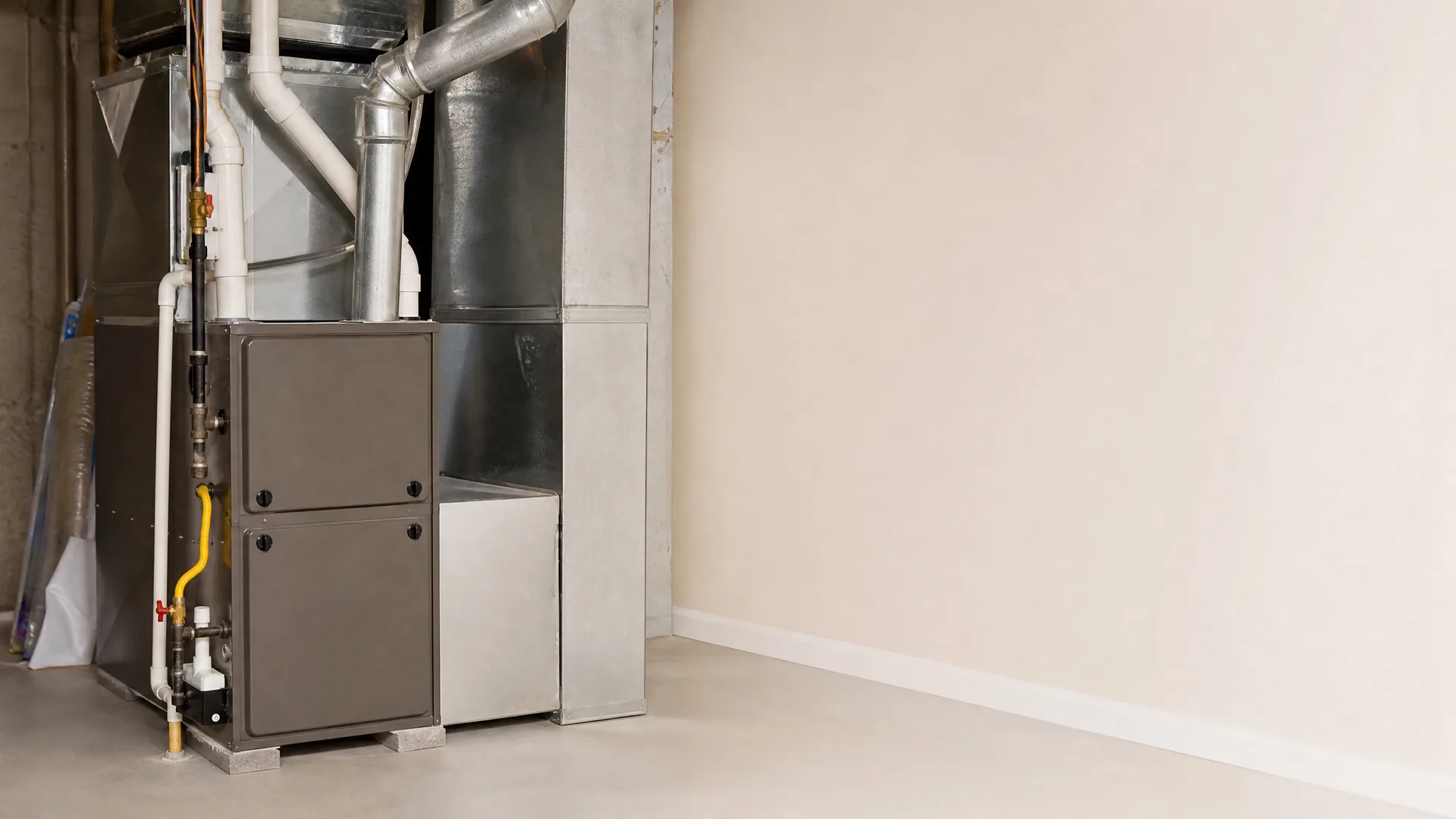
A gas furnace with two gray access panels stands in a basement corner, connected to sheet-metal ductwork and copper, PVC, and yellow gas piping, beside a plain beige wall and concrete floor.

Why age changes the math

A furnace is built to last 15 to 20 years. Past that point, the heat exchanger has run through that many winters of expanding and contracting with every cycle, and that's what eventually cracks it. A cracked heat exchanger means replacement, not repair, because it's the part that keeps combustion gases out of the air you breathe. If your furnace came with the house and nobody knows its age, the age is worth finding out before you spend money fixing it.

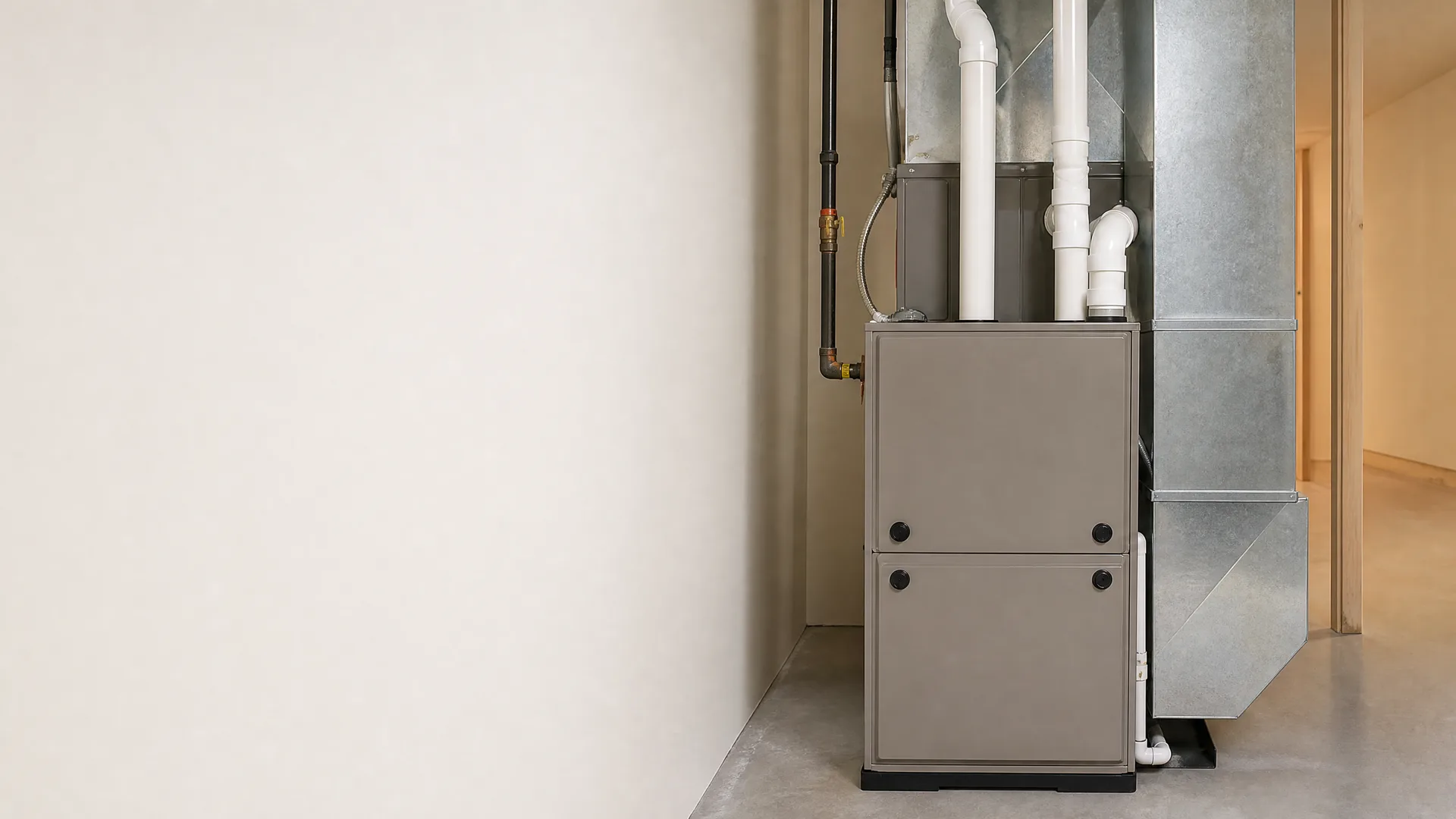
A gray furnace with white PVC vent pipes and a galvanized sheet-metal duct stands against an interior wall on a concrete floor, with a large blank wall to the left.

What a cracked exchanger means

Once a heat exchanger cracks, a repair isn't an option a licensed contractor should offer you. Combustion byproducts can mix with the air moving through your ducts, and that's a carbon monoxide risk, not just a comfort issue. Furnaces built to run efficiently vent at lower temperatures, which means more condensation moving through the exchanger over the years. That's normal by design. It's also why the exchanger, not the blower or the thermostat, is usually what ends a furnace's life first.

Winter nights average 19°F

At 19°F, a furnace that's limping along doesn't get a break overnight to make up for it. It has to hold that line for hours on end, night after night, all winter. If yours is already short on capacity, those are the hours it shows.

NOAA nClimDiv 1991-2020

A gray-haired man in a dark green knit sweater sits on a beige sofa with a dark cushion, looking to the side, with a potted plant, shelves and sunlit windows behind him.
A gray-haired man in a dark green sweater sits smiling on a sofa in a sunlit living room, with a houseplant, shelving unit, and dining table visible behind him.
A middle-aged man in a dark denim shirt sits on a light beige sofa in a living room with wooden shelving and a potted plant, looking off to the side.
A gray-haired bearded man in a dark green sweater sits on a light sofa indoors, looking to the side, with a houseplant, framed picture, table lamp and sunlit window behind him.
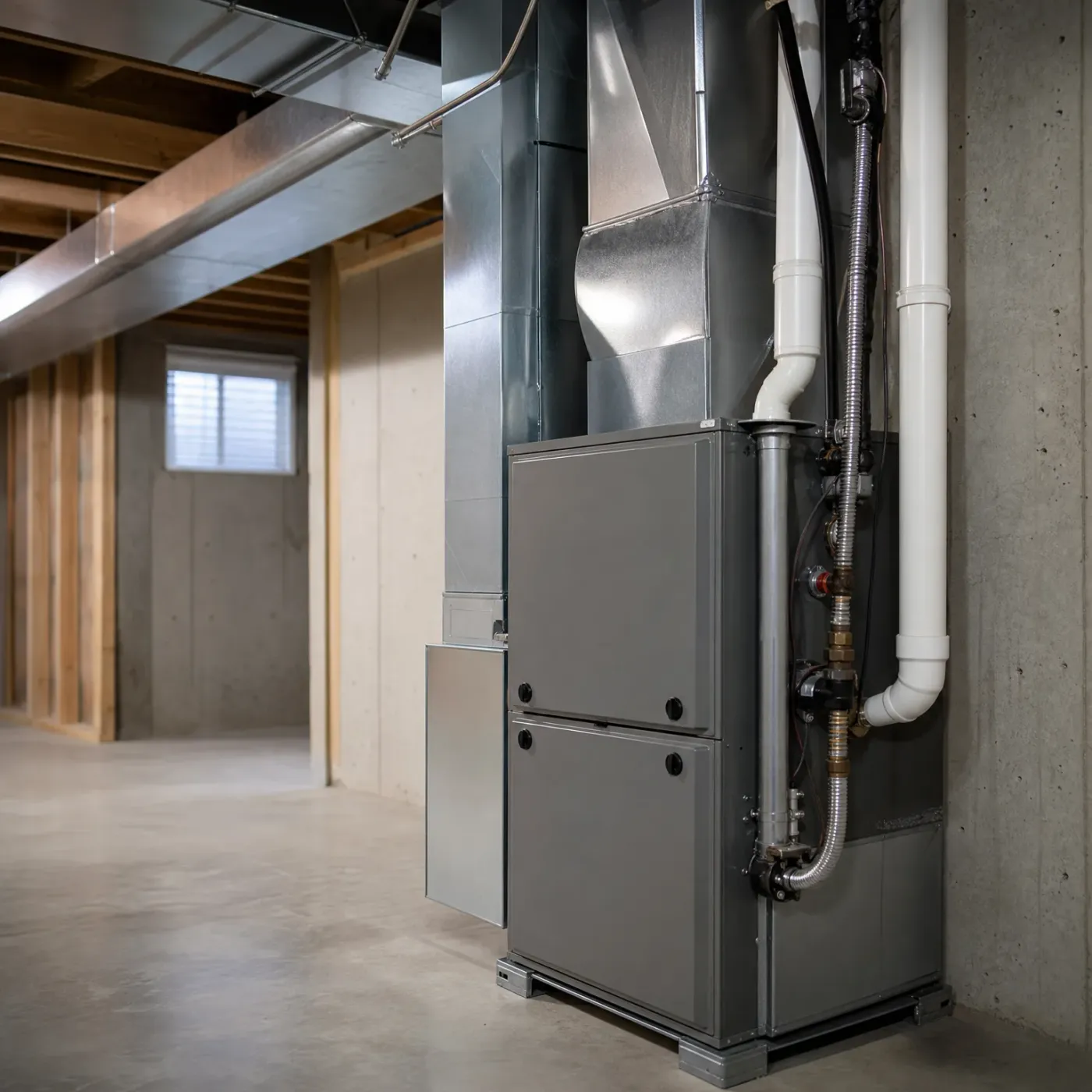
A gray high-efficiency furnace in an unfinished basement, connected to sheet-metal ductwork and white PVC vent pipes along a concrete wall, with wood-framed walls and a small window in the background.

It's off your list after this

The pro who gets in touch is licensed in Michigan and works in Washtenaw County.

After you send the request, you're done searching.

Find a local pro

You're not committing to anything by asking.

A beige high-efficiency furnace stands on a concrete basement floor beside sheet-metal ductwork, with white PVC vent pipes and a gas line running along an insulated wood-framed wall.
A furnace running clean like this one earns another repair instead of a replacement.
An older metal furnace with a louvered front panel stands against a concrete basement wall, connected to sheet-metal ductwork and a flue pipe, with copper and steel pipes running alongside.
Dust and age like this on the cabinet are a sign the next repair may not be the last one.
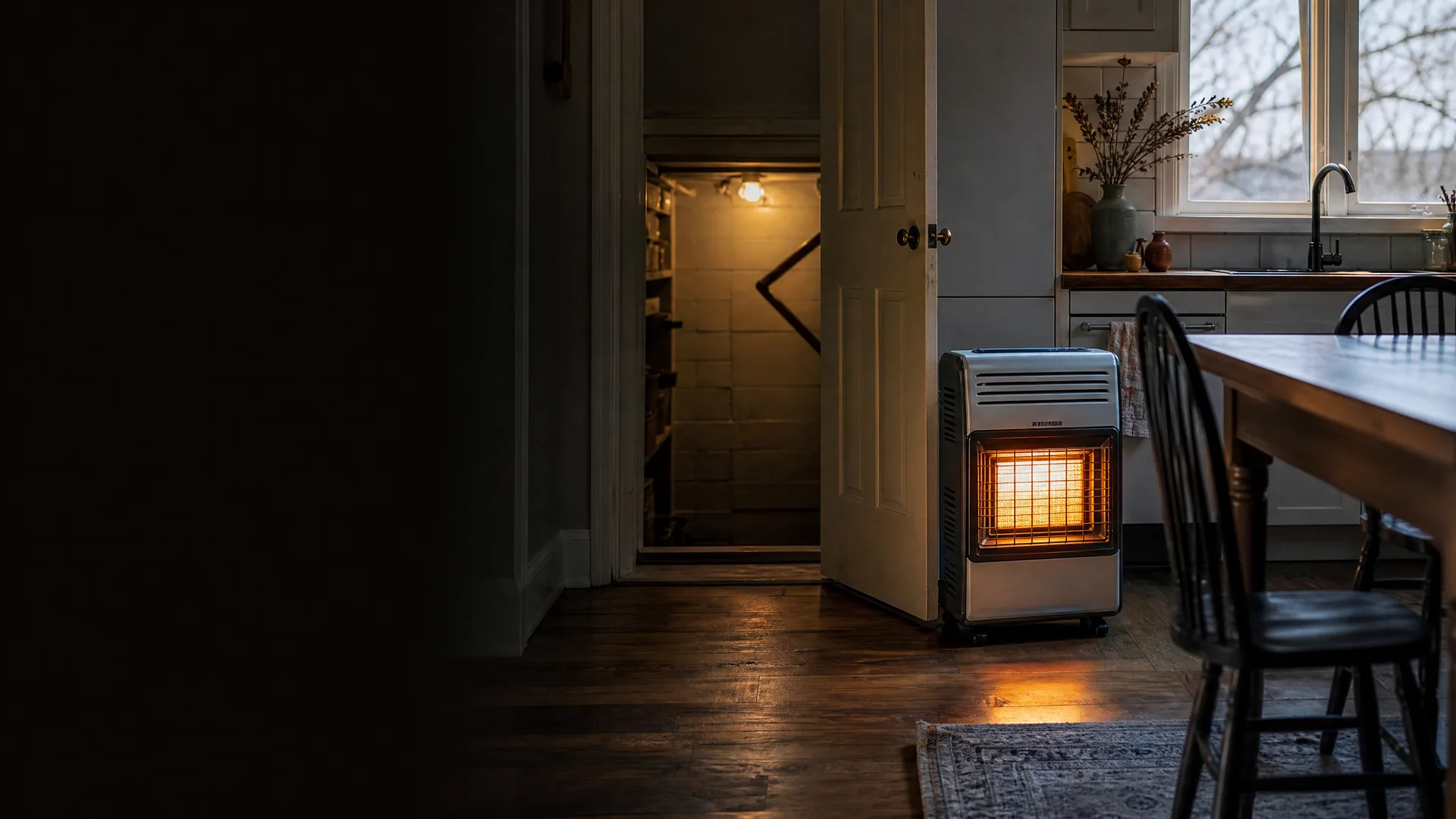
A white portable gas heater with a glowing orange element sits on a dark wood floor beside an open door and a kitchen counter with a window and wooden table and chairs.

The furnace cut out sometime before dawn. By seven the kitchen had gone cold enough to see your breath near the window, so you dragged the space heater in from the hall closet and set it by the table, running it at full tilt while the coffee brewed. The basement door stood open behind it, the stairway dark, because you'd gone down twice already to look at the unit and still couldn't tell what was wrong. Outside the thermometer on the porch post read nineteen. The kids ate breakfast in their coats. You kept glancing at the space heater's coil, doing the math on how long one little heater could hold a kitchen against a Washtenaw County morning like this one.

Why does my furnace sound different lately

A bang or thud when it kicks on means gas is building before it lights instead of catching right away. A screech points to the blower motor or its bearings wearing out. A rattle in the cabinet can be a loose panel, or it can be the heat exchanger starting to go, and you don't want to guess which. You might also notice short cycling, where it turns off before the room gets warm, or a burner flame that's yellow instead of blue. Yellow flame can mean the furnace isn't burning gas clean, and that's worth having looked at soon rather than waiting for the next cold snap to tell you.

A gray high-efficiency furnace with white PVC vent pipes stands on a concrete pad in a basement, beside sheet-metal ductwork, copper piping and a poured concrete wall with wood framing at left.

Still doing the job

A furnace like this, set up clean with the ductwork and gas lines run tight, is heating the house the way it should. No rust on the cabinet, no scorch marks near the burner. If this is what's in your basement, a repair gets you through.

A beige gas furnace in a basement with a metal flue pipe, galvanized sheet-metal ductwork to its left, and gas and water pipes along the concrete wall to its right.

Showing its age

An older unit like this one has been through a lot of winters. The flue pipe and shutoff valves around it still work, but the furnace itself is the part that wears out first. At this stage, a replacement is worth pricing against the repair.

A small repair on a furnace that's still sound is money well spent. A furnace past 15 to 20 years, especially with a cracked heat exchanger, isn't worth chasing with another repair. That's the whole decision. If you're still not sure which one describes your furnace, a licensed contractor local to Washtenaw County can tell you in one visit, and because you're matched with just that one contractor, you're not fielding calls from five different companies trying to win the job. Someone who works on furnaces through every Ann Arbor winter has seen what a nineteen-year-old heat exchanger looks like and what a five-year-old control board looks like, and knows which one is worth saving. That's the judgment this comes down to: not guesswork, but someone who's looked at enough furnaces in enough basements around here to know the difference on sight. Whichever way yours goes, you'll know what you're dealing with and what it takes to fix it.

A shingled two-story house with lit windows and stone accents at dusk, with a stone paver walkway and landscape lighting leading past ornamental grasses toward a calm bay under an orange and blue sky.

Furnace Installation

Stop chasing a furnace pro

New system or replacementFurnace or heatingWashtenaw County, MI
Step 1 of 2

What ZIP code is the job in?

  • A cream upholstered armchair with a textured pillow sits in a corner beside a small round wooden side table holding a vase of greenery and a book, under a framed landscape print, with a potted tree in a woven basket and a sheer curtain nearby.
    • Describe your furnace job, and a local pro who handles it gets in touch.
    • Get matched with a pro who works on furnaces in Washtenaw County.
  • A beige upholstered armchair with a green cushion and knitted fringed throw sits in a corner beside a wooden side table holding a stone vase of leafy branches, under a framed landscape picture, on a woven rug near a sheer curtain.
    • Send the request and finding a pro stops being your problem.
    • After this form, you can stop searching for a furnace pro.
  • A wood-framed armchair with light beige upholstery and a gray linen cushion sits in a corner beside a potted olive-like tree and a sheer curtain at a window, with a framed picture on the wall above.
    • Fill out one short form instead of calling around.
    • Explain the job once and skip repeating it on every call.
  • A ceramic vase holding leafy branches sits on a round wooden side table beside a sofa with a dark green cushion and gray throw, next to a sunlit window.
    • The pro who reaches out is licensed in Michigan.
    • Only one pro gets your request, so you hear from one company.