15 years
Most gas furnaces around Flint last about that long. If yours is near there, a no-light problem can be the start of the ignition system failing for good.
You've gone down to the thermostat or the basement and the furnace just clicks or hums but never lights. In Genesee County winters, that's not something to leave for later. Most houses around Flint heat with gas, so when the burner won't fire, you want to know what's actually stopping it before you decide whether to call someone or try anything yourself.
Most of the time the gas is fine and the problem is a part that's supposed to prove the flame is lit. The flame sensor is a thin metal rod near the burner, and once it picks up a coat of soot it can't tell the control board a flame exists, so the board shuts the gas back off. An igniter wears out the same way over years of heating cycles, either cracking or losing the heat it needs to light the gas. Either one leaves you with a furnace that runs through its startup, tries to light, and quits. A tripped limit switch or a closed gas valve can do it too, but those show up less often. Whatever the part, it's not something to force or wire around yourself.

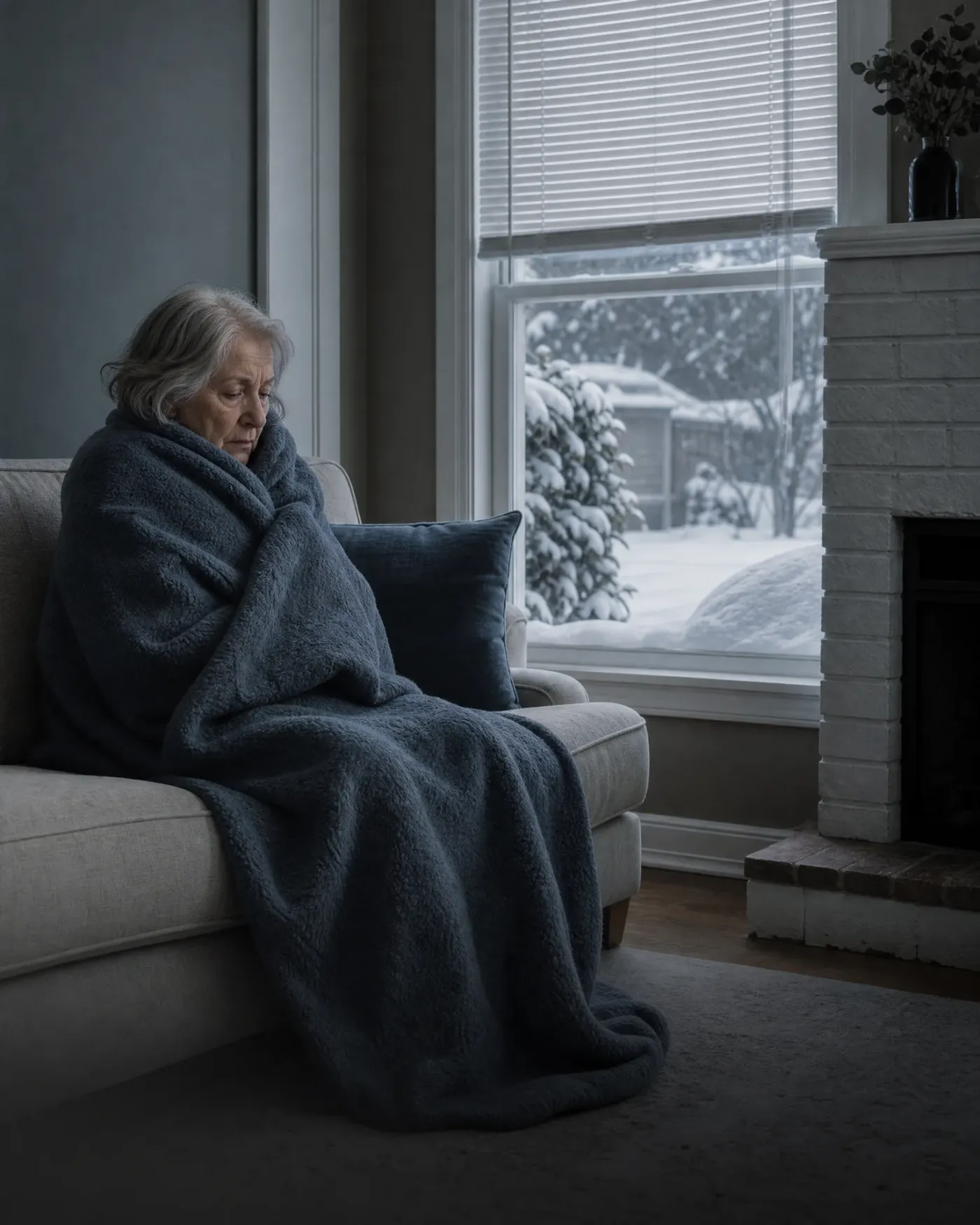
It's just past six on a November evening, already dark outside, and you're down in the basement because the house has gone quiet in that way that means the furnace isn't running. You flip the light and there it is, standing cold against the block wall, a thin haze of dust still hanging where the blower kicked it up before it gave out. You crouch by the access panel and listen. A click, then nothing. No flame, no roar of burners catching. Upstairs the thermostat reads a few degrees lower than it did an hour ago, and you can feel it in the floor through your socks. Outside, Genesee County is settling into another cold night.
Thermostat calls for heat and sends power to the control board.
Inducer motor starts and pulls air through to clear the exchanger.
Pressure switch closes once it senses the inducer is running.
Control board opens the gas valve and powers the igniter.




Most gas furnaces around Flint last about that long. If yours is near there, a no-light problem can be the start of the ignition system failing for good.
After three failed attempts to light, most furnaces lock out and need a reset at the breaker or thermostat before a technician can even diagnose what failed.

A furnace that won't light doesn't just mean a cold room. It means the water lines running along your basement walls or crawlspace start working toward freezing, and in a Flint winter that clock moves fast once the furnace has been off for several hours. It means space heaters running in two or three rooms, pulling more off your circuits than they're built for, on top of power rates that are already high around here. If anyone in the house needs the heat to stay well, that's the part that can't wait for morning.
You could start calling around, but most furnace companies in Genesee County are already stretched thin on a cold night, and you'd be explaining the same clicking, humming, no-light problem to three different answering services before anyone gives you a time. Request service here instead and it goes to one licensed local contractor, someone who works on furnaces like yours all winter and already has a short list of what causes this. No comparing quotes, no repeating yourself, just someone headed to your address.


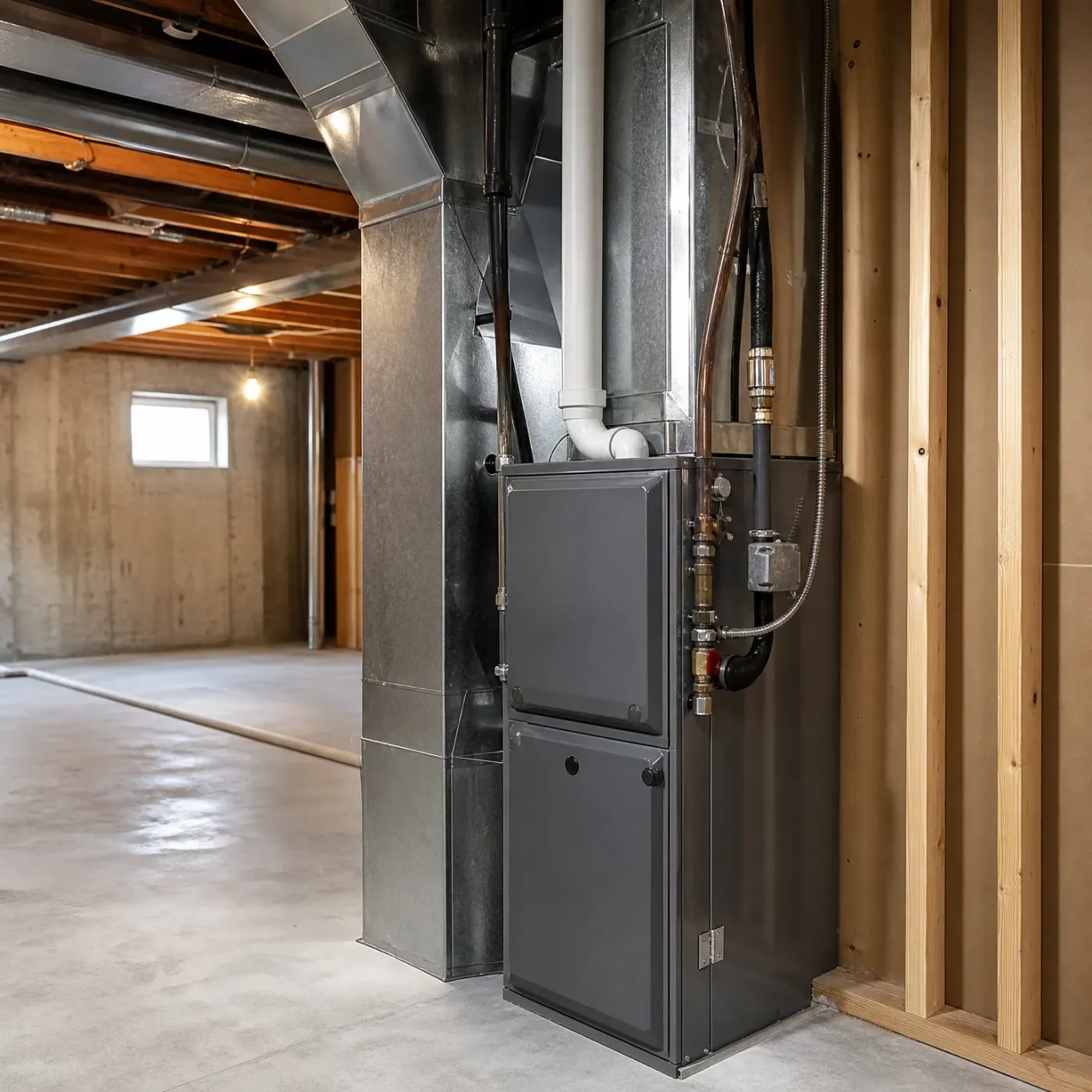
This is what a working setup looks like: a steady connection to the main duct, tight joints at the pipes, no rust at the base. Air moves through on schedule and the burners light every time the thermostat calls for heat.

Rust along the cabinet and plenum is a sign the furnace has been working for years in a damp basement or utility room. An older unit that won't light may be past the point of a simple repair, especially if the rust has reached the burners or the heat exchanger underneath.
The rooms upstairs are cooling off faster than they should, and the air coming from the vents, if any comes at all, feels barely warm. You might hear the furnace try, a click or two, then a hum that goes on too long before it quits. Maybe you caught a whiff of gas near the floor vents or down by the furnace itself. The thermostat still shows the temperature you set, but the house isn't getting there. If this has been going on since yesterday, check the basement and any pipes near outside walls. A house that can't hold heat in a Genesee County winter puts those pipes at risk before it puts anyone in danger, but a gas smell means shut it off and don't relight it yourself.


Your request goes to one pro, not a list of companies.
Explain the furnace problem once instead of to every shop in Genesee County.
No charge to send it. You decide if you hire them.
Winter nights average 19°F
Overnight lows this cold mean a furnace that won't light can let pipes start freezing before morning.
Heat runs October through May
Eight months of heat a year means the ignition parts cycle on and off far more than in milder places, and wear shows up sooner.
81.3% of homes heat with gas
With most homes around Flint burning gas for heat, a stuck gas valve or dead igniter is the most common reason a furnace won't catch.
NOAA nClimDiv 1991-2020 · ACS 2020-2024
You can reset the furnace by cutting power at the switch for thirty seconds, or at the breaker, then letting it start its cycle again. You can check that the gas valve is turned to on and that the filter isn't so clogged it's choking the burners. If the furnace has a standing pilot, you can try relighting it by the instructions on the panel inside the front cover. Past that, you're guessing. Opening the burner compartment to look at the flame sensor or the igniter without the right tools means you're as likely to knock something loose as fix it, and a furnace that keeps trying to light gas it can't ignite is not a safe thing to leave running while you experiment.
A contractor who works on furnaces around Flint every winter has seen this exact no-light problem on this exact kind of unit more times than you have. They know whether a hum with no light usually means the igniter on a furnace your age, or whether it's more likely the pressure switch or a cracked flame sensor. Instead of calling around to two or three companies, explaining the same clicking and humming each time, and waiting to see who calls back first, you get matched with one licensed local contractor who takes the call and comes to look at what's actually wrong, while the cold keeps working on your pipes.



This is what it looks like when everything is doing its job. Gas lines and condensate pipe run clean to the cabinet, the ductwork overhead is tight, and the burners fire every time the thermostat calls. No rust at the base, no soot around the flue.

An older unit like this one is more likely to have a cracked heat exchanger, a worn igniter, or a flue pipe that isn't drafting the way it should. The shutoff valves on the wall next to it are worth knowing how to use if you smell gas or need to kill the line before anyone looks at it.
Nineteen degrees is the average low across a Genesee County night in December, January and February. A furnace that won't light doesn't just leave the house chilly at that temperature, it lets the basement and the pipes along its walls start working toward freezing before you're even awake to notice.
NOAA nClimDiv 1991-2020
A furnace that clicks or hums but won't fire is a short list of possible causes, not a mystery. It's the igniter, the flame sensor, the pressure switch, or a gas valve that didn't open. Something in that chain is broken, and nothing about a Genesee County winter is going to fix it on its own. The thermostat will keep calling for heat, the board will keep trying and locking out, and the house will keep losing ground while that part sits bad.
What changes things is getting someone in front of the furnace who already knows which of those parts tends to fail first, because they've been pulling the cover off furnaces just like yours all season. That's not guesswork from a basement at six in the evening. It's someone who can look at how the furnace is failing, whether it's a dead click with no attempt, or a few seconds of flame that drops out, and go straight to the part behind it.
You don't have to call around Flint and the surrounding towns to find that person. One request gets you matched with a single licensed, local contractor, so you're not juggling return calls from three or four companies while you wait on a cold house. The furnace is down. The cold isn't going to hold off while you sort that out yourself. The next step is straightforward: get someone who works on this equipment every winter to look at it and tell you what's actually wrong.





The pro who gets in touch is licensed in Michigan and works in Genesee County.
There's no charge for the request.