Your request goes to a Genesee County pro who takes furnace jobs.
A furnace that's struggling in January isn't something to sit on. In Flint, winters are hard, and a furnace that short cycles, won't stay lit, or can't keep the house warm is a problem that gets worse while you wait on it.
Repair makes sense for plenty of furnaces. A bad igniter, a failed flame sensor, a blower motor on its way out, these are fixable, and a furnace that's otherwise sound shouldn't be replaced over one part. But a furnace that's near the end of its life, or that's already had a few repairs this winter, is a different situation. At some point the question isn't what's wrong this time, it's whether the furnace is worth fixing again.
That's not a call you have to make alone, and it's not one you have to make from scratch every time something goes wrong. A contractor who works on furnaces in Genesee County, in homes with the same gas lines and the same hard winters yours sees, can look at your furnace and tell you straight whether it's a repair or whether it's time to replace it.
Most homes in and around Flint heat with gas, and gas furnaces here have to work through a long, cold season. That means the decision matters more here than somewhere with milder winters. It also means there are plenty of contractors in this area who see this exact situation regularly and know what to look for.
Send the details of your situation once, and a contractor who covers your area will follow up with you directly. You won't have to track down who's available or explain your furnace's history more than once. Once it's sent, it's off your plate. Someone who knows furnaces will take it from there.
A furnace that's 15 years old or older and starting to need repairs more than once a season is usually a better candidate for replacement than another fix. Most gas furnaces are built to last 15 to 20 years, and once one passes that point, the cost of repairs starts to compete with the cost of a new unit, and the odds of something else failing soon after go up. If yours is younger than that and the problem is a single part, like an igniter or a flame sensor, repair is the cheaper path and should hold for years. If it's older, keeps needing attention, or can't keep the house warm through a Flint winter, replacing it means you stop paying to patch a furnace that's on its way out. Either way, the decision comes down to the furnace's age and what's actually wrong with it, not guesswork.
A furnace running the way it should, heating the house evenly with no strain on the system.
A furnace on its last stretch, the kind that's costing more to keep going than to replace.
1
A contractor checks the heat exchanger, igniter, and gas pressure first.
2
They size the replacement furnace to your home's actual heat loss.
3
Old ductwork gets inspected for leaks before the new unit goes in.
4
The old furnace and venting come out, and the new one goes in.
Fix the Furnace or Replace It
Repair
A cracked heat exchanger means replacement, not repair, since that part isn't sold on its own for most furnaces.
A new igniter, flame sensor, or draft inducer motor can often be swapped in a single visit and the furnace runs like normal again.
Repair costs less upfront, which matters if the furnace is under 10 years old and otherwise sound.
If the furnace is still under manufacturer warranty, parts may be covered, which tips the math toward fixing it.
A furnace that's only failed once in the past year is usually worth repairing rather than pulling out.
Replace
A new furnace comes with a fresh warranty, so the next decade isn't spent paying for parts on a machine already past its prime.
Furnaces built in the last few years run more efficiently, which matters given how expensive power is in Genesee County.
Replacing means a contractor sizes the new unit to the house's actual heat loss, instead of living with a furnace that was never sized right to begin with.
A furnace past 15 years that needs a major part like the blower motor or heat exchanger usually costs more to fix than to replace outright.
Once a furnace needs a second repair in the same winter, the repair bills start adding up toward what a new unit would have cost.
A new furnace means no more guessing whether it'll make it through a hard Flint winter without quitting.
Running the way it should
This is a furnace holding its own. The flue and condensate lines run clean above it, the gas valve and connectors are tight along the wall, and the ductwork is pulling warm air through the house without a fight. Nothing here is asking for attention.
On borrowed time
Dust has built up around the base and the flue is the older round kind, not PVC. That alone doesn't mean it's done, but paired with age and repeat repairs it's a furnace working harder than it should to get through a Flint winter.
Get the right pro for your furnace
Send the form and the search for an installer is over.
Get matched with someone who does this kind of work in Genesee County.
What a dying furnace does to your house in a Flint winter
A furnace on its way out doesn't fail all at once. You'll notice rooms at the far end of the house staying cold while the one near the thermostat feels fine. You'll notice the gas bill climbing even though you haven't changed the thermostat setting. You'll notice it running longer stretches just to hold the same temperature, which in Genesee County, with power rates what they are here, shows up fast if you're running space heaters to cover the gap.
None of that gets better on its own, and a furnace that's already struggling in December has a hard road ahead of it through February. If yours is at that point, the next step isn't figuring out which contractor to call or waiting on hold to get someone out. Send the details once and a contractor who works on furnaces like yours gets in touch, and from there it's off your plate.
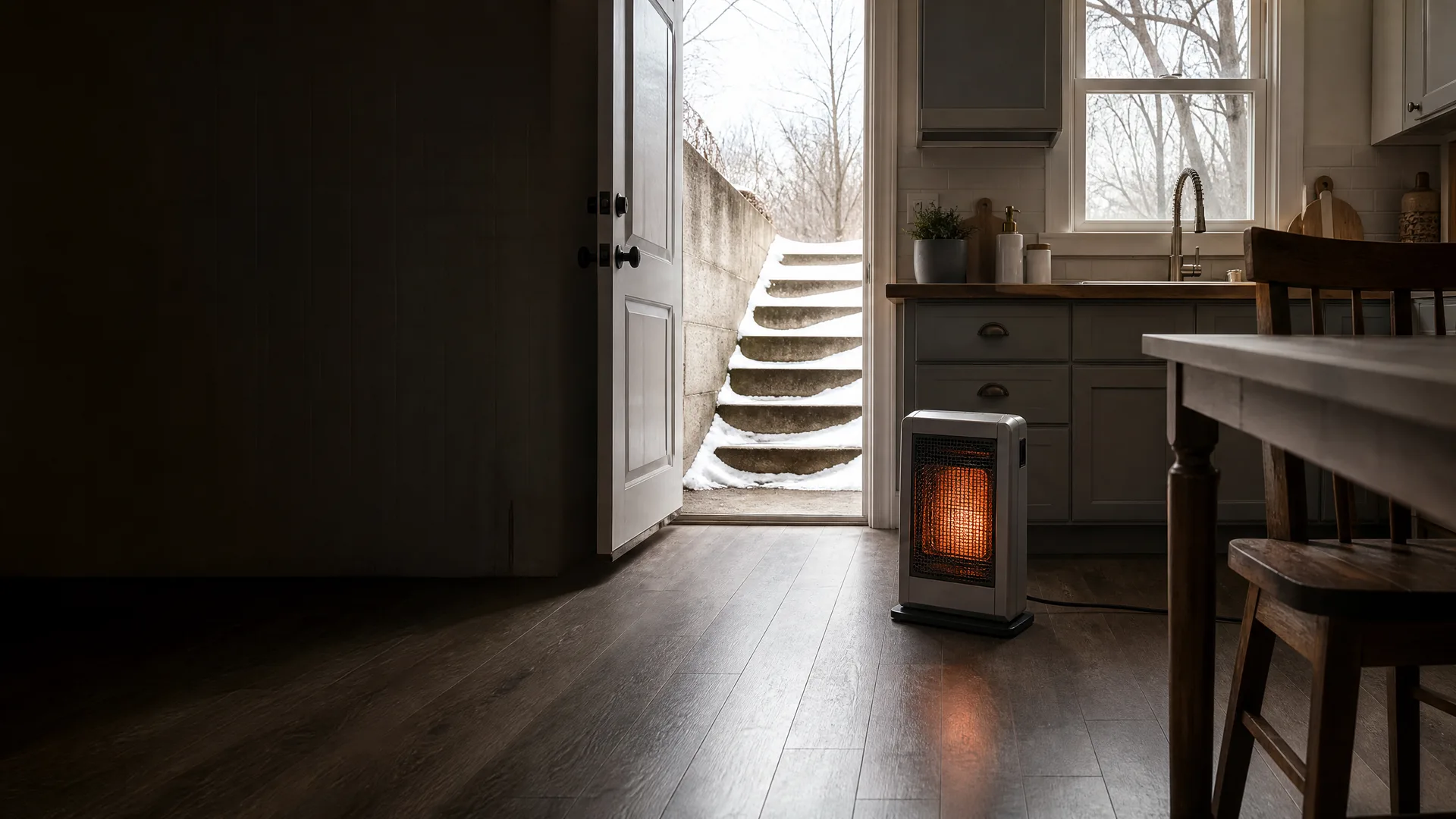
The thermostat says 68 but the kitchen feels colder than that. It's just after six, still dark outside, and you've got the space heater pulled out from the hall closet again, cord stretched across the floor, its coil glowing orange by the table leg. The basement door hangs open behind it. You went down twice already, once to check the pilot and once to see if the duct work warmed up any after. It hadn't. Genesee County in late February doesn't give you room to wait this out. You'll make coffee standing close to the heater, and figure out before work whether this is a morning you call someone or a morning you just hope it holds till the weekend.
Why does one room never get warm?
A furnace that used to heat the whole house evenly starts losing ground at the edges first. The bedroom over the garage or the room at the end of the hall goes cold while the thermostat reads fine. You might hear the burners take two or three tries to catch, or a rattle from the cabinet that wasn't there last winter. The air coming out of the vents feels cooler than it should, even when the furnace is running. None of this is nothing. A furnace working harder to do less is burning more gas to get there, and in a Flint winter, a system that can't keep up on a mild day in November usually can't keep up at all once it's fifteen below.
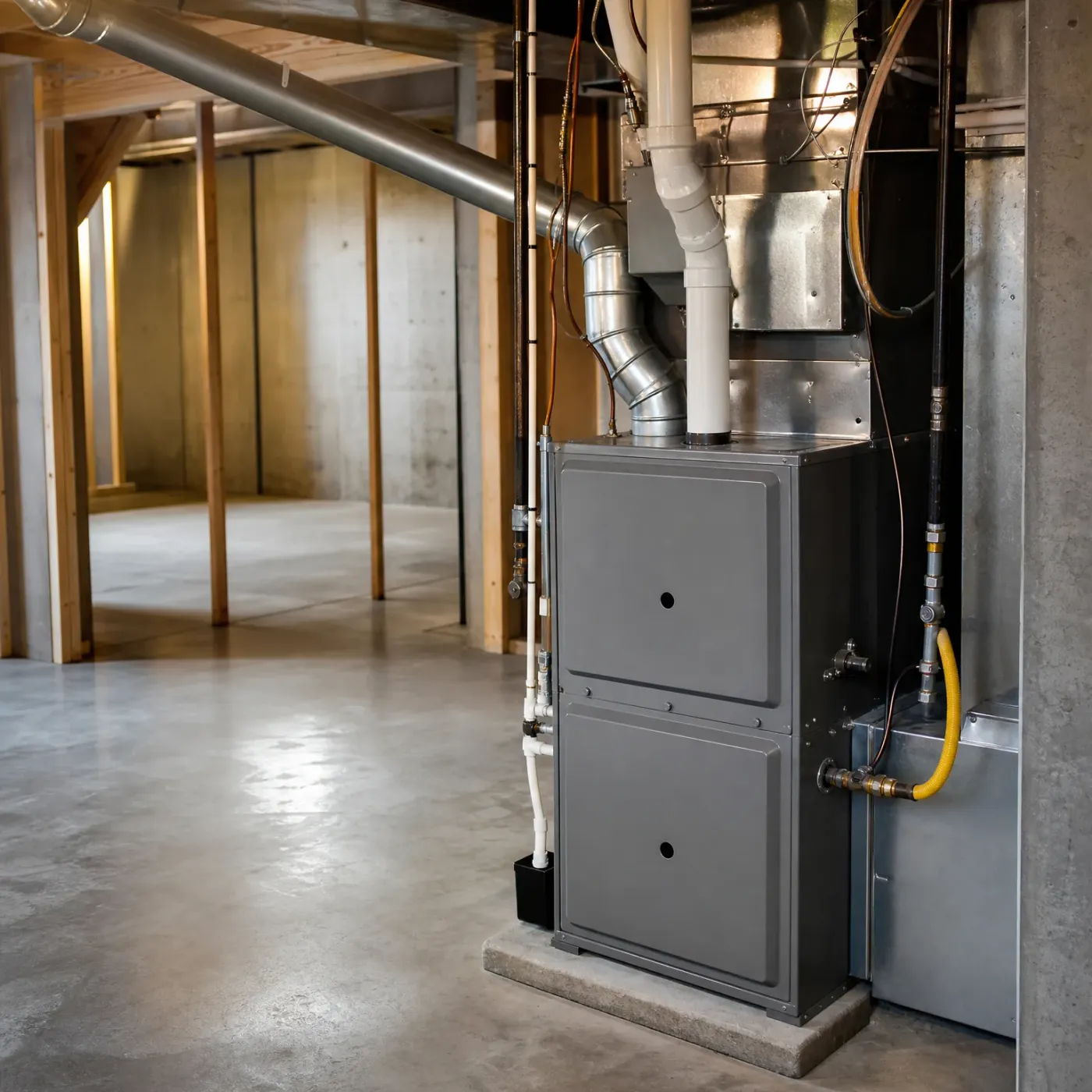
Working the way it should
This is a high-efficiency furnace doing its job. The PVC drain pipes run clean, the gas line connections are tight, and the unit sits level on the concrete floor without strain. Air moves through the filter cabinet steady, no hesitation at startup.
On its way out
This furnace is older, the mid-efficiency kind with galvanized ductwork and a louvered panel that's seen years of use. Units like this run longer cycles to keep up, and the metal cabinet shows it. When a furnace this age starts needing attention more than once a winter, replacement is worth weighing against another repair.
A Genesee County winter night averages 19°F, according to NOAA climate data. Your furnace spends hours at a stretch just holding the house against that, not cycling on for a few minutes and resting. That's what wears on an igniter or a blower motor that's already weak. It also means a short outage isn't a minor thing. Lose heat on a night like that and a house cools fast, especially at the far end from the thermostat. If your furnace has been running long stretches to keep up, or struggling to get the house back up to temperature after the thermostat drops, that's the cold doing it, not just age on its own.
NOAA nClimDiv 1991-2020
Before you get your furnace installationAfter you get your furnace installation
Why does Flint's cold hit a furnace harder than most?
Winter nights average 19°F
Nineteen degrees overnight means the burner runs long stretches, not quick bursts. That steady load wears on an aging igniter or blower faster than mild cold would.
Heat runs October through May
Eight months of heat a year means far more total run hours than a furnace in a milder climate sees, so wear adds up on a shorter calendar.
81.3% of homes heat with gas
Most homes here run on gas, so when a furnace starts failing, there's usually no backup system warming the house while you sort out repair or replacement.
NOAA nClimDiv 1991-2020 · ACS 2020-2024
Repair or Replace, Decided
A furnace under 15 years old with one worn part usually comes back to normal after a single repair visit.
A furnace past 15 years that keeps breaking down is one where replacement stops costing more than another repair.
Uneven heat, a climbing gas bill, and repeat repairs together point toward replacement rather than one more fix.
A cracked heat exchanger ends the repair question on its own, since that part isn't sold separately for most furnaces.
Genesee County nights averaging 19°F mean the decision can't wait until the furnace fails outright.
Sending the form hands the search for a contractor off to someone else, so you're not the one making the calls.
The question underneath all of this is simple. A furnace with one bad part and a reasonable age gets fixed. A furnace that's old, breaking down more than once a season, and costing you in comfort as well as repair bills gets replaced. Everything in between comes down to weighing what you'd spend keeping it alive against what you'd spend moving on.
A cracked heat exchanger settles the question by itself. That part isn't sold separately for most furnaces, so when it goes, replacement is the only path left, no matter how young the rest of the unit is. Short of that, it's the pattern that tells you where you stand: uneven heat in the back bedroom, a gas bill that's crept up two winters running, a contractor who's been out more than once already this season. None of those alone means much. Together, they mean the furnace is losing the argument.
Genesee County doesn't give you much room to wait this out. Nights averaging 19°F mean a struggling furnace is running long and hard right when you need it most, and a decision put off until it fails outright usually gets made for you, in the cold, with no good options left.
Once you send the form, the search for who handles it isn't yours to carry anymore. A contractor who knows Flint furnaces and Flint winters takes it from here.
A pro who works on furnaces
Send the request and finding a pro stops being your problem.