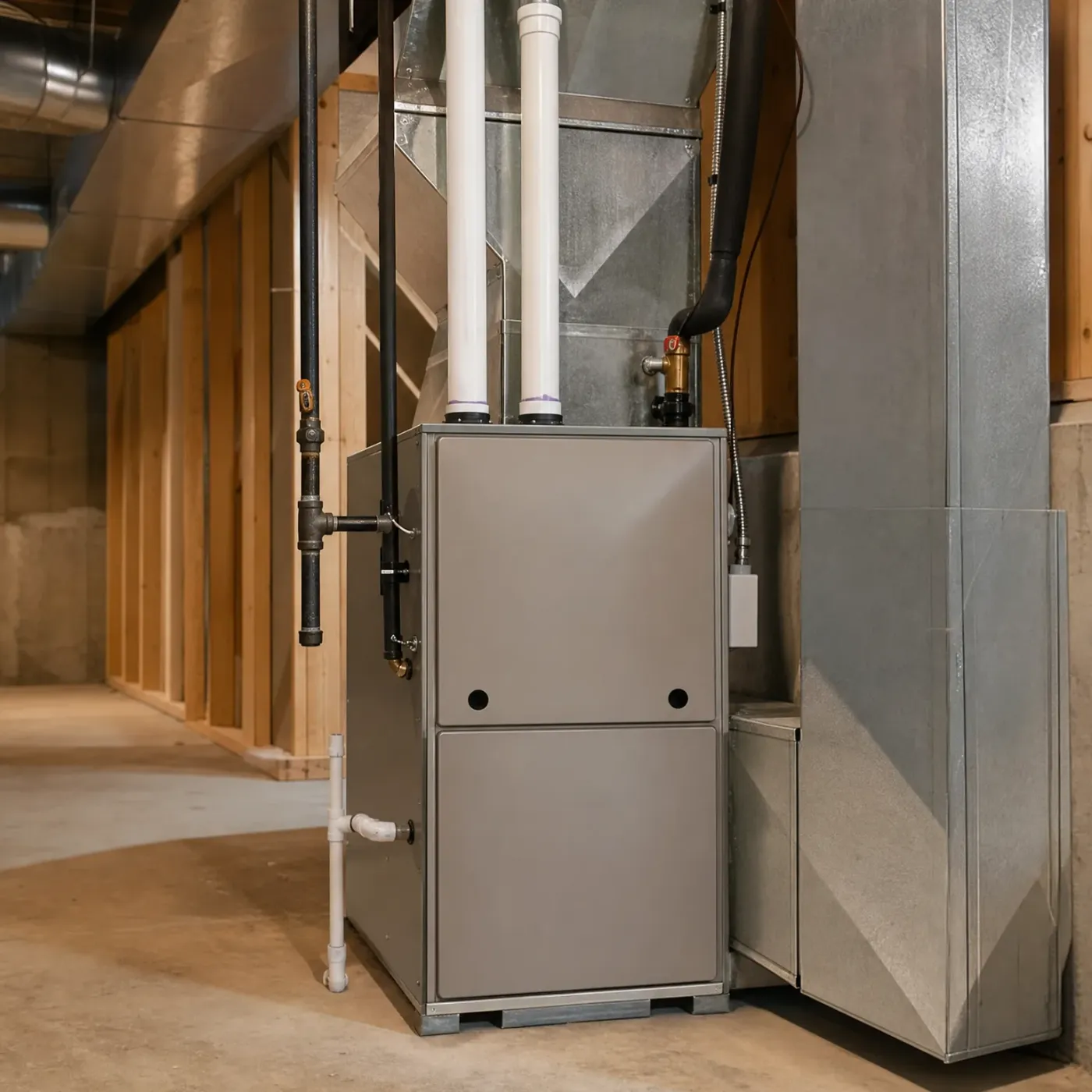
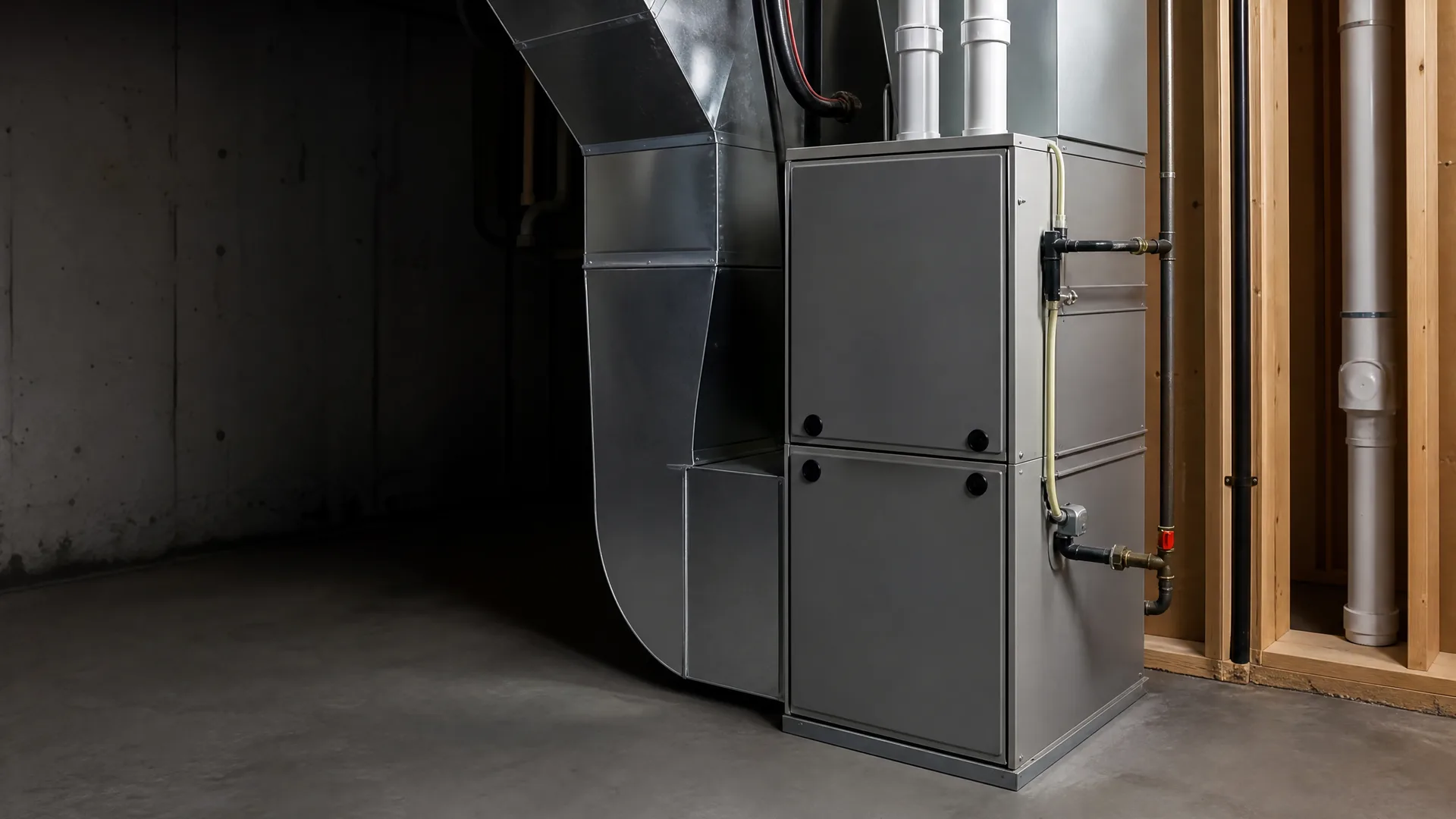
A gray high-efficiency furnace with PVC venting, copper and plastic piping, and a condensate pump sits beside sheet-metal ductwork in a concrete-floored basement.

No calling every shop in Washtenaw County

Why your gas furnace won't light in Ann Arbor, MI

A furnace that won't light can be a dead igniter, a flame sensor coated with residue, a closed gas valve, or a pressure switch that won't engage. This page walks through what causes each in a Washtenaw County winter and what a furnace needs to run again. Below, skip the search for a contractor, the round of phone calls, and explaining the problem over and over, and get matched with one licensed local pro.

Start one form

A gas furnace that won't light usually comes down to one part failing to do its job in the ignition sequence. Most furnaces built in the last couple decades use a hot surface igniter instead of a standing pilot, and that igniter cracks or burns out over time, the same way a light bulb filament does. When it can't glow hot enough, the furnace never gets a flame and shuts itself down as a safety measure. A flame sensor coated with residue causes the same shutdown: the furnace lights for a second, then cuts out because the sensor can't confirm the flame is there. Cold snaps in Washtenaw County put more demand on a furnace than it sees the rest of the year, which is exactly when a weak igniter or a dirty sensor finally gives out. Either way, the furnace isn't broken beyond repair. It's refusing to run until the part that confirms ignition is working again.

A woman in a gray sweatshirt with her hair pinned up sits in a living room looking off to the side, with a pale sectional sofa, cushions, a potted plant, framed wall art and a large window behind her.
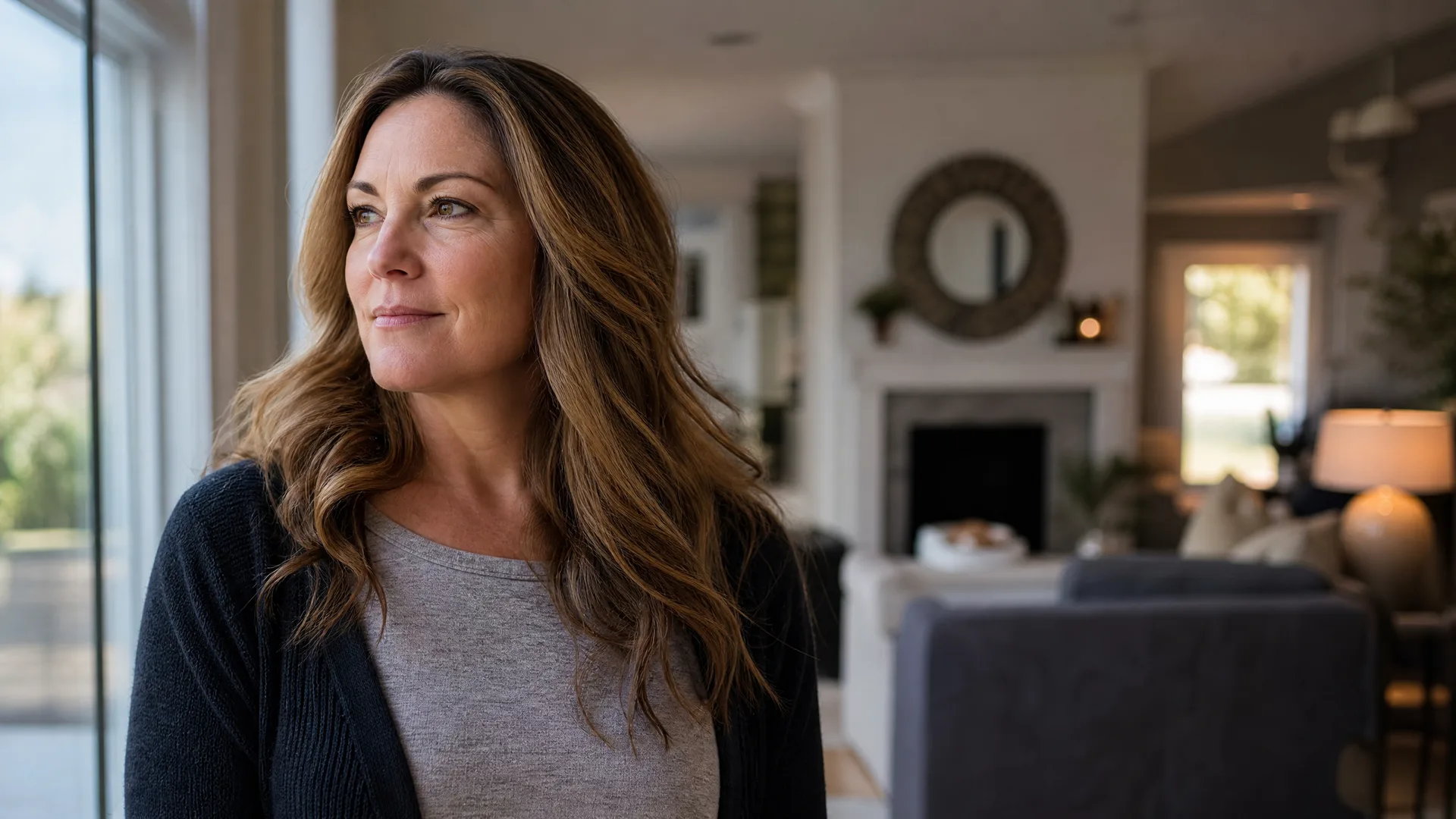
A woman with long wavy brown hair in a gray top and dark cardigan stands near a window, looking to the side, with a living room, fireplace and round mirror blurred behind her.
A woman with curly dark hair in a grey long-sleeved top sits on a grey couch with patterned cushions, looking off to the side in a softly lit living room.
A woman in a gray knit sweater with her hair in a bun sits on a couch indoors, smiling and looking off to the side, with a dining area and framed picture blurred in the background.

A furnace doesn't just light. It runs through a set order, and it has to clear each step before the next one starts. The thermostat calls for heat first. The inducer motor spins up to clear the exhaust, and a pressure switch has to confirm that's happening before the board will do anything else. Only then does the igniter get power, heating up for 15 to 20 seconds before the gas valve finally opens. Once there's a flame, the flame sensor has a short window to confirm it's burning. Miss that window and the board shuts the gas valve right back down. A furnace that fails partway through will usually try the whole sequence again, maybe two or three times, before it gives up and locks out. That's why a no-heat call rarely comes from one big failure. It's one step in a chain not clearing, and everything after it waiting on a signal that never comes.

The sequence behind the lockout

  • The thermostat calls for heat, and the control board opens the inducer motor before anything else happens.
  • A pressure switch has to detect suction from that inducer motor, or the board stops and won't send power to the igniter.
  • Once the pressure switch closes, the igniter gets power and heats up for about 15 to 20 seconds before the gas valve opens.
  • The flame sensor has a few seconds to detect the flame after ignition, or the board shuts the gas valve again.
  • A furnace that tries this sequence and fails will usually repeat it two or three times before locking out.
  • Each of these steps depends on the one before it, so a failure anywhere stops the whole sequence cold.
A beige sheet-metal furnace with a louvered upper panel stands on a concrete basement floor, connected to galvanized ductwork, white PVC vent pipes, and a metal gas line with an electrical box.
Before you get your furnace repair
A gray high-efficiency furnace with white PVC vent pipes stands in an unfinished basement beside sheet-metal ductwork, gas piping, and insulated stud walls on a concrete floor.
After you get your furnace repair

What a Cold House Costs You

  • A furnace stuck mid-cycle on a night in the teens drops a house several degrees before morning.
  • Space heaters running in bedrooms to cover the gap push your electric bill up fast, and Washtenaw County power isn't cheap.
  • Pipes along outside walls or in a crawlspace are the first thing at risk once the house loses heat for hours.
  • A furnace that locks out repeatedly is often one worn part away from leaving you with no heat on the coldest night of the week.
  • Older residents and small kids feel a cold house faster, and a lockout at 2 a.m. doesn't wait for business hours.
  • Calling around to find someone who can get out to Ann Arbor that same night costs you time you don't have when the house is already cold.

A furnace that won't light doesn't announce itself politely. It happens at night, usually, because that's when the thermostat calls hardest and a weak part finally gives out. By the time anyone notices, the house has already started losing ground. In the teens outside, that drop is fast and it doesn't stop until the furnace runs again.

What people reach for instead makes the problem worse in a different way. Space heaters in a couple of bedrooms feel like a fix, but they pull a lot of power, and power in Washtenaw County isn't cheap to begin with. Run them for a night or two and the bill shows it.

There's a quieter risk too, one that doesn't show up until later. Pipes running along an outside wall or through a crawlspace depend on the house staying warm around them. Once the heat's been off for hours, those are the first to feel it.

And a furnace that's locking out isn't usually a one-time event. It tends to repeat, because the part behind it is still failing, and it often fails all the way on the night it's coldest and least convenient. If there's an older adult or a small child in the house, that cold sets in faster for them than it does for anyone else, and a 2 a.m. lockout isn't going to wait until Monday to get looked at.

Why can't your furnace wait until morning to get fixed?

  • Winter nights average 19°F

    Overnight lows here average 19°F in December, January and February, so a furnace that won't light is losing you heat on one of the coldest parts of the day.

  • Heat runs October through May

    Furnaces around here run from October through May, about eight months of the year, so a furnace that quits rarely picks a convenient month to do it.

  • 75.2% of homes heat with gas

    Gas heats 75.2% of homes in Washtenaw County, so a furnace repair almost always means finding someone who works on a gas furnace, not an electric or oil system.

NOAA nClimDiv 1991-2020 · ACS 2020-2024

A pressure switch that won't close often means a blocked inducer motor, a stuck flap in the switch itself, or a vent pipe outside packed with ice or snow after a Washtenaw County storm.

Clear the pipe and the switch can close on the next call for heat, but a cracked inducer motor or a stuck switch needs a part, not a shortcut.

Winter nights average 19°F

At 19°F, a furnace that won't light isn't a minor inconvenience waiting for daylight. That's the average overnight low here in December, January and February, so when the igniter fails or the gas valve won't open, the house is already losing ground to the cold outside.

NOAA nClimDiv 1991-2020

  1. Thermostat calls for heat and the control board starts the inducer motor

  2. Pressure switch closes to confirm the inducer is pulling air through the vent

  3. Igniter heats up for about 30 seconds until it glows hot enough to light gas

  4. Gas valve opens and sends gas across the burners to the hot igniter

A woman with dark hair in a bun sits wrapped in a chunky knit blanket on a couch with a child resting his head on her shoulder, eyes closed, beside a lit lamp and bookshelf indoors.
A smiling older woman with gray shoulder-length hair in a cream cable-knit turtleneck sweater stands behind a wooden board holding a round loaf of bread, in a warmly lit kitchen with a dark window and shelves behind her.
A gray high-efficiency furnace in an unfinished basement, connected to sheet metal ductwork, white PVC vent pipes, a black gas line and flexible conduit, with concrete floor and wood-framed walls nearby.

No phone calls to make

A licensed pro who works in Washtenaw County gets your request.

Explain the furnace problem once instead of to every shop in Washtenaw County.

Skip calling around

Asking costs nothing, and the choice to hire stays yours.

Call a Pro or Check It First

Call a contractor

  • A licensed contractor who works on furnaces every winter around Ann Arbor knows which part fails most and checks it first.
  • You explain the problem once, to one person, instead of calling around and repeating it to several companies.
  • The igniter, flame sensor or pressure switch gets tested with meters and gauges, so the part replaced is the part that actually failed.
  • A furnace that's short cycling or locking out on a safety switch gets diagnosed correctly instead of guessed at.
  • The gas valve and venting get checked too, since a furnace that won't light sometimes points to a problem beyond the one part.

Troubleshoot it yourself

  • You can check that the thermostat is set to heat and the batteries aren't dead before assuming the furnace itself failed.
  • The filter is worth a look, since a furnace buried in dust can trip a safety switch and shut down the ignition sequence.
  • You can check the breaker and the furnace's own power switch, which looks like a light switch near the unit and gets bumped off by accident.
  • A standing pilot, if your furnace has one, can go out and sometimes relights by following the instructions printed on the gas valve.
  • Clearing snow or ice away from the outside vent pipe is something you can do yourself without opening the furnace at all.
  • Beyond that, the igniter, flame sensor, pressure switch and gas valve all need testing equipment to diagnose, not guesswork.
A gray high-efficiency furnace with white PVC vent pipes stands beside galvanized sheet-metal ductwork in a basement with a concrete floor, with a wooden staircase and railing at left.

Furnace running right

The igniter glows, the gas valve opens, and burners light within seconds of the thermostat calling for heat. The blower kicks on once the heat exchanger warms up, and warm air moves through the ducts without any hesitation or delay in the cycle.

An older gas furnace with louvered panels sits on a concrete pad in a basement, connected to sheet-metal ductwork and PVC and metal pipes, with a water heater and wooden stair framing in the background.

Furnace stuck, not lighting

The inducer motor may run but the burners never catch, or the whole unit stays silent after the thermostat calls for heat. Check the gas valve by the shutoff on the line and look for a blinking light on the control board before deciding what it needs.

Why does my furnace click but not light?

You hear the furnace try. The clicking is the igniter or the control board attempting to start the sequence, but nothing catches, and the burners stay dark. It keeps clicking and failing, clicking and failing, while the house gets colder. You want to know what's making noise without doing its job.

The clicking means ignition is starting but not finishing

That clicking is usually the igniter itself, ticking as it tries to reach the temperature needed to light the gas. A cracked igniter can click and glow without ever getting hot enough to ignite. A dirty flame sensor causes a different version of this: the burners light for a second, the sensor fails to detect the flame through the residue coating it, and the board shuts the gas valve and tries again, which sounds like the same repeating click. Either way, the control board is doing its part. It's the igniter or the sensor that's falling short. A furnace stuck on this cycle on a cold Washtenaw County night won't warm up on its own no matter how many times it tries.

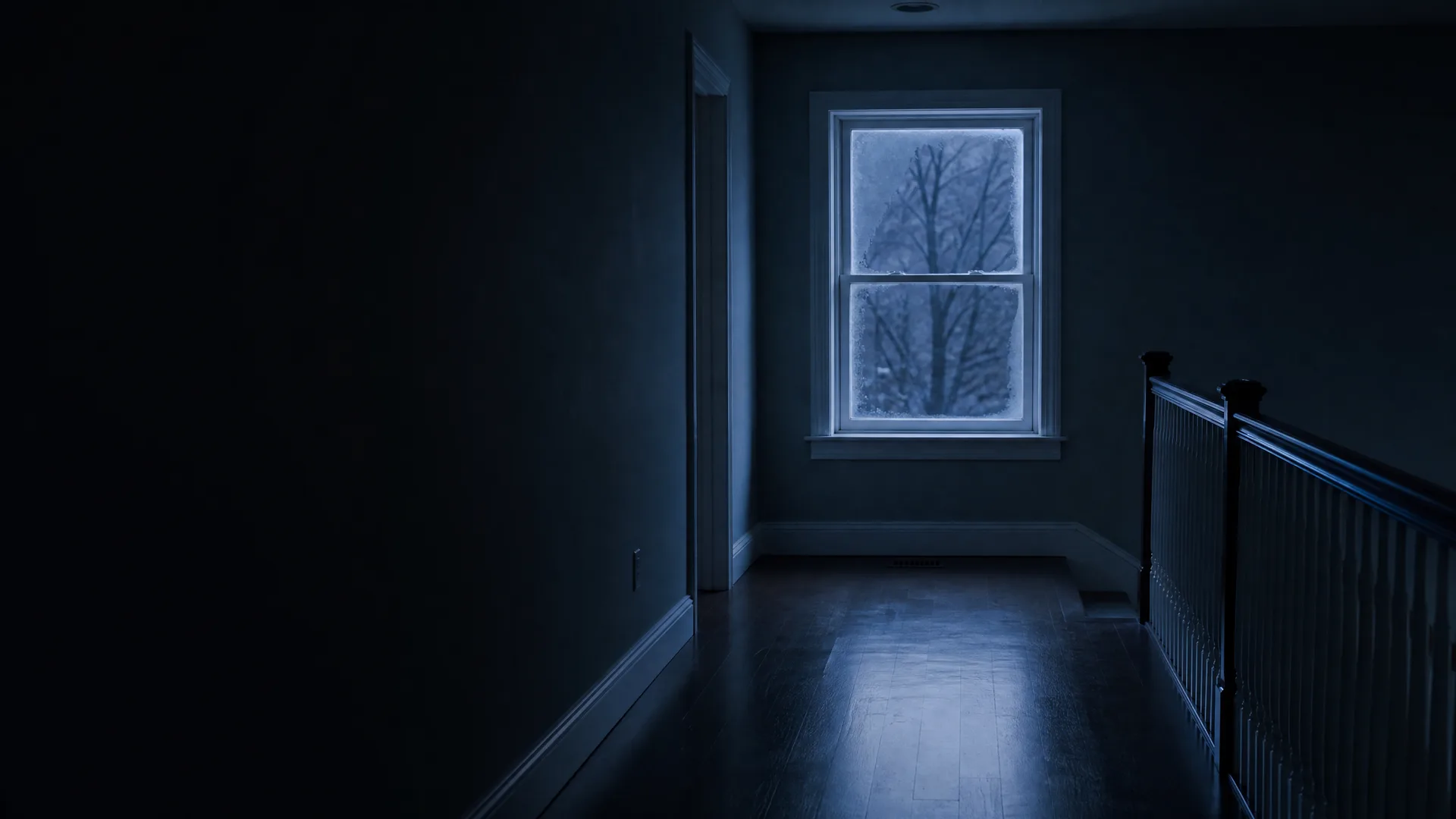
A dark interior hallway with a dark wood floor, a floor vent, a doorway on the left, and a stair railing on the right, lit only by a tall double-hung window showing bare tree branches outside.

You wake up a little after 2 a.m. because the house feels wrong before you even open your eyes. The hallway outside the bedrooms is quiet, no air moving through the vents, no hum from downstairs. Frost has crept along the edges of the window at the end of the hall. The floor is cold through your socks. Somewhere behind a door, one of your kids is asleep under a pile of blankets, and you stand there for a second listening for the furnace to catch. It doesn't. Outside, Washtenaw County is deep into a January night, the kind where the temperature keeps dropping long after midnight, and the only light in the hallway is the pale blue coming off the frost on the glass.

A closed laptop and a ceramic mug of dark coffee sit on a wooden table, with a blurred kitchen counter, potted plant, wooden utensils and cutting boards, and a large window in the background.

A furnace that won't light needs a part replaced, not a wait

A cracked igniter, a dirty flame sensor, a closed gas valve or a pressure switch that won't engage. Those are the four things that stop a furnace from lighting, and a licensed contractor who works on these systems all winter can usually tell which one it is before touching the furnace, just from how it's failing. Checking the igniter glow, testing the flame sensor, listening for the inducer motor, those are the first steps, and someone who does this every week in Washtenaw County has a good idea where to start.

What a contractor takes off your plate isn't the repair itself, it's everything before it. You don't have to search through a list of companies, call a few of them, explain the clicking and the cold house to each one, then sit with three different quotes trying to guess which contractor actually knows furnaces best. You explain it once, to one person who's local and licensed, and they already know what a dead igniter sounds like at 2 a.m. in December.

Interior corner with sheer white curtains at a window, a brown upholstered sofa in the foreground, and a wooden multi-drawer cabinet holding a round ceramic vase with leafy branches.
A gray furnace with attached sheet-metal ductwork and PVC vent pipes stands in a basement with concrete walls and floor beside exposed wood framing and vertical pipes.

One form, no calling around

RepairFurnace or heatingWashtenaw County, MI
Step 1 of 2

What ZIP code is the job in?