Profile view of a bearded man wearing a dark baseball cap and a dark gray T-shirt against a plain off-white background.

Repair or replace a propane furnace in Shelby, MI

New system or replacementFurnace or heatingOceana County, MI
Step 1 of 2

What ZIP code is the job in?

Whether to repair or replace your propane furnace usually comes down to its age and what's actually wrong with it. A furnace under 15 years old with a single failed part, like an igniter or a flame sensor, is almost always worth fixing. One that's older and starting to need repairs more than once a season is a different story, especially here in Shelby, where the furnace runs hard from late fall through early spring and can't afford to be unreliable. Propane furnaces also tend to show their age through weaker, cooler air and higher fuel use before they quit outright, so a jump in your propane bill is worth paying attention to. If the heat exchanger has cracked, replacement isn't optional, that part can't be patched. Past that point, a repair is just a delay, and a new furnace built for a hard Michigan winter is the safer bet.

A gray furnace with sheet-metal ductwork, PVC vent pipes and a yellow gas line stands on a concrete basement floor beside wooden stair framing.
A furnace like this, still tied into solid ductwork and a clean flue, is usually a good repair candidate if the problem is one part.
An older gas furnace with a louvered front panel stands on a concrete basement floor beside galvanized sheet-metal ductwork, a metal flue pipe, gas piping and a flexible conduit along a concrete wall.
A unit in this shape, with rust or wear showing around the cabinet and connections, is telling you it's closer to the end.

Start to finish, a propane furnace has to clear several checks before you feel any heat. The inducer motor kicks on first and has to pull enough draft to satisfy a pressure switch. Only then does the igniter get power. Once it's hot enough or sparking, the gas valve opens, and the flame sensor has a few seconds to confirm fire. No proof of flame, and the control board closes the valve again rather than let gas flow unburned. Propane needs more pressure through the manifold than natural gas does, and the orifices are sized for that, which is why parts aren't interchangeable between the two fuels. If the plenum overheats, a limit switch cuts the burner, and if that happens often, the cause may be airflow or a duct problem rather than the furnace itself. The one failure that changes the math is a cracked heat exchanger. That lets combustion gas get into the air moving through your house, and it's usually a reason to replace rather than repair, whatever else the furnace has going for it.

How a propane furnace actually fires

  • A propane furnace lights by sparking or heating an igniter, which then has to prove flame to a sensor before the gas valve stays open.
  • If the flame sensor reads no fire within a few seconds, the control board shuts the gas valve again, and the burner won't stay lit.
  • The inducer motor has to pull enough draft to satisfy a pressure switch before the igniter even gets power, so a bad switch can stop ignition before gas ever flows.
  • Propane burns hotter than natural gas, so the orifices and manifold pressure on a propane furnace are sized specifically for it and shouldn't be swapped between fuel types.
  • A cracked heat exchanger lets combustion gas mix with the air your blower pushes through the house, which is why a furnace that age with that problem usually gets replaced instead of patched.
  • The limit switch shuts the burner off if the plenum gets too hot, so a furnace that trips it repeatedly may have a duct or blower problem rather than a furnace problem.
A woman wrapped in a thick cream knit blanket sits in an armchair beside a lit table lamp, with an open book in the foreground and a frost-covered window behind her.
A bearded man in a plaid flannel shirt sits indoors looking out a window at snow-covered trees, with a steaming mug on the sill and wooden kitchen shelves behind him.

Get matched with a furnace pro in Oceana County

A furnace that won't hold flame on a January night in Shelby isn't a problem you can sit with while you weigh your options. Propane runs the heat in most homes out here, and when the burner keeps shutting itself off, you're choosing between a repair call and a replacement quote with the temperature already working against you. Getting a straight answer on which one makes sense means someone looking at your actual furnace, not guessing from its age on paper. That usually means calling a few contractors, waiting on callbacks, and walking each one through the same symptoms before you even get a number to compare. Submitting your furnace's age, make, and what it's doing wrong gets that in front of a contractor who can give you a real answer instead of a guess, and skips the part where you're the one doing the legwork while the house gets colder.

A gray high-efficiency furnace in a basement with PVC venting pipes, a yellow gas line, metal ductwork, concrete walls and floor, and a wood-framed stairway at left.

Running right

This is what a furnace in good shape looks like: tied into PVC venting, a steady gas line, and a plenum that's sealed up tight. No rust, no soot, no loose connections. If yours looks like this and the problem is one failed part, repairing it is the right call.


A beige furnace with a louvered front panel and metal ductwork stands on a concrete basement floor beside pipes and a white cylindrical water heater.

Showing its age

Louvered vents, older sheet metal ductwork, a gas line that's seen years of service. Nothing here says failure on its own, but a furnace this old wearing down this way is usually not far from its next breakdown. That changes the math on fixing it again.

A gray-haired man in a dark coat dusted with snow stands in a warmly lit home entryway, with a lamp, sofa, window and white staircase banister behind him.
An older man with gray hair and a beard, wearing a dark coat dusted with snow and a blue plaid scarf, stands smiling in a dimly lit entryway with a window, framed picture, table lamp and staircase behind him.
A gray-haired, bearded man in a dark winter coat with snow on the shoulders stands in a doorway of a home interior with a lit lamp, framed pictures, a potted plant and a staircase behind him, and an evergreen wreath at the left edge.
A gray-haired man in a dark coat with snow on the shoulders and collar stands smiling in a dimly lit entryway with a paneled front door, lamps, and a framed picture in an adjoining room.

15 years

That's the rough line where repair stops making sense for most propane furnaces. Past it, parts fail more often, and the next breakdown could be the blower or heat exchanger.

Request a pro

One failed part

An igniter or flame sensor costs a fraction of a new furnace. If that's the only thing wrong and the furnace is otherwise sound, fixing it is the straightforward call.

Request a pro
A beige furnace with two louvered front panels stands on a concrete basement floor beside galvanized ductwork, metal pipes, and a wooden post.
Before you get your furnace installation
A gray high-efficiency furnace stands on a concrete basement floor beside galvanized sheet-metal ductwork, with white PVC vent pipes, gas and water lines, and unfinished wood framing behind it.
After you get your furnace installation
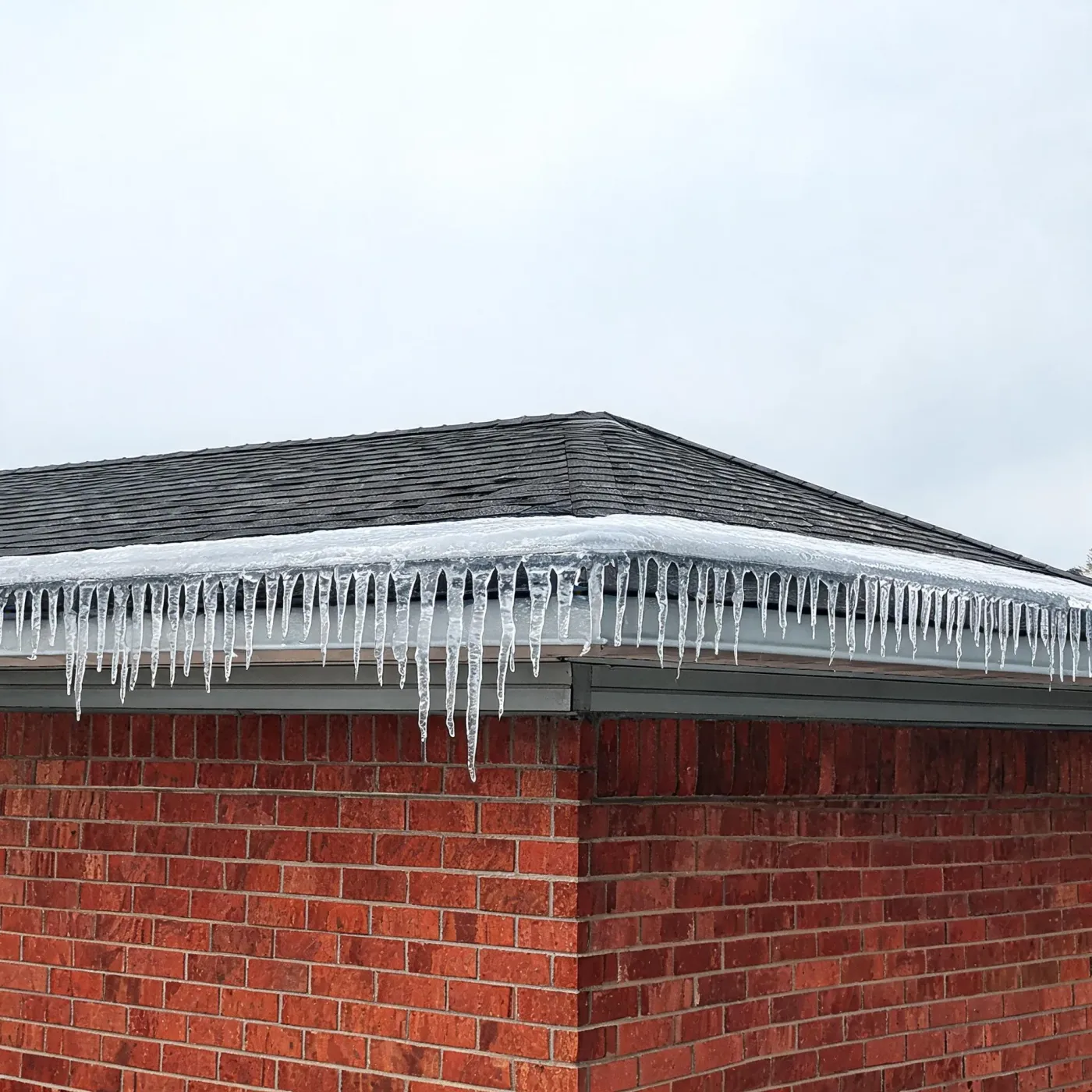
Corner of a red brick building with a dark shingled hip roof, a row of icicles hanging from the ice-covered gutter, under an overcast white sky.

Oceana County nights average 18°F across December, January and February, per NOAA climate data. That's the stretch where a propane furnace runs close to nonstop, cycling on again almost as soon as it shuts off. A furnace in good shape handles that fine. One with a weak igniter or a cracked heat exchanger will start showing it here first, with shorter cycles, cool air out of some vents, or a burner that won't stay lit through the night. If your furnace has been fine all fall and starts acting up once nights settle into the teens, the cold isn't causing the problem. It's just asking more of a part that was already failing.

NOAA nClimDiv 1991-2020

A woman in a long cream cardigan and jeans stands at an open wooden front door of a gray shingled house with stone-based porch columns, with a second person visible inside, and potted flowers and shrubs beside the entry.

Repair if it's one part, replace if it's age

That's the whole decision. A single failed igniter or flame sensor on a furnace that's still under 15 years old is worth fixing. A furnace past that age, showing rust around the cabinet or failing a second or third time this winter, is telling you the next call will be another one.

Getting to that answer for your own furnace means someone looking at the actual unit, not a general rule. A contractor who works on propane furnaces in Oceana County can tell you in one visit which side of that line yours falls on, so you're not calling around to different companies trying to get a straight answer before the next cold night.

A light-colored ceramic vase holding green leafy branches sits on a round wooden table, with a wooden-framed armchair draped in a cream throw, a tripod floor lamp, and sheer curtains blurred in the background.
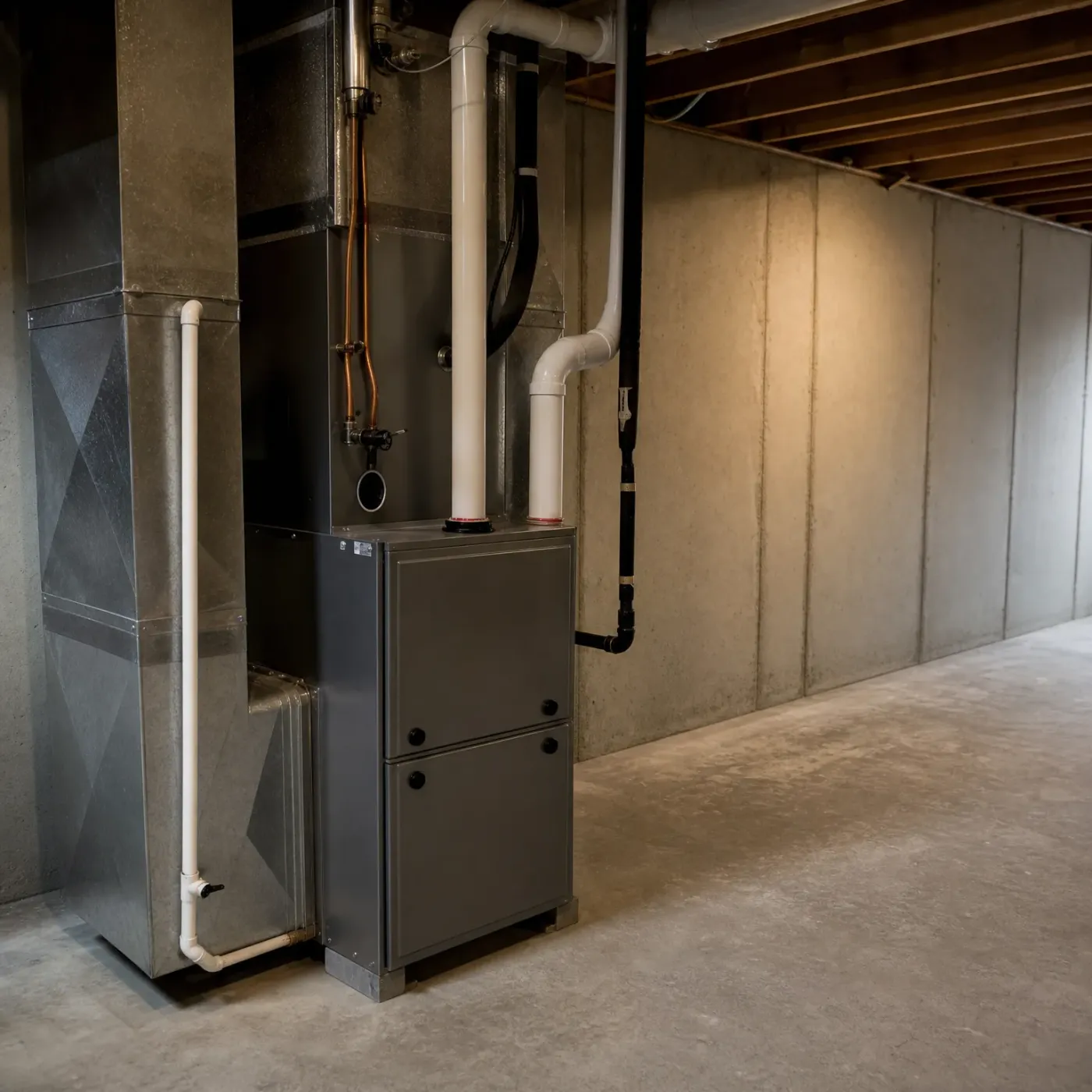
A gray high-efficiency furnace in an unfinished basement with concrete walls and floor, connected to sheet-metal ductwork, white PVC vent pipes, and a black drain line beneath exposed wood joists.

Get the right pro for your furnace

Skip the search

Skip searching for a furnace pro and answer a few questions instead.

It costs nothing to send, and you don't have to hire anyone.