A propane furnace that won't light on a cold morning in Shelby doesn't wait for a good time to happen. With most homes in Oceana County running on propane heat and power costing what it does here, going without isn't something to sit on. Right now you're probably thinking about who to call, whether they can come out soon, and whether you'll end up explaining the same problem to three different people before anyone shows up. You don't have to do any of that. Send the form and the job of finding someone becomes someone else's problem, not yours. No calling around to see who answers. No repeating yourself to one company after another. No sorting through quotes trying to guess who's worth trusting with a furnace in the middle of a Michigan winter. That part of this is done. What's left is getting your heat back, and that starts with the button below.
A propane furnace that won't light usually comes down to one of a few things. The igniter can wear out and stop glowing hot enough to catch the gas. The flame sensor can get coated with a film that stops it from telling the control board a flame is there, so the system shuts the gas back off almost as soon as it opens. A pressure switch can fail to close if the inducer motor isn't pulling enough draft, and the board won't send gas without that signal. Thermostats and power issues can look the same from the vent: no heat, no sound. In Shelby, with most homes running on propane, this also means checking that the tank still has gas and that the line to the furnace is open. None of these are things to force past by relighting it over and over. Each one needs a furnace technician to find which part actually failed and replace it.
1
Thermostat calls for heat and signals the control board.
2
Inducer motor starts, pulling air through the vent to clear it.
3
Pressure switch confirms draft before gas is allowed to flow.
4
Igniter heats up or a spark starts near the burner.
Why does my furnace click but not light?
You hear the clicking start, over and over, and nothing catches. No flame, no warmth coming up, just that repeating click from somewhere behind the panel. It's a different sound than the furnace just staying silent, and it usually means the furnace is trying to light and failing partway through, not refusing to start at all.
The clicking is the igniter trying to spark, and the gas isn't catching
That clicking is a spark igniter firing again and again, trying to light the gas at the burner. When it clicks but nothing catches, either the spark isn't strong enough to reach the gas or the gas isn't getting there to be lit. A cracked igniter will spark weak or not at all. A flame sensor coated with residue can also cut the burner off right after it catches, so fast it looks like it never lit. In Shelby, a propane furnace that's been sitting idle before the first hard cold snap is more likely to show this, since dust and residue have had all summer to build up on these parts undisturbed.
Before you get your furnace repairAfter you get your furnace repair
A furnace that won't light doesn't just mean a cold house. In Shelby, the temperature inside starts falling fast once the sun's down and the cold sets in, and a house built around propane heat has no real backup for that. If you've got pipes running along an outside wall or through a crawlspace, a long cold stretch without heat puts them at risk of freezing. Meanwhile the furnace itself may still be pulling power even while it fails, clicking away behind the panel without ever catching, and that's power you're paying for and getting nothing from. If the propane tank is running low at the same time, a simple ignition problem can turn into something harder to fix fast, since getting fuel flowing again takes its own time. And the clock is already running the moment the furnace goes quiet. Every hour spent trying to track down a contractor is an hour the house keeps cooling. None of this gets better on its own. A furnace that fails to light once, without the igniter or flame sensor replaced, tends to fail the same way again within days.
What a Dead Furnace Costs You
A furnace that won't light can leave a Shelby house dropping several degrees an hour once the morning gets cold.
Pipes along outside walls or in a crawlspace risk freezing if the furnace stays down through a hard overnight low.
A furnace that keeps clicking without lighting is still drawing power, and electricity here isn't cheap to waste.
Propane tanks that run low in the middle of a cold snap can make a furnace problem worse if the contractor can't get fuel flowing again right away.
Every hour spent calling around for a contractor is an hour the house keeps losing heat.
A furnace that fails to light once often repeats the problem within days if the igniter or flame sensor isn't replaced.
Explain the furnace problem once instead of to every shop in Oceana County.
It costs nothing to send, and you don't have to hire anyone.
What's Really Behind the No-Light
A limit switch tripped by a dirty filter or blocked vent will stop the igniter before it ever gets a chance to glow.
Low propane tank pressure, especially under 20 percent, can starve the burner even when the igniter and sensor both work fine.
A failed draft inducer motor keeps the pressure switch from closing, so the control board never allows gas to open.
Some control boards store an error code as a series of LED flashes that point to the exact part that failed.
A cracked heat exchanger will force some furnaces to lock out on purpose rather than keep lighting.
Moisture or corrosion on the thermostat wiring can mimic a bad igniter by cutting the signal before it reaches the board.
A furnace that won't light isn't always the igniter's fault, even though that's the first part most people suspect. The control board is built to stop the whole sequence if any single check fails, so a problem in one spot can look like a totally different part is to blame. A dirty filter or a blocked vent pipe can trip the limit switch before the igniter ever gets power, which looks like a dead igniter but isn't one. Propane tanks running low, especially once they drop under 20 percent, can starve the burner even with a good igniter and a clean flame sensor. If the draft inducer motor is failing, the pressure switch never closes, and the board holds the gas valve shut no matter how many times it tries. Some boards track all of this and store the answer as a pattern of LED flashes behind the front panel, a code that points straight at the failed part if you know how to read it. A cracked heat exchanger causes a lockout on purpose, since letting that furnace keep firing would push combustion gas into the house air. Even the thermostat wiring plays a part here. Moisture or corrosion on those wires can cut the signal to the board in a way that looks exactly like a bad igniter from the thermostat's side, when the igniter itself is fine. Getting the right part named is the difference between a short repair and a long guessing game.
A furnace like this lights every cycle without a second thought, sending heat up through the ductwork while the gas piping beside it stays quiet and uneventful.
A furnace in this shape, rusted at the cabinet seams, is more likely to stall on ignition and leave the flue cold when it matters most.
What are you noticing right now in your house
The thermostat says it's calling for heat, but no warm air comes up through the vents. You might hear the furnace try, a click or two, maybe the inducer motor spinning up, then quiet. Or you hear nothing at all. Rooms farthest from the furnace cool first, and you'll feel it at the floor before you feel it in the air. If this started overnight, check any pipes running along an outside wall or through a crawlspace. A furnace down for several hours during a hard freeze gives those pipes time to get cold enough to be a real concern, not just an inconvenience.
Furnace lighting the way it should
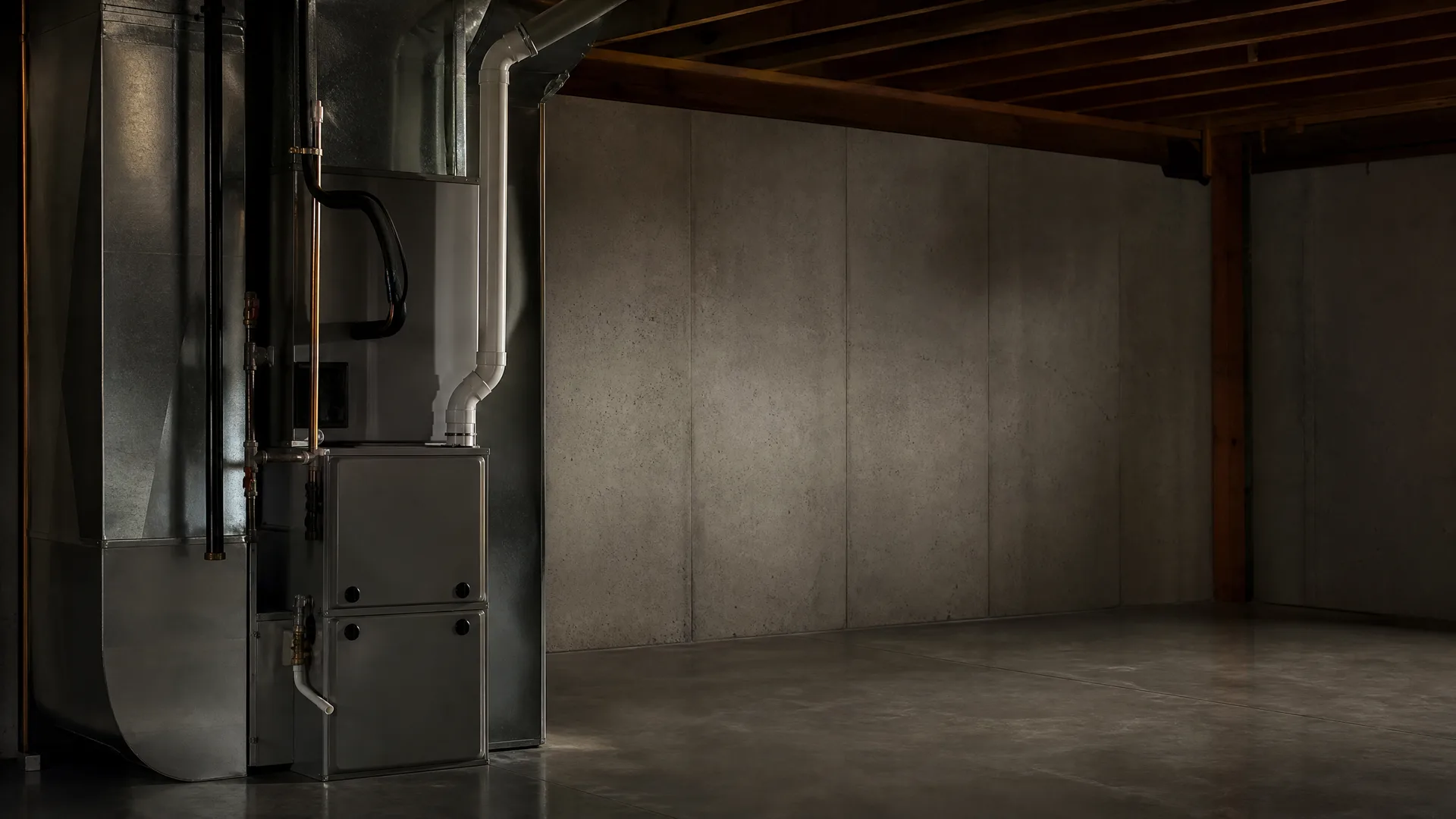
This one catches on the first try. The igniter glows, the burner lights, and heat moves out through the ductwork without a stall. The cabinet is clean, the pipes beside it are tight, and nothing about the startup gives you a second thought.
Furnace struggling to light
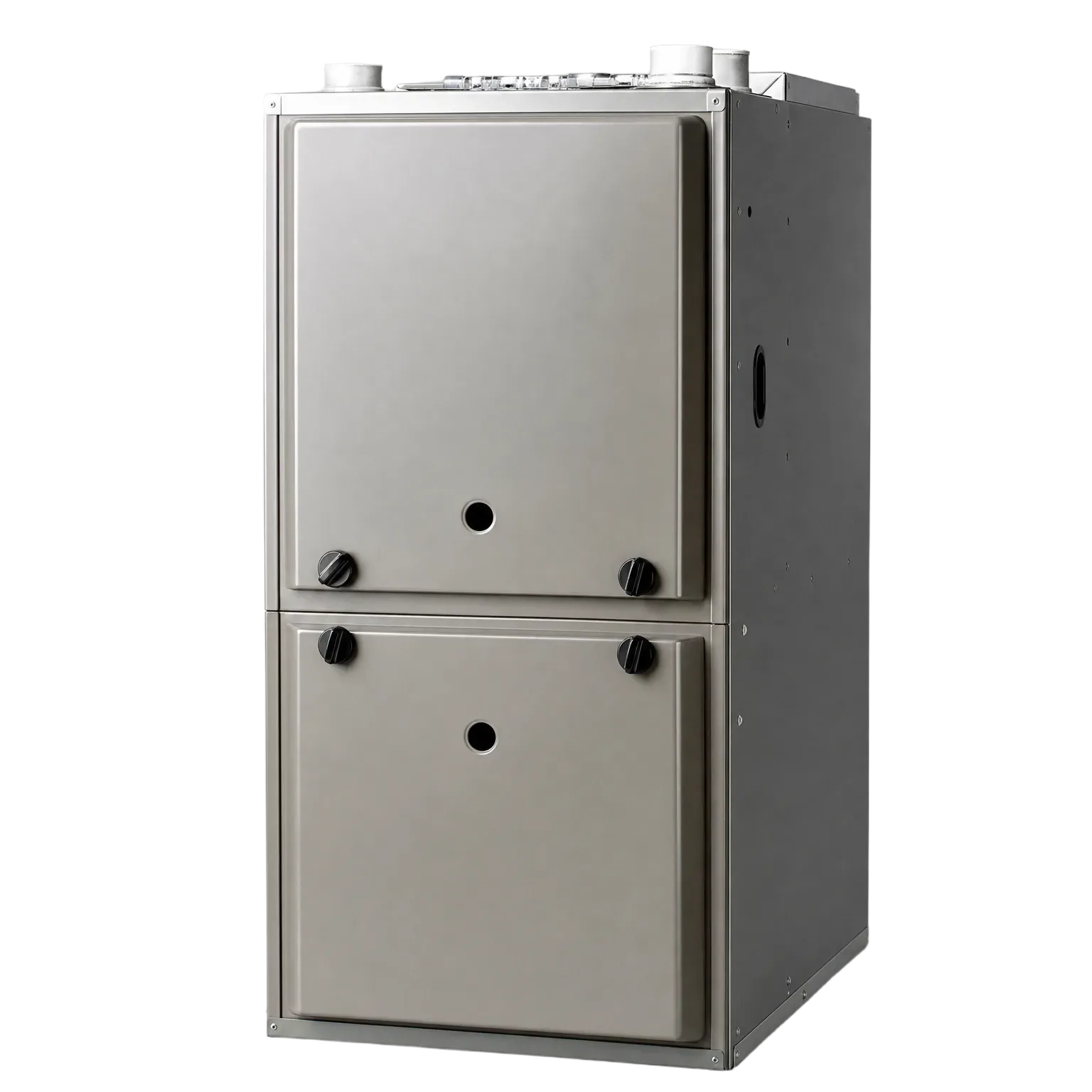
This one hesitates or doesn't catch at all. An older unit like this has had more cycles to wear down an igniter or foul a flame sensor. Once it starts skipping lights, it tends to keep doing it until something inside gets replaced.
Winter nights average 18°F
At 18°F, the average overnight low here in December, January and February, a house loses heat fast once the furnace stops lighting. A short delay getting it running again is the difference between a cold morning and pipes you're worried about.
NOAA nClimDiv 1991-2020
Why the igniter matters most
Most furnaces built in the last couple decades use a hot surface igniter instead of a standing pilot. It has to reach a certain temperature in about a second before the gas valve opens, and it only gets a few tries per cycle. A hairline crack or a weak spot in the coil means it glows dimmer and cools faster than it should. It still lights some mornings and not others, which is why the problem can seem to come and go before it stops working for good.
Why propane behaves differently
Propane sits in a tank outside, not in a buried line like natural gas, and the furnace depends on steady pressure from that tank to light correctly. When the tank runs low, usually under 20 percent, the pressure drops enough that the burner struggles to catch even though the igniter and flame sensor are both working fine. Cold tank temperatures make this worse, since propane pressure falls as the tank gets colder. Checking the gauge is a fast way to rule out the fuel side before anything else.
How cold does it get here, and how much does your furnace matter to your heat?
Winter nights average 18°F
Overnight lows average 18°F here in December, January and February. That's not a night your house can go without heat and be fine by morning.
Heat runs September through May
Heat runs September through May here, nine months out of the year. A furnace that won't light isn't a rare inconvenience, it's a problem on a system you lean on most of the year.
36.3% of homes heat with propane
36.3% of homes in Oceana County heat with propane, more than any other fuel. If your furnace won't light, there's no backup fuel sitting in the wall waiting to take over.
NOAA nClimDiv 1991-2020 · ACS 2020-2024
A furnace that won't light has a reason, and the reason has a fix
A propane furnace that won't light in Shelby almost always comes down to the igniter, the flame sensor, a tripped limit switch, or low tank pressure. Sometimes it's more than one of those at once. A licensed contractor can work through the sequence and find which part stopped the cycle, then get the burner lighting again.
Finding that contractor is the part you can skip. Instead of searching around Oceana County for someone who answers the phone, calling a few numbers, and explaining the same clicking sound to each one before you can even compare what they'd charge, you send the form once. From there, the search is off your plate, and so is the sorting through quotes. What's left is getting your furnace lit and your house back to warm.
It's off your list after this
One form replaces the calls you'd make to find a furnace pro.