Profile view of a bearded man wearing a black baseball cap and a dark gray T-shirt against a plain light background.

Repair or replace a propane furnace in St. Ignace, MI

New system or replacementFurnace or heatingMackinac County, MI
Step 1 of 2

What ZIP code is the job in?

Whether you repair or replace your propane furnace comes down to its age and what's actually broken. A cracked heat exchanger, a failed control board, or a unit past 15 to 20 years of age usually means replacement makes more sense than another repair bill. A bad igniter, a dirty flame sensor, or a blower motor problem on a furnace that's otherwise in good shape is usually worth fixing. Winters in Mackinac County are hard, and most homes here run on propane to get through them, so a furnace that quits in January isn't something you can leave for later. The colder it is outside, the harder your furnace works to keep up, and that strain is often what pushes an aging unit from "needs a repair" to "needs to be replaced." A contractor who looks at your specific furnace, its age, and what's failed can tell you which side of that line you're on.

A smiling woman with dark shoulder-length hair in a cream V-neck sweater sits at a marble counter with a glass of red wine, with a kitchen and softly lit living room behind her.
A woman in a dark green sweater laughs while seated at a marble kitchen island with a glass of red wine, with open shelving, cabinets and a living room visible behind her.
A woman with long dark hair in a cream knit sweater laughs while looking off to the side, seated at a counter with a glass of red wine, in a dimly lit living room with a sofa, lamp, framed pictures and houseplant behind her.
A smiling woman with long dark hair in a beige sweater sits at a marble kitchen counter with a glass of red wine, with a dimly lit living room behind her.

How do I know if my propane furnace's heat exchanger is cracked?

A cracked heat exchanger isn't something you can just look at and spot. The furnace is still running, still putting out heat, and nothing looks obviously wrong from the outside. But a crack lets combustion gases mix into the air your blower pushes through the house, and in Mackinac County winters, with the furnace running for months straight, that's not something to wait out.

A few signs point to it, but a technician has to confirm it

Watch for soot around the furnace, a strange smell when the blower kicks on, or a flame that flickers and dances instead of burning steady. A carbon monoxide detector going off near the furnace is another sign, and it's worth having one installed near any propane furnace regardless. None of these confirm a crack on their own. A technician checks the heat exchanger by running the furnace, shutting the blower off, and watching how the flame reacts, along with a direct inspection and a carbon monoxide reading at the supply vents. If the exchanger is cracked, the furnace needs to be shut down until it's replaced, not just patched.

A smiling bearded man in a navy sweater sits at a candlelit dinner table with a glass of red wine, a bowl of salad, and plates of food in the foreground.
A woman with dark hair in a bun reclines on a sofa with her eyes closed, wrapped in a cream fleece blanket, a closed blue hardcover book resting in front of her, with a lit lamp and a vase of dried flowers in the background.

Why does a propane furnace in St. Ignace work this hard?

  • Winter nights average 13°F

    Winter nights here average 13°F. A furnace built to cycle on and off all day is instead running long stretches just to hold a room at 68°F.

  • Heat runs September through June

    Heat runs here September through June. That's ten months of the year your furnace is the thing standing between you and the cold, not just a few winter weeks.

  • 35.8% of homes heat with propane

    Propane heats more homes in Mackinac County than any other fuel, at 35.8%. Whoever repairs or replaces yours should know propane furnaces, not just whatever's common elsewhere.

NOAA nClimDiv 1991-2020 · ACS 2020-2024

A beige furnace with a louvered front panel and metal ductwork stands on a concrete basement floor beside pipes and a white cylindrical water heater.
Before you get your furnace installation
A gray high-efficiency furnace in a basement with PVC venting pipes, a yellow gas line, metal ductwork, concrete walls and floor, and a wood-framed stairway at left.
After you get your furnace installation
  1. Thermostat calls for heat and opens the gas valve.

  2. Igniter heats up and lights the burners.

  3. Flames warm the heat exchanger inside the cabinet.

  4. Blower pushes air across the hot heat exchanger.

Winter nights average 13°F

At 13°F, your furnace can't just hold a room, it has to keep pulling your whole house back up from the cold every time a door opens. An old unit struggles to catch up on nights like that. A failing one may not catch up at all.

NOAA nClimDiv 1991-2020

A gray high-efficiency furnace stands on a concrete basement floor beside galvanized sheet-metal ductwork, with white PVC vent pipes, gas and water lines, and unfinished wood framing behind it.
A furnace like this is doing its job: burners lighting clean, heat exchanger sound, flue drafting right out through the PVC pipe.
A beige furnace with two louvered front panels stands on a concrete basement floor beside galvanized ductwork, metal pipes, and a wooden post.
This one's working against itself: a flue pipe and gas lines crowded next to an aging cabinet are signs a repair might just buy a little time.

What's your furnace telling you right now?

You might be hearing it before you see it. A furnace that used to kick on, run a while, and shut off is now running almost constantly, and the house still feels cool in the rooms farthest from it. Maybe it's taking two or three tries to light, or you're catching a whiff of something faintly like exhaust near the cabinet. Maybe the pilot or igniter flame looks yellow or orange instead of blue. Your propane bill is up from last winter even though you haven't changed the thermostat. None of this is something to wait out. A furnace straining to keep up on a cold night, or one that's venting improperly, puts your family's comfort and safety at risk, not just your wallet.

A dimly lit interior with wood plank flooring where a small portable heater with a glowing orange element sits near an open doorway, with a stove at left, kitchen cabinets and a potted plant at right, and a wooden table and chair in the foreground.

It's just past six and still dark outside. You're in the kitchen with a coffee, and the space heater by the table is doing more work than it should. The basement door is open behind it, propped so some of that warmth drifts down to the furnace closet, like that'll help. It's 13 degrees out. You've called two places already this week and left a message with a third, and nobody's called back yet. At some point you stop wanting to explain the noise it's making one more time to someone new and just want it fixed, or replaced, by whoever actually shows up.


Get matched with a furnace pro in Mackinac County

Answer a few questions instead of calling shop after shop.

Sending the form costs nothing.

A gray high-efficiency furnace in a basement with white PVC vent pipes, sheet-metal ductwork, copper and black piping, a condensate pump, and insulated walls above a concrete floor.

Furnace running clean

Burners light even, ductwork and flue tight, condensate draining out through the PVC line like it should. A furnace set up this way is keeping up with 13 degree nights without strain. Nothing here points to a repair call anytime soon.

A beige residential furnace stands on a concrete basement floor beside galvanized sheet-metal ductwork, a round flue pipe, copper gas piping, and a PVC condensate line, with a wood-paneled wall at right.

Furnace showing its age

Copper and black iron gas lines, a metal flue riser, two panels with surface grime built up over years of runtime. None of that alone means failure. But on a unit this old, the next breakdown is the question that matters, not whether one's coming.

Repair the Furnace or Replace It

Repair

  • A furnace under 10 years old with one failed part, like an igniter or a draft inducer motor, is usually worth fixing rather than replacing.
  • If the heat exchanger is sound and the cabinet isn't rusted through, the rest of the furnace can keep running for years after a repair.
  • Repairing keeps the same AFUE rating you've had, so your propane use this winter won't drop just because a part got replaced.
  • A repair gets heat back faster than a replacement, which matters if it's failing on a night in the teens.
  • If the control board or gas valve is the only thing that's gone, swapping it is a lot less disruptive than tearing out the whole unit.

Replace

  • A cracked heat exchanger can't be patched, and running the furnace with one is a real risk with flue gas in the house.
  • A furnace past 15 to 20 years has likely cycled hundreds of thousands of times, and the parts failing now are usually followed by more.
  • A new furnace is sized and set up for your ductwork, so rooms that have run cold for years may finally hold 68°F.
  • Replacing means a higher AFUE rating, which matters on a fuel you're paying for by the gallon through a ten month heating stretch.
  • If you're already facing a second or third repair bill this year, that money is better put toward a unit that isn't failing part by part.
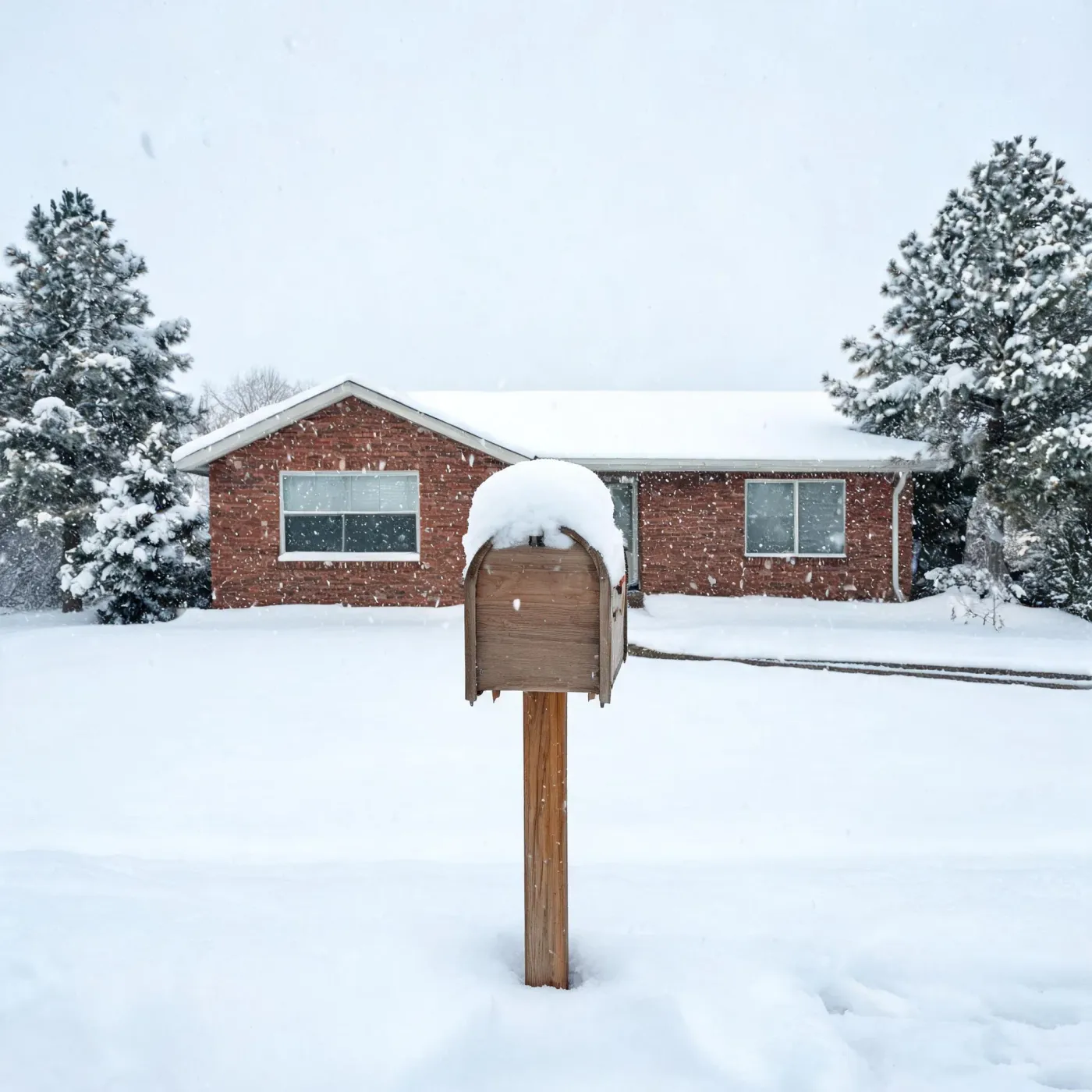
A wooden mailbox on a post topped with a thick layer of snow stands in a snow-covered yard in front of a single-story brick house with a snowy roof, flanked by snow-laden evergreen trees during falling snow.

Those 13°F nights are the average for December through January through February here in Mackinac County, not the extreme. Your furnace is sized to handle that stretch of winter, but it's working for it. Every time the front door opens or the sun goes down, the burners have to make up ground again before the house even gets back to comfortable. You'll notice it most in the rooms farthest from the furnace, the ones that take longest to warm back up. A furnace in good shape handles this without much strain. One with a weak igniter or a cracked heat exchanger starts falling behind on nights like these, and that's usually when people start calling about a furnace that used to keep up and now doesn't.

NOAA nClimDiv 1991-2020

A man seen from behind raises his hand to wave at a woman standing in the open front doorway of a single-story house with gray shingle siding, white columns and a gabled porch entry.

So which is it, repair or replace?

The age of the unit and what's actually failed on it answer that question. A young furnace with one bad part, a cracked heat exchanger on an old one, a cabinet rusted through from years in a damp basement. Those facts point one way or the other, and by now you probably know which way yours is pointing.

What's left is getting the right person to look at it and tell you for sure. That means finding a contractor who works on propane furnaces in this kind of cold, getting them out to your house, and getting a straight answer instead of a guess over the phone. Submit your information here and a contractor who serves St. Ignace and the rest of Mackinac County will reach out to you directly, so you're not the one calling around.

A gray upholstered sofa with a textured cushion sits beside a dark round side table holding a vase of green foliage, with a table lamp and sheer-curtained window behind.
A covered porch with a wood front door with six upper glass panes, a lantern wall sconce, tapered column on a stone base, potted ferns and flowers, a woven doormat, and wide steps leading to a paver walkway bordered by shrubs and white hydrangeas.
A beige upholstered sofa with a cream cushion and chunky knit throw sits beside a white-framed window, with a leafy potted plant in a stone vase against a tan wall.
Sunlit corner of a room with a linen curtain beside a window, built-in shelves holding ceramic vases, wooden bowls, a potted green plant, stacked books and a woven basket, above a textured rug.
A dark wood three-drawer dresser against a pale wall holds a tall ceramic vase with leafy branches, stacked books and a shallow bowl, with a framed print above, a woven basket on the wood floor at left, and an upholstered sofa with a green pillow in the foreground.
A cream upholstered sofa with a textured ivory cushion and a rust-colored cushion sits beside a window with sheer linen curtains, with a potted leafy plant behind it and a wooden bowl on a wood table in the foreground.

A local pro for your furnace installation

Describe your furnace job once, to one pro.

Get a local pro

You're not committing to anything by asking.