








A gray high-efficiency furnace with two white PVC vent pipes stands beside galvanized sheet-metal ductwork in a dim basement with exposed joists and a concrete floor.

Get your furnace to the right pro

Repair or replace a gas furnace in Troy, MI

A furnace that's struggling in a Troy winter puts you on the spot: pay for a repair now or pay more for a new system. It usually comes down to the furnace's age, what's actually broken, and whether it's worth fixing again. Answer that below, then get matched with a licensed local contractor who can look at your furnace directly.

Find my pro

A furnace repair is usually worth it if the unit is under 15 years old and the problem is a single part, like an igniter, a flame sensor, or a blower motor. Replacement starts to make more sense once the furnace is past 15 to 20 years, or if you're facing a cracked heat exchanger, since that part isn't safely repaired. Troy winters run long and cold, and a furnace that's already struggling in December usually keeps struggling through February. A unit that's failed more than once this winter is telling you something about what's coming next. If the repair quote is already running high relative to a new system, that's usually the point where replacement pulls ahead, because you'd be spending real money to extend the life of a furnace that's still getting older. A local contractor who sees these furnaces every winter can tell you which side of that line yours is on.

Winter nights average 19°F

At 19°F overnight, your furnace is running most of the night just to hold the house steady. If it's cycling on and off instead of running steady, or struggling to get past that recovery, an aging unit will show it on nights like these first.

NOAA nClimDiv 1991-2020

A furnace under 15 years old with a bad igniter or blower motor is a repair, not a decision. Parts fail on furnaces that still have a decade of life left, and fixing the one part that broke is the cheaper path every time.

A furnace past 15 to 20 years that just failed on a hard call is a different case. The cracked heat exchanger or the second repair in two winters is the system telling you it's done, and the next part to go will be the gas valve or the control board.

A woman with dark hair in a bun wearing a cream knit sweater sits on a gray sofa in a bright living room, looking off to the side.
A woman wrapped in a knit blanket sits on a gray sofa in a living room, looking toward a bright window with houseplants and an armchair in the background.
A woman in a gray cowl-neck sweater sits on a light sofa with cushions, smiling and looking to the side, with a kitchen and window visible behind her.
A woman with dark hair in a bun, wearing a light linen shirt, sits on a sofa and looks to the side, with a window, houseplants and a kitchen with pendant lights blurred behind her.

How a Gas Furnace Actually Fires

  • A gas furnace fires in a set sequence: the inducer motor starts, the igniter heats up, the gas valve opens, and the burners light.
  • The flame sensor has to detect that burner flame within seconds or the control board shuts the gas valve as a safety check.
  • A furnace that short cycles on a cold night is often shutting down on a dirty flame sensor rather than a part that's actually failed.
  • The blower motor doesn't run until the heat exchanger is warm, so a furnace that ignites but never blows warm air points to a different problem than one that won't ignite at all.
  • Most furnace failures trace back to one of three parts: the igniter, the flame sensor, or the inducer motor, not the heat exchanger itself.
  • A cracked heat exchanger is the one failure that usually means replacement no matter how old the furnace is, since it affects the one part that isn't sold separately from the whole unit.

Your furnace follows the same sequence every time it starts. The inducer motor kicks on first and clears exhaust gas from the heat exchanger, and a pressure switch confirms that's happening before anything else moves. The igniter heats up next. Once it's hot enough, the control board opens the gas valve and the burners light off it. The flame sensor is watching by this point, a thin metal rod sitting in the flame itself. It has to confirm burner flame within seconds, and if it doesn't, the board closes the gas valve again rather than let gas flow unburned. That's a safety check, not a malfunction. Only after the heat exchanger has had time to warm does the blower motor start pushing air through your ducts, which is why a furnace that lights but blows cold air is a different problem than one that won't light at all.

Almost everything that goes wrong traces back to the igniter, the flame sensor, or the inducer motor. A dirty flame sensor reads as the furnace shutting itself off repeatedly on a cold night, not as a furnace that's dying. The heat exchanger is the exception. It's not sold as a separate part, so a crack there usually means replacing the unit rather than repairing it, regardless of how old the furnace is.

Why does a Troy furnace work this hard every winter?

  • Winter nights average 19°F

    Overnight lows near 19°F mean the furnace runs long cycles for hours on end. A tired igniter or blower motor is going to show itself on nights like that.

  • Heat runs October through May

    Eight months of heat a year, October through May, means a lot of cycles on every part. Replacement cost gets spread across more months of real use.

  • 85.9% of homes heat with gas

    With 85.9% of homes here running on gas, parts failures and gas valve problems are common, and a local contractor sees the same handful of issues every winter.

NOAA nClimDiv 1991-2020 · ACS 2020-2024

  1. The thermostat calls for heat and signals the control board.

  2. The inducer motor starts and clears the exhaust path.

  3. The igniter heats up or the pilot lights the burners.

  4. The flame sensor confirms burner flame within seconds.

What are you noticing with your furnace right now?

Maybe it's taking a few tries to light, or you hear a click and then nothing. Maybe it runs for a while and shuts off before the house warms up, so you're bumping the thermostat and still feeling cold air out of the vents. A burning dust smell the first time it fires after months off is normal. A smell that lingers, or a sound that wasn't there before, like a rattle or a screech from the blower, is not. If it's short cycling or running constantly and barely keeping up, that's the furnace telling you something before it quits outright, and in Troy, a furnace that quits on a cold night leaves the house dropping fast.

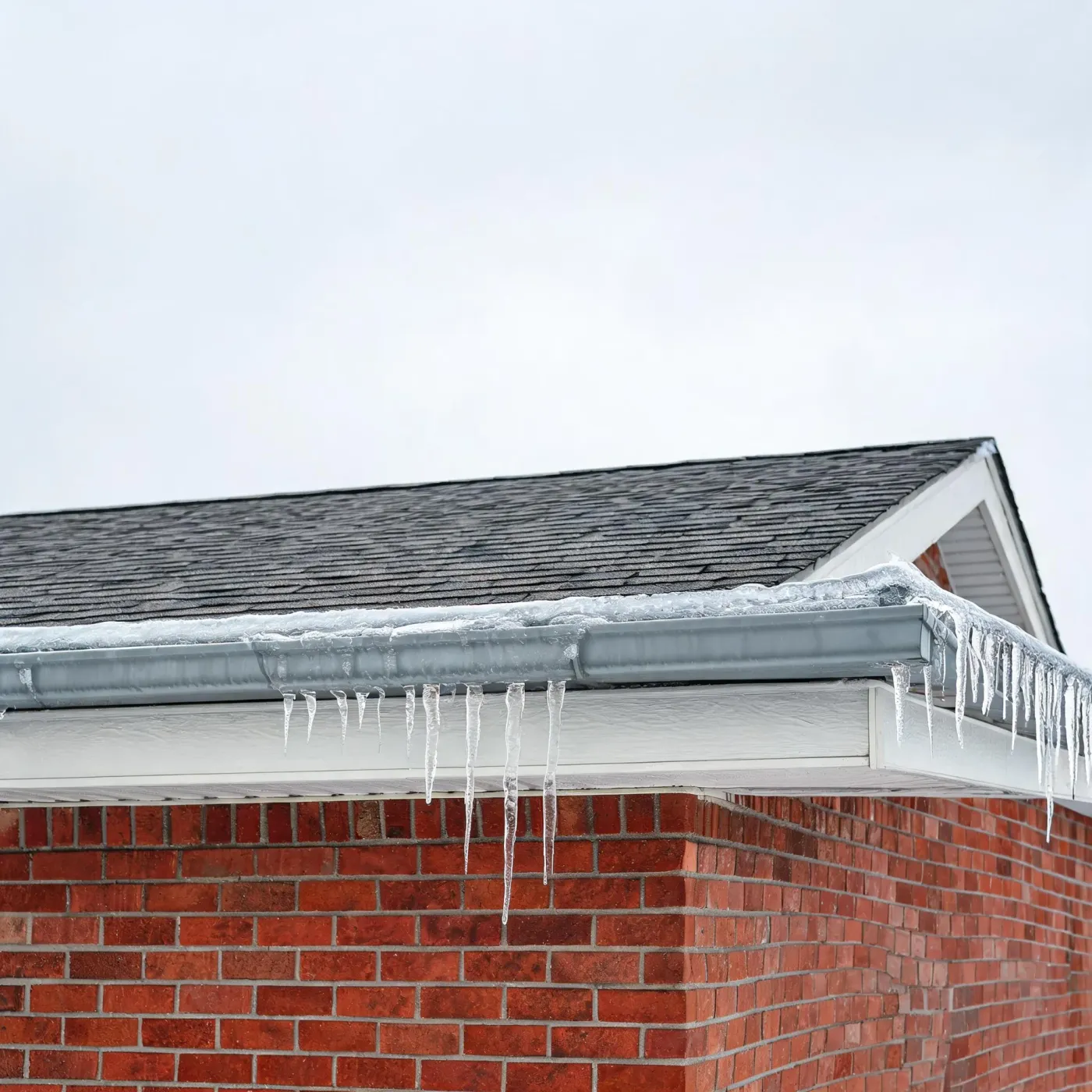
Corner of a brick house with asphalt shingle roof, white soffit and gray gutter, with icicles hanging from the gutter against an overcast sky.

December through February, Oakland County's overnight low averages 19°F, a figure the National Weather Service tracks for the area. That's the temperature your furnace is working against most nights, not just when a cold snap hits. A furnace in good shape handles it by running long steady cycles and holding the house where you set it. One that's starting to fail shows it differently: short-cycling, a longer wait before warm air comes through the vents, or a room that never quite catches up. If you're seeing that now, it's worth having someone look at it who works on furnaces in this area all winter and knows which parts give out first in weather like this. One contractor, local to Troy, licensed, is who gets matched to your request.

NOAA nClimDiv 1991-2020

Find a furnace installation pro in Oakland County

A furnace doesn't fail on its own schedule. It fails on a January night at 19°F, usually right when you need it most. At that point you don't want to spend an evening calling around Troy for quotes, waiting for callbacks, comparing strangers. You want someone who already knows what breaks on a furnace that's run eight months a year for over a decade, and who can tell you straight whether the igniter or blower motor is worth fixing or whether the whole unit is past that point. That's what you get here: one licensed contractor local to this area, not a handful of companies competing for your number. They see this exact failure pattern every winter in homes like yours. Answer a few questions about your furnace and what it's doing, and that contractor reaches out to you directly. No sorting through five bids while your house gets cold.

A gray high-efficiency furnace with two access panels stands in a bare basement corner, connected to sheet-metal ductwork, white PVC vent pipes, and flexible gas and electrical lines.

Fixing the furnace you have

A repair keeps the furnace you already know. The ductwork is sized for it, the thermostat is set for it, and whatever quirks it has are quirks you've lived with. If the parts that failed are isolated, a repair gets the heat back on without touching anything else in the house. You skip the work of picking a new system, and you skip the learning curve that comes with one. For a furnace with years left in it, that's the whole case.

A gas furnace with metal ductwork, copper and yellow gas piping stands against a wall in an empty room with a bare concrete floor.

Starting over with a new one

A new furnace means a fresh warranty and a control board, igniter, and blower that haven't logged 15 winters yet. You stop guessing which part is next to go. If the old furnace was undersized or oversized for the house, a new one can be matched properly, which shows up in how evenly the house holds heat. It's a bigger cost up front, but it's paid once, not in pieces every heating season for years to come.

Repair the Furnace or Replace It

Repair

  • A single failed part on a furnace that's otherwise sound means a technician replaces just that part and the furnace runs the rest of the winter like normal.
  • Repairs cost less upfront, which matters if money's tight right now and the furnace is still within its expected working life.
  • You keep the furnace you know, along with the ductwork and thermostat settings already dialed in around it.
  • If the furnace has been reliable up to this point, one bad igniter or flame sensor doesn't mean the rest of the unit is failing too.
  • A repair now doesn't rule out replacing later if the same furnace starts failing again in a year or two.

Replace

  • A new furnace means no more guessing whether the next part to go will be the inducer motor, the heat exchanger, or something else entirely.
  • Replacement resets the clock, so you're not paying for a repair this winter and a new system next winter anyway.
  • Newer furnaces run more efficiently, which matters over eight months of heating a year in Oakland County.
  • If the furnace has already needed more than one repair in the past couple of years, replacement stops that pattern instead of extending it.
  • A furnace past 15 to 20 years old is replacing parts that are also aging, so a new igniter on an old control board isn't the same bet as a new igniter on a five-year-old one.
A gray high-efficiency furnace in a basement with PVC venting pipes, a yellow gas line, metal ductwork, concrete walls and floor, and a wood-framed stairway at left.

Running right

A furnace like this one should fire, run steady, and bring the house up to temperature without drama. The cabinet, the flue pipes, the gas line and the plenum are all doing their job quietly. If yours looks something like this and holds the house steady on a 19°F night, there's nothing to fix.


A beige furnace with a louvered front panel and metal ductwork stands on a concrete basement floor beside pipes and a white cylindrical water heater.

Worth a second look

An older furnace with louvered vents and exposed ductwork can still run fine, but age catches up with these units. If it's cycling more than it used to, running longer to hold the same temperature, or sitting near a water heater that's also showing its age, it's worth having someone look at both before one fails on you.

A woman in a cream sweater and jeans stands in the open doorway of a white stucco house, holding the dark door, while a man in a dark quilted jacket seen from behind walks toward the entry past potted plants.

The age and the part decide it

A furnace under 15 years old with one bad part is worth fixing. A furnace past 15 to 20 years, or one stacking up repair after repair, is worth replacing. Everything the cold nights in Troy expose, the clicking, the short cycles, the cold air from the vents, comes back to that one line.

If you're still not sure which side of it your furnace falls on, a local contractor who services this equipment all winter can look at the actual unit and tell you straight. You'll get matched with one contractor who works on furnaces in Oakland County every season, not a handful of companies competing for the job, and they'll reach out to go over what they find.

A living room corner with a beige sofa and cushion, a round wooden coffee table holding a pale ceramic vase of eucalyptus stems and a wooden bowl, and a curtained window with a potted plant above a latticed radiator cover in the background.
A dark gray high-efficiency furnace with two white vent pipes and connected sheet-metal ductwork stands in an unfinished basement with concrete walls, a support pole, and a small window.

The right pro for this job

New system or replacementFurnace or heatingOakland County, MI
Step 1 of 2

What ZIP code is the job in?

