






Heat pump vs gas heat in Flint, MI

Find my pro

You are weighing a heat pump against gas heat for your Flint home, and that is not a small question here. Winters in Genesee County are hard, and most houses around you run on gas for a reason. Power rates in Michigan are among the highest in the country, so a heat pump's performance on the coldest days, and what it would actually cost you to run next to gas, matters more here than it does somewhere mild. Your ductwork, your gas line, your panel, all of it factors into which choice makes sense for your house, and that is not something to guess at from a chart. A contractor who works on homes in Flint and Genesee County can look at what you have and tell you straight what fits. Answer a few questions and you will be matched with one who serves your area, and they will reach out to you. Finding that contractor stops being your problem the moment you send it.

For most homes in Flint, gas heat still makes more sense than a heat pump, and the reason comes down to how cold it gets here. A heat pump moves heat from outside air, and once that air drops toward freezing, it has to work harder to pull out less and less. Below the teens, most heat pumps need backup heat strips to keep up, and those strips run on electricity priced among the highest in the country. Gas doesn't lose capacity when the temperature falls, so a furnace keeps putting out the same heat in January that it does in November. Some homes here do fine with a heat pump paired with a gas furnace as backup, switching over only on the coldest nights. But a heat pump alone, with no gas backup, will struggle through a Genesee County winter and cost more to run while doing it.

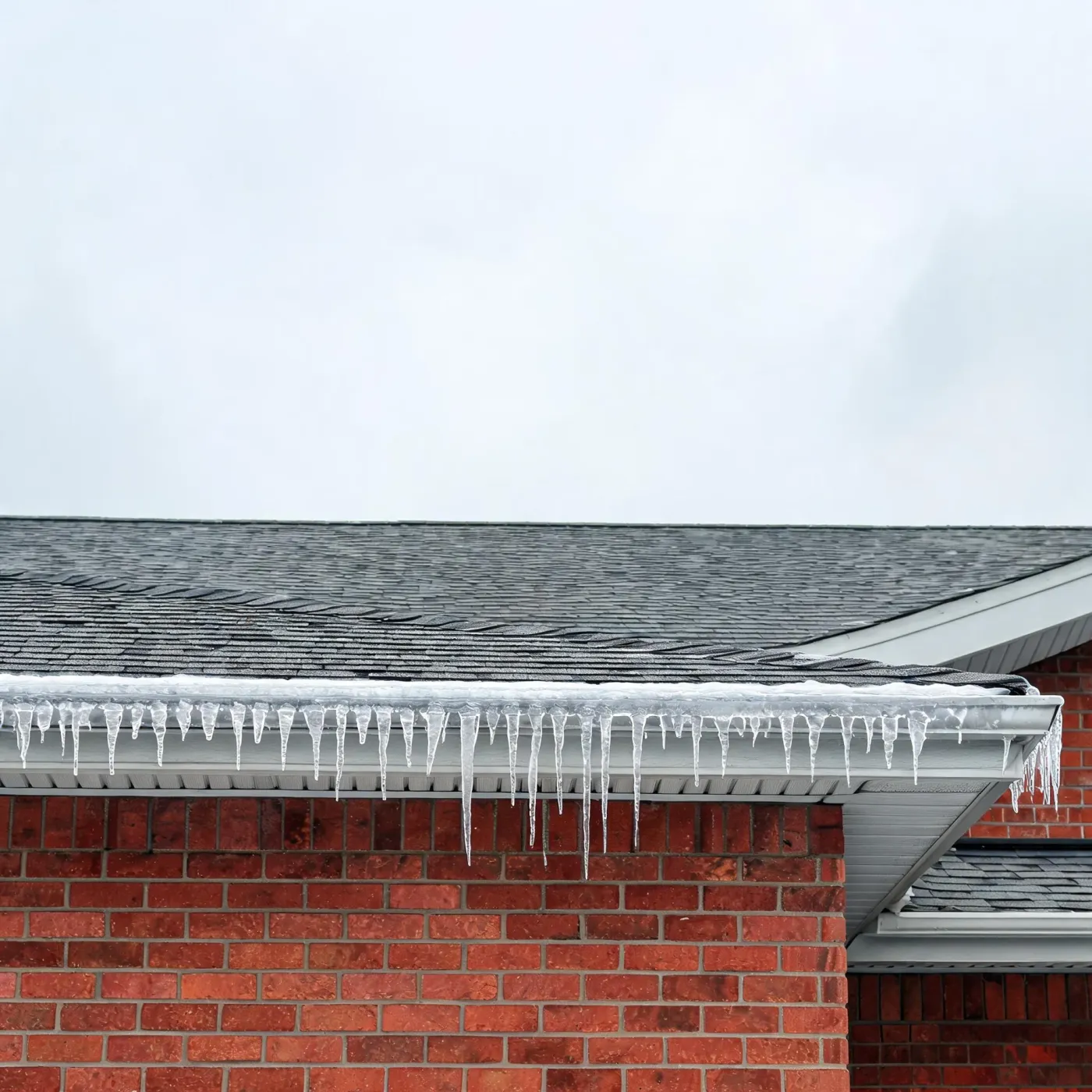
Icicles hanging from a white gutter along the edge of a gray shingled roof on a red brick house, under an overcast sky.

On a January night in Genesee County, the temperature outside averages 19°F, according to NOAA climate data. At that mark, a heat pump is pulling warmth from air that has almost none left to give, and it runs nearly nonstop trying to keep up. A gas furnace doesn't care how cold the air is. It burns fuel and makes its own heat, so a 19°F night asks no more of it than a 35°F one. That's what you'd notice at home: vents blowing warm instead of lukewarm, and the furnace cycling off instead of running straight through the night.

NOAA nClimDiv 1991-2020

A gray-haired bearded man in a dark coat and scarf dusted with snow stands smiling in a dimly lit entryway with a white front door, a side table with a lit lamp, an oval mirror, and a patterned rug.
An older bearded man in a dark snow-dusted coat and gray scarf stands just inside a dimly lit home entry, with a framed picture, lit table lamp, and an adjoining room with a fireplace behind him, and snow visible through the open door.
A gray-haired, bearded man in a dark snow-dusted coat stands smiling in a dimly lit entry hall with a staircase, a lit table lamp, a framed picture, and a living room visible through a doorway.
An older man with gray hair and a beard, wearing a dark jacket dusted with snow, stands smiling in a dimly lit hallway with lamps and a living room visible behind him.

A furnace makes its own heat by burning gas, so it can push air out at 100 to 140 degrees no matter what it's doing outside. It fires, hits the temperature you set, and shuts off until it's needed again. A heat pump works differently. It pulls heat that already exists in the outside air and moves it into your house, which is why the air at your vents feels warm but not hot, usually in the 90s. That's not a malfunction. It's just a lower-temperature heat source running for longer stretches instead of short, hot bursts. In Flint, this matters because outside air holds less heat to pull from as the temperature drops. Past a certain point, most heat pumps can't keep up on their own and switch over to a backup heat source, often electric resistance coils or a paired furnace, to carry the load. A gas furnace doesn't have that problem. Whether it's 30 degrees out or well below zero, it's making its own heat the same way every time.

How Each System Actually Heats

  • A gas furnace burns fuel to make heat, so the air coming out of your vents can run 100 to 140 degrees.
  • A heat pump instead moves existing heat from one place to another, so the air out of the vents is warm but much cooler than furnace air, often in the 90s.
  • That lower output temperature is normal for a heat pump and does not mean it is failing to heat the house.
  • A gas furnace fires in short bursts and shuts off once the house hits temperature, while a heat pump tends to run longer and steadier through cold stretches.
  • Below a certain outdoor temperature, a heat pump's output drops enough that many systems switch to a backup heat source to keep up.
  • A furnace's output stays the same whether it is 30°F or 0°F outside, since it is not drawing on outside air to make its heat.
An older gas furnace with two louvered front panels stands on a concrete basement floor beside galvanized sheet-metal ductwork, pipes, and a weathered concrete wall.
Before you get your furnace installation
A gray high-efficiency furnace in a basement, connected to sheet-metal ductwork on the left and white PVC vent pipes above, with black gas and drain piping and an exposed wood-stud wall with OSB sheathing on the right.
After you get your furnace installation

Find a furnace installation pro in Genesee County

Send the form and the search for an installer is over.

Asking costs nothing, and the choice to hire stays yours.

What a dual-fuel setup changes

Some homes in Genesee County run a heat pump alongside a gas furnace instead of choosing one or the other. The heat pump handles the milder stretches of fall and spring, when the outside air still has enough heat in it to move. Once temperatures drop toward that 19 degree January average, the system switches over and the furnace takes the load for the rest of the winter. The gas furnace still does the heavy lifting on the coldest nights, the same nights where a heat pump alone would be running constantly to keep up. A contractor can size this kind of setup to your house and tell you whether the switch-over point makes sense for what you're paying for power and gas.

Why the furnace still gets sized first

Whatever you decide, the furnace is what's rated to carry your house through a Genesee County winter on its own. Sizing starts with how much heat your house loses on the coldest days, not the mildest ones, because a furnace too small for the house runs long and still falls behind once it's well below freezing outside. A heat pump gets added to that system, not the other way around. That's also why swapping in a heat pump without checking the furnace's capacity and the ductwork it depends on can leave a house cold on the nights it matters most. Getting the sizing right is a job for whoever installs the system, not a guess made from the outside.

Winter nights average 19°F

At 19°F, a heat pump in your house is pulling double duty just to keep the air out of your vents warm. A gas furnace doesn't care what it's like outside. It burns fuel and puts out the same heat whether it's 30°F or 0°F, which matters on a night like that.

NOAA nClimDiv 1991-2020

What a heat pump alone costs you here

If a heat pump were the only thing heating your house this winter, you'd feel it on the coldest nights first. Once the outside air gets down near freezing, the heat pump has to run almost constantly, and the air coming out of your vents won't feel as warm as what a furnace puts out. Your electric bill carries that load instead of your gas bill, and electricity in Michigan costs more than gas does for the same amount of heat. On the nights Genesee County gets coldest, that's the math working against you.


What sticking with gas protects

Your furnace doesn't slow down when the temperature drops. It burns the same fuel the same way whether it's 20°F or well below zero outside, so the heat coming through your vents stays hot and steady all winter. That's the setup most homes around you already have, and the gas lines and ductwork to run it are probably already in your walls. Replacing a furnace with another furnace means you're not paying to add equipment your house doesn't already have a place for.

A woman wrapped in a thick beige fleece blanket sits on a sofa with an open book on her lap, beside a lit table lamp, with a frost-covered window behind her.
A gray-haired woman in a cream knit sweater stands in a dimly lit kitchen at night, looking to her right, with a round loaf of bread in the foreground and a dark window and potted plant behind her.

Where This Leaves You

  • For most homes in Flint, a gas furnace carries the winter better than a heat pump on its own.
  • At 19°F, a heat pump is working hard for less heat, while a furnace puts out the same warmth regardless.
  • A dual-fuel setup lets a heat pump handle the mild stretches and hands off to gas once the cold sets in.
  • Vent temperature tells the story: furnace air runs hotter than heat pump air, and that gap grows as it gets colder outside.
  • Michigan's power rates make leaning on electric heat alone a harder case in a county this cold.
  • Once you send the form, a contractor who knows Genesee County winters takes it from there.

Gas heat carries a Flint winter better than a heat pump on its own, and the reason is simple. Your furnace burns fuel and puts out the same heat whether it's 30 degrees outside or 19. A heat pump has to work harder for less as the air gets colder, and Genesee County gets plenty of nights where that difference shows up on the thermostat and in the vents. That doesn't rule out a heat pump entirely. Paired with a furnace in a dual-fuel setup, it can handle the milder stretches of fall and spring, when there's still enough heat in the outside air to move, and step aside once real cold sets in. What it rules out is leaning on electric heat by itself through a Michigan winter, especially with power rates here running among the highest in the country. The honest answer for most houses around you is gas, with a heat pump as an option worth asking about rather than a replacement worth counting on. A contractor who works on homes in this county has seen how these systems perform here and can tell you which setup fits your house, not just the general case. Once you send the form, you're not the one tracking down who's available or chasing a callback. That part is off your plate, and someone who knows these winters takes it from there.

A gray high-efficiency furnace with two access panels stands on a concrete basement floor, connected to sheet-metal ductwork and white PVC vent pipes, with wood framing and a gas line nearby.

The right pro for this job

New system or replacementFurnace or heatingGenesee County, MI
Step 1 of 2

What ZIP code is the job in?
