When repair still makes sense
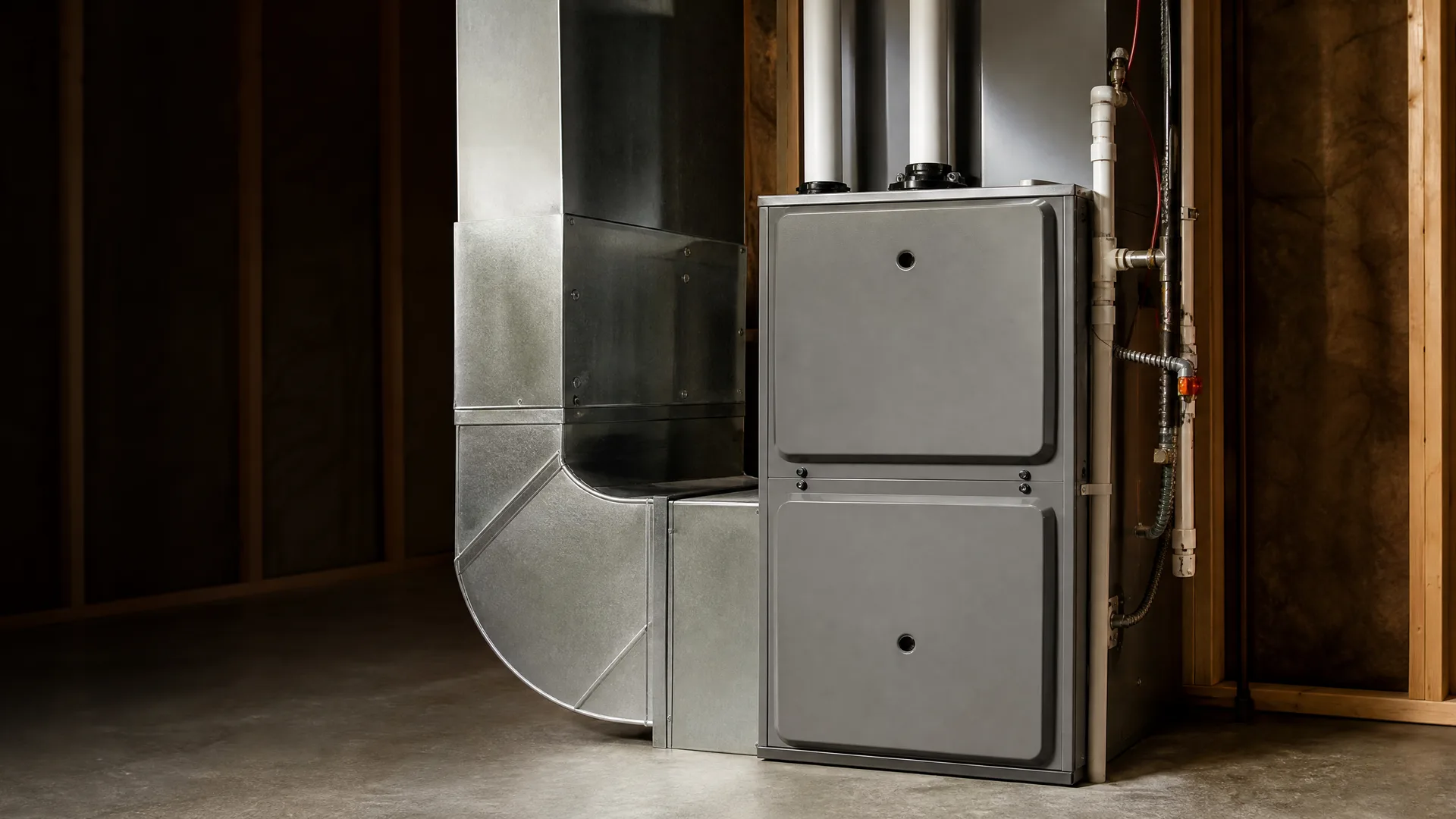
A furnace like this is running the way it should. The burners fire clean, the ductwork is sound, and the gas lines feed it steady. If the cabinet and vent pipe are in shape like this, a repair gets you back to this.
 Request a pro
Get matched with someone who does this kind of work in Kalkaska County.
Your propane furnace quit on a January night in Kalkaska, or it's running longer than it used to, and now you're trying to figure out if it needs a repair or if it's time to put in a new one. That's not a small decision here. Winters in Kalkaska County are hard, and when most homes run on propane, a furnace that's limping along costs you in fuel long before it fails for good.
The honest answer depends on things only someone standing in front of your furnace can see. How old it is. Whether the heat exchanger is cracked or the blower motor is on its way out. Whether parts for your model are still easy to get. A furnace that's eight years old with a bad igniter is a different call than one that's eighteen and losing efficiency every winter it runs.
What you don't need is to spend your evening calling around, explaining the same problem to three different companies, and then trying to compare quotes that aren't really for the same work. That's the part that eats time, especially when the furnace is already down and the house is getting cold.
This gets you matched with a contractor who works on propane furnaces in Kalkaska County and knows what the winters here demand of them. They'll look at your specific furnace, your specific situation, and reach out to go over what they're seeing and what it would take to fix it or replace it. No guessing from a form, no generic estimate pulled from averages.
Fill in a few details and the next step is on them, not you. Someone who knows propane systems in this area gets in touch, and you go from there.
You don't want to sink money into a furnace that's on its way out, but you also don't want to replace one that just needs a part. A few things point the decision one way or the other: the age of the furnace, what the repair would cost, and how it's been running the past winter or two. There's no single rule, but a clear pattern usually shows itself once you look at those together.
A propane furnace that's under 15 years old and otherwise reliable is usually worth repairing if the problem is one part, like an igniter or a flame sensor. Past that age, the cabinet, heat exchanger and blower have all been through that many winters of hard use, and a repair now often just buys time before the next part fails. If a furnace has needed more than one repair in the past year, or the burner is starting to sound different or struggling to keep the house warm on the coldest nights, that's usually the furnace telling you it's closer to the end than the start.

A furnace like this is running the way it should. The burners fire clean, the ductwork is sound, and the gas lines feed it steady. If the cabinet and vent pipe are in shape like this, a repair gets you back to this.

Rust along the base, staining on the walls behind it, a cabinet this worn. A furnace that looks like this has likely been losing ground for a while, and a repair only buys you time until the next part gives out.

A propane furnace that's struggling doesn't just run less efficiently. It falls behind on a night when it's below zero outside, and in Kalkaska County that's not rare from December through February. Pipes in an outside wall or a crawlspace can freeze fast once the house drops below the mid-fifties. If you're gone for the day or away for a weekend, a furnace that quits can turn into a bigger repair than the one you were trying to avoid.
There's also what it's doing to your propane use right now. A furnace with a cracked heat exchanger or a dirty burner assembly works harder to put out the same heat, and that shows up in the tank level and the bill before it shows up as a breakdown. Instead of calling around to find out whether what you're hearing or paying is normal, you can get matched with a contractor who looks at your furnace and your situation and tells you straight whether it's worth fixing or time to replace it.

A thermostat call sends power to the furnace control board.
The inducer motor starts and purges the heat exchanger first.
The igniter heats up, then the gas valve opens.
Propane lights off the igniter and the burners ignite.


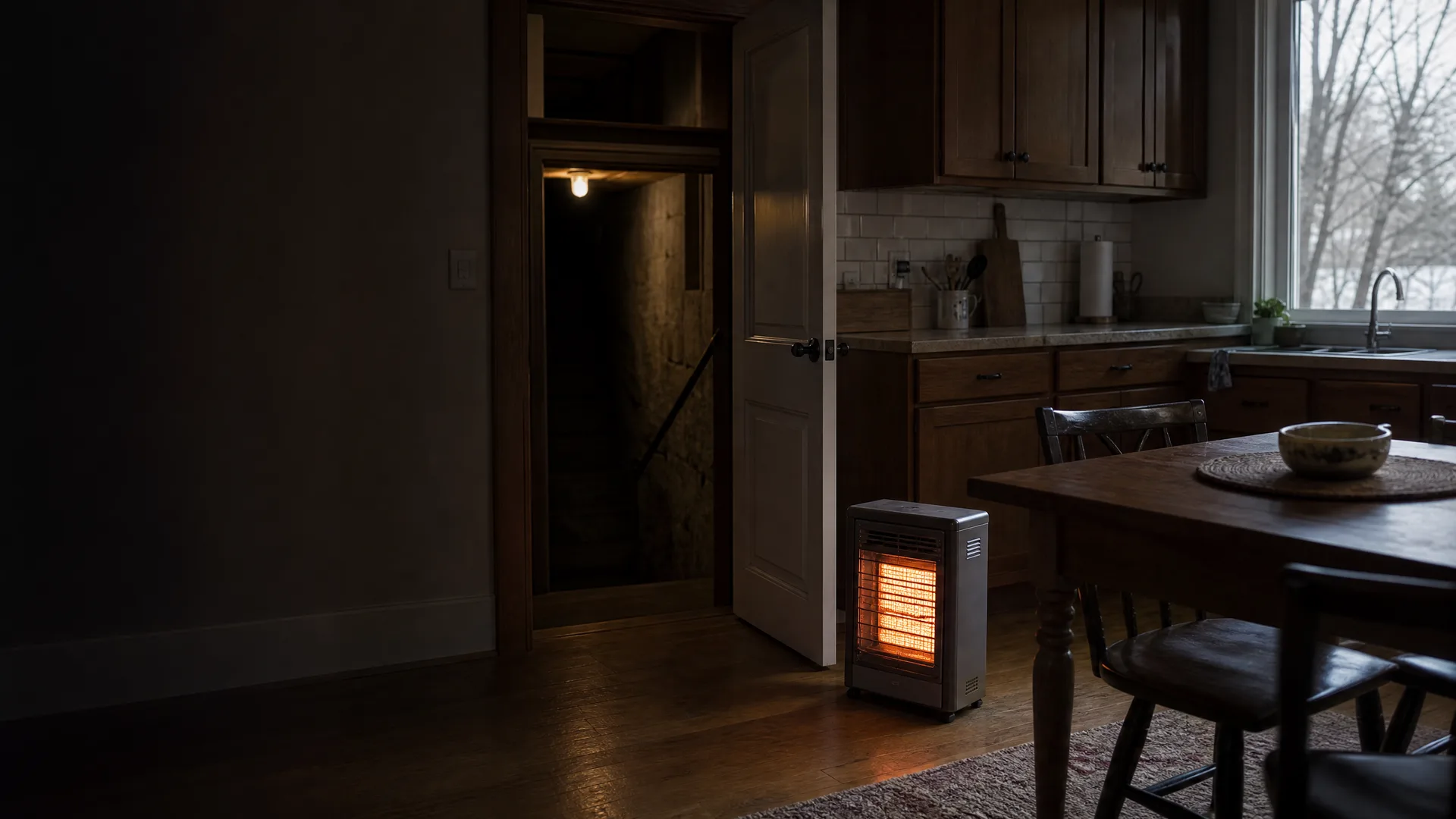
It's just past six and still dark outside. The furnace has been short-cycling for a week, and this morning it didn't come back on at all. You've got the space heater pulled out from the closet, set up by the kitchen table, its coil glowing orange while the kids eat breakfast with their coats still on. The basement door is open behind you because that's where the furnace is, and you've been down there twice already, flashlight in hand, not sure what you're looking at. The propane tank reads a quarter full. Somewhere between now and tonight you need someone who actually knows furnaces to tell you what's wrong, and whether it's worth fixing.
You've already got a sense of which way this is leaning, repair or a new furnace. Either way, the next step is the same headache: finding a contractor near Kalkaska who answers the phone, shows up when they say they will, and gives you a straight number instead of a runaround. That usually means calling around to a handful of companies, explaining the same symptoms each time, waiting on callbacks, then sitting with quotes that don't quite match up because nobody looked at the same thing. Propane furnaces aren't common everywhere, so not every outfit works on them the same way, and that matters more in a county where the furnace is doing real work from December through February. A bad call on who fixes it or who installs it costs you time you don't have when it's below zero outside. Handing that search off now means you're dealing with one contractor who knows propane systems in this area, not a stack of quotes to sort through on your own.
A propane furnace sized for Kalkaska County is built to run through stretches well below zero, and it does that by cycling less and burning longer per cycle than a furnace would in a milder spot. That's normal. What's not normal is a furnace running long and still losing ground on the thermostat setting. If the burners are clean and the heat exchanger is sound, a furnace can put in a lot of winters here before the repairs stop making sense.
Propane burns hotter per gallon than a lot of people expect, so when a furnace is underheating the fuel usually isn't the problem. Check the tank gauge first. If propane is getting to the furnace and the burners still won't hold a steady flame, the issue is in the furnace itself, the igniter, the gas valve or the control board, not the supply. That's a useful first check before anyone opens the cabinet.
Winter nights average 15°F
Winter nights here average 15°F across December, January and February, per NOAA data. A furnace sized too small won't keep up on nights that cold.
Heat runs September through May
Heat runs about nine months here, September through May. That's most of the year your furnace carries the load, with little time off in between.
41.6% of homes heat with propane
41.6% of homes in Kalkaska County heat with propane, more than any other fuel (Census ACS 2020-2024). Parts and service here are built around that fuel.
NOAA nClimDiv 1991-2020 · ACS 2020-2024




December through February, the average overnight low in Kalkaska County sits at 15°F, according to NOAA. At that temperature a furnace is cycling on through most of the night, not just kicking in now and then. It's working to hold the house steady while the cold outside barely lets up till morning. If the burners are weak or the heat exchanger isn't transferring heat the way it should, this is when you'll feel it: rooms farther from the furnace cooling off, the thermostat reading fine while the air coming out doesn't feel like much. A furnace in good shape handles this without strain.
NOAA nClimDiv 1991-2020
A cracked heat exchanger or a cabinet gone to rust means a new furnace. An igniter or inducer motor failing on a furnace that's still young usually means a repair, and a fair one. That's the whole decision, and by now you know which side of it your furnace is on. What's left is finding someone to do the work, and that's its own job: calling around, telling the same story about the short-cycling or the cold mornings to three different people, waiting on quotes that come in different shapes so you can't even compare them straight. You don't have to do that part. Getting matched with a contractor who works on propane furnaces in Kalkaska County means one call instead of five, and someone who already knows what you're dealing with before they walk in. Your furnace still needs a decision made on it. You don't have to make the rest of this harder than it is.
A local pro for your furnace installation