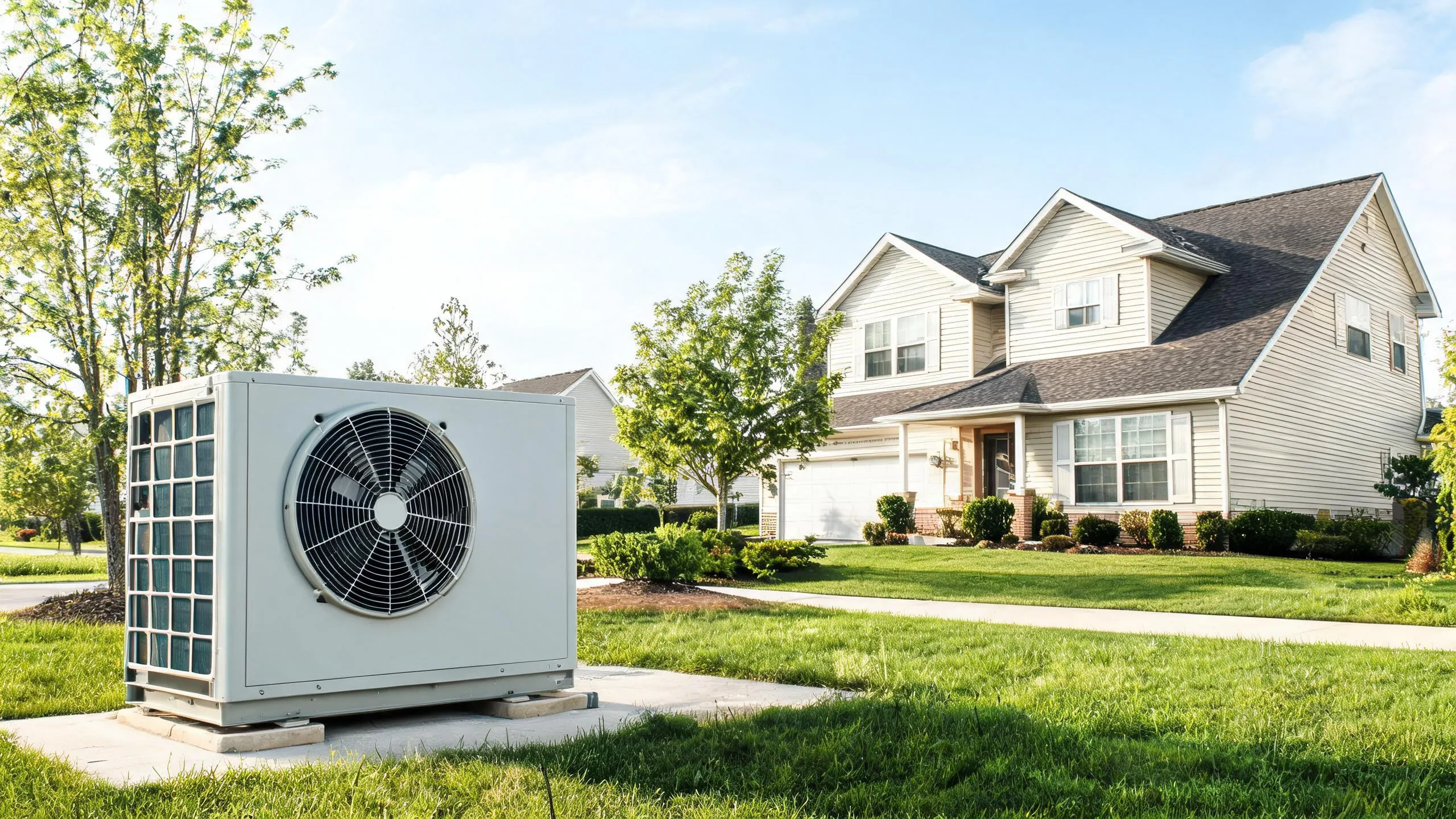





An outdoor heat pump unit mounted on a concrete pad in front of a two-story suburban house with a landscaped lawn.

Heat Pump Repair in Troy, MI

Tell us about the job

Takes about a minute. No obligation.

RepairHeat PumpOakland County, MI
Step 1 of 2

What ZIP code is the job in?

Oakland County saw 210 severe weather events between 2015 and 2024. Most of that was damaging wind, 164 times in the same stretch, along with 25 hail events and a handful of tornadoes. A heat pump's outdoor unit sits right in the path of all of it, exposed to whatever the wind throws at it and whatever the hail drops on it. The coil and fan can take a hit and keep running for a while before the damage shows up as a real problem. If a storm has come through, it's worth having the unit looked at even if it still seems to be working fine.

8 months
October through May, your system heats
3 months
June through August, it cools
19°F
the average winter night it heats against
80°F
the average summer afternoon it cools against
Isometric cutaway illustration of a gray house showing interior rooms, a central air handler with ducts in the attic, and refrigerant lines running to an outdoor condenser unit beside the building.
Your system heats October through May and cools June through August.

NOAA nClimDiv, 1991–2020 normals

Electricity in Oakland County runs 20.26 cents per kilowatt hour, higher than most of the country.

A heat pump that's struggling pulls more power to do the same job, and that shows up on every bill until it's fixed.

Eight months of heat starting in October, three months of cooling starting in June

Cooling runs June through August
Heat runs October through May
164 damaging wind events from 2015 to 2024

A heat pump that's struggling doesn't fix itself by running longer. It just keeps pulling extra power to make up the difference, and here that costs more than it would almost anywhere else. Waiting on a repair means paying that higher rate on every cycle until someone looks at it. If the system is short cycling, blowing weak air, or making a noise it didn't used to make, those are reasons to get it checked now rather than after another bill comes in.

After a storm, get the outdoor unit looked at

If a storm has come through recently, that's reason enough to get the outdoor unit checked, even if it's still running. Wind and hail damage doesn't always show up right away.

Find a contractor
A gray outdoor HVAC unit mounted on a concrete pad beside a house with gray lap siding and a stone foundation.

Running Both Ways, All Year

A heat pump runs in both directions, all year, so the parts that wear are the ones doing the work no matter the season. The reversing valve is a common failure point. It's what switches the system between heating and cooling, and a valve that sticks will leave the system stuck in one mode or cycling without actually switching. The outdoor coil picks up dirt and debris over time, and once it's coated, the system can't move heat across it the way it should, so it runs longer to do the same job. The defrost board and sensor fail too, and when they do, the outdoor unit ices over and can't pull heat from the air at all. Capacitors weaken with age and strain the compressor every time it starts, and a compressor that's been strained long enough can fail outright, which is the most expensive thing to go wrong on the whole system. None of these show up all at once. A system losing capacity usually gives some warning first, a longer run time, a noise on startup, air that's not quite as warm or cool as it used to be, before it quits.

The system stuck in one mode

A heat pump that only blows warm air, or only cools, no matter how the thermostat is set, usually points to the reversing valve. It's the part that switches the system between heating and cooling, and when it sticks, the system keeps doing whatever it was last doing. That's not a problem that clears up on its own.
Ice where there shouldn't be ice

Some frost on the outdoor unit in cold weather is normal, and the system clears it on its own through a regular defrost cycle. A unit that's caked in ice, or stays iced over, has a defrost board or sensor that isn't doing its job. Left alone, the unit can't pull heat from the air at all, and the system will keep running without actually heating the house.

Before calling anyone, check the thermostat is set to heat or cool as intended, and not accidentally switched to fan only or the wrong mode. Look at the outdoor unit and clear away leaves, mulch, or anything piled against it, since blocked airflow around the coil can look like a bigger problem than it is. Check the air filter. A filter clogged with dust chokes airflow through the whole system and can cause icing or weak output that has nothing to do with the heat pump itself. Walk around the house and see if the circuit breaker for the outdoor unit has tripped, since a reset is sometimes all it takes. None of this fixes a bad reversing valve or a failed capacitor, but it rules out the simple causes first, and it gives whoever comes out a clearer picture of what's actually wrong.

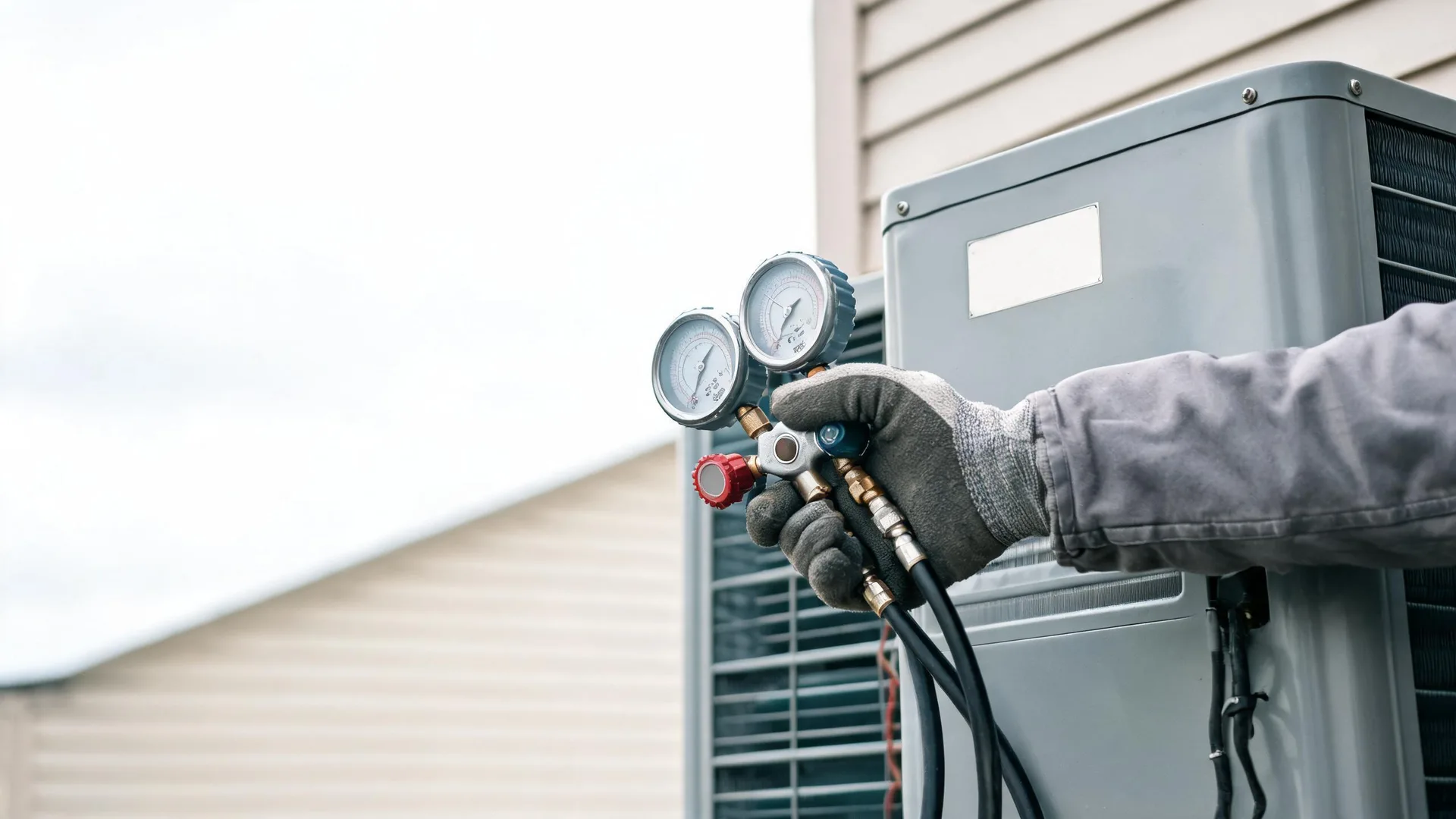
A diagnostic visit starts outside, at the unit itself. A tech will check refrigerant pressure, look at the reversing valve, and see how the compressor is cycling, since those readings tell them more than anything the thermostat shows. Inside, they'll check the air handler, the filter, and the airflow across the coil, because weak airflow can mimic a dozen other problems. They'll run the system in both modes if they can, not just the one it's stuck in, to see whether the valve is actually switching or just failing to respond. Electrical components get checked too: the capacitor, the contactor, the wiring at the disconnect box, since a connection that's loose or corroded can cause symptoms that look like a bigger failure. By the end, the point isn't just to name the broken part. It's to confirm nothing else is wearing out alongside it, so the repair holds.