






A quiet suburban street at twilight featuring two-story brick homes with illuminated windows and large trees lining the sidewalk.

Heat Pump Repair in Saginaw, MI

Tell us about the job

Takes about a minute. No obligation.

RepairHeat PumpSaginaw County, MI
Step 1 of 2

What ZIP code is the job in?

Saginaw County saw 110 severe weather events between 2015 and 2024, most of it damaging wind. Hail showed up too. Both reach the outdoor unit, since it sits outside with nothing but a thin coil guarding it. A bent fin or a cracked panel does not always stop the heat pump from running, so it can keep going for weeks after a storm while losing efficiency or wearing on a part that took a hit. If a storm has come through since the unit last ran fine, that is worth mentioning to whoever looks at it.

8 months
October through May, your system heats
3 months
June through August, it cools
19°F
the average winter night it heats against
81°F
the average summer afternoon it cools against
Isometric line illustration of a cutaway single-story house showing interior rooms with beds and furniture, ceiling ductwork connected to an indoor air handler, and an outdoor condenser unit linked by refrigerant lines.
Your system heats October through May and cools June through August.

NOAA nClimDiv, 1991–2020 normals

Winter nights here average 19°F, and that's the hard season for a heat pump.

There's no brutal summer on top of it wearing the unit down, so a repair is often fixing something isolated, not patching a machine worn out from both ends.

A heat pump running badly here costs you more every month it waits

Power costs 19.3 cents a kWh statewide
79 damaging wind events from 2015 to 2024
17 hail events from 2015 to 2024
Running costs follow you hereMichigan electricity ran 19.30 cents per kilowatthour in 2024, and a struggling heat pump burns more of it every day it runs like this

Half the homes in Saginaw County went up in 1968 or earlier. If your heat pump came with a house that age, it's not the original unit, but whatever replaced it may still be older than you'd guess. An older heat pump calls for the same repair as a new one, but the question underneath is different. A cracked capacitor or a failed contactor is worth fixing on any unit. On one already well into its years, it's worth asking the tech how much life is left before you spend more on the next repair, and the one after that.

Get the outdoor unit checked for storm damage while it's already being looked at

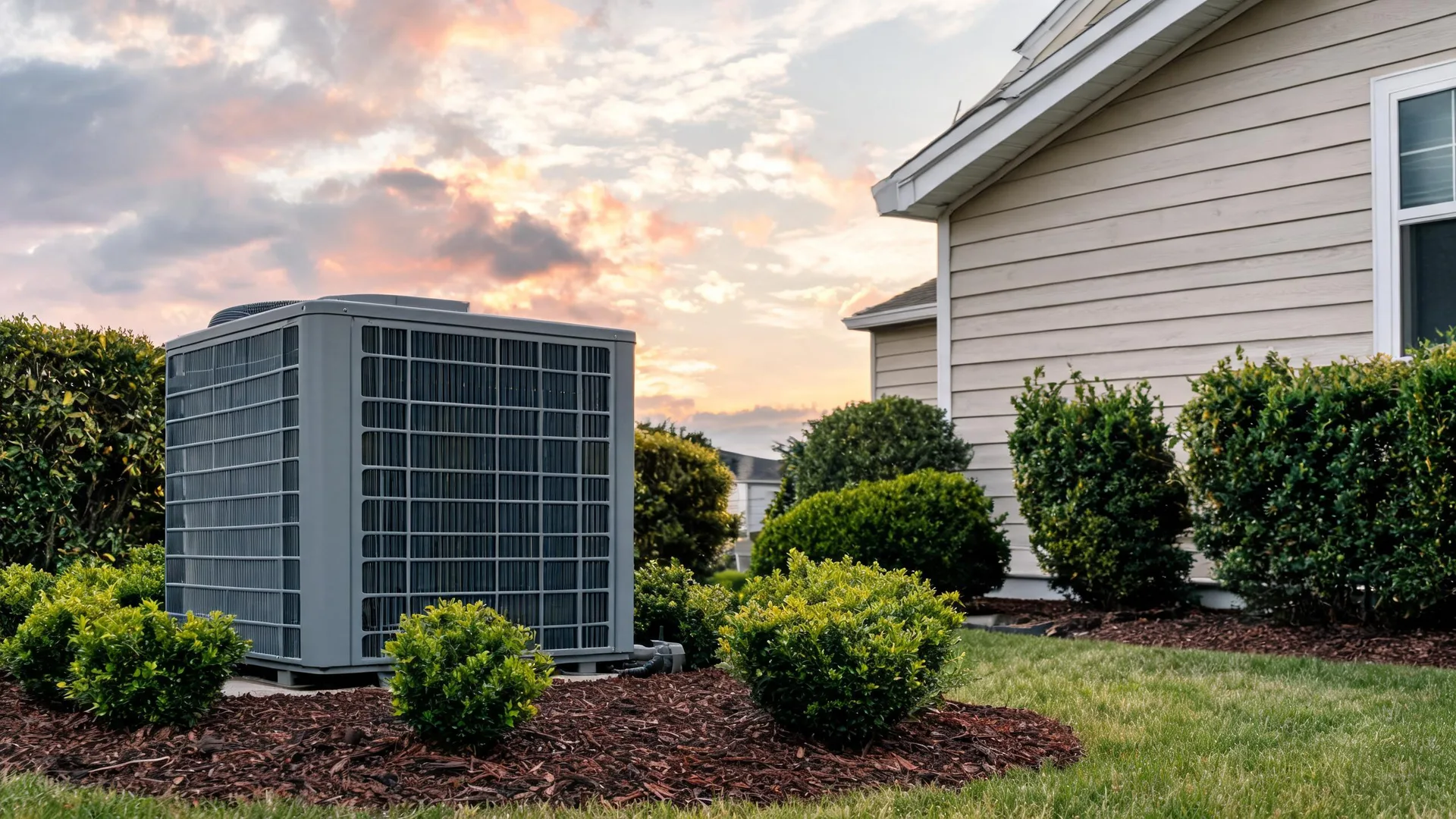
If the outdoor unit has been outside through any of that, a repair call is the time to have it looked over for hail dents or bent fins, not just the fault it's showing now. Running weeks or months with storm damage nobody caught is how a small repair turns into a bigger one.

Find a contractor
A gray air-source heat pump mounted on a concrete pad next to a house with gray vinyl siding, surrounded by gravel and flanked by green shrubs and white hydrangea flowers.

One hard season, not two

One season does most of the work on this machine, not two. That's less time under full load than a unit fighting a hot summer and a cold winter both. So when something breaks, it's usually one part that failed, not a system that's been run down from every direction. Worth asking the tech what actually failed before you weigh whether to fix it.

A refrigerant leak only gets bigger

A heat pump low on refrigerant will still blow air, so it's easy to let it ride. Every day it runs low, the compressor works harder to move heat that isn't there, and that strain is what ends up cracking it. A leak caught early is a sealed line and a recharge. Left alone, the compressor itself can fail.
A failing part can take the compressor with it

A weak capacitor or a sticking contactor makes the compressor struggle to start, or short cycle on and off before it's ready. The compressor is the one part in the system built to run for years without being touched. Keep straining it through a bad start and it wears out well before it should.

A heat pump in trouble usually tells you before it quits. Warm air coming out when it should feel hot, or the system running long stretches without ever quite catching up, both point to something losing ground. Ice building up on the outdoor coil and not clearing during the defrost cycle is another one, especially if it keeps coming back. Listen for it too. A clicking that won't resolve into a start, a hum with no fan movement, a rattle that wasn't there before, these are a part telling you it's struggling before it fails outright. Short cycling, where the unit kicks on and off in quick bursts instead of running a full cycle, puts real strain on the compressor every time it happens. None of these mean the whole system is done. They mean something specific is wearing out, and it's easier to fix now than after it takes something else with it.

A diagnostic visit starts outside, at the unit itself, not with a guess. A tech will check refrigerant pressure, test the capacitor and contactor, and look at the compressor's amp draw against what it should be pulling. Indoors, the air handler gets checked too, since a heat pump problem can show up as weak airflow or a blower that won't shut off. Electrical readings catch a lot that the ear and eye miss, a start capacitor can look fine and still be failing. The tech will also run the system through a cycle if they can, watching it switch between heating and defrost, because some faults only show up when the system changes modes. What comes out of that visit is a specific part and a specific failure, not a guess at what might be wrong.