






A large outdoor air-conditioning unit mounted beside a vinyl-sided house, surrounded by mulched garden beds and green shrubs.

Heat Pump Repair in Port Huron, MI

Tell us about the job

Takes about a minute. No obligation.

RepairHeat PumpSt. Clair County, MI
Step 1 of 2

What ZIP code is the job in?

St. Clair County saw 110 severe weather events between 2015 and 2024. Most of that was wind, 82 events strong enough to earn the label. Hail showed up 11 times, and three tornadoes touched down somewhere in the county. A heat pump's outdoor unit sits outside through all of it, with thin aluminum fins that bend easily and a fan that debris can reach. None of that means your unit is damaged. It means a unit that still runs fine after a storm is worth a second look, because a bent coil or a dented cabinet does not always announce itself right away.

8 months
October through May, your system heats
3 months
June through August, it cools
20°F
the average winter night it heats against
80°F
the average summer afternoon it cools against
Isometric illustration of a cutaway single-story house showing interior ductwork and vents connected to an outdoor condenser unit beside the building, on a white background.
Your system heats October through May and cools June through August.

NOAA nClimDiv, 1991–2020 normals

Electricity in St. Clair County runs 20.25 cents per kilowatt-hour, more than most US counties pay.

A heat pump running on a bad capacitor or low charge burns through that expensive power every single day it goes unfixed.

A heat pump works hardest right when October and June start

Cooling runs June through August
Heat runs October through May
82 damaging wind events from 2015 to 2024
Your heat pump doesn't fight the air hereSummer dew points near Port Huron average 60°F in June, July and August, lower than most of the country.

A heat pump that's struggling doesn't just run less, it runs longer to make up for it. Low refrigerant or a weak capacitor makes the system stretch a short cycle into a much longer one, trying to reach the temperature you set. That extra runtime shows up on the bill whether you've called someone yet or not. Waiting doesn't pause the cost. It just means paying more for less heat or less cooling until the repair happens.

Had a storm come through? Get the outdoor unit checked

If your outdoor unit took wind or hail this year, have it looked at even if it still runs fine. A bent coil or a dented cabinet doesn't always show up in how the system performs, not right away. A technician can check the fins, the fan and the refrigerant lines in one visit.

Find a contractor
A gray outdoor HVAC unit mounted on a concrete pad beside a house with gray lap siding and a stone foundation.

It hasn't been run hard

Mild air means less demand on the compressor across a normal year. A heat pump that's kept up with usually has plenty of life left in it, even after a few years of winters here. If the outdoor unit is running rough or short-cycling, that points to a part that failed or wore out, not a machine that's been worked too hard. Worth knowing before you decide whether to repair it or replace it.

The reversing valve is often the weak point

A heat pump has one part a straight air conditioner doesn't: the reversing valve that switches it between heating and cooling. When it sticks, the system can get stuck in one mode, blow air that isn't the right temperature, or stop responding when you change from heat to cool. That valve takes a lot of cycling over a year, far more than a furnace or AC sees, and it wears accordingly.
A refrigerant leak shows up as weak output, not no output

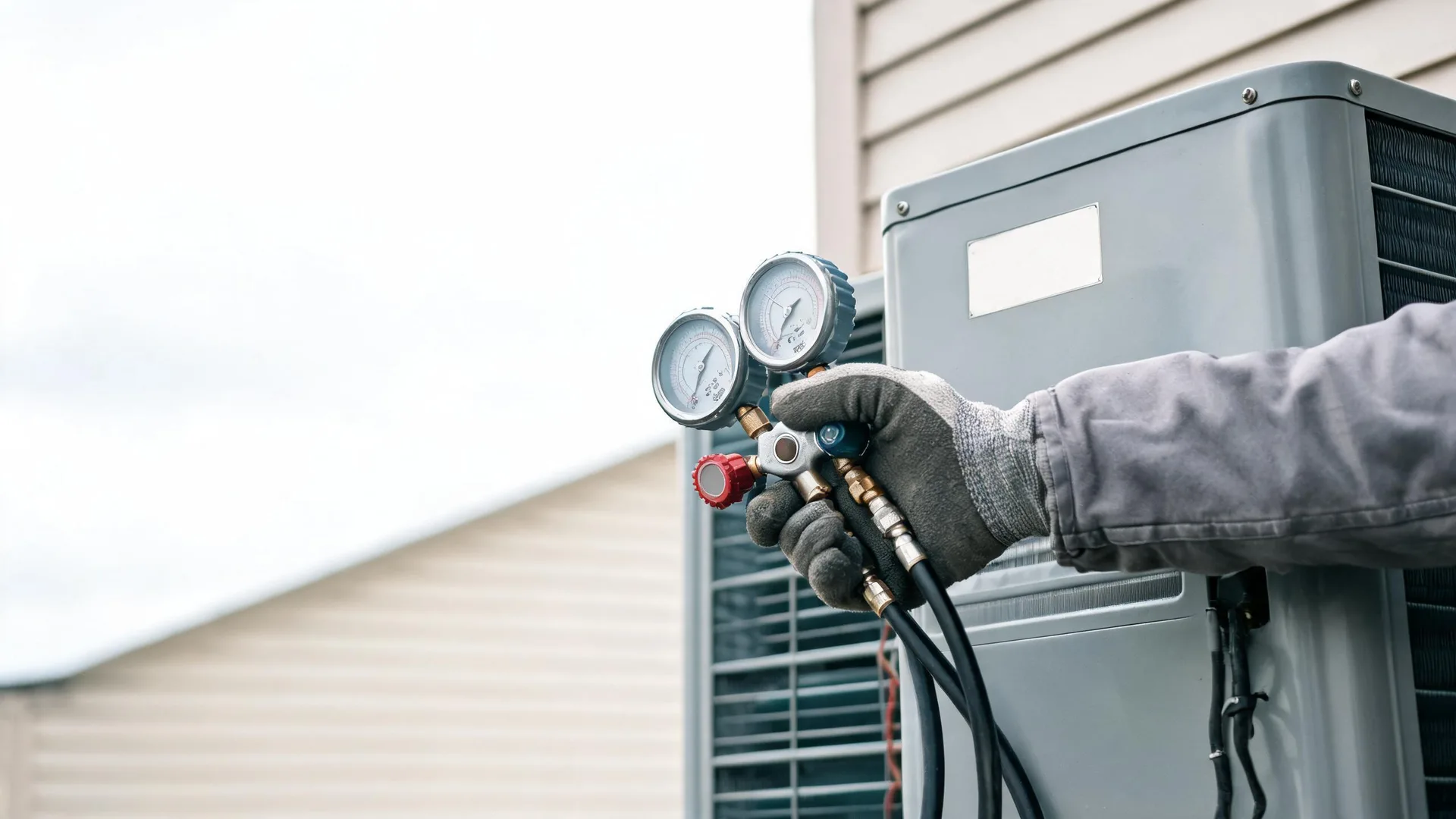
Low refrigerant rarely stops a heat pump cold. Instead you get weak heat, weak cooling, ice forming on the outdoor coil, or a compressor that runs constantly without catching up. The leak itself is usually a small crack or worn fitting in the line, and it only gets worse the longer it runs low. Catching it early means a smaller repair than waiting until the compressor strains against it.

A heat pump that's icing over or short-cycling is already telling you something failed. Keep running it and the compressor pays for that part's mistake. Ice on the outdoor coil blocks airflow, so the system pulls harder to move the same amount of heat, and a compressor that runs constantly under that strain wears out faster than one that cycles normally. A refrigerant leak behaves the same way. Low charge makes the compressor work to compensate, and oil travels through the system mixed in with the refrigerant, so less refrigerant eventually means less lubrication too. None of that damage shows up right away. It shows up as a compressor replacement instead of a refrigerant repair, months after the first sign was there to catch.

A diagnostic visit starts outside, at the unit itself. The technician checks refrigerant pressure, looks at the coil and fins for damage, and watches how the fan and compressor behave when the system cycles on. Then it's the reversing valve, since a stuck valve explains a lot of the symptoms that bring people to call in the first place. Inside, they'll check the air handler, the thermostat signal, and whether the system is actually reaching the temperature it's calling for. Most of this comes down to watching the system run and comparing what it's doing against what it should be doing. By the end, you should know what failed, why, and whether it's a repair or a sign of more wear underneath.