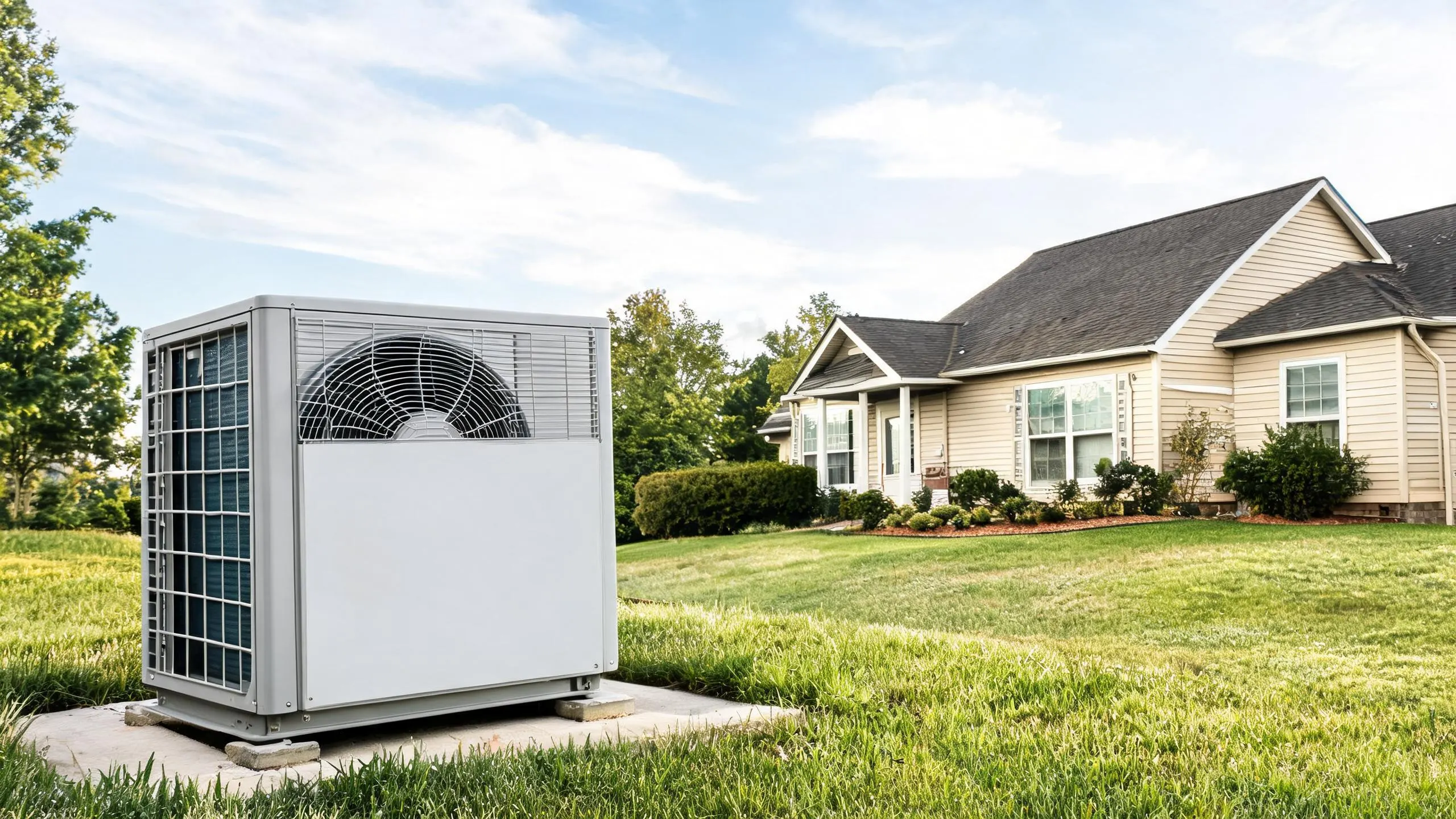
October is when it gets tested
Your heat pump switches over to heating around October, and whatever was marginal over the summer tends to show up right then, when it has to work hardest for the first time in months.
Takes about a minute. No obligation.
Your heat pump switches over to heating around October, and whatever was marginal over the summer tends to show up right then, when it has to work hardest for the first time in months.
A heat pump that's struggling in its first cold weeks usually has one specific thing wrong with it. Tracking that down and fixing it beats letting it run weak through a Muskegon winter.

NOAA nClimDiv, 1991–2020 normals
Muskegon falls under zone 5A, a cool climate where heating is the bigger load, not cooling.
A heat pump here works hard through the winter, but it isn't fighting extreme summer heat the rest of the year.



Half the homes in Muskegon County were built in 1969 or earlier. If yours is one of them, and the heat pump came with the house rather than being a later swap, it may be on its last few winters. That doesn't mean it needs to be replaced. A compressor or a reversing valve can often be repaired, and plenty of older units are still worth fixing. But it's worth asking the contractor directly how much life is left in it before you commit to a major repair. Find that out first, then decide.
Muskegon has had its share of wind and winter storms, same as most of Michigan, but none of that is what's wearing on your heat pump. It's most likely one part doing one thing wrong. Worth getting that found and fixed.
Find a contractorStart outside. Clear leaves, ice or anything piled against the outdoor unit. It needs air moving through it or nothing else will work right. Check the thermostat is set to heat, not cool, and the setpoint is actually above room temperature. Feel the air at the vents. Warm but not hot is normal for a heat pump, that's how it works. Cold air that stays cold is not. Look at the outdoor unit again. A little frost in cold weather is fine. A solid coat of ice over the coil is not. If the system is running but you're getting no air at all, check the breaker before you assume the worst. These checks won't fix a failed compressor or a stuck reversing valve, but they rule out the easy stuff first.
The reversing valve is the part that switches a heat pump between heating and cooling, and it's the part most likely to stick. When it fails, the system may run but blow cold air, or get stuck in one mode no matter what the thermostat asks for. A stuck valve usually needs replacing, not adjusting.
A heat pump is a sealed system. If one is low on refrigerant, something is leaking slowly, often at a fitting or a coil. Adding refrigerant without finding the leak just means doing it again next year. The honest fix is finding where it's escaping, not topping it off.
A heat pump that's icing over or short cycling will keep trying to do its job no matter how badly it's doing it. The system doesn't know it's failing, so it just keeps calling for the same cycle, pulling the same current, pushing the same strain onto whatever's already weak. A compressor working against a bad valve or a low charge runs hotter than it should every time it kicks on. That heat doesn't go anywhere good. Keep that up for weeks and a repair that would have been one part turns into a compressor replacement. The part that's struggling now is the part that fails later.
A diagnostic visit starts outside at the unit. The tech checks for frost on the coil, debris around it, and whether the fan is actually moving air. Then come the gauges. Refrigerant pressure gets checked on both sides to see if the charge is right. A good tech runs the system in both heating and cooling during the visit, because a reversing valve that sticks might only show itself one way. The capacitor and contactor get checked too. A weak capacitor can make a compressor struggle to start even when everything else is fine. The point is narrowing it down to the one part causing the problem, not replacing things until something works.