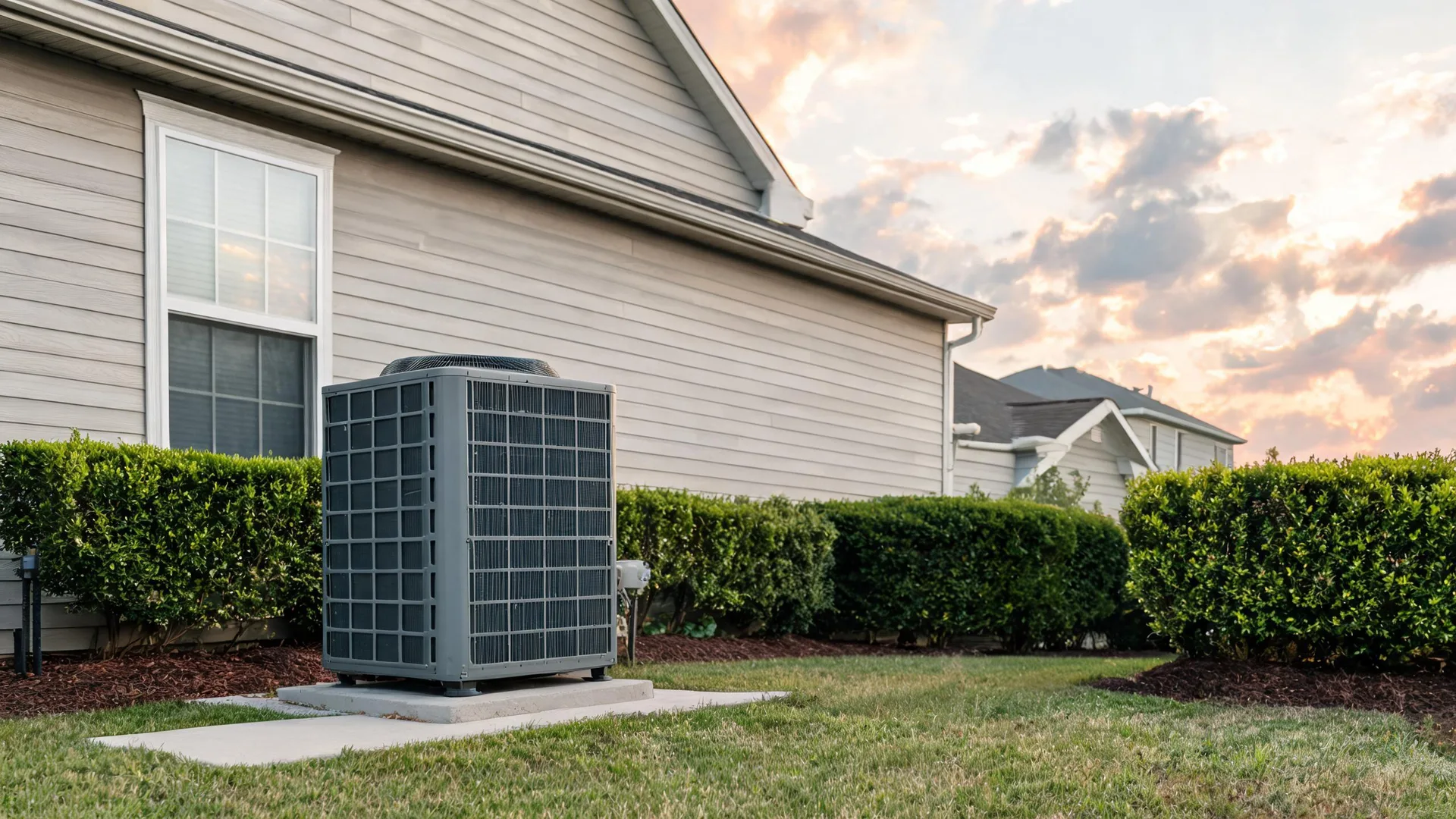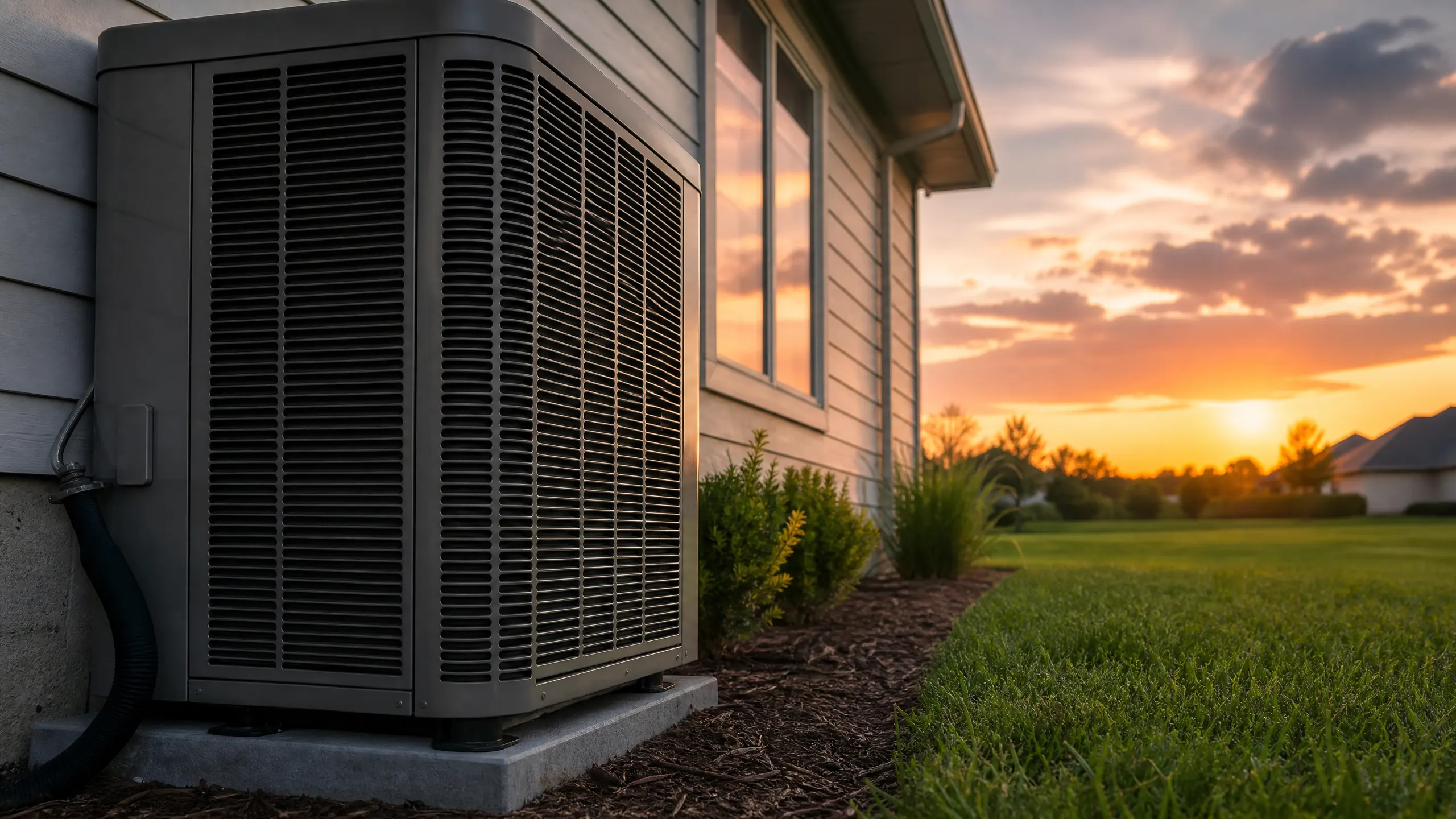
An outdoor air conditioning condenser unit mounted on a concrete pad beside a house at sunset.

Heat Pump Repair in Mount Pleasant, MI

Tell us about the job

Takes about a minute. No obligation.

RepairHeat PumpIsabella County, MI
Step 1 of 2

What ZIP code is the job in?

Isabella County sees real storm damage

Isabella County logged 31 severe weather events between 2015 and 2024, including 18 damaging wind events, 3 hail events, and 10 winter storms. A heat pump's outdoor unit sits outside through all of it, taking wind-blown debris and hail straight on.

Power doesn't always come right back

More than a third of Michigan households went at least 24 hours without power in 2024. A heat pump needs electricity to run at all, so an outage that long means no heat and no hot water until the power comes back on.

9 months
September through May, your system heats
3 months
June through August, it cools
17°F
the average winter night it heats against
80°F
the average summer afternoon it cools against
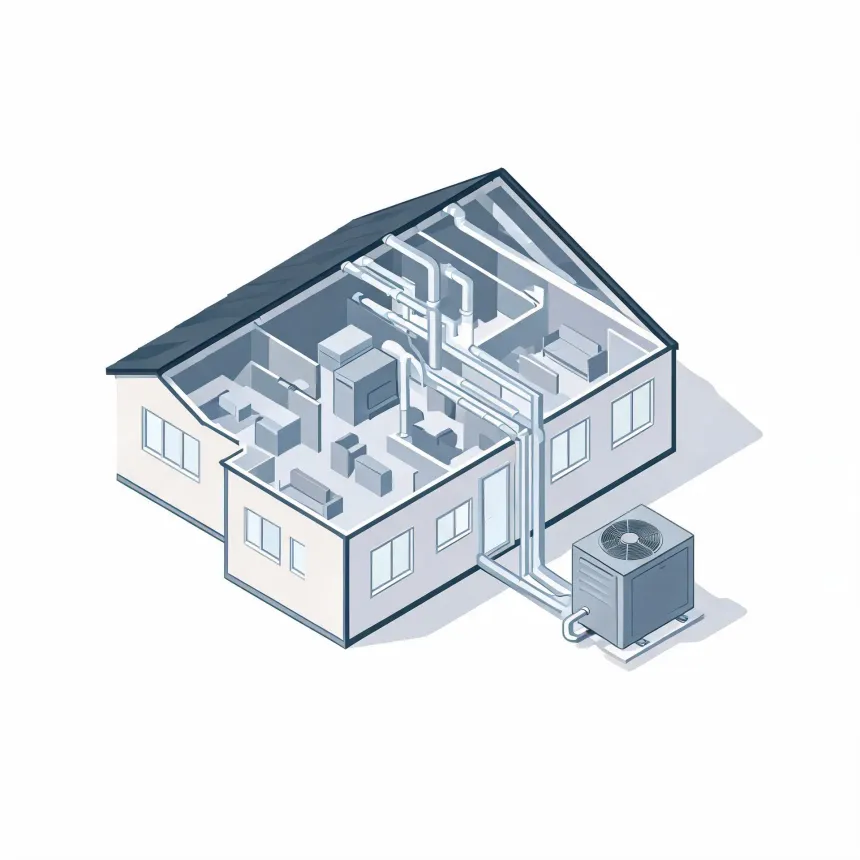
Isometric illustration of a cutaway single-story house showing interior ductwork and vents connected to an outdoor condenser unit beside the building, on a white background.
Your system heats September through May and cools June through August.

NOAA nClimDiv, 1991–2020 normals

Half the homes in Isabella County were built in 1983 or later.

A heat pump that came with a newer house still has working life in it, and that favors a repair over a replacement.

Electricity here runs 20.46 cents a kilowatt-hour, well above most of the country. A heat pump that's struggling pulls more of it just to keep up.

Power here costs 20.46 cents per kilowatt-hour
10 winter storms from 2015 to 2024
Winter nights average 17°F

Heat in Isabella County runs from September through May, nine months straight. August is the last quiet month before that load starts. A heat pump that has been sitting through a mild summer can have a part that is already weak, and mild weather does not ask much of it. The first real cold snap in September does. That is when a failing capacitor or a low charge gets found out, right at the start of the season rather than in the middle of it. Having it looked at in August, before the switch, catches what three easy months hid.

If the outdoor unit took a hit, get it checked before it has to work

If this one has been through hail or wind-blown debris and it still seems to run fine, that's not the same as fine. A technician can check the coil and fan for damage a storm left behind, before an outage or a cold snap puts the unit to the test.

Find a contractor
A man in a cap, gray long-sleeve shirt and brown pants carries a canvas tool bag up porch steps toward a dark front door, beside a potted shrub.
A residential heat pump outdoor unit mounted on a concrete pad next to a house with gray vinyl siding.

Built in 1983 or later, this unit has years left to run

A heat pump built into a newer house still has most of its working life ahead of it. Repairing it now is the straightforward call, not a stopgap before something bigger. Ask the technician for the age of the unit if it's not on record, the data plate on the outdoor unit usually has it. Knowing that number settles the repair question before it even comes up again.

It's running constantly and still not catching up

A heat pump short cycling, or one that runs nonstop without closing the gap to the thermostat setting, is losing capacity somewhere. The outdoor coil could be iced over, the airflow across it blocked, or the unit could be low on refrigerant. Whatever the cause, a system working that hard for that little result needs a look before it's asked to do more.

It's making a noise it didn't used to make

A clicking at startup, a hard clunk when it switches between heat and cool, or a grinding from the outdoor unit are all worth paying attention to. The reversing valve, the fan motor, and the compressor each have a normal sound, and a change in that sound usually shows up before a full failure does. Catching it at the noise stage is easier than catching it after the part lets go.

Most heat pump failures trace back to a handful of parts, and they don't fail for mysterious reasons. The outdoor fan motor sits exposed to the weather year round, and its bearings wear out from simple use. The compressor is the heart of the system, and it can fail outright or just lose its ability to compress refrigerant efficiently, often because it ran low on charge for too long without anyone noticing. Refrigerant doesn't get used up the way fuel does, so if the charge is low, there's a leak somewhere in the line set or coil that needs finding, not just topping off. The reversing valve, which is what lets the system switch between heating and cooling, can stick in one position after years of cycling back and forth. Defrost controls fail too, and when they do, ice builds up on the outdoor coil and chokes off airflow until the whole system loses its ability to pull heat from the air.

A heat pump that's lost some of its capacity doesn't stop running, it just runs longer to get the same result. Every extra hour it runs is an hour pulling power, and power here isn't cheap. A unit stuck partway between heat and cool, or one low on charge, can end up running close to constantly without ever quite closing the gap on the thermostat. That's not a problem that waits well. The sooner a technician finds what's dragging on the system, the sooner it goes back to running the way it should instead of running longer for less.