




A row of dark-painted single-story houses with lawns and large deciduous trees, seen behind a tall trimmed hedge.

Heat Pump Repair in Midland, MI

Tell us about the job

Takes about a minute. No obligation.

RepairHeat PumpMidland County, MI
Step 1 of 2

What ZIP code is the job in?

Midland County recorded 76 severe weather events between 2015 and 2024. Fifty of those were damaging wind, and 11 brought hail. A heat pump's outdoor unit sits outside through all of it, with the coil and fan exposed to whatever comes through the yard. Wind-blown branches and hail can bend fins or crack the fan blade without stopping the unit from running. A heat pump that still starts and still blows air can be running on a damaged coil, and that costs it efficiency long before it fails outright. If a storm has come through, it is worth having the outdoor unit looked at even when nothing seems wrong.

8 months
October through May, your system heats
3 months
June through August, it cools
18°F
the average winter night it heats against
81°F
the average summer afternoon it cools against
Isometric line illustration of a cutaway house showing interior rooms with furniture, ceiling ductwork under a dark shingled roof, and an outdoor condenser unit connected by lines on the right.
Your system heats October through May and cools June through August.

NOAA nClimDiv, 1991–2020 normals

Summer dew points in Midland average 59°F, lower than most of the country.

A heat pump here isn't fighting heavy, muggy air all summer, so a repair often brings back a unit with plenty of life left.

Electricity here runs 20.65 cents a kilowatt-hour, and a struggling heat pump burns more of it every day you wait

Power here costs 20.65 cents per kilowatt-hour
50 damaging wind events from 2015 to 2024
11 hail events from 2015 to 2024

October is when heat starts running here, and the first cold mornings put a real load on a heat pump that idled most of the summer. A part that was already marginal, a contactor pitted from months of cycling, a sensor drifting out of range, tends to give out right when the system switches over and has to run long and hard to catch up. The same thing happens in June, when cooling starts back up after months of sitting idle. If the system struggled at the end of last season, whatever caused that is still there waiting for the next changeover. Catching it in September, before the load hits, is easier than catching it at two in the morning in a cold house.

After a storm, have the outdoor unit checked before anything looks wrong

If a storm has come through Midland with wind or hail, get the outdoor unit checked even if the heat pump still runs. A bent fin or a cracked fan blade won't always stop it from starting, but it will keep costing you efficiency until someone looks at the coil.

Find a contractor
A gray heat pump outdoor unit mounted on a concrete pad next to the stone-accented exterior wall of a house.

One Bad Part Isn't the Same as a Worn-Out Machine

A heat pump doesn't wear out evenly. The compressor and the reversing valve are the parts that matter most, and both of them age by how many times they've cycled, not by how long the cabinet's been sitting in the yard. A unit that starts easily, holds its temperature, and switches between heating and cooling without hesitating is a unit with plenty of service left in it, whatever its age. What changes that math is a single bad event: a seized bearing, a burnt contactor, a coil crushed from the outside in. Those failures don't mean the system is worn out. They mean one part failed. Replacing that part usually brings back a machine that still has years in it. The harder call is a unit that's needed a service call every season for a few years running. That pattern means something is wearing out faster than it should, and at some point the repairs are just postponing the same decision. A tech who's worked on the unit before is in a better position to tell you which situation you're in than any rule of thumb.

The reversing valve is the part that only this machine has

A heat pump switches between heating and cooling with a reversing valve, and that valve isn't in a furnace or a straight air conditioner. It can stick from a weak solenoid or from debris, and when it does the system may blow cold air when it should heat, or run nonstop without catching up. Because it cycles every time the system changes direction, it takes more wear than almost anything else in the unit.
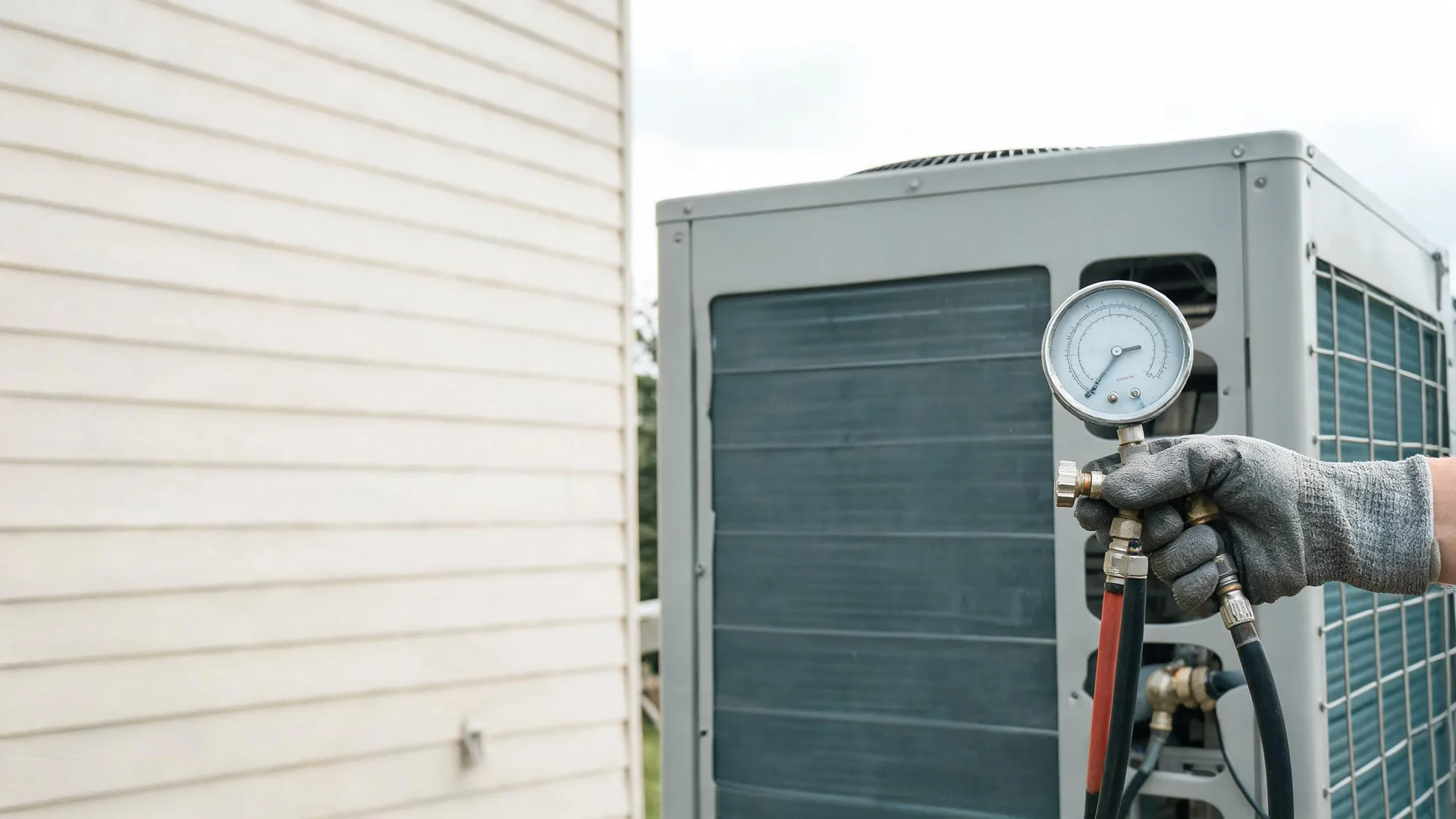
Refrigerant problems show up as ice

A low charge or a failing metering device starves the coil of refrigerant, and the coil frosts over instead of doing its job. Once ice builds up, airflow drops further and the compressor works harder to move heat it can no longer move well. Left alone, that strain is what burns out a compressor, the most expensive part in the system to replace.

Before calling anyone, check the thermostat first. Make sure it's set to the mode you want and the temperature is actually past where the system would kick on. Next, go inside and look at the air filter. A filter clogged with dust chokes the airflow a heat pump depends on, and that alone can make it run constantly without keeping up. Walk outside and look at the unit itself. Clear away leaves, grass clippings or anything piled against the cabinet, since the outdoor coil needs open air around it to work at all. If you see ice covering the coil or the pipes, don't chip at it. Switch the thermostat to fan or emergency heat if you have it, and let the ice melt on its own before anyone touches the unit. Last, check your breaker panel for a tripped breaker, but don't reset it more than once. A breaker that trips again is telling you something is actually wrong inside.

A heat pump that's short cycling or running nonstop to catch up is drawing power the whole time it does that, and here that power costs more than almost anywhere else. Waiting doesn't let the unit fix itself. A contactor that's starting to pit or a reversing valve that's starting to stick tends to get worse, not better, the longer it runs that way. If the system has been struggling for more than a few days, that's not something to keep watching. Get it looked at before the part that's failing takes something more expensive down with it.