A illuminated two-story red brick house on a quiet residential street at dusk, flanked by mature trees under a deep blue evening sky.

Heat Pump Repair in Kalamazoo, MI

Tell us about the job

Takes about a minute. No obligation.

RepairHeat PumpKalamazoo County, MI
Step 1 of 2

What ZIP code is the job in?

The reversing valve is usually the weak point

A heat pump switches between heating and cooling with a reversing valve, and that valve is doing work a standard air conditioner's never has to. Over years of switching back and forth, the valve can stick in one position or start leaking refrigerant past its seals. When it sticks, the system keeps blowing air but stops actually heating or cooling, which is often the first sign something's wrong.

The outdoor unit takes the abuse

The outdoor coil and fan sit outside year round, through rain, ice and whatever the wind blows at them. Dirt and debris build up on the coil and block airflow, and the defrost cycle that's supposed to melt off ice can fail if the sensor or control board goes bad. Once the coil can't shed heat properly, the compressor works harder and wears out faster.

8 months
October through May, your system heats
3 months
June through August, it cools
19°F
the average winter night it heats against
81°F
the average summer afternoon it cools against
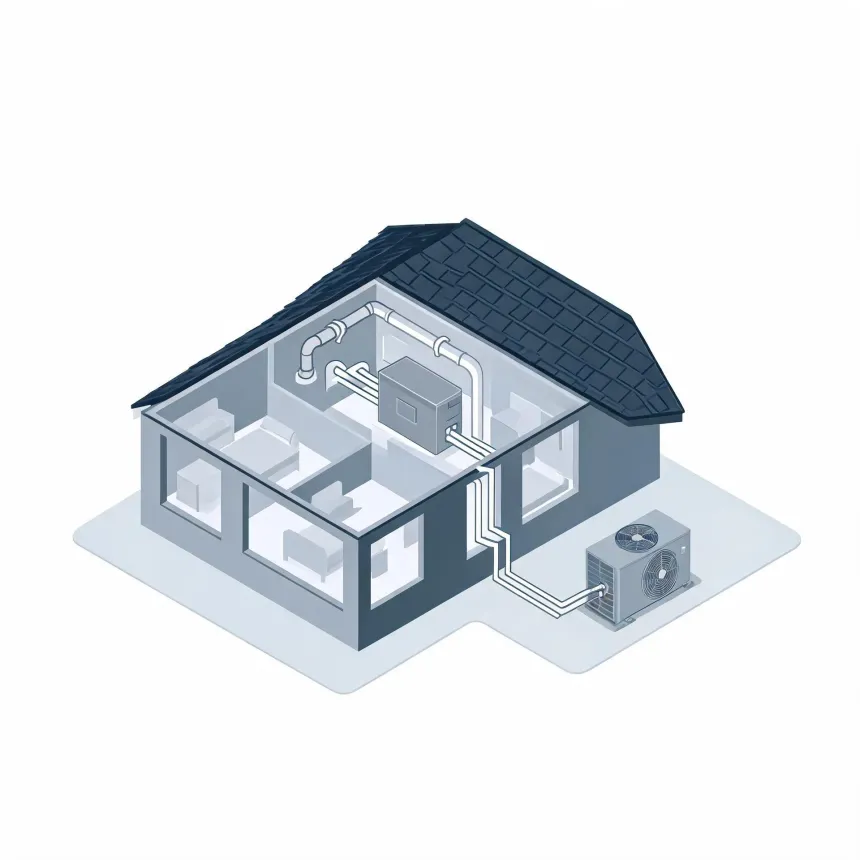
Isometric cutaway illustration of a gray house showing interior rooms, a central air handler with ducts in the attic, and refrigerant lines running to an outdoor condenser unit beside the building.
Your system heats October through May and cools June through August.

NOAA nClimDiv, 1991–2020 normals

Electricity in Kalamazoo County runs 19.89 cents per kilowatt-hour, higher than most of the country.

A heat pump losing efficiency costs you more here every month than it would almost anywhere else.

A heat pump here isn't fighting the climate as hard as the storms suggest

34 damaging wind events from 2015 to 2024
10 hail events from 2015 to 2024
15 winter storms from 2015 to 2024
A heat pump that struggles shows it in the first cold snapHeat here starts in October, and September is when a weak part gets found out.

A heat pump that's low on charge or stuck between modes still runs, it just runs longer to do the same job. Every extra hour it runs shows up on the bill, and power here already costs more than most places pay. Waiting a month to get it looked at is a month of paying more for less heat or less cooling. If the system is cycling constantly, blowing air that isn't the right temperature, or the outdoor unit is icing over outside of a normal defrost, get someone out to look at it rather than riding it through another billing cycle.

Stop paying for a struggling machine

Power costs more here, so a machine that's running badly costs you every month. Get it fixed soon.

Find a contractor
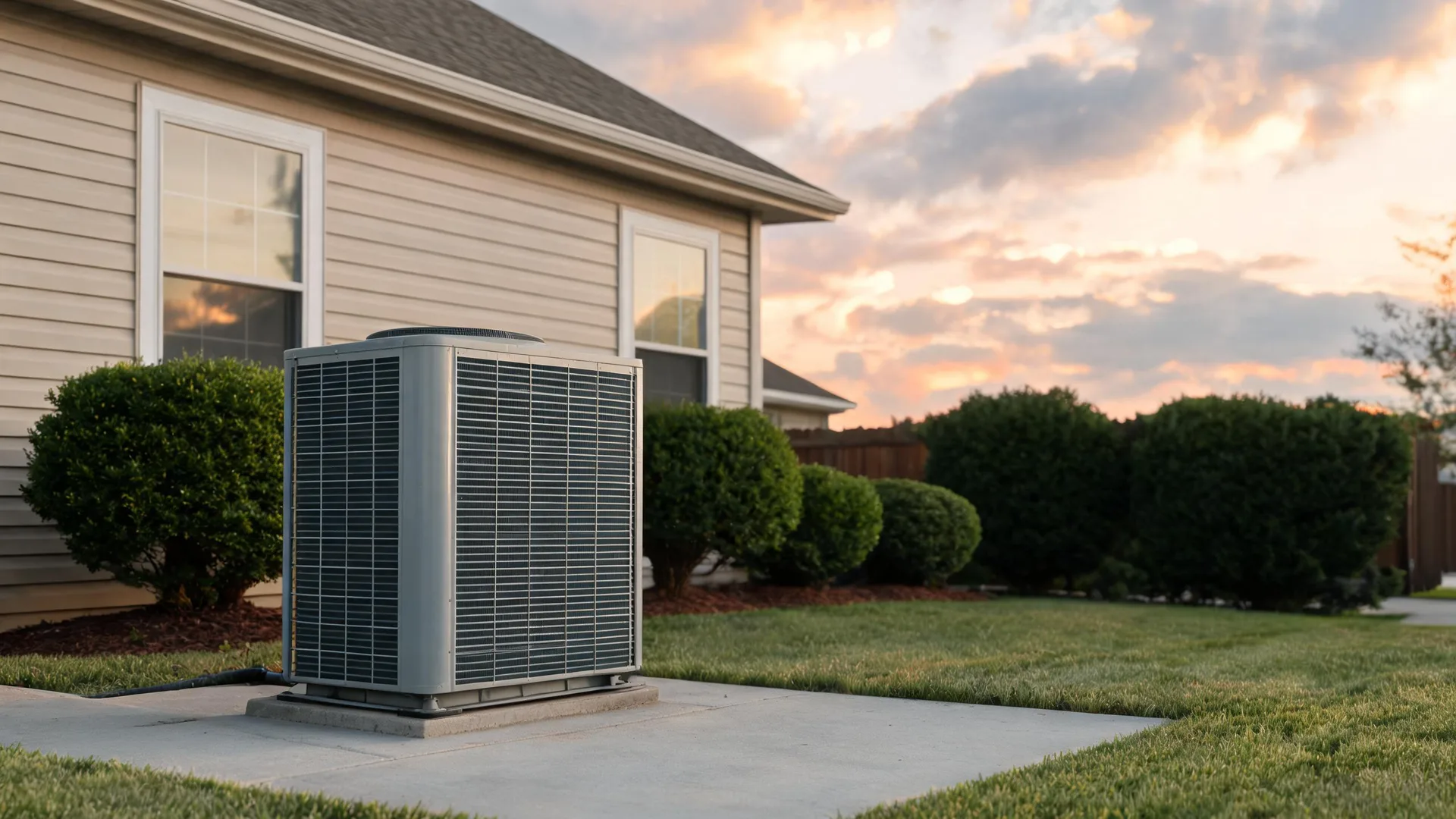
A gray heat pump outdoor unit mounted on a concrete pad next to a residential house with lap siding and stone accents.

It hasn't logged the hours

The time-lapse above is mostly a heating story here. Zone 5A means the furnace carries winter in most homes, so the heat pump isn't the thing standing between the house and the cold day after day. That's fewer hours logged, less strain on the compressor and the coil, year over year. A machine with that kind of life behind it is usually still in good shape underneath whatever's acting up now. If yours is cycling oddly or not keeping up, the storms and the long hours aren't why. Worth getting looked at rather than replaced.

A small fault turns into a bigger repair

A compressor is built to move refrigerant, not raw refrigerant gas or liquid that's out of balance. If the charge is low, the compressor still runs and still tries to pump what it's given, and it starts taking damage with every cycle. Keep running it like that and a problem that was a refrigerant leak becomes a failed compressor, which is a different repair entirely.

Ice feeds on itself

A little frost on the outdoor coil during a normal defrost cycle is nothing. But if the defrost control or sensor has failed, that frost turns to ice and keeps building. Ice blocks airflow across the coil, so the system works harder to move the same amount of heat, which pulls more moisture out of the air and lays down more ice. Left alone, it can seize the fan or crack the coil itself.

A heat pump usually tells on itself before it quits outright. It'll run and run without the house actually getting warmer or cooler, because moving air isn't the same as moving heat. Short cycling is another one, where it kicks on, stops, kicks on again within a few minutes instead of running a normal full cycle. Listen for it too: a grinding or squealing from the outdoor unit usually means a motor bearing or fan problem, not something that waits. Warm air out of the vents when it should be blowing cold, or the reverse, points straight at the reversing valve. None of these mean the whole system is done. They mean something specific inside it has failed, and that's a repair, not a replacement, as long as it gets caught before it drags the compressor down with it.

A diagnostic visit starts outside, with gauges on the refrigerant lines to check the charge and see how the system is actually moving heat, not just whether it's running. Inside, it means checking the air coming off the vents against what the thermostat is calling for, since that gap is what tells you if the heat pump is keeping up or just spinning its wheels. The reversing valve gets tested directly, switching the system between heating and cooling to see if it actually responds or hangs up partway. The defrost control and sensor get checked too, since a board that's failed to cycle defrost properly is a common reason ice builds up outside. Electrical connections and the capacitor get a look as well, because a weak start capacitor can make a compressor struggle without ever fully quitting. By the end of it you should have an actual name for the problem, not just a guess, and a straight answer on whether it's worth repairing.