A quiet suburban street at twilight featuring two-story brick homes with illuminated windows and large trees lining the sidewalk.

Heat Pump Repair in Grand Rapids, MI

Tell us about the job

Takes about a minute. No obligation.

RepairHeat PumpKent County, MI
Step 1 of 2

What ZIP code is the job in?

Storms come through here often

Kent County logged 90 severe weather events between 2015 and 2024, including 56 damaging wind events, 11 hail events and 8 tornadoes. An outdoor heat pump unit sits outside through all of it, exposed to wind-driven debris and hail.

A unit that still runs may have taken a hit

Hail can dent the fins on the outdoor coil, and wind can drive branches or grit into the cabinet, without the system failing right away. If your heat pump has been through a storm, that's worth a look even while it's still heating or cooling your house.

8 months
October through May, your system heats
3 months
June through August, it cools
19°F
the average winter night it heats against
81°F
the average summer afternoon it cools against
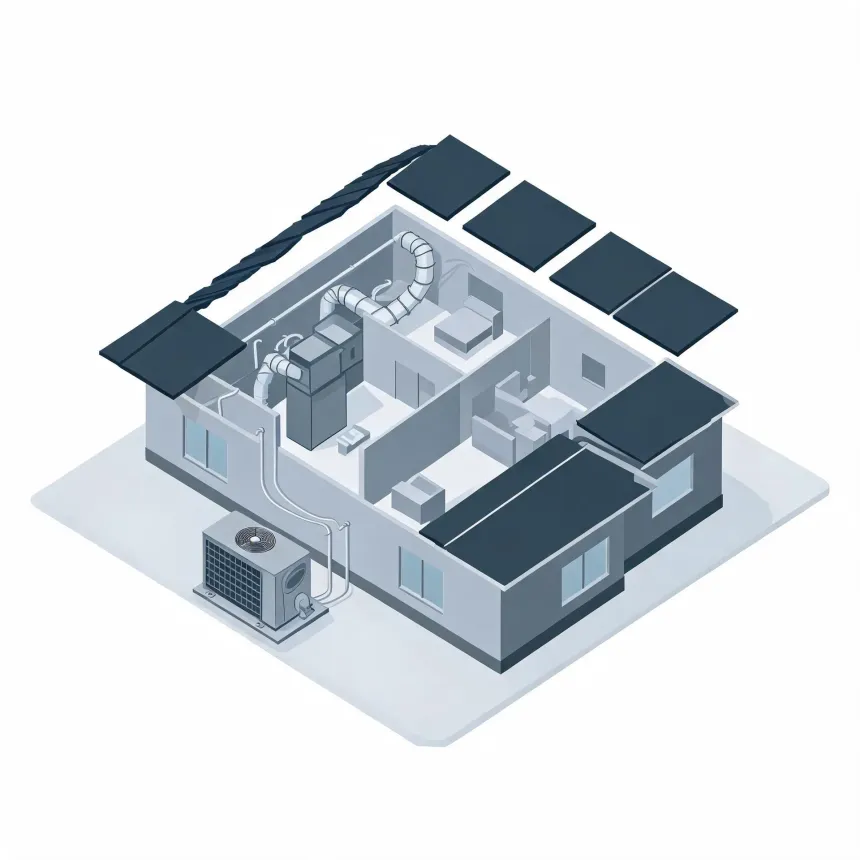
Isometric grayscale illustration of a cutaway single-story house showing interior rooms, ductwork and an air handler, an exterior condenser unit connected by lines, and dark solar panels on the roof.
Your system heats October through May and cools June through August.

NOAA nClimDiv, 1991–2020 normals

Electricity in Kent County runs 20.54 cents per kilowatt-hour, among the higher rates in the country.

A heat pump struggling to heat or cool draws more power to do the job, and that shows up on the bill every month it runs that way.

The air here is milder than it looks from outside

56 damaging wind events from 2015 to 2024
11 hail events from 2015 to 2024
15 winter storms from 2015 to 2024
The First Cold Snap Finds the Weak PartHeat starts running in October here, and September is worth checking first.

A heat pump that's short on refrigerant or struggling to pull heat still runs, just longer and harder to get the same result. With power priced the way it is here, that difference shows up fast. It isn't a problem that gets better on its own. A system working overtime to heat or cool keeps drawing that extra power month after month until someone fixes what's actually wrong with it. Getting a contractor to look at it now costs you the one visit. Waiting costs you every bill between now and then.

Had a storm come through? Get the unit looked at.

If your heat pump has been outside for a storm, a visual check can catch a dented coil or a cabinet full of grit before it causes a bigger problem. That's true even if it's still running fine today.

Find a contractor
A man in a cap, dark shirt and tan pants, seen from behind carrying a canvas bag, climbs wooden porch steps toward a blue front door beside a potted evergreen.
A gray air-source heat pump mounted on a concrete pad next to a house with gray vinyl siding, surrounded by gravel and flanked by green shrubs and white hydrangea flowers.

The Job Is Lighter Than You'd Think

Zone 5A means heating does most of the work here, not cooling. A heat pump spends more hours keeping the house warm than it does keeping it cool, and that's the lighter of the two jobs a compressor can do. So when one of these breaks down, it's rarely because the machine ran itself into the ground. Get a contractor to look at what actually failed before you assume the whole unit is on its way out.

The signs are easy to miss at first

A heat pump in trouble doesn't always stop. It might run longer to reach the set temperature, blow air that's not quite warm or cool enough, or cycle on and off more than it used to. The outdoor unit might ice over in a way that doesn't clear on its own, or you'll hear a rattle, a hum, or a click that wasn't there before. None of these mean the system is done. They mean something inside it is working wrong, and that part usually gets worse, not better, until someone finds it.

What to do once you notice

Shut the system off if you hear grinding or smell anything burning, and call for a diagnostic rather than waiting to see if it clears up. A contractor can trace a noise, a weak airflow or a bad cycle back to the part causing it, whether that's a failing capacitor, a stuck reversing valve, or a coil that's lost its charge. Catching it while the system still runs, even poorly, is a smaller job than catching it after the compressor gives out.

Before calling anyone, look at the thermostat first. Check that it's set to heat or cool as needed and that the batteries aren't dead, since a blank or frozen display can look like a bigger problem than it is. Go outside and check the unit itself. Clear away leaves, grass clippings or anything piled against the cabinet, because blocked airflow around the outdoor coil can make a heat pump struggle without anything being broken. Look at the air filter inside and swap it if it's gray or clogged. If the outdoor coil is caked in ice and it's not freezing out, that's worth noting for whoever comes to look at it, but don't chip at the ice yourself. None of this fixes a bad capacitor or a refrigerant leak, but it rules out the simple stuff first.

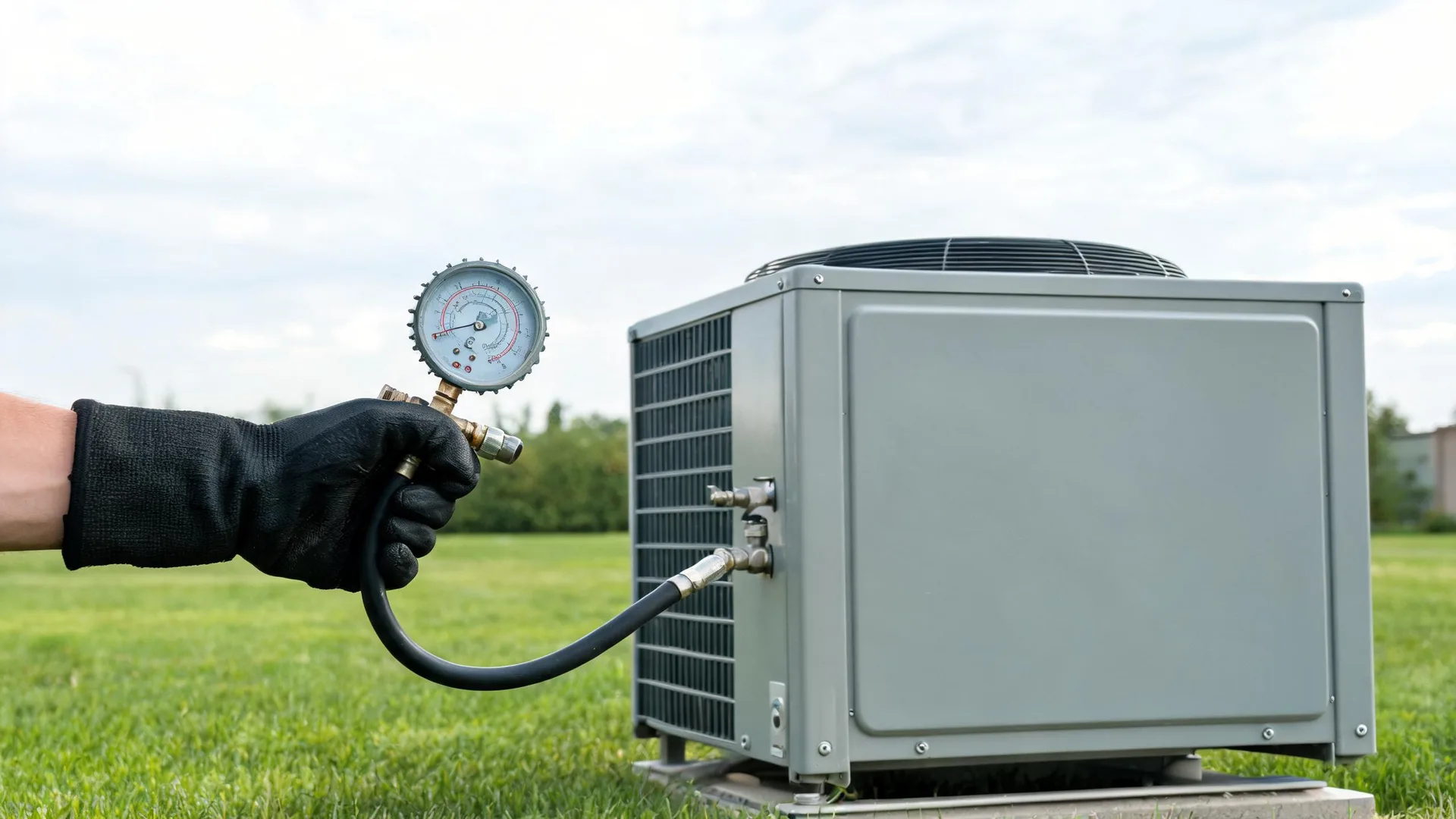
A diagnostic starts outside at the unit itself, not with a tool plugged in. The contractor checks the outdoor coil for ice, dents or debris, then pulls the panel and looks at the components inside: the capacitor, the contactor, the reversing valve. Gauges go on next to check refrigerant pressure, since low charge shows up there before it shows up anywhere else. Inside, they'll check airflow at the vents and look at the filter, because weak airflow can mimic a dying compressor without the compressor being the problem. They'll also run the system in both directions, heating and cooling, since a reversing valve can fail in one direction and work fine in the other. Most of this is spotting which part is behind the symptom, not replacing things to see what helps.