Storms come through often here
Genesee County logged 109 severe weather events between 2015 and 2024, including dozens of damaging wind storms and several tornadoes. A heat pump's outdoor unit sits right in the path of all of it.
Takes about a minute. No obligation.
Genesee County logged 109 severe weather events between 2015 and 2024, including dozens of damaging wind storms and several tornadoes. A heat pump's outdoor unit sits right in the path of all of it.
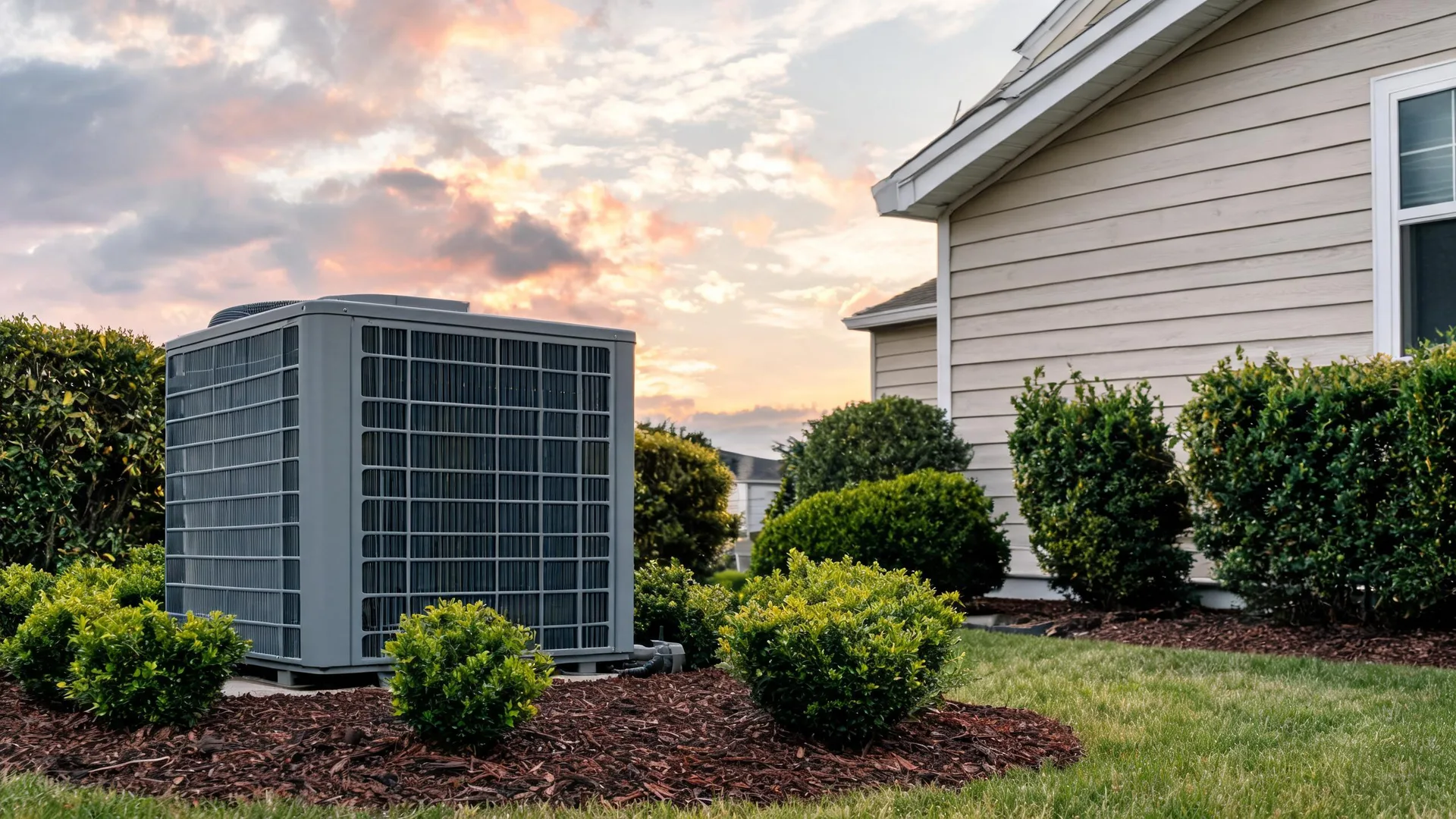
Wind-blown branches and hail can bend fins or crack the fan housing without stopping the unit outright. If a storm has rolled through recently, it's worth having a contractor check the outdoor unit rather than waiting for it to fail.
NOAA nClimDiv, 1991–2020 normals
Winter here is the main job, and the average overnight low across December, January and February is only 19°F.
A heat pump built for that doesn't strain to cool a Flint summer, so a unit in decent shape has usually earned its keep rather than worn itself out.



Half the homes in Genesee County were built in 1969 or earlier. If yours is one of them, the heat pump probably isn't the original unit, but there's no way to know that just from the age of the house. Check the nameplate on the outdoor unit for the install date before you decide anything. A system that's been repaired more than once in the last year or two is telling you something, and a contractor can look at the nameplate and the repair history together and give you a real answer on how much life is left in it. That's worth knowing before you pay for another repair on a unit that might be close to done anyway.
Heat here starts in October, and a heat pump that's struggling now will get asked for more the moment it has to carry the cold. Problems that show up as a weak repair in September tend to turn into no heat at all once the temperature drops. Getting it checked before October is on, rather than after, is the difference between a scheduled repair and an emergency one.
Find a contractorA heat pump that's low on refrigerant or struggling with airflow doesn't just run less efficiently, it runs longer to make up for it. That extra runtime puts more hours on a compressor that's already working harder than it should. A fan motor with a bad bearing will wear through faster the longer it keeps turning. Ice on the coil that isn't clearing on its own means the system is fighting itself every cycle, and that compounds. None of this fixes itself by staying on. The part that's struggling keeps struggling, and the parts around it start absorbing the strain too.
The unit comes on and blows air like it should. Rooms still end up colder than the thermostat says, or the system runs long stretches without ever catching up. That points to a refrigerant level that's off or airflow that isn't getting where it needs to go. It's not something a thermostat setting will fix.
A heat pump that shuts off a few minutes after starting, then starts again a few minutes later, is struggling with something underneath. A hard clunk when it switches between heating and cooling, or a buzzing that wasn't there before, means a part is wearing out. Either one gets worse the longer it runs that way.
Before you call anyone, there are a few things worth a look. Check the thermostat is set to heat and the temperature is actually above room temperature, not just on. Go outside and look at the unit. Ice coating the coil or the whole cabinet is worth noting, a thin layer that melts off in a normal defrost cycle isn't. Make sure nothing is piled against the outdoor unit, no leaves, no snow, nothing blocking the sides where it pulls air in. Check the air filter inside, a filter clogged with dust chokes the airflow and can make the whole system work harder than it should. Walk around and check that every vent in the house is open and not blocked by furniture or rugs. None of this fixes a bad capacitor or a refrigerant leak, but it rules out the simple stuff first.
Not every failing part means a new system. A heat pump is built from separate pieces, the compressor, the reversing valve, the fan motor, the board, and most of them can be replaced on their own without touching the rest. A bad capacitor or a failed fan motor is a straightforward repair on a unit that's otherwise sound. A compressor going bad is a different question, because the compressor is the one part that costs enough to make you weigh it against starting over. Age matters less than what's actually broken. A unit that's needed nothing in years and suddenly trips a breaker is usually one repair away from fine. One that keeps coming up with a new problem every few months is telling you the parts around it are starting to go one by one, and the next call is never far off.