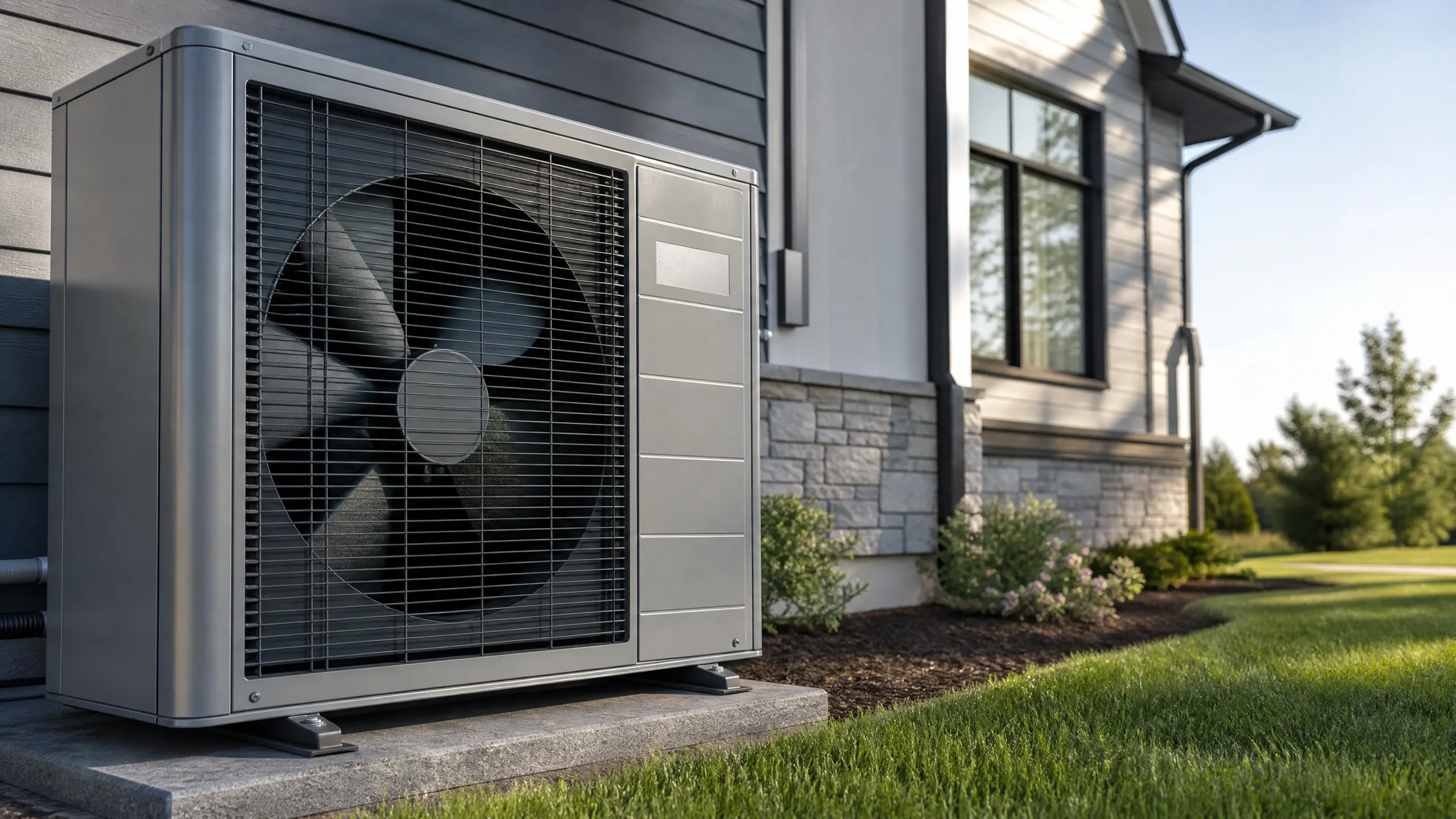






A grey heat pump outdoor unit mounted on a concrete pad against the exterior wall of a house with grey siding and stone veneer.

Heat Pump Repair in Dowagiac, MI

Tell us about the job

Takes about a minute. No obligation.

RepairHeat PumpCass County, MI
Step 1 of 2

What ZIP code is the job in?

Cass County saw 86 severe weather events between 2015 and 2024, and most of that was wind. Wind-driven hail and flying debris are hard on a heat pump's outdoor coil and fan blades. A dented cabinet or a bent fin can throw the whole unit off balance without stopping it from running. If yours has been through a storm and still seems fine, that's not proof it's fine. Have it looked at anyway.

8 months
October through May, your system heats
3 months
June through August, it cools
20°F
the average winter night it heats against
81°F
the average summer afternoon it cools against
Isometric illustration of a cutaway single-family house showing interior ductwork and an air handler, with an outdoor condenser unit connected by lines along the exterior wall.
Your system heats October through May and cools June through August.

NOAA nClimDiv, 1991–2020 normals

Heat pumps in Dowagiac run heat from October through May, about eight months a year.

September is the time to get a weak part checked, before the first cold snap puts it to work.

Winters here work this heat pump hard. Summers barely ask anything of it.

47 damaging wind events from 2015 to 2024
12 hail events from 2015 to 2024
22 winter storms from 2015 to 2024
Half these homes are older than your heat pump's whole industryHalf the houses in Cass County were built in 1973 or earlier.

Michigan electricity runs 19.30 cents per kilowatt-hour, and a heat pump that's struggling pulls more of it to do the same job. A low charge or a failing compressor makes the unit run longer to reach the temperature you set, sometimes without reaching it at all. That shows up on the bill before it shows up as a breakdown. A heat pump here spends most of the year on heating duty, so a problem you let sit isn't a one-time cost. It's a monthly one, for as long as it takes to get looked at.

If this unit has been through a storm, get it checked before it decides the question for you

A heat pump that still runs after hail or wind isn't the same as one that's fine. A bent fin or an unbalanced fan can sit there for months before it leaves you without heat on a cold night. Get it looked at now, while it's still running.

Find a contractor
A gray outdoor HVAC unit mounted on a concrete pad beside a house with gray lap siding and a stone foundation.

What a tech actually checks

A diagnostic starts outside, at the unit itself. A tech checks the refrigerant charge, because too little or too much makes the compressor work harder and shortens its life. They'll check the reversing valve, since that's the part that lets the system switch between heating and cooling, and a stuck valve can leave you heating when you want cool air or the other way around. They'll look at the defrost cycle, because a heat pump's outdoor coil collects frost in cold weather and has to shed it on a schedule. If that cycle is off, ice builds up and blocks airflow across the coil. They'll test the capacitor and contactor, since a weak capacitor makes the fan or compressor struggle to start. Inside, they'll check airflow at the vents and look at the filter, because restricted airflow makes the whole system run longer to do the same job. Most of this gets checked whether or not you mentioned a specific symptom, since a part that's starting to fail doesn't always announce itself the way you'd expect.

The reversing valve sticks before it breaks

The reversing valve switches a heat pump between heating and cooling, and it tends to fail slowly. A valve that's starting to stick might leave the system blowing cool air during a heating cycle, or hang partway and run poorly without fully failing. By the time it won't switch at all, it's usually been struggling for a while.
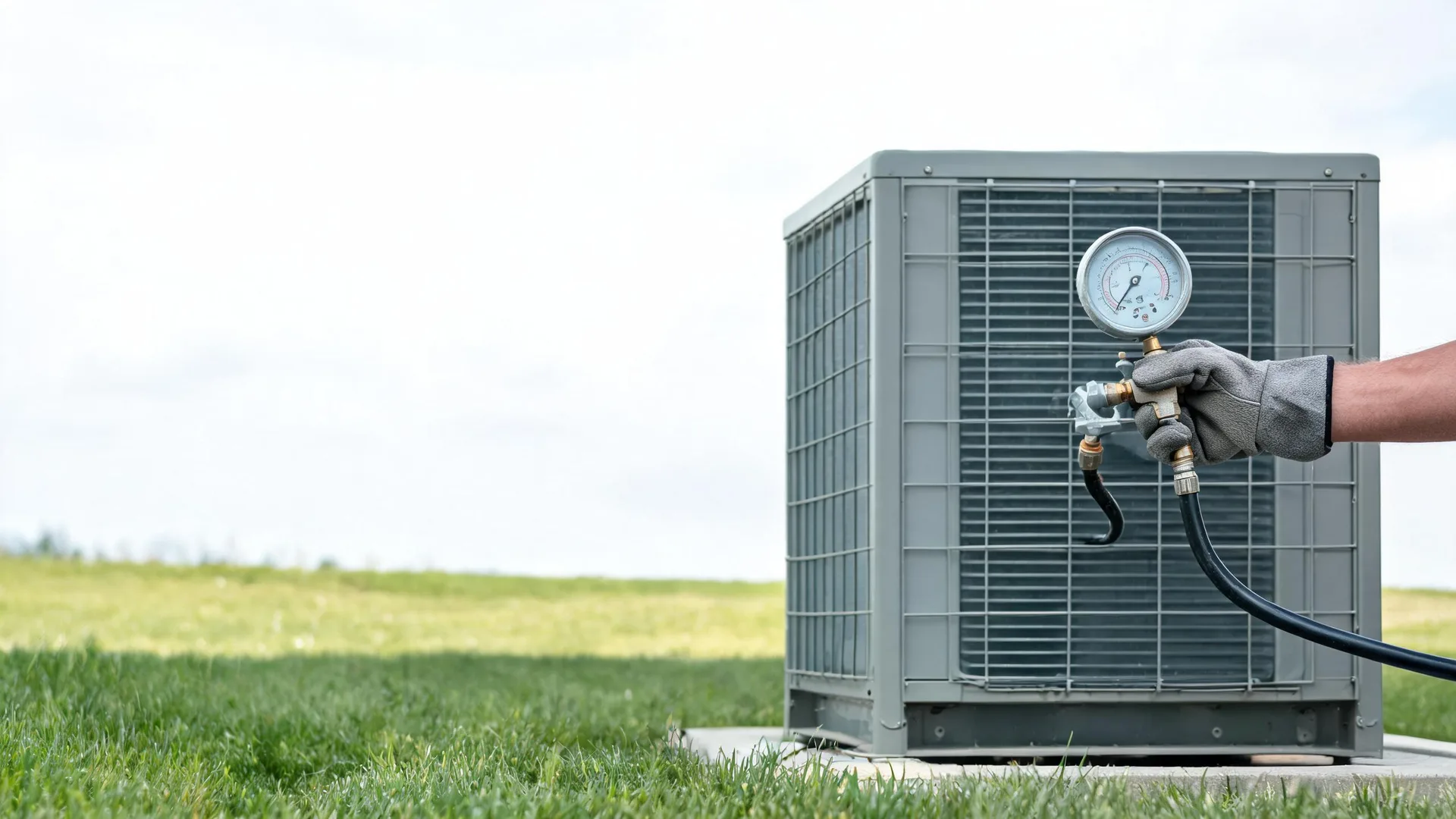
The outdoor unit takes the abuse

The compressor and fan motor sit outside year round, and that's where most failures start. Dirt and debris packed against the outdoor coil block airflow and make the compressor work harder than it should. A failing capacitor can't give the compressor or fan motor the jolt they need to start, so the unit hums but doesn't run, or cycles on and off without settling in.

A heat pump that's struggling doesn't fix itself by staying on. If the reversing valve is starting to stick, every cycle it runs on the wrong side asks the compressor to work against itself. A low refrigerant charge means the compressor runs longer to move the same amount of heat, and it runs hotter while it does. Ice on the outdoor coil that isn't clearing on schedule blocks airflow a little more each cycle, so the unit draws harder for less output. None of this announces itself as a breakdown right away. It shows up first as the system running longer, then as a part that was marginal giving out from the extra strain. The failure you get after weeks of that is usually bigger than the one you'd have had at the start.

A heat pump that needs a repair now and then isn't necessarily close to done. It's the pattern that tells you something, not any single breakdown. A capacitor that wore out and got swapped is just a part that wore out. A compressor straining because the charge is low, the valve is sticking, and the coil is icing over all at once is a system past the point where repairs are the cheaper bet. Age matters too, because a compressor that's already old and weak costs more to keep alive than one that's just hit a bad patch. If a tech keeps finding a new problem every time the cabinet goes back on, that's the system telling you where this is headed.