






An outdoor heat pump unit mounted on a concrete pad in front of a two-story suburban house.

Heat Pump Repair in Battle Creek, MI

Tell us about the job

Takes about a minute. No obligation.

RepairHeat PumpCalhoun County, MI
Step 1 of 2

What ZIP code is the job in?

Heat pumps in Battle Creek earn their keep. Homes here run them for heat from October through May, then switch over for cooling in June, so there's barely a month off between seasons. September is worth a look before heat season starts. If the system has been struggling to keep up or short cycling, that weak spot usually shows itself in the first cold snap, not before. A contractor can catch a failing capacitor or a low charge now, while it's an easy fix, instead of after it quits on the first hard freeze.

8 months
October through May, your system heats
3 months
June through August, it cools
19°F
the average winter night it heats against
81°F
the average summer afternoon it cools against
Isometric line illustration of a cutaway single-story house showing interior rooms, ceiling ductwork and an indoor air handler, connected by a line to an outdoor condenser unit on a pad beside the building.
Your system heats October through May and cools June through August.

NOAA nClimDiv, 1991–2020 normals

A heat pump running low on refrigerant still moves heat, just not enough of it.

Keep it running that way and the compressor is working harder than it was built for, every hour it's on.

Half the homes in Calhoun County were built by 1961, and so was the heat pump in some of them

Half the homes here were built by 1961
30 damaging wind events from 2015 to 2024
13 winter storms from 2015 to 2024
Calhoun County doesn't ask more of a heat pump than any other county does30 damaging wind events in Calhoun County between 2015 and 2024, nothing a heat pump isn't built for

Michigan homes paid 19.30 cents per kilowatt-hour in 2024, among the higher rates in the country. A heat pump that's low on charge or struggling to cycle right doesn't just heat poorly, it pulls more power to do less work. With this system running nearly year round here, that difference shows up on every bill until someone fixes the actual problem. A tuneup or repair now costs less than months of a compressor working harder than it should.

A heat pump struggling here is more likely worn than beaten

Winter lows here average 19°F. That's cold, but it's not the kind of extreme that runs a heat pump into the ground. Most of what goes wrong with one in Battle Creek comes down to age or a part that's failed, not a system worked past what it was built for. That's worth knowing before deciding what to do next, because it means a repair is usually the right call.

Find a contractor
A white mini-split heat pump outdoor unit mounted on a concrete pad beside a gray-sided house, surrounded by gravel and green shrubs.

How old is the one at your house

If the age fits, ask the contractor straight out how much life is left in it before agreeing to a major repair. A compressor or reversing valve replacement on a unit from that era is money worth weighing against a new system. A thermostat, capacitor or sensor fix is worth doing regardless of the unit's age.

It's blowing air that isn't warm enough

A heat pump in heating mode puts out air that feels cool compared to a furnace, that's normal. But if the air barely feels warmer than the room, or the system runs constantly without the house warming up, that's a sign of a stuck reversing valve, a low charge, or a compressor that isn't pulling its weight.
It's icing up and not defrosting

Some frost on the outdoor unit in cold weather is normal, and the system should clear it on its own through a defrost cycle. If ice is building up thick and staying there, or you notice the outdoor fan isn't spinning during that cycle, the defrost control board or a sensor has likely failed.

Most heat pump failures trace back to a handful of parts. The reversing valve is the one that's unique to a heat pump, and when it sticks, the system keeps blowing cold air in heating mode or won't switch over right in cooling mode. The capacitor wears out on a schedule you can't see coming, it just gets weaker over time until the compressor or fan can't start reliably. A refrigerant leak doesn't mean someone used up the refrigerant, it means a line or coil has a hole that needs finding before more gets added. Contactors pit and stick from the arcing every time they open and close, until one day they don't close at all. The defrost sensor and control board fail quietly too, and you usually only notice once ice is sitting on the outdoor coil with nowhere to go.

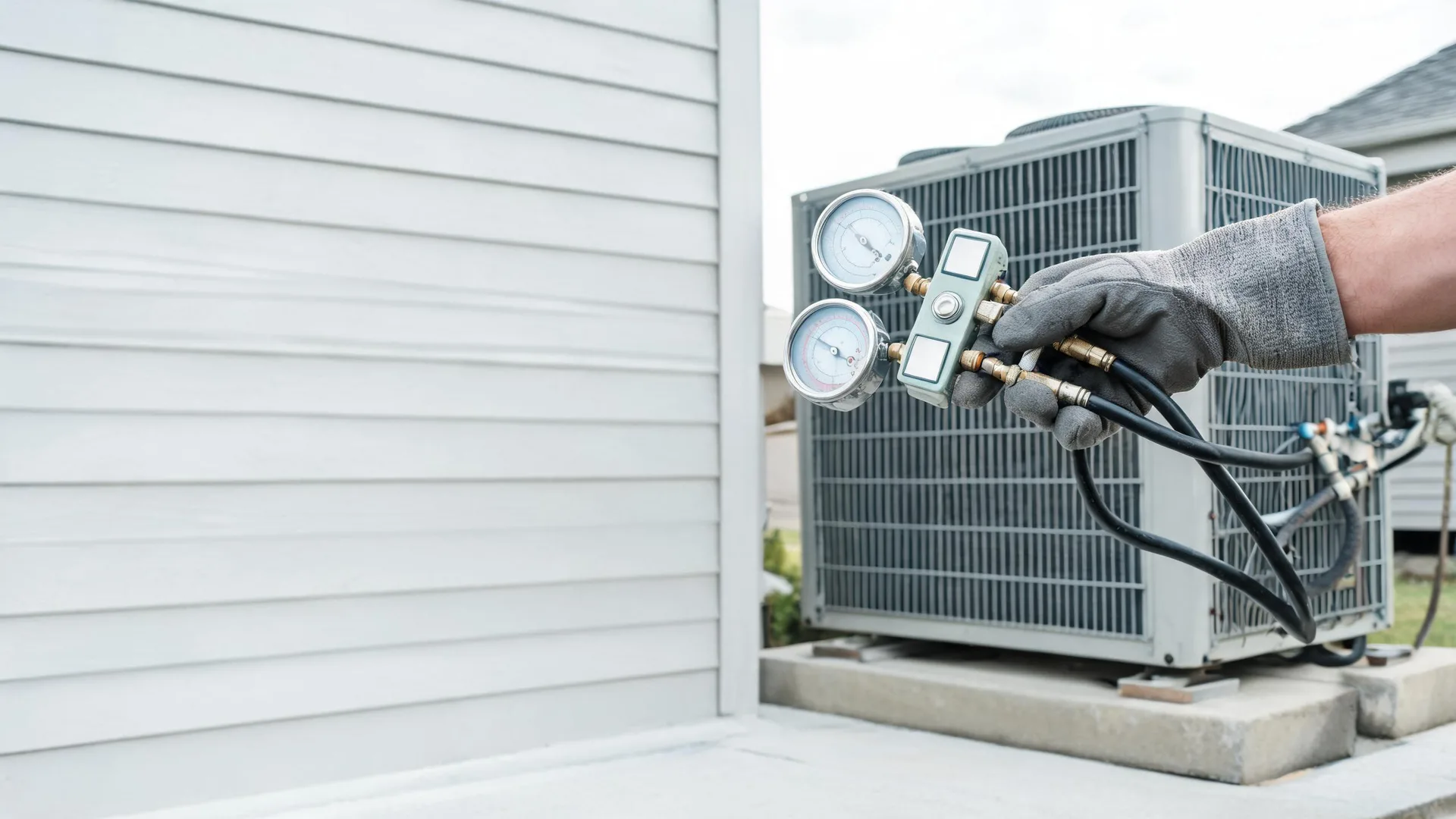
A diagnostic visit starts outside, with gauges on the lines to check refrigerant pressure and a look at the compressor and reversing valve while the system runs in both modes. Inside, that means checking the air temperature coming off the vents against what's expected, and pulling the cover on the air handler to look at the blower and coil. A contractor will cycle the defrost control to see if it trips when it should and watch whether the outdoor fan actually spins during that cycle. Electrical parts get tested under load, not just looked at, since a capacitor or contactor can look fine sitting still and still fail to start the system. The point of all this is narrowing down which part is actually causing the symptom, rather than guessing and replacing something that was never the problem.