


What winter here does to a heat pump
Winter here is long and it gets cold enough to matter. Heat runs about eight months a year, October through May, and the overnight low averages 19°F across December, January and February. About 135 nights a year dip to freezing or below, over half the nights in that eight month stretch. Six nights a year reach 0°F or below.
A standard heat pump starts losing ground before it even gets that cold. Below 40°F it puts out less heat than its rating says, and by the time it's in the teens that gap is wide. Below about 35°F most standard heat pumps need backup heat to keep up. The average winter low here, 19°F, sits below both of those marks. Every one of the 135 nights at or below freezing does too.
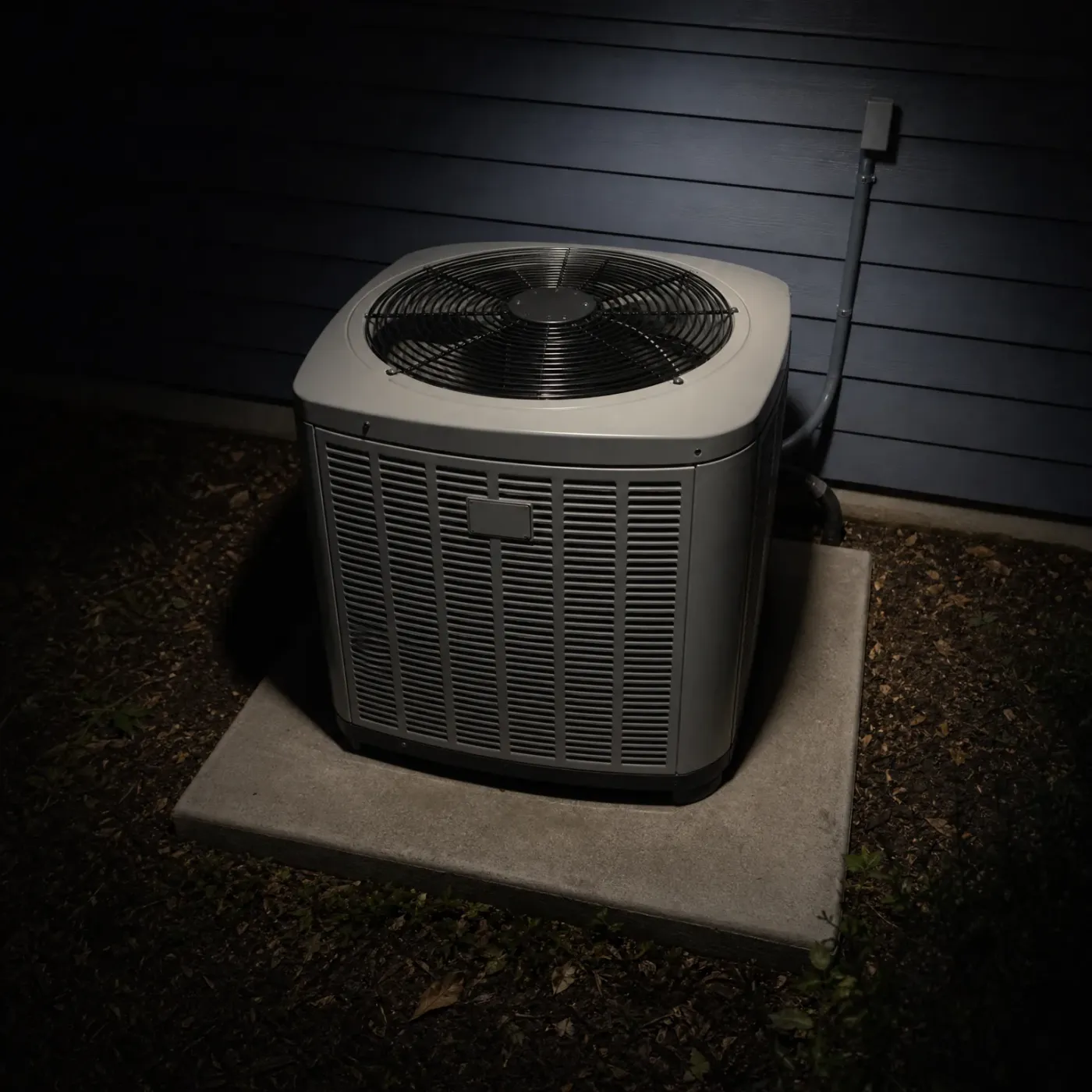
That doesn't mean a heat pump won't heat your house. It means a standard one is working below its rated output most nights of a Calhoun County winter, and will likely lean on backup heat to make up the difference. A heat pump built to carry the ENERGY STAR Cold Climate label is a different machine: it has to hold onto at least 70 percent of its 47°F capacity and still deliver 1.75 units of heat per unit of electricity at 5°F, tested by someone other than the company selling it. A two winter field test of these cold climate models in real homes backed that up. Backup heat covered only a small share of the output between 0°F and 35°F, and the system running on backup alone was rare even above 0°F. If a heat pump is on the table for a house here, that's the spec to check for, not just the word heat pump on the box.