






A lit brick residential street at dusk showing a row of two-story homes with covered porches and mature trees.

Heat Pump Installation in Battle Creek, MI

Tell us about the job

Takes about a minute. No obligation.

New system or replacementHeat PumpCalhoun County, MI
Step 1 of 2

What ZIP code is the job in?

Electricity in Michigan ran 19.30 cents per kilowatthour in 2024. A heat pump moves heat instead of burning gas to make it, so it gets more out of every kilowatthour than baseboard or resistance heat. But it still runs on electricity, and at that rate how well the unit holds its efficiency matters on every bill, not just the first one. Two systems rated the same on paper can land differently once Battle Creek winters get into the single digits, since that's when a heat pump has to work hardest to keep up. Ask what a unit is rated to do at low outdoor temperatures, not just what it does on a mild day.

8 months
October through May, your system heats
3 months
June through August, it cools
19°F
the average winter night it heats against
81°F
the average summer afternoon it cools against
Isometric line illustration of a cutaway single-story house showing interior rooms with furniture and ceiling ductwork, connected to an outdoor condenser unit on the ground outside the left wall.
Your system heats October through May and cools June through August.

NOAA nClimDiv, 1991–2020 normals

Calhoun County sits in zone 5A, a cool climate where heating carries the bigger load most of the year.

A heat pump here spends its winters working harder than its summers, so what matters is how it performs in the cold, not how it performs on an easy day.

Heat runs eight months here, so get the new system in before October

Cooling runs June through August
Heat runs October through May
30 damaging wind events from 2015 to 2024
Half the homes here were built in 1961 or earlierHalf the homes in Calhoun County were built in 1961 or earlier. An older home needs a heat pump sized to match it, not one sized off a spec sheet.

Calhoun County sits in zone 5A under the 2021 energy code, a cool, humid climate where heating does most of the work. Any split-system heat pump installed here has to clear federal minimums of 14.3 SEER2 for cooling and 7.5 HSPF2 for heating. That is the floor, not a selling point, so a unit meeting it is already built for a harder climate than much of the country sees. A federal tax credit is available on qualifying heat pump installations, which can offset part of what it costs to meet that standard.

Most homes here run on gas, so a heat pump is a different kind of install

Gas heats 74.8% of homes in Calhoun County. If that's what your house already runs on, a heat pump means putting electric heat into a home built around gas, which changes what the ductwork and the panel both need to handle. Get that checked before you pick a unit.

Find a contractor
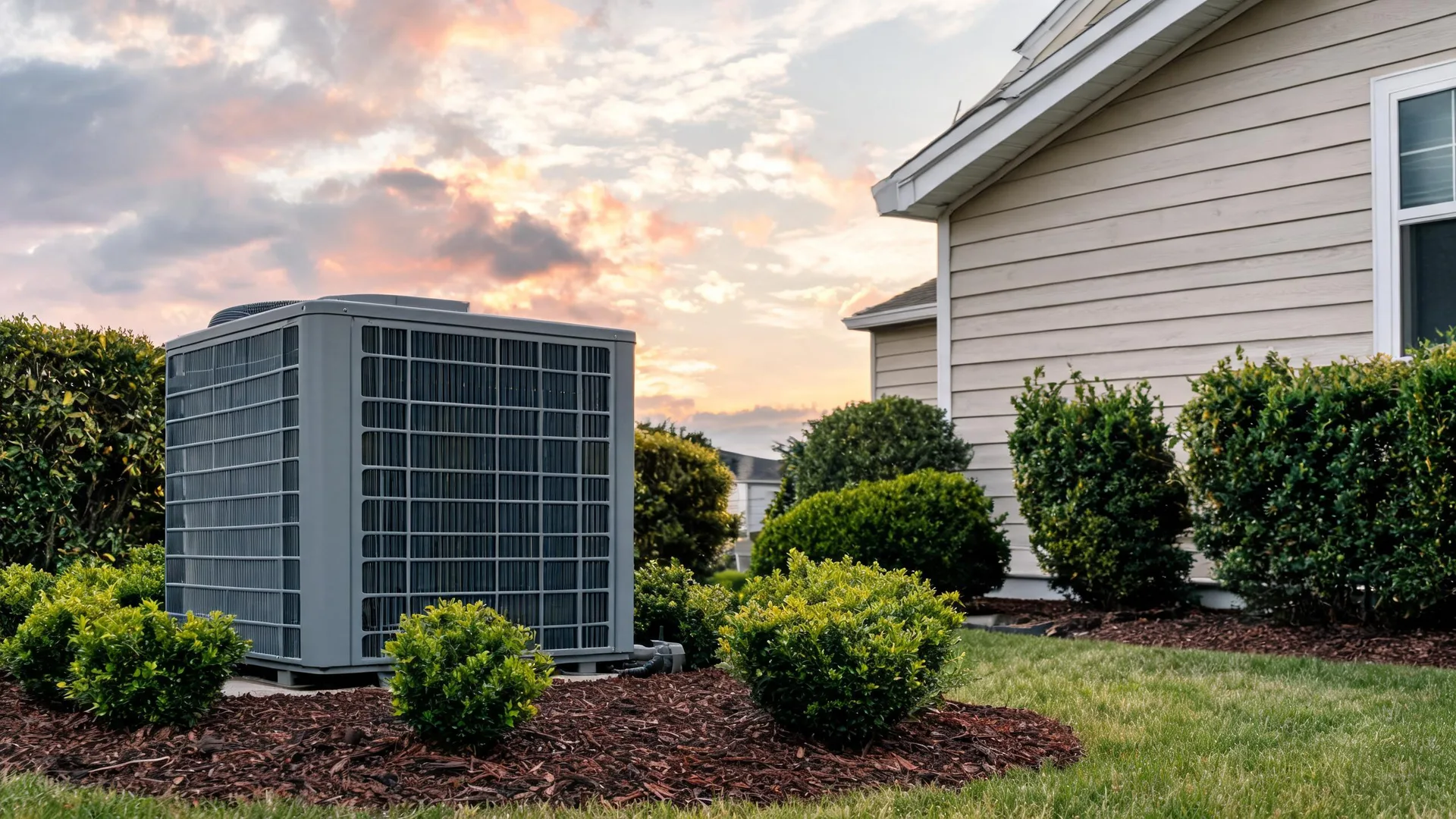
A gray air-source heat pump mounted on a concrete pad next to a house with gray vinyl siding, surrounded by gravel and flanked by green shrubs and white hydrangea flowers.

It works hard some nights, not every night

A heat pump here runs hardest in winter, and most winter nights sit well above zero, averaging 19°F. That's cold, but it's not the kind of extreme cold that pushes a unit to its limit night after night. You still want one rated to perform at low temperatures, since Calhoun County will test that rating, but you don't need the top of the lineup to get through a season here. Pick a reliable unit sized right for the house, and let it do the job it's built for.

The old system doesn't just get unplugged

Whatever is heating the house now, whether it's a furnace or an older heat pump, gets disconnected from the ductwork and the power or gas line that fed it, then hauled out. If it runs on gas, that line gets capped and sealed properly, not just shut off at the valve. None of that work is optional, since the new system can't go in around equipment still wired or piped into place.
What's buried in the yard needs attention too

If the old setup included an outdoor condenser, that unit, its pad, and its refrigerant lines all come out as part of the swap. The refrigerant left in those lines has to be recovered properly, not vented, since release of it is against the law. A new heat pump brings its own line set sized to match it, so the old lines usually aren't reused anyway.

What a heat pump installation costs comes down to more than the box on the wall. The indoor and outdoor units are only part of it. Line sets have to run between them, and if the old lines don't match the new unit's spec, those get replaced rather than reused. Ductwork matters just as much as the equipment. If the trunk lines or branch runs are too small for the airflow a heat pump needs, they have to be modified, and that work happens inside walls and ceilings, not in an afternoon. The electrical panel plays a part too, since a heat pump draws differently than a gas furnace did and some panels need upgrading to carry that load. Where the outdoor unit sits, how far the refrigerant lines have to travel, and whether a crane or extra labor is needed to move the old equipment out all shape the job before the unit itself ever gets priced in.

Installation starts with a load calculation, not a delivery truck. A tech measures the rooms, the windows, the insulation, and sizes the system to the house before anything gets ordered. On the day itself, the indoor air handler or coil goes in first, then the line set gets run to wherever the outdoor unit will sit. That outdoor unit needs a level pad and clearance on all sides so air can move through it. Once everything's connected, the lines get pressure tested for leaks before refrigerant goes in, and the system gets charged to the exact weight the manufacturer specifies, not just topped off by feel. Last comes the startup check, where the tech runs the system through a full cycle and confirms it's pulling the current and airflow it's supposed to.