Calhoun County sees real storms
Calhoun County logged 50 severe weather events between 2015 and 2024. That includes 30 damaging wind events, 6 hail events, a tornado and 13 winter storms with heavy snow and ice.
Takes about a minute. No obligation.
Calhoun County logged 50 severe weather events between 2015 and 2024. That includes 30 damaging wind events, 6 hail events, a tornado and 13 winter storms with heavy snow and ice.
More than a third of Michigan households lost power for 24 hours or more in 2024. A furnace needs electricity to run even when the fuel is gas, so a long outage can leave a house without heat.

NOAA nClimDiv, 1991–2020 normals
Half the homes in Calhoun County were built in 1961 or earlier.
A furnace in one of these houses may already be on borrowed time, so a repair call is a good time to ask how much life it has left.
Furnaces here run from October through May. That's eight months of the year the system has to fire up on demand and keep firing, night after night, through whatever the winter throws at it. A furnace that short-cycles or won't hold a temperature isn't being dramatic. It's telling you something wore down over a long stretch of hard use. The honest move is to find out what part gave out and why, not just reset it and hope. A repair that addresses the real cause holds up through the next eight months instead of failing again partway through.
A furnace losing power or taking a hit from a storm doesn't always quit right away. Sometimes it just starts running worse. If your system has been through a recent outage or rough weather, it's worth having someone look at it now, even if it's still putting out heat.
Find a contractorGet the actual cause checked before you call it fixed. A furnace that cycles on and off or blows cool air partway through winter has a part wearing out somewhere, and resetting it only buys a few days. Ask the technician what failed and why, not just what they reset. That's what holds up for the rest of the season.
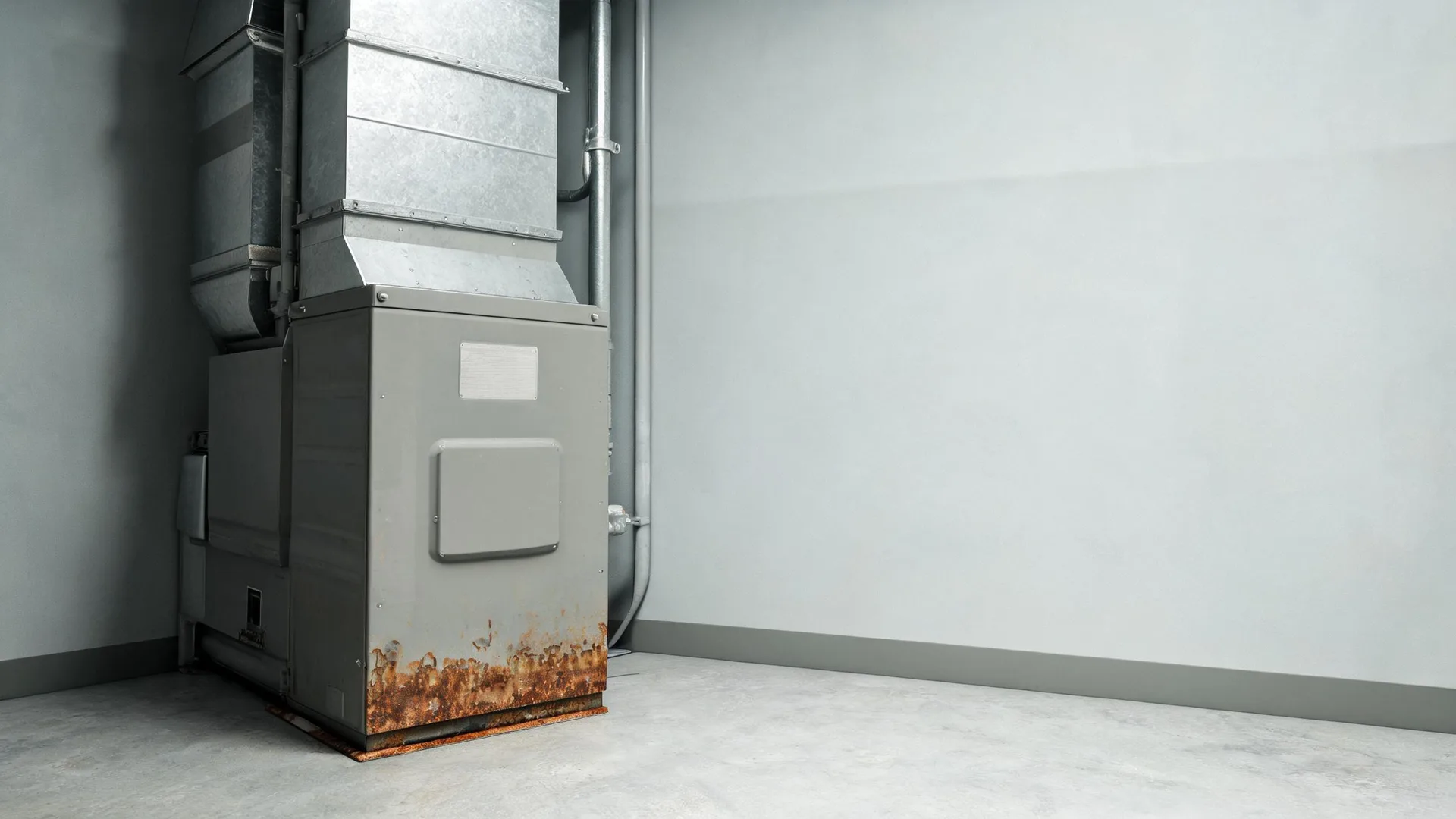
A furnace that won't light usually has a bad igniter, a dirty flame sensor, or a failed control board reading things wrong. A furnace that lights but can't keep the house warm is often starved for air: a clogged filter, a blocked vent, or a blower motor losing strength. Both kinds of failure build slowly before they show up as a no-heat call.
Every part that opens, closes, sparks or spins has a lifespan measured in cycles, not years on the wall. An igniter that's glowed on and off thousands of times gets brittle and cracks. A blower motor bearing that's spun for seasons starts to drag and run hot. The parts that fail first are almost always the ones that move or heat up every single cycle.
Estimates for a typical Calhoun County home, compared with an older unit built to the previous federal minimum, from EIA household energy data, Michigan fuel prices and NOAA climate normals. Your home will differ.
Repair makes sense when one part has failed and the heat exchanger is sound.
Replacement makes sense when the heat exchanger is cracked or the furnace keeps needing parts.
A diagnostic visit starts before the panel comes off. The technician asks what the furnace was doing: short cycling, no heat, a smell, a sound, a code on the board. Then they watch it run through a full cycle if it will start at all, because some failures only show up a few minutes in. They'll check for flame, check the draft, and pull the igniter or flame sensor to look for cracks or buildup. If it lights but won't keep up, the filter and blower come next, since weak airflow mimics a dozen other problems. The goal is to find the part that's actually failing, not just the symptom it's causing, so the fix holds instead of bringing you back to a no-heat call in a few weeks.