

Repair or replace a gas furnace in Detroit, MI

A local installer who puts in furnaces gets your project.

Get a furnace pro

Should I repair or replace my gas furnace?

A furnace that's acting up in the middle of a Detroit winter forces a quick decision. Maybe it's the second repair call this season, or the first one ever, but either way you want to know whether to spend money fixing it or put that money toward a new system before the cold really sets in.

Replace a furnace once it's 15 years or older and failing; repair a younger one

A gas furnace in Wayne County usually runs 15 to 20 years before it wears out for good. If yours is in that range and the repair involves the heat exchanger or the blower motor, replacing it makes more sense than paying to keep it going. If it's younger than that and the problem is something smaller, like an igniter or a flame sensor, repair is the right call. Winters here are cold enough that a furnace runs for months straight, and an older unit under that kind of load tends to need more frequent fixes as it ages. A contractor who inspects the unit in person can tell you which side of that line yours falls on.

A gray high-efficiency furnace stands on a concrete basement floor beside sheet-metal ductwork, with white PVC vent pipes and a black flexible line running up to exposed wood floor joists, next to a wood-framed post against a concrete wall.

When repair makes sense

A furnace running fine most of the time with one isolated problem, like a failed igniter or a blown capacitor, is usually worth fixing. If the unit is still under ten years old and the rest of it is sound, a repair gets you through the rest of a Detroit winter without a big outlay.


A beige metal furnace with a louvered front panel stands on a concrete floor against a concrete wall, connected to galvanized sheet-metal ductwork and a metal pipe.

When replacement makes sense

An older furnace calling for repairs every season, or one that can't keep the house warm when it's below freezing outside, is telling you something. Rust on the heat exchanger or a cracked one is a safety issue, not a repair job. At that point a new furnace is the sounder bet.

Repair the Furnace or Replace It

Repair

  • A single repair, like a new igniter or flame sensor, usually runs a few hundred dollars and gets the furnace through the rest of winter.
  • If the furnace is under ten years old, parts are still easy to source and most repairs are straightforward for a licensed contractor to make.
  • Repairing keeps the furnace you already know, so you're not relearning a new thermostat setup or control board layout in January.
  • A furnace with one isolated failure, and no history of repeated breakdowns, is a good candidate for fixing rather than replacing.
  • Repair avoids the disruption of an install, which matters if you need heat back fast and don't want the house torn into mid-winter.

Replace

  • A furnace past 15 years old is working with a heat exchanger and controls that have been cycling for over a decade, and failures tend to come closer together from here.
  • Replacing clears out the repeat service calls that come with an aging unit, since a worn furnace rarely fails just once.
  • A new furnace carries a far higher efficiency rating than one installed in the 2000s or earlier, which matters with Michigan's electric and gas rates where they are.
  • If the furnace has already needed two or more repairs this season, the cost of fixing it again starts to compete with the cost of a new one.
  • A failing heat exchanger is a safety issue, not just a performance one, and it's a straightforward reason to replace rather than repair.
  • Replacement resets the clock, so you're not guessing which part goes next through a Wayne County winter.
An older man with gray hair, a dark coat and scarf dusted with snow stands in a warmly lit entryway with an open wooden door, a table lamp, framed pictures, and a plant in a vase.
An older man with gray hair and a beard wearing a dark snow-dusted coat stands in a home entryway, with a lamp-lit living room and a wooden staircase behind him.
An older man with gray hair and a beard, wearing a dark snow-dusted coat, stands in a warmly lit home entryway with a hallway, console table with lamp, patterned rug, and living room visible behind him.
A gray-haired bearded man in a dark snow-dusted coat and scarf stands inside a dimly lit home entryway, with a hallway, framed picture, lit table lamp and staircase behind him.
A woman stands in the open front doorway of a single-story house with stone and wood siding while a man in a dark polo shirt and cap walks toward it along a concrete path.

What a failing furnace costs you in a Detroit winter

A furnace that keeps cutting out doesn't just leave you cold. It runs up the gas bill trying to recover the house temperature every time it short-cycles, and in Wayne County, where electric backup or space heaters get pulled out as a stopgap, that adds up fast on a power bill that's already not cheap. If the blower or heat exchanger is struggling, you may notice rooms on the far end of the house staying cooler than the rest, or the thermostat reading satisfied while you're still reaching for a sweater.

There's also the risk of being without heat entirely on a night when it's in the single digits, which in this area is not rare from December through February. If your furnace is old enough that you're unsure whether a repair is worth it, or the problem has come back more than once this season, getting a straight answer from someone who can look at the actual unit matters more than guessing. Once you send the request, a contractor who handles this in your area takes it from there and reaches out to go over what your furnace needs.

A speckled beige ceramic vase holding thin dried branches sits on a round wooden table near a window with sheer curtains, with a dark upholstered chair and draped blanket blurred in the background.
A gray high-efficiency furnace in a basement with PVC vent pipes, sheet-metal ductwork, copper and insulated pipes, a water heater at left, and an unfinished wood-stud wall at right.

The furnace holding steady

This is what a furnace running the way it should looks like. The cabinet is sealed up, the PVC flue pipes run clean to the outside wall, and the ductwork overhead is sized to move air through the house without strain. Nothing here needs a second look.

An older beige furnace with louvered front panels stands on a concrete basement floor beside galvanized ductwork, metal and plastic pipes, exposed wood framing, and a cylindrical water heater at right.

The furnace running on borrowed time

Galvanized flue pipe and an older cabinet like this one mean the furnace has put in a lot of winters already. It may still run, but parts get harder to find as a unit ages, and a breakdown in January doesn't wait for a good time.

Is my furnace telling me it's on its way out?

You'll probably notice it before you can name it. The furnace runs longer than it used to, or it cycles on and off every few minutes instead of settling in. Some rooms stay cold no matter where the thermostat is set. You might hear a bang when it fires up, a rattle from the cabinet, or a hum that wasn't there last winter. The flame behind the viewing window looks yellow or orange instead of blue. Dust seems to settle faster, or there's a faint burning smell the first time it kicks on after months off. None of that means tonight is an emergency, but a furnace pushed past what it can reliably do is a furnace that can leave you without heat on the coldest night of the year, and in Detroit that's not a night to find out the hard way.

A gray high-efficiency furnace with white PVC venting pipes stands on blocks in a basement next to sheet-metal ductwork, with exposed wood framing on the left and a concrete wall and floor.
A newer install like this one keeps its PVC and gas lines tight, which matters once Detroit hits single digits.
An older gas furnace with two white PVC vent pipes stands on a concrete basement floor beside galvanized sheet-metal ductwork, flexible conduit, and piping along a wall.
A furnace this old working this hard is the one that leaves you checking the thermostat at 2 a.m.
  1. Thermostat calls for heat and sends power to the control board.

  2. Inducer motor starts and purges the heat exchanger before ignition.

  3. Igniter heats up or sparks to light the burners.

  4. Flame sensor confirms the burners lit and keeps gas flowing.

An older gas furnace with a louvered front panel stands on a concrete basement floor beside large sheet-metal ductwork, a metal flue pipe, copper piping and wood framing.
Before you get your furnace installation
A beige high-efficiency furnace stands on a concrete basement floor beside sheet-metal ductwork, with white PVC vent pipes, flexible conduit and copper and steel piping running up a concrete wall to an electrical box.
After you get your furnace installation

Matched to your furnace job

A furnace doesn't pick a good time to fail, and in Wayne County it tends to show its worst side in January, when the burners are running half the day just to hold the house at temperature. By then you've usually already weighed a repair against a new unit, maybe more than once this season. What's left is finding someone who can look at your specific furnace, your ductwork, your gas line, and tell you which way to go. That's not something you work out from a search page. A licensed contractor who sees the unit can tell you in minutes whether it's a repair or a replacement, and getting that answer without chasing down separate quotes from separate companies is most of what you're after right now. Send the request and let someone qualified take it from here.

What AFUE tells you about costs

Every furnace carries an AFUE rating, which is just the percentage of gas it turns into heat. An older furnace running at 80 percent AFUE sends 20 cents of every gas dollar straight up the flue. New furnaces now run at 95 to 98 percent AFUE, so the same gas dollar loses only two to five cents. You can usually find the rating on a yellow sticker on the cabinet or in the furnace's manual. If yours reads 80 or lower and the unit is old enough that you're weighing replacement anyway, that number is doing real work against you every month gas prices stay high.

Why venting changes with efficiency

An 80 percent furnace vents through a metal flue because the exhaust is still hot enough to rise on its own. A 95 percent or higher furnace cools the exhaust so much it can't rise that way, so it vents through PVC pipe straight out a side wall instead. That difference matters if you're replacing an old metal-vented furnace with a high-efficiency one, since the install has to add that PVC run and a condensate drain for the moisture it produces. It's not a reason to avoid the upgrade, just a detail worth knowing before a contractor walks through what the job involves.

Winter nights average 21°F

At 21°F, a furnace that's lost even one burner's worth of heat can't keep up, and you'll feel it first in the rooms farthest from the thermostat. That's the temperature your furnace is actually fighting most winter nights here, not the daytime high.

NOAA nClimDiv 1991-2020

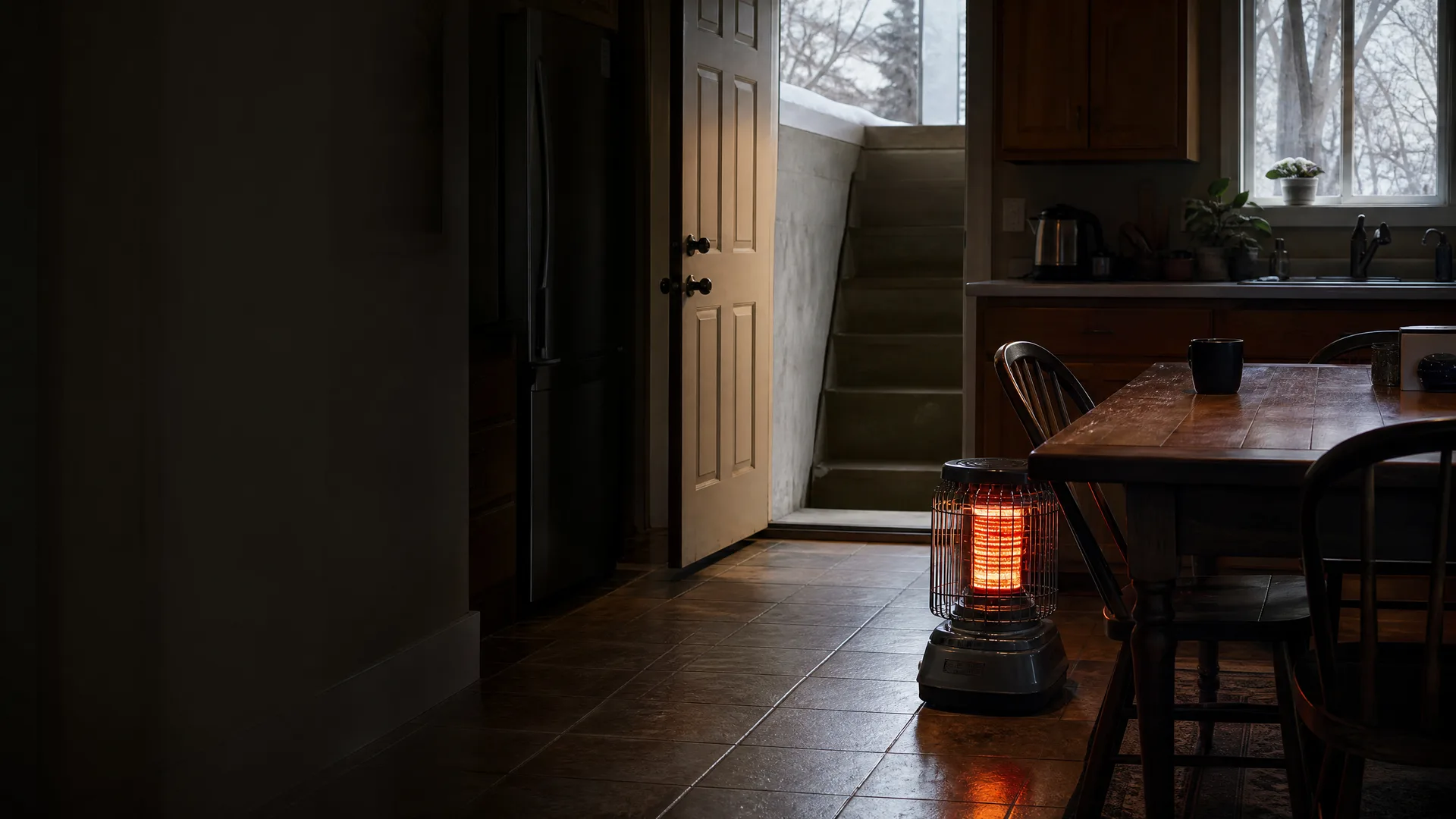
A dim interior with a glowing portable kerosene heater on a tiled floor beside a wooden table and chairs, an open white door leading to a staircase, and a kitchen sink by a window showing snow outside.

It's just past seven and the kitchen window is still dark. The space heater sits by the table, its coil glowing orange, because the floor by the back door has gone cold enough to notice in socks. The basement door is open behind it, propped like it has been all week, ever since the furnace started taking its time between cycles. You've got coffee going and one hand on the heater's cord, ready to move it to the living room once the kids are up. Outside, Wayne County is sitting in the low twenties, the kind of morning the furnace is supposed to handle on its own.

How long does a furnace really have to work here?

  • Winter nights average 21°F

    Overnight lows near 21°F mean the furnace runs at full output for hours, not minutes, and any weak part shows up fast.

  • Heat runs October through May

    Eight months of heat a year puts long hours on the igniter, blower and heat exchanger, so wear adds up faster than in milder states.

  • 83.6% of homes heat with gas

    At 83.6% of homes on gas, parts and contractors for gas furnaces are common here, which matters once you're choosing repair or replacement.

NOAA nClimDiv 1991-2020 · ACS 2020-2024

A furnace that keeps short-cycling or won't hold the house at temperature is telling you something, and by now the signs say repair or replace plainly enough. A single failed part on a furnace that's otherwise young is worth fixing. A furnace pushing past its years, struggling through every cold snap, costs more to keep patching than to replace. You know which one you've got. What you don't have to do alone is find someone to look at it, price the work, and tell you straight whether that igniter or blown heat exchanger is the last repair this furnace needs or the first of many. Send in the details once and a contractor who works on furnaces like yours takes it from there. You go back to your evening, and the decision that's been sitting on your shoulders gets handed to someone who can actually act on it.

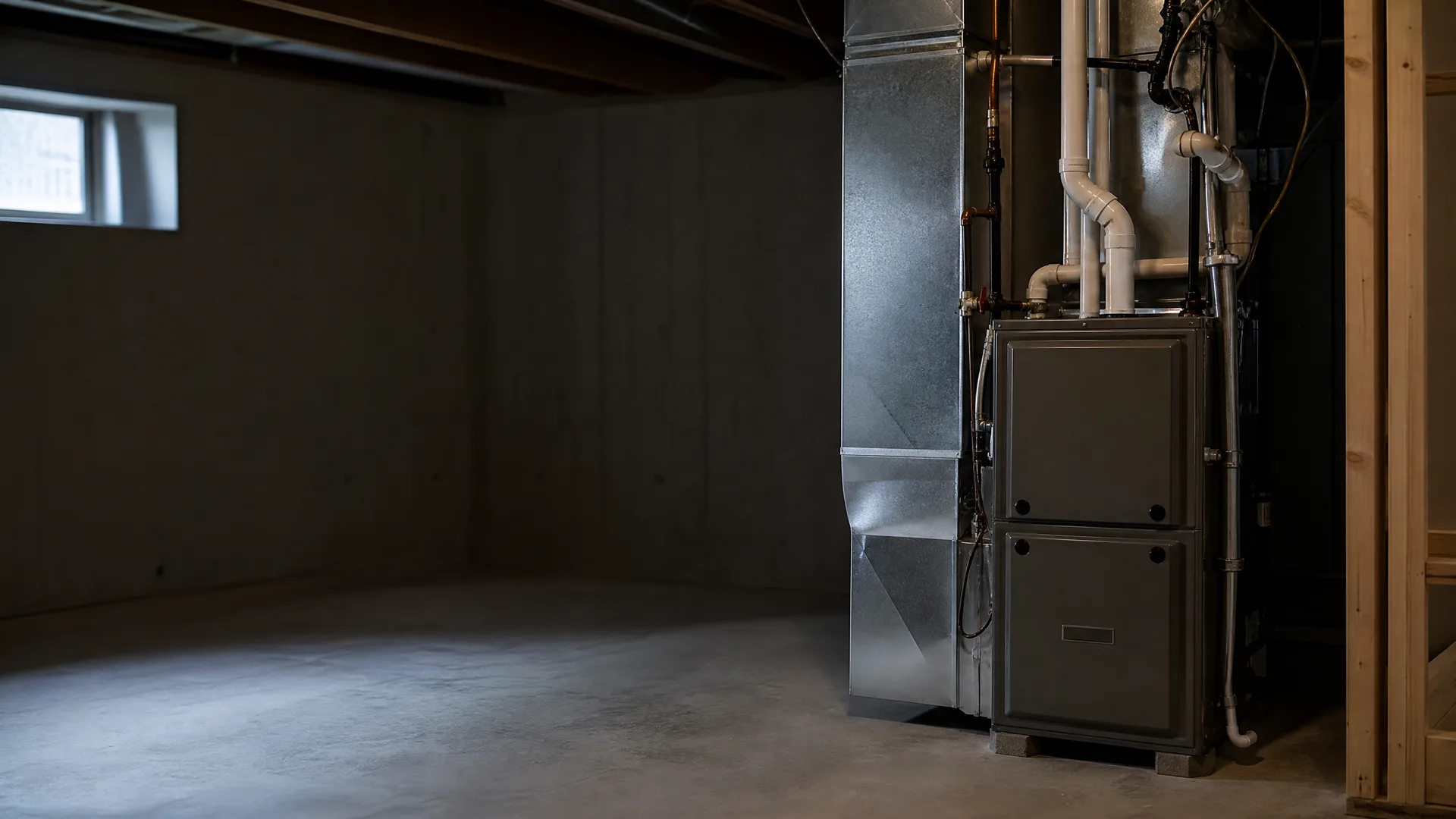
An unfinished basement with bare concrete walls and floor, a small window at upper left, exposed joists overhead, and a furnace with sheet-metal ductwork and pipes along the right side.

A furnace pro near you

Send the form and stop researching installers for the new furnace.

New system or replacementFurnace or heatingWayne County, MI
Step 1 of 2

What ZIP code is the job in?