



Heat pump vs gas heat in Detroit, MI

Get matched

You're weighing a heat pump against the gas furnace you already have, and in Wayne County that's not a simple swap. Gas is still what heats most homes here, winters get cold enough to matter, and electricity isn't cheap. The right answer depends on your ductwork, your gas line, your panel, and what your house is already set up for, not on a general rule. A contractor who installs both knows which homes near Detroit come out ahead on gas, which ones make sense for a heat pump or a dual fuel setup, and what that choice looks like once the equipment is actually in. Answer a few questions about your home and you'll be matched with one licensed, local contractor who handles this kind of installation regularly, not a list of names to sort through yourself. They'll reach out and walk through what fits your house before anything gets decided.

Should I switch from gas heat to a heat pump in Detroit?

Your gas furnace works fine, but you keep seeing heat pumps mentioned as the modern choice, especially if you're thinking about adding air conditioning or replacing an aging AC unit anyway. In Wayne County, where winters get well below freezing and electricity costs more than it does in a lot of other places, that question isn't simple. Before you decide anything, it helps to know what actually changes if you make the switch.

For most homes in Wayne County, keeping the gas furnace and pairing it with a heat pump makes more sense than switching entirely

A heat pump moves heat instead of burning fuel, and it does that efficiently until the outdoor temperature drops low enough that it struggles to keep up. Detroit winters get there regularly. That's why a dual fuel setup, a heat pump handling the mild months and the gas furnace taking over when it's genuinely cold, tends to work better here than a heat pump running alone. You get lower electric bills on the days above freezing and still have gas backup for January. Going all electric with just a heat pump means your furnace gets replaced entirely, and your heating bill shifts onto an electric rate that isn't cheap in this area. Whether that trade makes sense depends on your ductwork and what shape your current furnace is in.

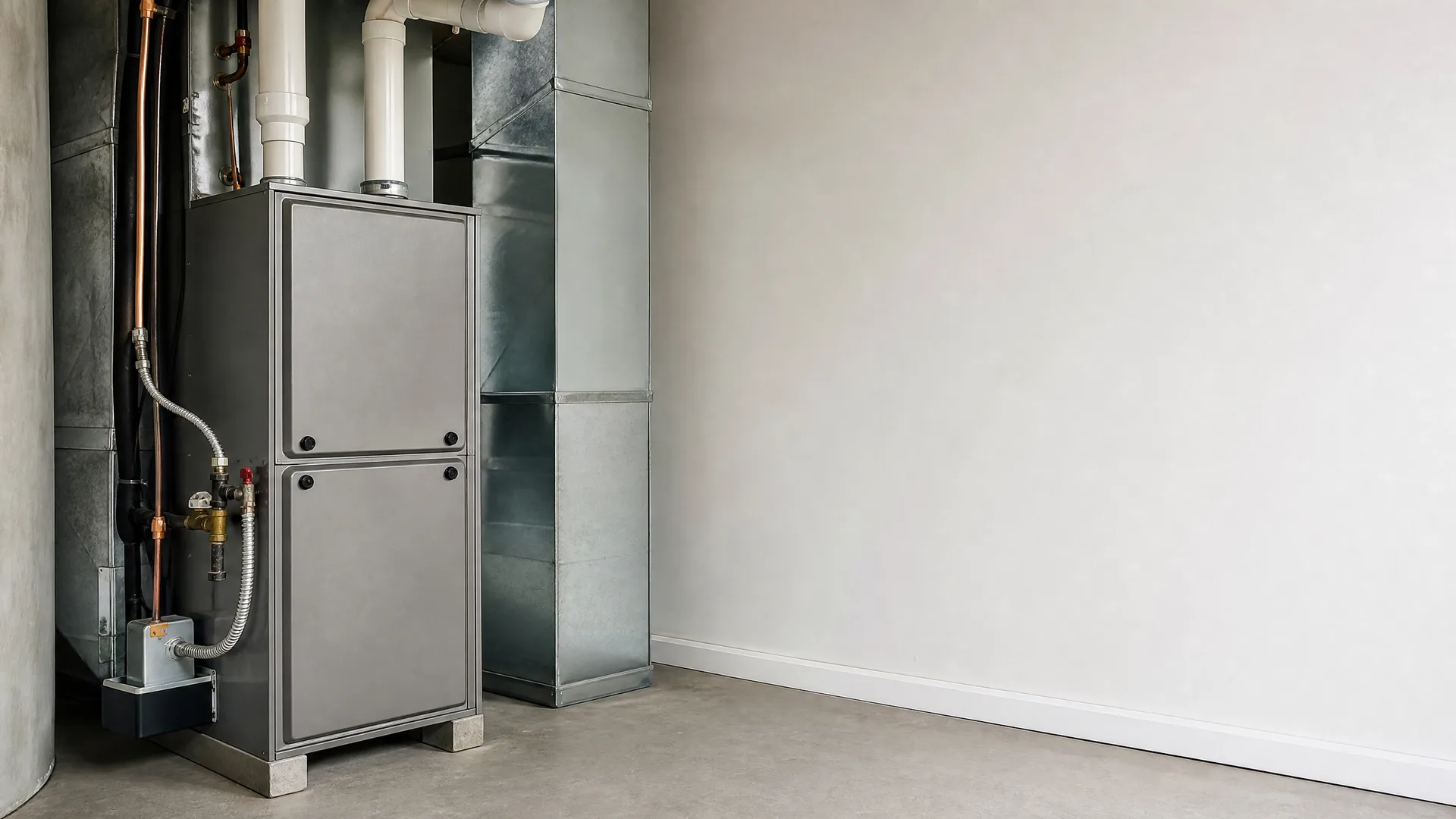
A gray high-efficiency furnace with white PVC vent pipes, copper and flexible piping, and galvanized sheet-metal ductwork stands against a wall in a room with a bare concrete floor and plain light-colored wall.

How a heat pump struggles below freezing

A heat pump moves heat from outside air into your house, and that gets harder as the outside air gets colder. Once temperatures drop into the teens or lower, which happens plenty in Wayne County from December through February, the unit has to work harder to pull out less heat. Many systems switch over to electric resistance backup at that point, and that backup is expensive to run. Your gas furnace burns fuel to make heat directly, so outdoor temperature doesn't change how it works.

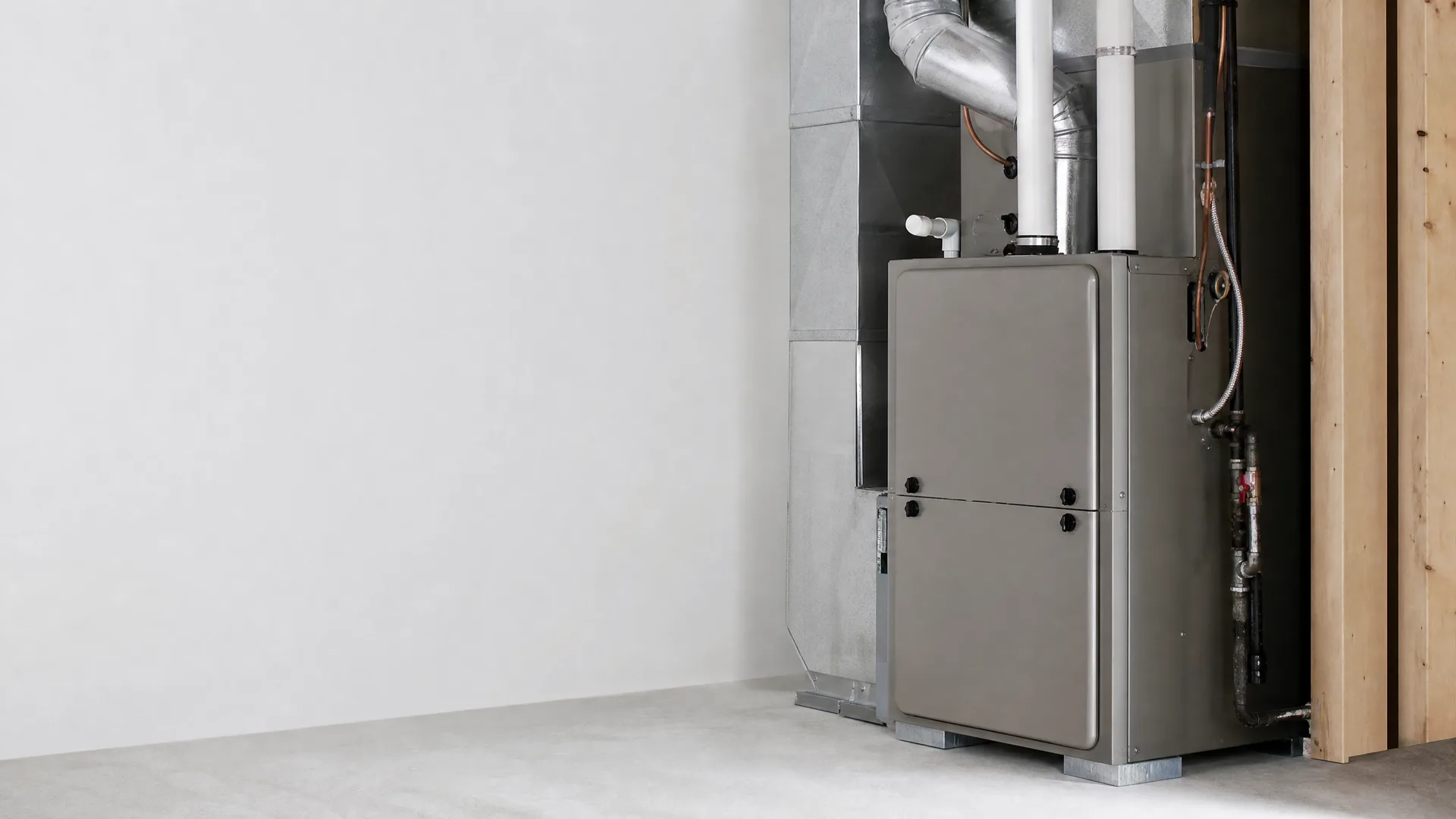
A gray residential furnace with attached sheet-metal ductwork, white PVC vent pipes and copper lines stands against a plain white wall on a concrete floor, beside exposed wooden framing.

What a dual fuel setup actually does

Some homeowners in this area keep the furnace and add a heat pump instead of replacing one with the other. The heat pump handles the milder stretches of fall and spring, when it runs efficiently, and the furnace takes over once temperatures drop low enough that gas becomes the cheaper way to heat the house. A contractor sets the switchover point based on your equipment and your ductwork. It's a bigger upfront job than a straight swap, since both systems have to tie into the same ducts and controls.

What's pushing you to think about this now

Maybe your gas furnace is still running fine but you're staring down an AC replacement and wondering if a heat pump could cover both jobs. Maybe you noticed your gas bill climbing every January and February and want to know if there's a cheaper way to stay warm. Maybe the furnace is getting old and you're deciding what replaces it. None of that means something's broken. It means you're trying to make the right call before you're forced into one. The risk isn't in asking the question, it's in picking equipment that doesn't match how cold it actually gets here, or how your house is set up to heat and cool, and finding that out in January.

A middle-aged man with grey hair and a beard, wearing a grey knit sweater, sits on a light sofa in a sunlit living room with a houseplant, wooden cabinet and framed landscape picture behind him.
A man with greying hair and a beard in an olive sweater sits on a sofa in a living room, looking to his left, with an armchair, round side table and large glass doors onto trees behind him.
A gray-haired bearded man in a dark blue shirt over a white t-shirt sits on a leather sofa in a living room with built-in shelves, a floor lamp, an armchair and large windows, looking off to the side.
A man with gray-brown hair and stubble in a dark sweater sits on a light-colored sofa in a living room, looking off to the side, with a houseplant, framed picture, shelving and a sunlit window behind him.

A pro who works on furnaces

A furnace swap is simple: the new one goes where the old one sat, same gas line, same ducts. A heat pump decision in Wayne County usually isn't, because it touches your ductwork, your electrical panel, and whether you keep the furnace as backup for January mornings. Getting that sized and connected right matters more here than in milder places, since a unit that's wrong for your house shows up on the gas bill or the power bill every month, not just once. A contractor who works on heat pumps and furnaces in this area through a full winter knows which brands hold up when it's in the teens outside and whether your ducts can handle the airflow a heat pump needs. That's a different read than someone who mostly installs AC in July. Whatever you decide, gas furnace replacement or heat pump, it's worth having someone local look at your actual setup before you commit. One contractor, matched to your situation, looking at your ducts and your panel, beats guessing from a chart.

Sticking with your gas furnace

If your furnace is in good shape, keeping it is the simpler path. Gas burns hot, so you get warm air fast on the coldest mornings without the furnace working any harder in January than it does in November. There's no ductwork to reassess, no electrical panel to check, no backup heat to plan for. The downside is the one you already know: a gas bill that climbs every winter, and a furnace that runs on a fuel whose price isn't yours to control. If it's not broken and it's not old, there's a real case for leaving it alone.


Adding or switching to a heat pump

A heat pump earns its keep in the shoulder months, spring and fall, when it heats and cools efficiently without burning gas at all. Paired with your furnace as backup for the deep cold, it can cut how much gas you burn over a winter without asking you to give up reliable heat when it's in the teens outside. On its own, with no gas backup, it has to work harder as the temperature drops, and in Wayne County that matters. The trade-off is upfront: it touches your ducts and your panel, not just a swap-in-place.

An older beige furnace with two louvered vent panels stands on a concrete basement floor, connected to galvanized ductwork and a metal flue pipe, with gas piping and flexible conduit on the wall behind.
Before you get your furnace installation
A beige high-efficiency furnace in an unfinished basement, with white PVC vent pipes, a yellow gas line, metal ductwork, and exposed wood framing on a concrete floor.
After you get your furnace installation
  1. A contractor checks your ductwork, panel and gas line first

  2. They size the heat pump or furnace to your home's heat loss

  3. They decide if your old furnace stays on as backup heat

  4. A dual fuel setup switches to gas below a set temperature

Winter nights average 21°F

A 21°F overnight low is normal here from December through February. That's cold enough that a gas furnace runs on its highest heat output for hours at a stretch most winter nights, and it's the range where a heat pump alone starts to lose ground.

NOAA nClimDiv 1991-2020

A woman in a gray sweater and jeans stands in an open wood front door of a white stucco house while a man in a dark jacket walks toward her on the entry path.

Gas, dual fuel, or a heat pump alone: it comes down to your house

There's no single right answer here, only the one that fits your ductwork, your panel, and how your furnace has been running. A gas furnace that's still doing its job on a 21°F night doesn't need replacing just because heat pumps are the newer option. A dual fuel setup makes sense if you want lower bills most of the year and gas backup for the cold stretch from December through February. A heat pump alone works for some homes and not others, and that depends on details you can't fully judge from the outside.

That's the kind of thing a local contractor sorts out by looking at your actual house, not a general rule. Someone who installs these systems around Wayne County every winter has seen which setups hold up through a January cold snap and which ones leave homeowners calling for backup heat. Getting matched with one contractor, rather than fielding calls from several, means the person looking at your ductwork and your panel is the one who'll size the equipment and give you a straight answer for your house.

A shallow dark wooden bowl and a stack of books rest on a wooden table in front of a beige sofa with linen and green cushions, with a tall ceramic vase of thin branches beside a window in the background.
A single-story stone-clad house with low-voltage path lights along a gravel bed and lawn at dusk, with a tree line and orange sky on the horizon.

Furnace Installation

Get your furnace to the right pro

New system or replacementFurnace or heatingWayne County, MI
Step 1 of 2

What ZIP code is the job in?

  • A beige upholstered armchair with an olive cushion sits in a sunlit corner beside a wooden side table holding a ceramic vase with leafy branches, under a framed abstract artwork, on a woven rug over a wood floor.
    • Get in touch with a local installer about a new furnace.
    • Describe your furnace job, and a local pro who handles it gets in touch.
  • A gray outdoor condenser unit on a concrete pad surrounded by dark gravel, beside a dark wood-sided wall with an electrical disconnect box and a stone veneer wall with a small evergreen shrub.
    • Send the form and the search for an installer is over.
    • Send the request and finding a pro stops being your problem.
  • A beige upholstered oversized armchair with a matching cushion and a knit throw draped over one arm, beside a round wooden side table holding a vase of greenery near a curtained window, with a framed landscape print on the wall and a woven rug on a wood floor.
    • Describe your furnace job once, to one pro.
    • Skip collecting and comparing quotes for the new furnace.
  • Sunlit living room corner with a beige upholstered sofa, cushion and knitted throw, a round wooden side table holding a white ceramic vase of leafy branches and a small wooden bowl, a framed landscape painting on the wall, and a window at right.
    • A licensed pro who works in Wayne County gets your request.
    • Your request stays with one local pro.