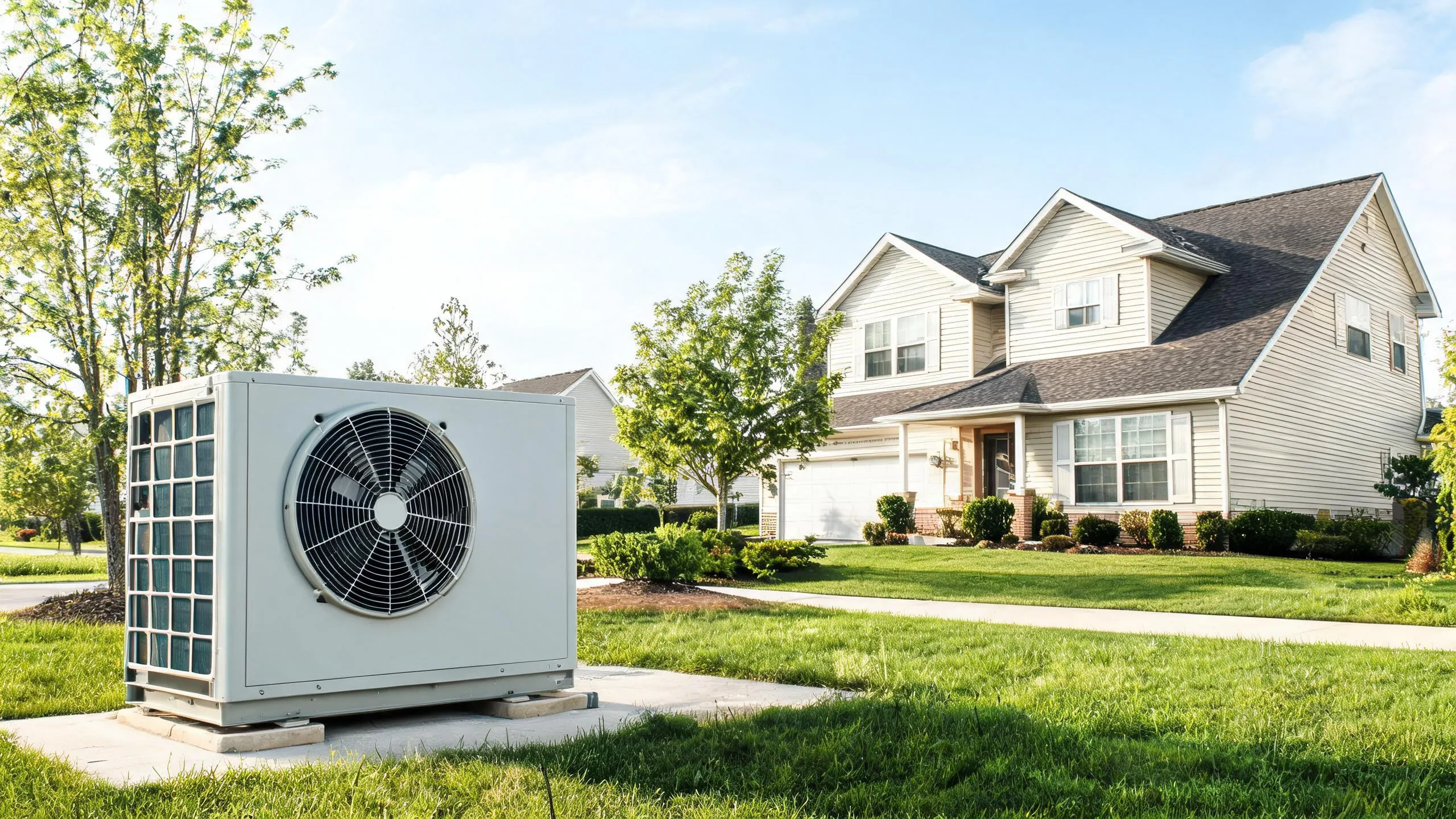







An outdoor heat pump unit mounted on a concrete pad in front of a two-story suburban house with a landscaped lawn.

Heat Pump Repair in Ann Arbor, MI

Tell us about the job

Takes about a minute. No obligation.

RepairHeat PumpWashtenaw County, MI
Step 1 of 2

What ZIP code is the job in?

Washtenaw County logged 166 severe weather events between 2015 and 2024. Most of that was wind, 89 events, with 60 hail events on top of it. The outdoor unit sits outside through all of it, and hail dents fins and bends the cabinet, wind throws branches and grit into the coil. A heat pump can keep running after that kind of hit and still be worse off than it was, losing airflow or efficiency slowly instead of all at once. If a storm has come through and the unit took a hit, that's worth a look even if it still blows warm or cold.

8 months
October through May, your system heats
3 months
June through August, it cools
19°F
the average winter night it heats against
81°F
the average summer afternoon it cools against
Isometric line illustration of a cutaway single-story house showing interior rooms with furniture and ceiling ductwork, connected to an outdoor condenser unit on the ground outside the left wall.
Your system heats October through May and cools June through August.

NOAA nClimDiv, 1991–2020 normals

A heat pump that blows air but not warm or cold air has lost its ability to move heat, not just its airflow.

That points to the reversing valve or the refrigerant charge, and both need a gauge set and a trained eye to sort out.

Electricity here runs 20.02 cents a kilowatt-hour, so a heat pump running wrong is a bill you'll notice

Power here costs 20.02 cents per kilowatt-hour
89 damaging wind events from 2015 to 2024
60 hail events from 2015 to 2024
October Is When It Finds the Weak PartHeat here runs October through May, and the first cold week is when a weak part gives out.

A heat pump that short cycles, runs constantly, or never quite hits the set temperature is drawing power the whole time it struggles. With electricity priced the way it is here, that cost lands on the next bill, not somewhere down the road. Waiting on a repair doesn't pause the problem, it just means paying for a machine working against itself for another week or month. Whether the cause is the reversing valve, the refrigerant charge, or storm damage to the outdoor unit, a contractor needs to find it before the fix makes sense. Get it looked at soon rather than letting it run wrong while you decide.

After a Storm, the Outdoor Unit Deserves a Look

If the outdoor unit took a hit this year, from hail or a branch or just wind-driven grit, that damage doesn't always show up as a breakdown right away. It shows up as a system that runs longer and keeps up less. A contractor can check the coil and fins for that kind of damage in the same visit that sorts out the reversing valve or the charge.

Find a contractor
A man seen from behind in a dark long-sleeve shirt, olive work pants and brown boots climbs porch steps toward a gray front door, carrying a waxed canvas tool bag with tools in its outer pockets, beside a potted shrub.
A gray air-source heat pump mounted on a concrete pad next to a house with gray vinyl siding, surrounded by gravel and flanked by green shrubs and white hydrangea flowers.

Running It Wrong Doesn't Give It a Pass

A heat pump low on refrigerant doesn't just struggle, it starts hurting itself. The compressor is built to pump refrigerant, not air, and low charge means it's working without enough refrigerant moving through it to carry the heat it generates away. Run it like that for days or weeks and the compressor wears toward a failure that normally wouldn't come for years. A reversing valve that's stuck or leaking internally causes a similar pattern. Refrigerant bypasses where it shouldn't, the compressor strains to make up for it, and heat builds up in a part that was never designed to handle it. Letting the system keep running on a bad valve or a low charge doesn't give it a chance to work through the problem. It just spends the compressor's life faster.

What Actually Wears Out

The compressor, the reversing valve, and the defrost control are where most heat pump failures start. The compressor has seals and bearings that wear with every start and every hour of run time, and once it's weak it draws harder and runs hotter without moving any more heat. The reversing valve has a sliding core that can stick from built-up grime or burn out internally, which leaves the system blowing air that's neither hot nor cold. The defrost control relies on a sensor and a timer, and when either drifts off, the outdoor coil ices over and the whole system loses capacity without any single part actually breaking.
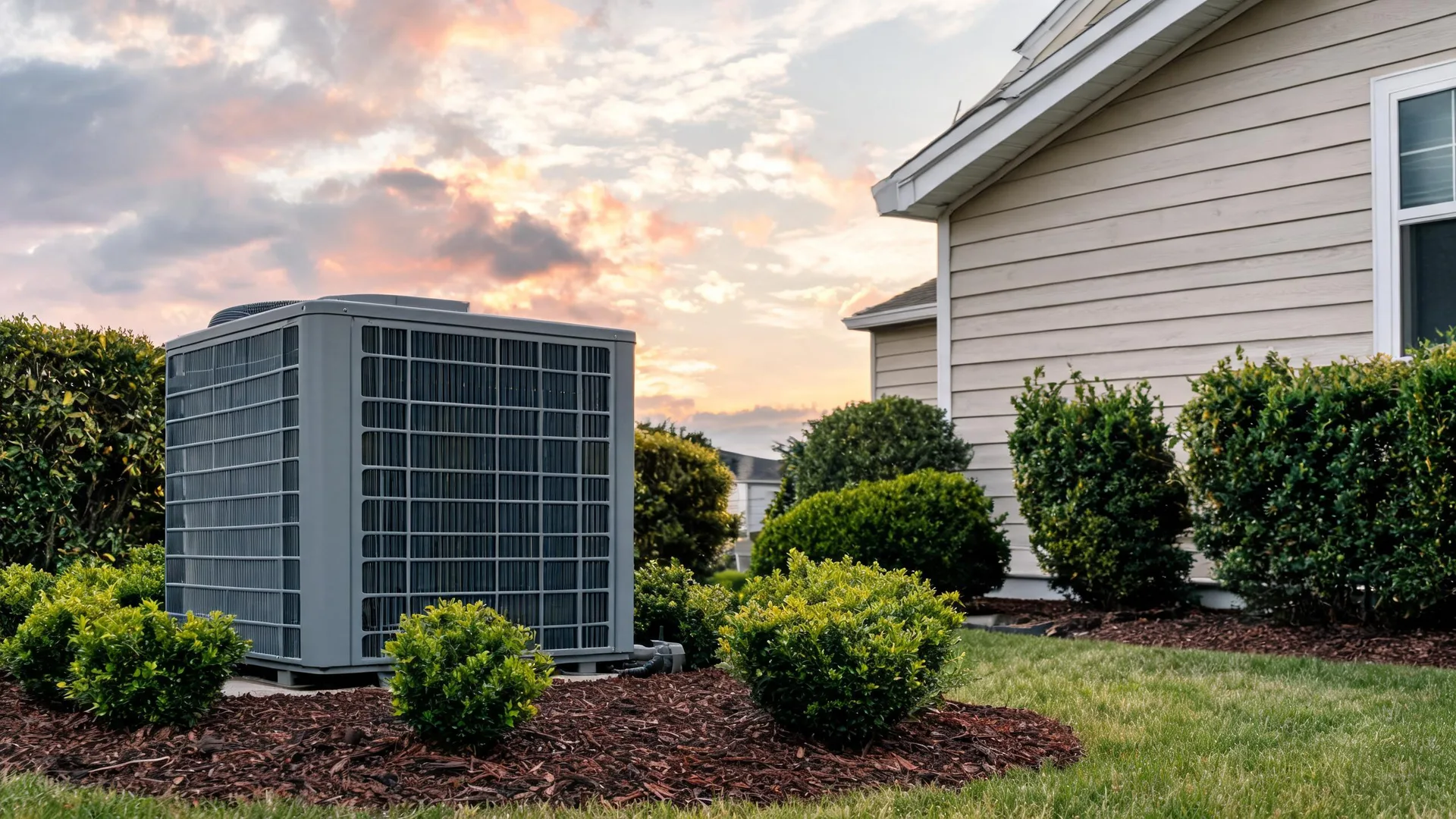
Why It Matters for the Fix

Each of these failures looks the same from inside the house, which is why guessing at a fix wastes money. A iced coil, a stuck reversing valve, and a tired compressor all show up as a system that runs and runs without keeping the house comfortable. Sorting out which one it is takes gauges, a meter, and a look at the outdoor unit while it's running, not just a glance at the thermostat. Fixing the wrong part, or waiting to fix any of them, lets the real problem keep working on the compressor underneath it.

Before calling anyone, a few things are safe to check yourself. Look at the thermostat first. Make sure it's set to heat or cool as needed and the setpoint is actually past room temperature, since a setting bumped by accident looks exactly like a breakdown. Check the air filter next and replace it if it's gray or clogged, because a blocked filter starves the system of airflow and can trip it into shutting down on its own. Walk outside and look at the outdoor unit. Clear away leaves, mulch, or anything piled against the cabinet, and make sure nothing is blocking the fan on top or the sides. If the outdoor coil is caked in ice outside of a normal defrost cycle, don't chip at it. That's a sign for a contractor, not a project for a homeowner. Last, check the breaker panel. A tripped breaker will shut the whole system down and is worth ruling out before assuming something inside the unit has failed.

A diagnostic visit starts outside, not at the thermostat. A contractor will run the system and watch what the outdoor unit actually does, since a heat pump has to reverse itself to switch between heat and cool and that's where a lot of problems hide. Gauges go on to check the refrigerant charge, because too little or too much both throw off how the system moves heat. A meter checks the compressor's amp draw against what it should be pulling, which says a lot about whether it's straining. The defrost control gets checked too, since a bad sensor or timer there can ice the coil without tripping anything else. None of this is guesswork. It's the same handful of readings every time, compared against what the system should be doing, until the one part that's off shows itself.