





An outdoor heat pump unit mounted on a concrete pad in front of a two-story suburban house.

Heat Pump Repair in Allegan, MI

Tell us about the job

Takes about a minute. No obligation.

RepairHeat PumpAllegan County, MI
Step 1 of 2

What ZIP code is the job in?

Allegan County is zone 5A, a cool climate where heating carries most of the load. Overnight lows average 20°F through December, January and February, so your heat pump spends the winter working steadily rather than straining through sudden spikes. That kind of steady load is easier on a compressor than the extremes you'd get somewhere with brutal summers added on top. The wear that does show up around here tends to come from outside, wind and winter storms, more than from the system working too hard. If yours has been through rough weather and is acting up now, that's usually something worth fixing rather than a sign it's finished.

8 months
October through May, your system heats
3 months
June through August, it cools
20°F
the average winter night it heats against
81°F
the average summer afternoon it cools against
Isometric cutaway illustration of a single-story house showing interior rooms, ceiling ductwork, an indoor air handler, and an outdoor condenser unit connected by lines on the ground.
Your system heats October through May and cools June through August.

NOAA nClimDiv, 1991–2020 normals

A dead thermostat battery or a tripped breaker can make a heat pump look broken when it isn't.

If the outdoor unit won't run at all, check the breaker and the thermostat display before you call anyone.

At 19.3 cents a kWh, a heat pump running wrong costs you all year

Power costs 19.3 cents a kWh statewide
Climate zone 5A
Cooling runs June through August

Your heat pump switches over to heat in October here, so September is worth a look if it's been sitting idle all summer. Whatever was wrong with it in May tends to still be wrong in September, it doesn't fix itself over a few warm months. The first cold mornings are when a weak part finally gets asked to do real work, and that's when it quits. A heat pump that's been limping along in cooling mode usually shows its hand within the first few weeks of heating, not gradually. If yours struggled at the end of last winter, get it checked before October rather than after the first cold snap finds the same problem.

It's usually worth repairing

It has an easier job here than in most places, so your heat pump is often in decent shape. Repair is usually worth it.

Find a contractor
A gray heat pump outdoor unit mounted on a concrete pad next to a residential house with lap siding and stone accents.

Built recently, running fine, still worth fixing

If yours was installed with the house, check the paperwork or the build date before you assume the worst. A heat pump maybe a decade or so into its life has a compressor and a reversing valve built to last well past whatever's acting up on it now. The time-lapse above is the ordinary case. Years of running, not a system near the end of it. Call for a repair first and let whoever comes out tell you if that's wrong.

A refrigerant leak only gets smaller to fix later

A heat pump low on charge will still run, just worse. The compressor keeps pulling on a system that doesn't have enough refrigerant moving through it, and that's what wears the compressor down early. Letting it run low all season doesn't use up anything, the leak just keeps leaking, but the compressor pays for every hour it runs starved.
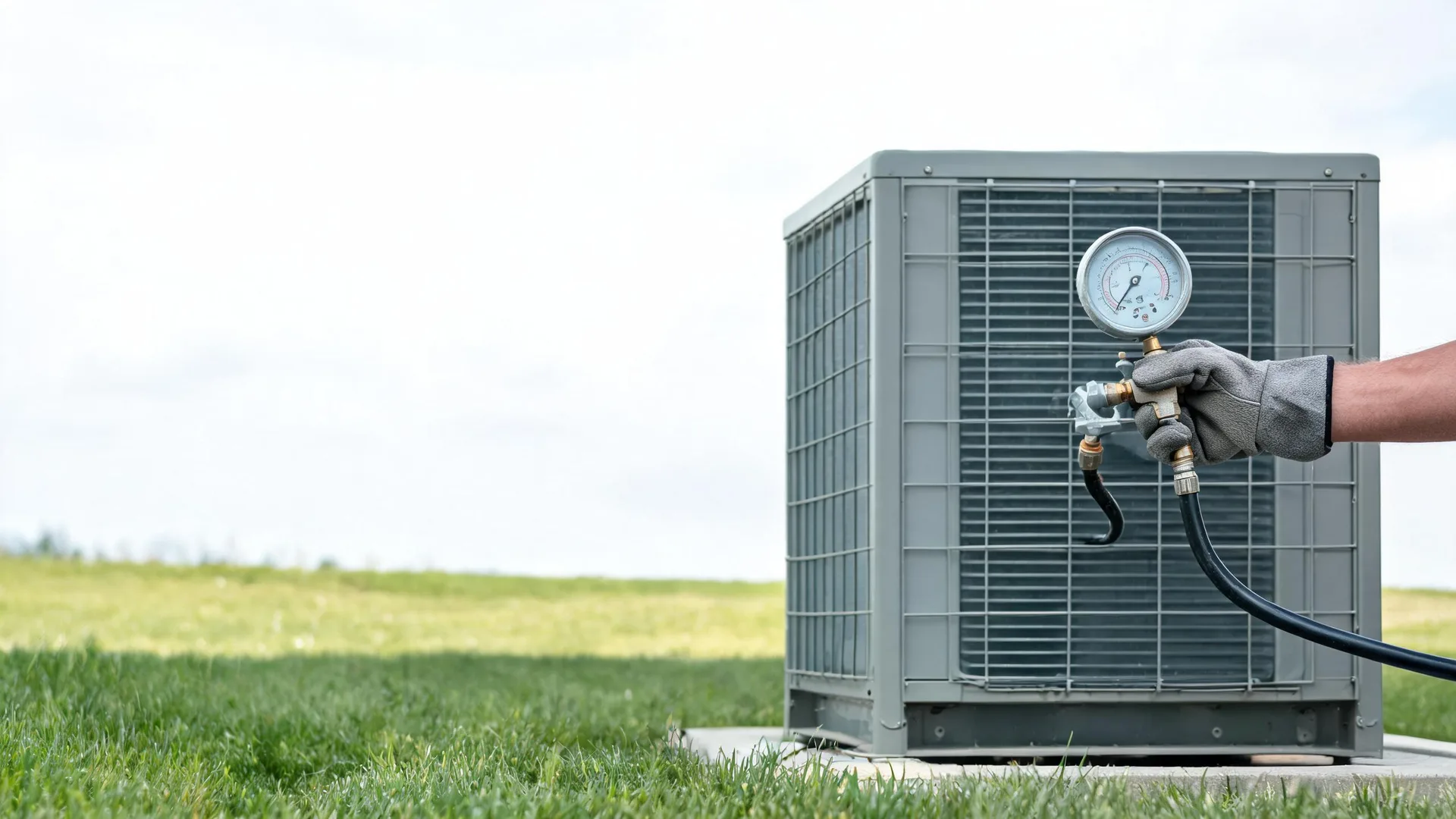
A struggling defrost cycle ices up fast once it starts

If the reversing valve or the defrost sensor is already marginal, frost builds on the outdoor coil faster than the system clears it. Once ice gets ahead of the defrost cycle, it insulates the coil from the outside air the system needs to pull heat from. A unit running iced over is working against itself, not just working harder.

A heat pump that needs repair usually tells you before it quits outright. Warm air coming from the vents that isn't actually warm, just less cold than the room, is the most common early sign. So is a unit that runs constantly without the house ever feeling satisfied, cycling on and on instead of reaching temperature and shutting off. Listen for it too. A grinding or rattling at the outdoor unit usually means a fan motor or a loose part, not something that settles down on its own. Short cycling, where the system kicks on and off every few minutes, points to a control problem or a refrigerant issue rather than a thermostat quirk. Any of these is worth a call before it turns into a unit that won't run at all.

Age on paper doesn't tell you much by itself. What matters is what broke and what it would take to fix it. A failed capacitor, a bad contactor, a dead fan motor, these are normal repairs on a heat pump of any age, and fixing them brings back a unit that works fine. A cracked heat exchanger or a compressor that's lost its oil and seized is a different conversation, because at that point you're paying to replace the one part that costs as much as starting over. Ask whoever comes out to name the part before you decide anything. If they can point to it and it's a part that fails on its own without taking the rest of the system down with it, repair almost always makes sense. If the failure is the compressor itself, that's worth weighing against a new unit instead of sinking money into the one part a heat pump can't really be fixed around.