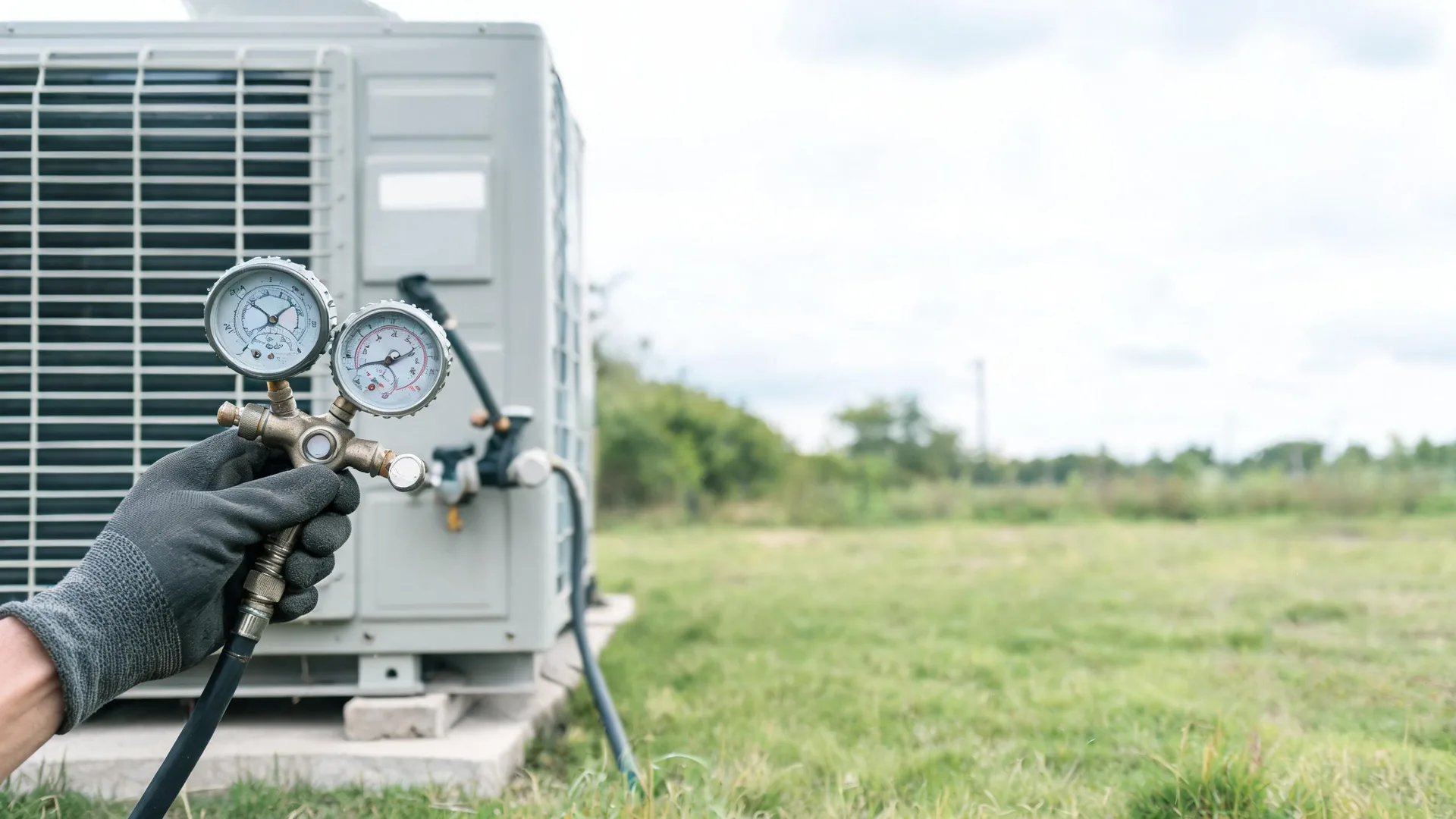
Lenawee County sees real storm numbers
Lenawee County logged 84 severe weather events between 2015 and 2024, most of it damaging wind. A tornado touched down here in that span too. A heat pump's outdoor unit sits right in the path of all of it.
Takes about a minute. No obligation.
Lenawee County logged 84 severe weather events between 2015 and 2024, most of it damaging wind. A tornado touched down here in that span too. A heat pump's outdoor unit sits right in the path of all of it.
Hail and flying debris can bend the fins or dent the cabinet without stopping the heat pump outright. It may still run and still feel off. If a storm came through and the outdoor unit took anything, that is worth a look even while it is working.

NOAA nClimDiv, 1991–2020 normals
Lenawee County winters average 20°F overnight in December, January and February, which is cold but not extreme for a heat pump.
A heat pump breaking down here is more often a sign of age or a worn part than a climate it can't keep up with.




September is worth paying attention to, since heat starts up again in October. A heat pump that's been sitting idle on the heating side since May gets tested the moment it has to run again, and a part that was already worn is what gives out, not the weather asking too much of it. The same thing happens at the other end of the year, when cooling starts in June after eight months of the unit resting on that side. If yours is short-cycling or not keeping up right as the season turns, that timing is the clue. It means something was already going before the load found it.
If a storm came through recently, have the outdoor unit looked at even if it's still running. Hail and debris can bend fins or dent the cabinet without stopping it outright, and that kind of damage doesn't always announce itself right away.
Find a contractor
A heat pump that has been running day and night for years is already partway through its working life. If your system came with a house built in 1968 or earlier, it's worth asking the contractor straight what's wrong and whether this repair is worth it, or if the unit is close enough to done that the money is better spent on a new one.
Set it to heat or cool, whichever isn't working, and move the temperature well past the current reading. Listen for the outdoor unit to kick on. Check that the batteries are fresh and the breaker for the air handler and the one for the outdoor unit are both on. A tripped breaker that resets itself and trips again means something's wrong, don't keep forcing it back on.
Walk out to the unit and look at the coil, the fins around the outside of the cabinet. Clear away leaves, grass clippings or anything blocking airflow, and make sure nothing is sitting within a couple feet of it. Look for ice built up on the coil or the lines. A thin layer that melts off during normal defrost cycles is fine. A unit caked in ice that isn't clearing on its own needs a technician, not a hairdryer.
A heat pump rarely quits all at once. Most of the time it tells you first. Air coming out of the vents that feels lukewarm instead of properly warm or cool, especially in heating mode, usually means the system is struggling rather than fully failing. Short cycling, where the unit kicks on and off every few minutes instead of running a full cycle, wears on the compressor and is worth getting looked at before it gets worse. A hissing sound can mean a refrigerant leak. Grinding or squealing points to a motor bearing going bad. And if the outdoor unit is running constantly, never shutting off, but the house still isn't reaching temperature, it's working hard for little result, which is its own kind of warning sign.
A repair is worth doing when it fixes one part and the rest of the system is sound. A failed capacitor, a bad contactor, a low refrigerant charge from a single leak point, these are normal wear and the rest of the unit doesn't care how old it is. Replacement starts to make sense when the compressor itself is failing, since that's the most expensive part in the cabinet and a compressor job on an old unit often costs close to what a new system would. It also makes sense when the same unit keeps coming back for different reasons, year after year. One repair is bad luck. A pattern of them means the next failure is already waiting somewhere in the system, and a good contractor will tell you straight when that's what's happening.