


A quiet residential street at dusk lined with illuminated two-story brick houses and mature trees.

Furnace Repair in Saginaw, MI

Tell us about the job

Takes about a minute. No obligation.

RepairFurnace or heatingSaginaw County, MI
Step 1 of 2

What ZIP code is the job in?

Saginaw County saw 110 severe weather events between 2015 and 2024. Most of that was wind, 79 events, with 17 hail events and a tornado on top of it. Wind and hail don't care whether your furnace is tucked in a closet or your AC condenser is sitting outside next to it. Hard freezes and ice storms strain the whole system that feeds your furnace, including the power to it. A furnace that still fires up after a storm can have damage you won't notice until the next cold snap, when a part that got jarred loose or corroded finally gives out.

8 months
October through May, your furnace is on duty
19°F
the average winter night it heats against
74%
of homes here heat with gas, so most furnaces here burn gas
13 winter storms
in ten years, the nights a failure hurts most
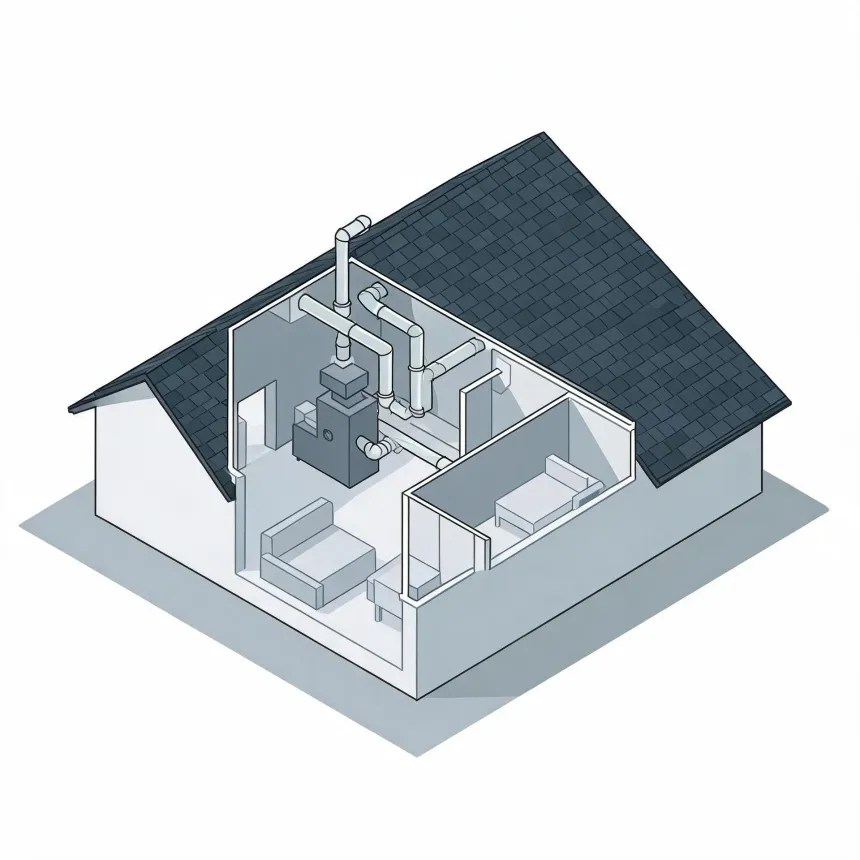
Isometric cutaway illustration of a single-story house with a dark shingled roof, showing interior rooms with furniture and a furnace connected to ductwork.
Your furnace works hardest from November through March.

NOAA nClimDiv, 1991–2020 normals

Half the furnaces in Saginaw County are running in houses built in 1968 or earlier.

A furnace that old has likely been replaced once already, so ask how much life the current one has left before you sink money into a big repair.

Eight months of heat a year wears a furnace down early

Heat runs October through May
Winter nights average 19°F
Climate zone 5A

A furnace here isn't running through a mild stretch and resting the rest of the time. It's on from October through May, and on the coldest nights it's fighting to keep up with overnight lows that average 19°F, colder than most of the country ever sees. That's a lot of hours on the igniter, the blower motor, the heat exchanger, all of it. When something starts acting up partway through that stretch, it's usually not bad luck. It's a part that's been working harder than it was built for and is finally showing it. Get the actual cause diagnosed instead of just patching the symptom, or you'll likely be back here again before spring.

Had a storm come through? Get your furnace checked before it tells you itself.

If your furnace went through a storm this year, a hail hit or a power cut doesn't always show up right away. Have it looked at even if it's still firing, so a jarred part doesn't wait until the next cold snap to fail.

Find a contractor
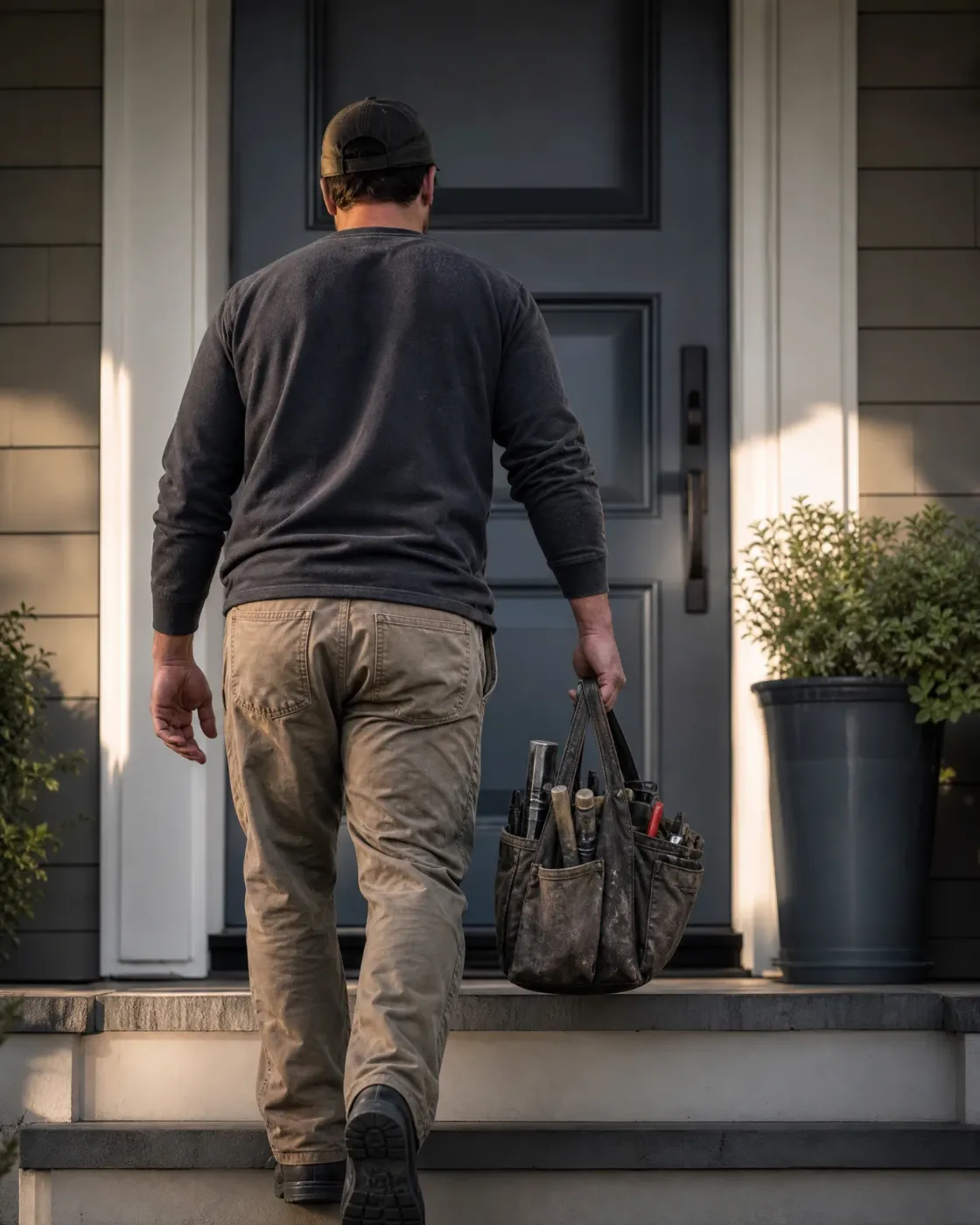
A man in a cap, dark long-sleeved shirt and tan work pants, seen from behind, carries a canvas tool bag up concrete steps toward a dark blue front door flanked by white columns and a potted shrub.
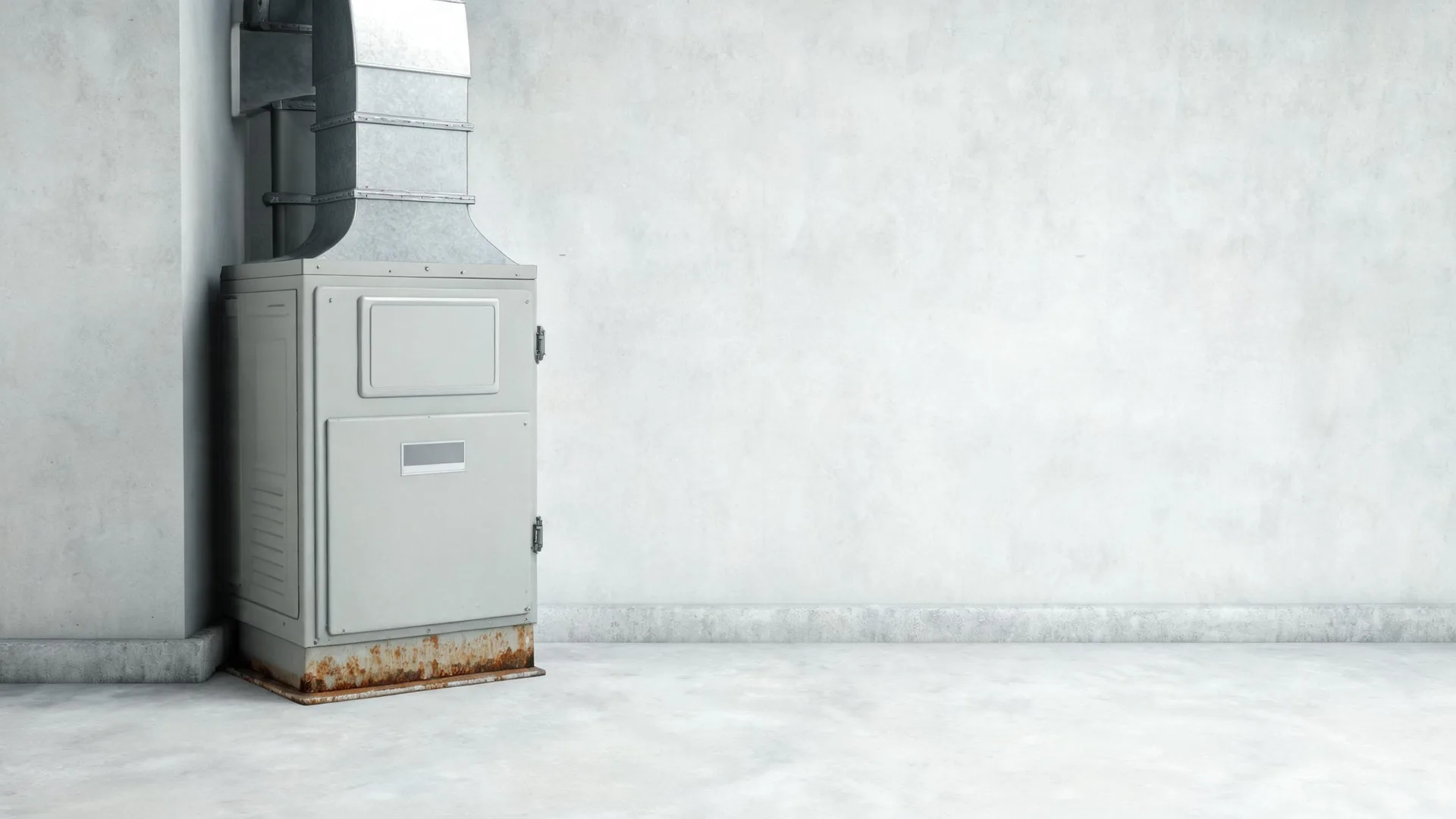
A gray gas furnace with attached ductwork and piping installed in an unfinished concrete basement.

Know what you're repairing before you pay for it

Before you pay for another repair, ask the contractor how many years the current furnace has left. If it's running on borrowed time already, a big repair now just delays the same decision.

Check these before you pick up the phone

Make sure the thermostat is set to heat and the setting is above room temperature, not just holding. Check the filter and swap it if it's gray or caked, a clogged one chokes airflow and can shut the furnace down on its own. Go to the breaker panel and look for a tripped switch. If the furnace has a standing pilot, see if it's lit. Last, check that the vent hood outside isn't blocked by anything that fell against it.

Know when to stop and wait for a tech

If the breaker trips again after you reset it, leave it off and call, something downstream is pulling too much current. The same goes for any burning smell, a furnace that won't stop cycling on and off, or a pilot light that's yellow instead of blue. Those point to a part failing inside the cabinet, and resetting things yourself won't fix what's actually wrong.

An unfinished concrete basement containing a metal HVAC air handler, exposed wooden ceiling joists with sheet-metal ducts, a hanging bare bulb, copper pipes, and stacked cardboard boxes.

A new furnace would cut about $150 a year off heating for a typical Saginaw County home.

  • A new high-efficiency furnace$600 a year
  • An older furnace$750 a year

Estimates for a typical Saginaw County home, compared with an older unit built to the previous federal minimum, from EIA household energy data, Michigan fuel prices and NOAA climate normals. Your home will differ.

Repair makes sense when one part has failed and the heat exchanger is sound.

Replacement makes sense when the heat exchanger is cracked or the furnace keeps needing parts.

A repair is worth making when the part that failed is isolated, like an igniter, a flame sensor, or a draft inducer, and the rest of the furnace is sound. Those parts fail on their own and fixing one doesn't tell you anything bad about the others. It's a different question when the heat exchanger is cracked or corroded, because that's the part the whole furnace is built around, and a furnace doesn't usually need just one major repair. If this isn't the first repair in the last year or two, or the furnace is already struggling to keep rooms at the temperature you set, that pattern matters more than any single fix. A tech can tell you whether what's failing now is wear on an old furnace or a part that just happened to give out. Ask that question before you agree to the repair, not after.