

Three illuminated two-story brick houses on a tree-lined residential street photographed at twilight, with warm window light and landscape uplighting visible against a deep blue evening sky.

Furnace Repair in Owosso, MI

Tell us about the job

Takes about a minute. No obligation.

RepairFurnace or heatingShiawassee County, MI
Step 1 of 2

What ZIP code is the job in?

Shiawassee County saw 63 severe weather events between 2015 and 2024. Damaging wind caused 39 of those, hail hit 5 times, and 5 tornadoes touched down in the county in that span. Across Michigan, 34% of households lost power for 24 hours or longer in 2024. A furnace needs power to run even on gas, from the igniter to the blower motor, so a storm that knocks out electricity for a day leaves a house with no heat no matter what's in the tank or the line. If your furnace sat through a storm, that's worth knowing even if it fired right back up.

8 months
October through May, your furnace is on duty
19°F
the average winter night it heats against
60%
of homes here heat with gas, so most furnaces here burn gas
13 winter storms
in ten years, the nights a failure hurts most
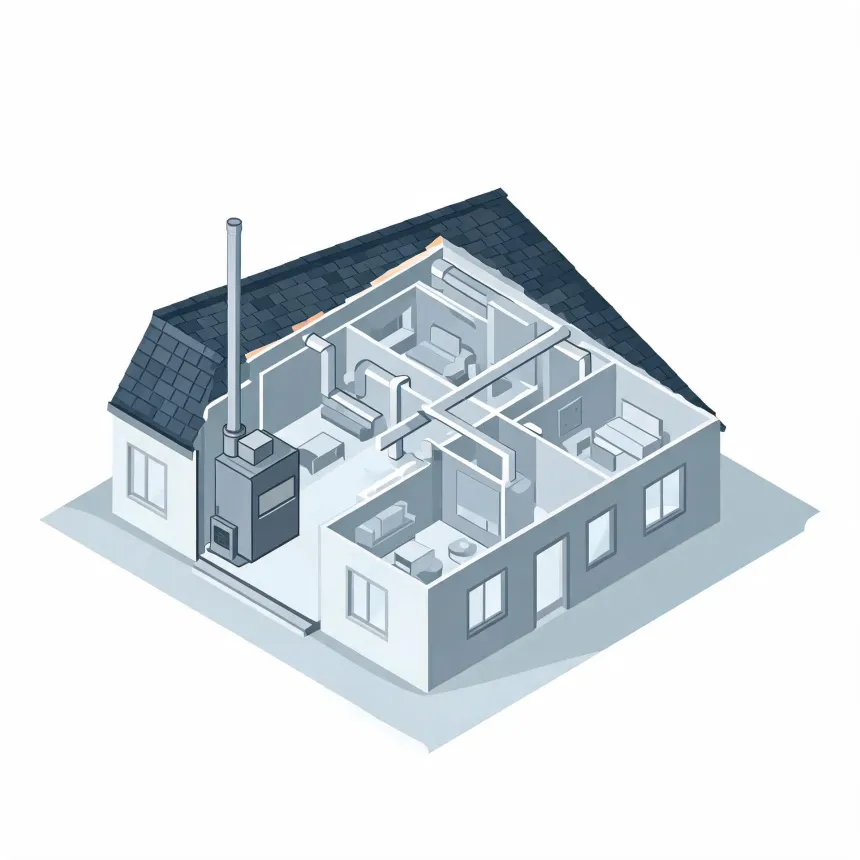
Isometric cutaway illustration of a single-story house showing interior rooms, ductwork, and a dark furnace unit with a tall flue pipe rising past the shingled roof.
Your furnace works hardest from November through March.

NOAA nClimDiv, 1991–2020 normals

Furnaces here start working in October and keep going through May.

A furnace that's been sitting idle since spring finds out in the first cold snap if a weak part is going to hold.

Half the homes here were already standing before this furnace was

Half the homes here were built by 1969
Heat runs October through May
Winter nights average 19°F

Eight months of heat a year is a long stretch for any furnace to carry. Most of the country gets by with less. Here the burner and blower are on the clock from October clear through May, and that kind of run time wears on an igniter or a blower motor faster than it would somewhere milder. A furnace that's acting up usually has a reason behind it, not just bad luck. Finding the actual cause matters more here than it would somewhere a furnace only ran a few months a year.

If your furnace rode out a storm, have it checked before the next one

A furnace that sat through a storm and came back on hasn't been cleared. If the power went out for a day, it's worth having someone check what that did to it before the next outage does the same thing again.

Find a contractor
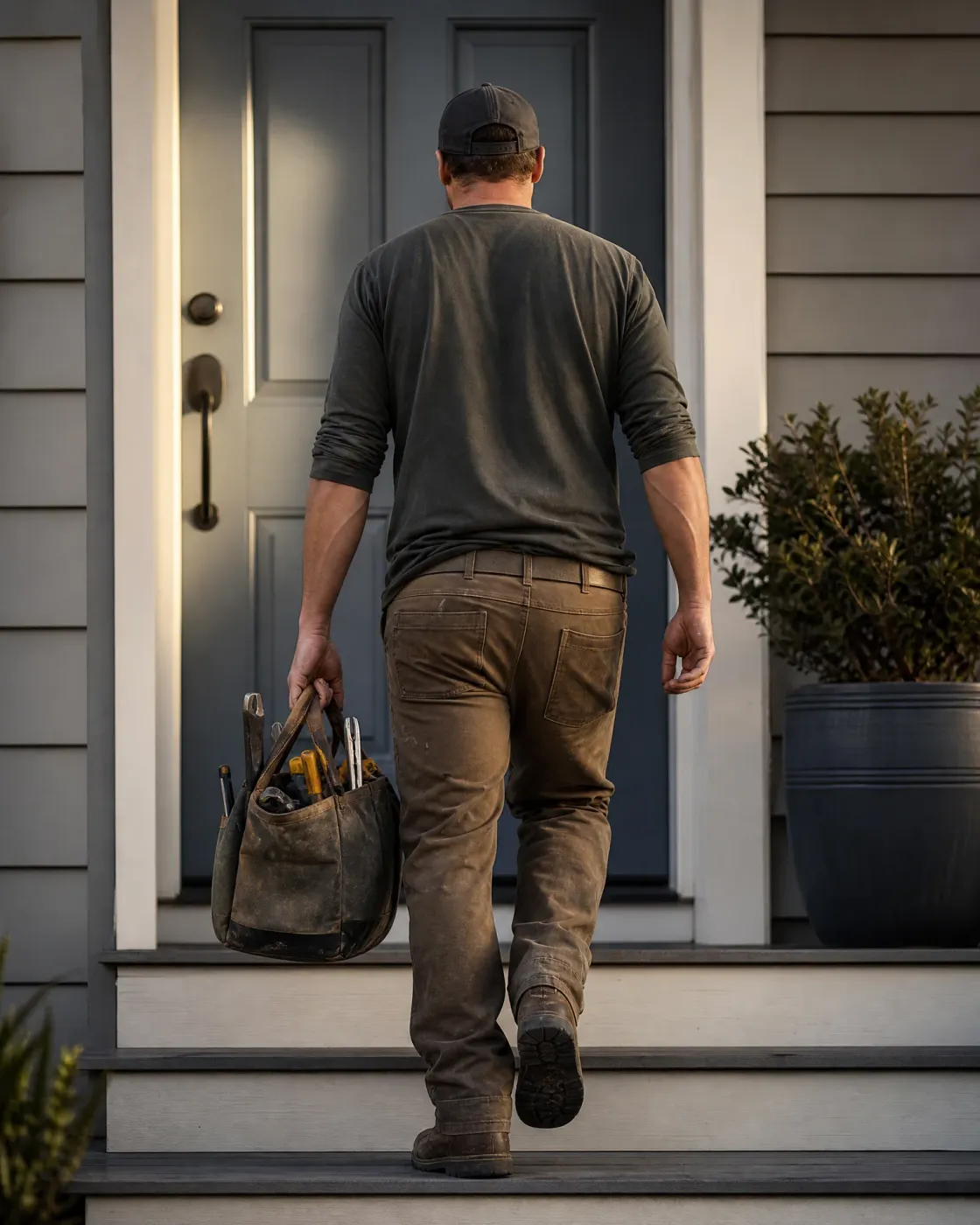
A man in a cap, dark long-sleeved shirt and brown work pants walks up porch steps toward a gray front door, carrying a worn canvas tool bag filled with hand tools.
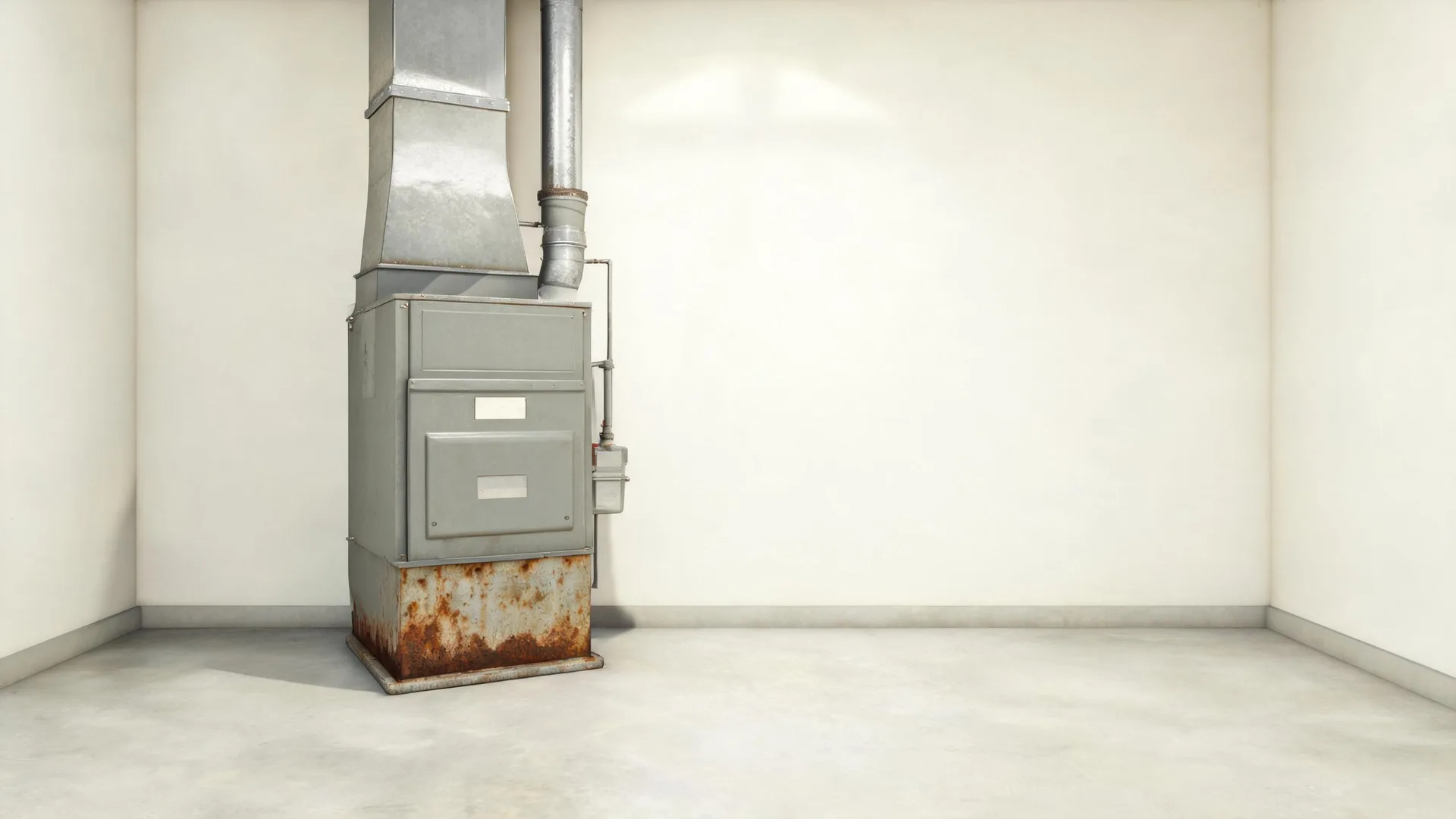
A gray gas furnace with attached ductwork and piping installed in an unfinished concrete basement.

On the clock since October

A furnace that's been run hard for eight months straight isn't a guess, it's what the thermostat shows. When one stops working right, the cause is usually wear from all that time on, not a one-off fluke. Finding which part gave out, and why, is what keeps the repair from being a repeat visit.

Most failures start with ignition

The igniter is the part that gives out most often. It's a thin strip that heats up every time the furnace starts, and that heating and cooling cycle wears it down until it cracks. A furnace that won't light, or lights and then shuts off, usually has a failing igniter or a flame sensor too dirty to prove there's a flame.

Moving parts wear before the rest

The blower motor pushes air through the house every time the furnace runs, and the bearings inside it wear down with every hour of use. A motor that's starting to go will often run loud, or run hot enough to trip its own safety switch. That's a sign to get it looked at before it quits outright and leaves the blower not moving air at all.

An unfinished basement containing a forced-air furnace with metal ductwork, exposed wooden ceiling joists, a hanging Edison bulb, and bare concrete floors.

A new furnace would cut about $150 a year off heating for a typical Shiawassee County home.

  • A new high-efficiency furnace$600 a year
  • An older furnace$750 a year

Estimates for a typical Shiawassee County home, compared with an older unit built to the previous federal minimum, from EIA household energy data, Michigan fuel prices and NOAA climate normals. Your home will differ.

Repair makes sense when one part has failed and the heat exchanger is sound.

Replacement makes sense when the heat exchanger is cracked or the furnace keeps needing parts.

A diagnostic visit starts before any panel comes off. The tech asks what the furnace was doing: did it try to light and fail, run and shut off, or not respond at all. That answer narrows things fast. Then comes a check of the thermostat call, the power to the unit, and the flame itself, working back from what the furnace is doing now to what part caused it. Igniters get tested for continuity, flame sensors get cleaned or swapped, and the blower gets watched running to see if it's pulling too much current or straining on its bearings. The goal isn't just to get it running again. It's knowing which part failed and why, so the fix holds.