





Three illuminated two-story brick houses on a tree-lined residential street photographed at twilight, with warm window light and landscape uplighting visible against a deep blue evening sky.

Furnace Repair in Muskegon, MI

Tell us about the job

Takes about a minute. No obligation.

RepairFurnace or heatingMuskegon County, MI
Step 1 of 2

What ZIP code is the job in?

Muskegon County saw 50 severe weather events between 2015 and 2024. Damaging wind came through 28 times, winter storms hit 15 times, and hail struck 7 times. A furnace itself usually sits inside, but the vent, the gas line, and any outdoor components can take a hit when wind drives debris across a yard or ice builds up on the roofline. Power matters too. Over a third of Michigan households went at least 24 hours without electricity in 2024, and a furnace with electronic ignition or a blower motor needs that power to run no matter how good the gas line is. None of this means your system took damage. It means a storm is a reason to have it looked at, not just a reason to wait and see if it still fires up.

8 months
October through May, your furnace is on duty
20°F
the average winter night it heats against
80%
of homes here heat with gas, so most furnaces here burn gas
15 winter storms
in ten years, the nights a failure hurts most
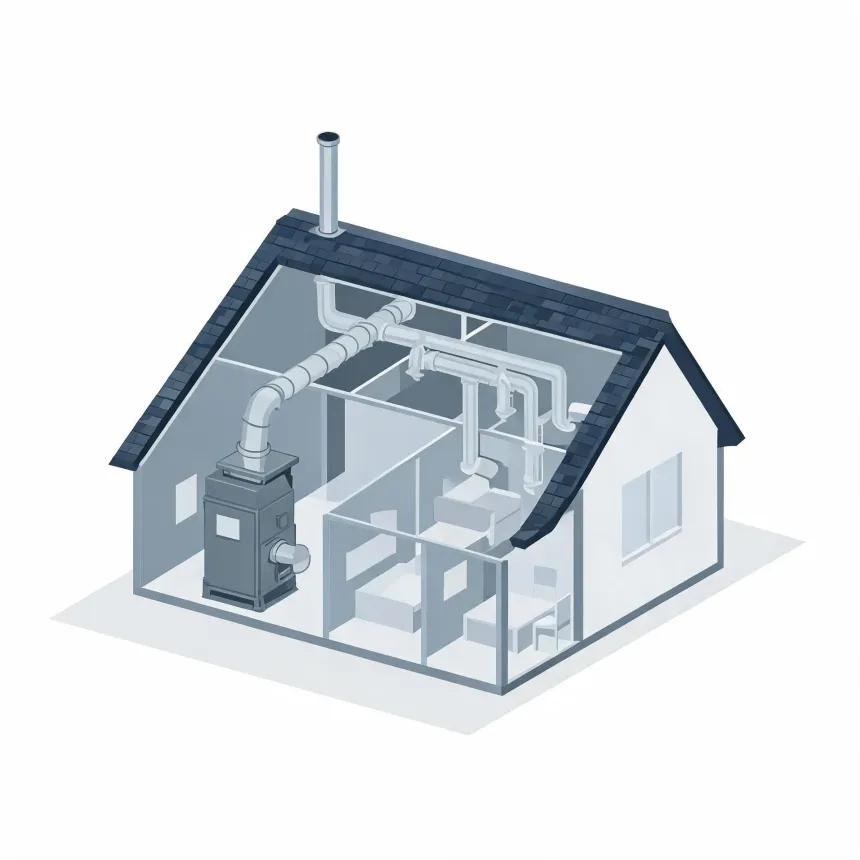
Isometric cutaway illustration of a small house showing a gray furnace unit with a flue pipe through the roof and branching ductwork running to rooms with simple furniture.
Your furnace works hardest from November through March.

NOAA nClimDiv, 1991–2020 normals

Your furnace runs eight months a year here, October through May.

That much runtime wears parts down faster, so a repair now is about catching the real cause before it gets worse.

Half these homes were built by 1969, and furnaces don't last that long

Half the homes here were built by 1969
Climate zone 5A
Heat runs October through May
Built for October, Tested in Month OneFurnaces here start their season in October, and the weak ones fail in that first cold snap.

A furnace that runs eight months a year doesn't fail at one clean point. It wears, and wear shows up as a symptom first: a longer run before the house warms up, a burner that cycles more than it used to, an igniter that takes two or three tries. Someone looking at it needs to find the actual cause, not just quiet the symptom for a month. A cracked igniter gets replaced and the furnace fires again, but if a dirty flame sensor or a failing blower motor is why the igniter burned out early, the next part goes the same way. Worth asking whoever comes out to check what's causing the wear, not just what broke.

After a storm, get the furnace checked before you need it

If a storm has come through recently, that's reason enough to get the furnace checked, even if it's still running. Wind-driven debris and ice can reach the vent, the gas line, or outdoor components without you knowing it. Have it looked at now instead of finding out the hard way during the next cold snap.

Find a contractor
A man in a cap, dark shirt and brown work pants walks up stone steps toward a gray front door, carrying a canvas tool bag in his right hand, with a potted plant beside the porch.
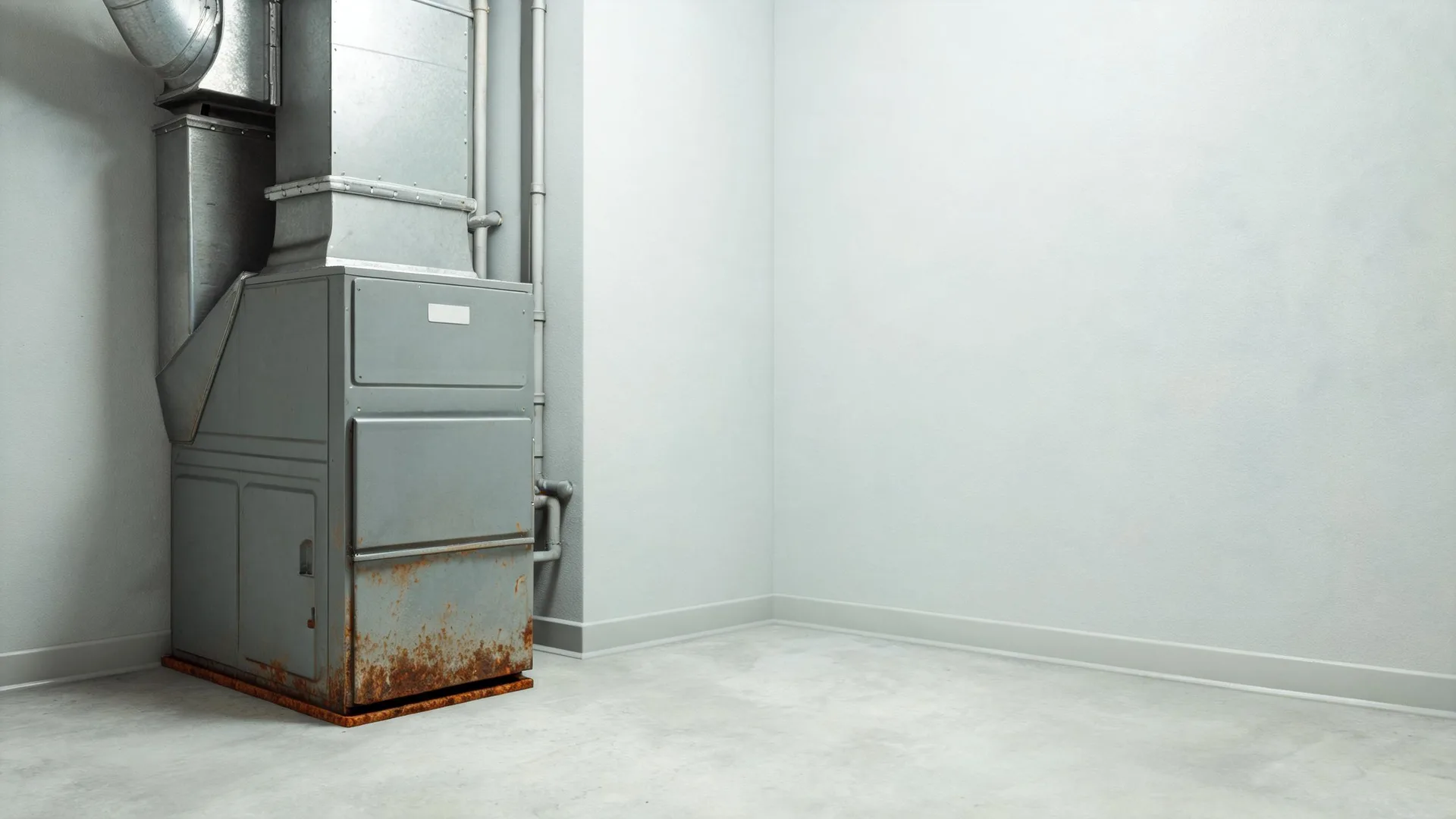
A gray residential gas furnace installed in an unfinished basement, connected to sheet-metal ductwork and PVC pipes.

Know What You're Repairing Before You Pay For It

If your furnace came with a house built in 1969 or earlier, ask whoever comes out how much life is left in it before paying for a major repair. A cracked heat exchanger or a failed blower motor means something different on a furnace that old than on one installed five years ago. Get the age of the unit itself confirmed, not just the house, and let that decide whether you're fixing it or planning to replace it.

A Small Problem Doesn't Stay Small

A furnace that's struggling still has to make heat, so it leans harder on whatever still works. A weak igniter gets tried again and again until it fails for good. A blower motor with a bad bearing keeps spinning until it seizes. Letting a known problem ride because the furnace still fires usually trades a simple fix now for a bigger one later.

Heat Rising From a Cracked Exchanger

Some failures aren't worth running through. A cracked heat exchanger can let exhaust mix into the air the blower pushes through the house, and that risk doesn't wait for a convenient time to show up. A furnace doing this needs to be shut down and looked at, not nursed along until the next service visit.

A gray forced-air furnace with ductwork stands in an unfinished concrete basement surrounded by storage items and clutter.

A new furnace would cut about $150 a year off heating for a typical Muskegon County home.

  • A new high-efficiency furnace$600 a year
  • An older furnace$750 a year

Estimates for a typical Muskegon County home, compared with an older unit built to the previous federal minimum, from EIA household energy data, Michigan fuel prices and NOAA climate normals. Your home will differ.

Repair makes sense when one part has failed and the heat exchanger is sound.

Replacement makes sense when the heat exchanger is cracked or the furnace keeps needing parts.

A diagnostic visit starts before any panel comes off. Whoever comes out will ask what you noticed first, when it started, and whether it's gotten worse, because that sequence narrows down where to look. Then the panels come off and the tech watches a full cycle: ignition, burner flame, blower start, shutdown. A good flame looks steady and mostly blue. A failing igniter might glow weak or take a couple of tries before it catches. The flame sensor gets checked too, since a coated or misaligned sensor can shut the burner off seconds after it lights, and that gets mistaken for an ignition problem when it isn't one. Static pressure and amp draw on the blower motor tell their own story, especially if the motor is running but not moving the air it should. None of this is guesswork. Each reading points toward one part or rules out another, and the tech should be able to tell you which part failed and why, not just which part they're replacing.