A row of dark-sided single-story buildings with gabled shingle roofs behind a tall trimmed hedge, with lawn, leafy trees and an overcast sky.

Furnace Repair in Monroe, MI

Tell us about the job

Takes about a minute. No obligation.

RepairFurnace or heatingMonroe County, MI
Step 1 of 2

What ZIP code is the job in?

Check the simple things first

Make sure the thermostat is set to heat and the setting is above room temperature. Check the furnace switch, the one that looks like a light switch near the unit, and make sure it's on. Look at the breaker panel for a tripped breaker. If the furnace uses a standing pilot, see if the pilot light is still lit. None of this takes tools, and it rules out the easiest problems before anyone pays a visit.

Know what to tell the tech

Check the air filter and see if it's clogged, since that alone can cause shutdowns or weak airflow. Notice if the furnace is trying to start, making noise, or doing nothing at all. Smell for gas near the unit, and leave the house if you do. Telling the tech what you saw and heard before they arrive helps them bring the right part on the first trip instead of guessing on site.

8 months
October through May, your furnace is on duty
21°F
the average winter night it heats against
81%
of homes here heat with gas, so most furnaces here burn gas
8 winter storms
in ten years, the nights a failure hurts most
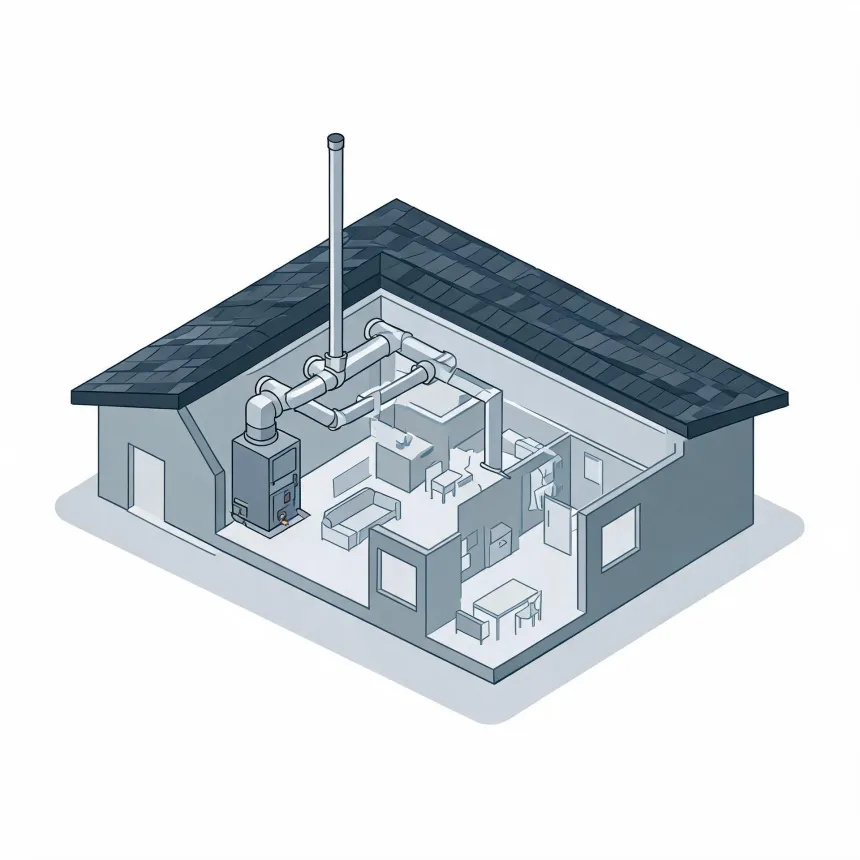
Isometric cutaway illustration of a single-story house showing interior rooms with furniture, a furnace unit with connected ductwork and a tall vertical flue pipe extending above the dark shingled roof.
Your furnace works hardest from November through March.

NOAA nClimDiv, 1991–2020 normals

A furnace won't tell you what's wrong over the phone.

The tech checks the pilot or igniter, the flame sensor, the pressure switch and the flow of air before touching anything else.

130 severe weather events, and 34% of homes statewide lost power for a day or more

130 severe weather events from 2015 to 2024
34% of homes statewide lost power a day or more in 2024
95 damaging wind events from 2015 to 2024
Ready Before OctoberFurnace season runs October through May here, and the first cold snap is when a weak part fails.

A furnace usually gives some warning before it quits for good. Short cycling is one, where it fires up, runs a few minutes, and shuts off before the house warms up. That can mean a dirty flame sensor, a clogged filter, or a cracked heat exchanger tripping a safety switch. A burner flame that looks flickery or yellow instead of steady blue needs attention, since it points to a combustion problem rather than a simple airflow issue. Banging or scraping when the blower starts usually means a loose part or a motor bearing going bad. Air coming out lukewarm instead of hot often traces back to the igniter or a failing limit switch. None of these get better on their own, and a furnace that's struggling to start is closer to one that won't start at all.

If the last storm took a toll on it, find out now

A furnace that still runs after a bad storm season isn't the same as one that's fine. If the outdoor power took a hit, or the unit sat through hail or high wind, get it checked before you need it to carry the house through a cold snap.

Find a contractor
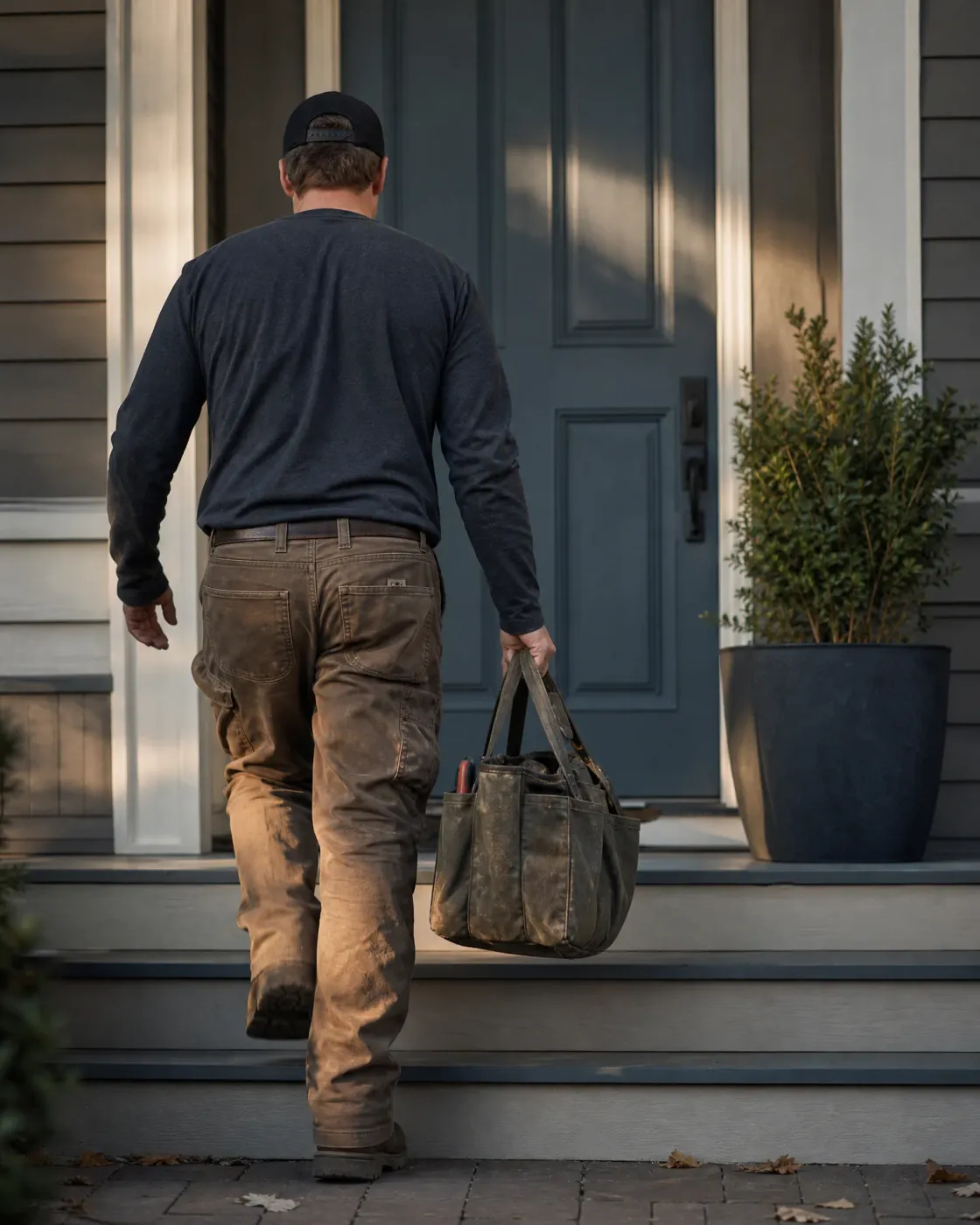
A man in a dark long-sleeved shirt, cap, and worn tan work pants climbs porch steps toward a dark blue front door, carrying a canvas tool bag.
A gas furnace with attached ductwork, gas piping, and condensate lines installed in a concrete-block basement.

Running It Won't Fix It

A cracked heat exchanger is the clearest case. The crack lets combustion gas mix into the air the blower pushes through the house, and heat makes the metal expand just enough to widen it. Keep running the furnace and the crack opens more each cycle. A blower motor with a failing bearing follows the same pattern. The bearing gets hotter and louder the longer it runs, and a motor that seizes can take out the blower wheel or trip the limit switch for good. A pressure switch stuck closed lets the furnace fire without confirming the inducer motor is pulling exhaust out properly, which is exactly the fault it's there to catch. None of these fix themselves by running longer. They fail a little more completely each time the furnace cycles, until the part that was struggling is the part that's gone.

Wear happens before failure does

A flame sensor coated in a thin layer of oxidation stops reading the flame even though it looks fine. An igniter gets weaker with every cycle it fires until the one that doesn't glow hot enough. A blower bearing dries out slowly, long before it bangs or seizes. None of this shows up by looking at the part. It shows up in how the furnace runs.

Age adds up across every part at once

A furnace that's been through many seasons isn't failing from one bad part, it's carrying wear in all of them at the same time. The capacitor is weaker, the sensor is dirtier, the switch contacts are more worn. Any one of those alone might not stop the furnace. Together, they're why older units run fine for years and then need a repair every few months.

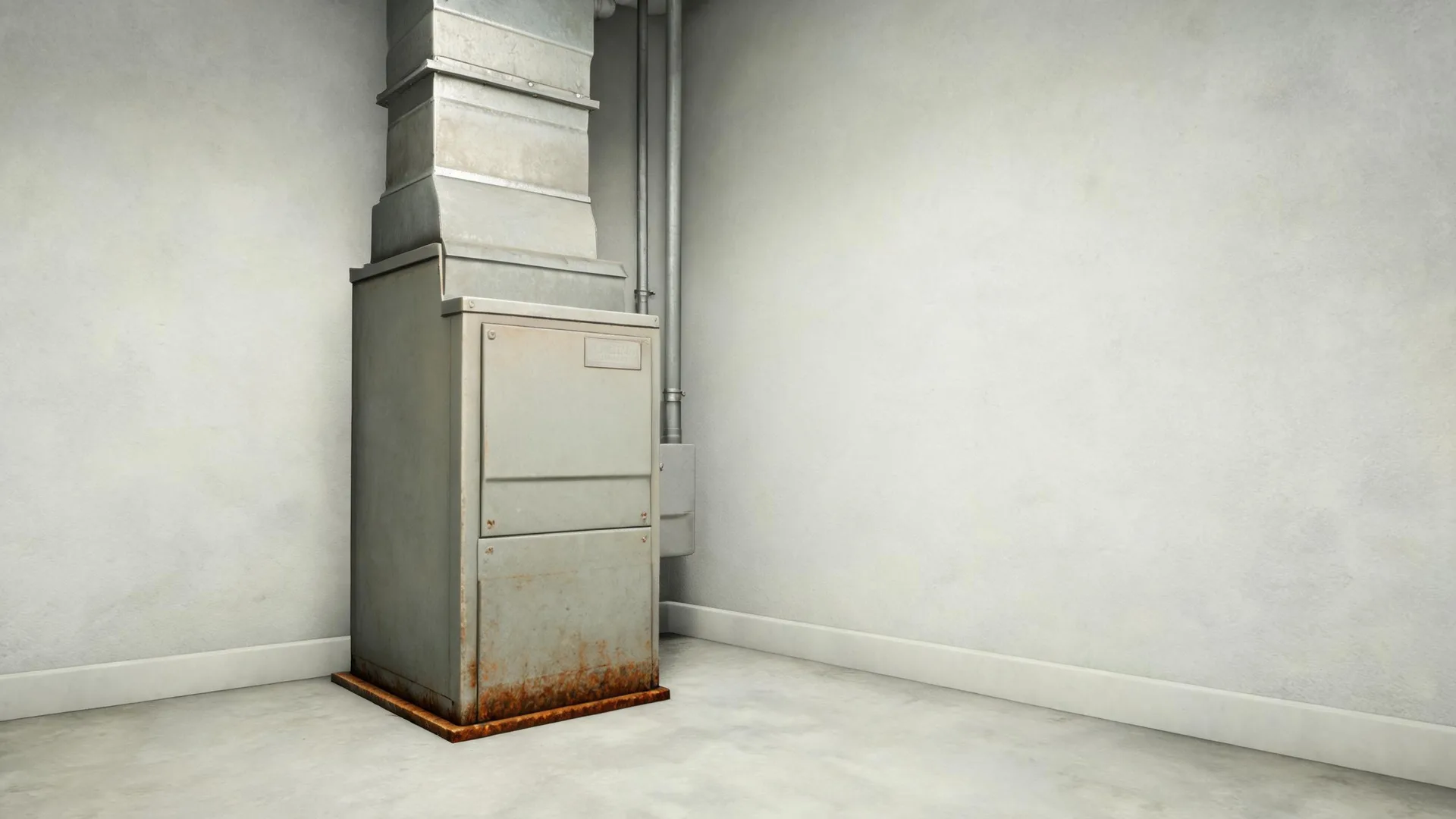
An unfinished concrete basement containing a metal HVAC air handler, exposed wooden ceiling joists with sheet-metal ducts, a hanging bare bulb, copper pipes, and stacked cardboard boxes.

A new furnace would cut about $130 a year off heating for a typical Monroe County home.

  • A new high-efficiency furnace$540 a year
  • An older furnace$670 a year

Estimates for a typical Monroe County home, compared with an older unit built to the previous federal minimum, from EIA household energy data, Michigan fuel prices and NOAA climate normals. Your home will differ.

Repair makes sense when one part has failed and the heat exchanger is sound.

Replacement makes sense when the heat exchanger is cracked or the furnace keeps needing parts.

At some point the question isn't what's wrong, it's whether fixing it makes sense. Age matters more than any single symptom. An older furnace that needs a blower motor is a different call than a newer one needing the same part. The heat exchanger is the one piece that changes the answer by itself. If that's cracked, the furnace needs to be replaced, not patched, because there's no safe repair for it. Frequency counts too. One repair is a repair. The same furnace back in the shop every season for a different part means the whole system is wearing out at once, even if each visit fixes the thing it was called for. A tech who's seen the unit can tell you whether you're buying it a few more winters or just buying time.