

A illuminated two-story red brick house on a quiet residential street at dusk, flanked by mature trees under a deep blue evening sky.

Furnace Repair in Midland, MI

Tell us about the job

Takes about a minute. No obligation.

RepairFurnace or heatingMidland County, MI
Step 1 of 2

What ZIP code is the job in?

Midland County saw 76 severe weather events between 2015 and 2024. Damaging wind caused 50 of those, and winter storms with heavy snow, ice and blizzards hit 15 times. Hail showed up 11 times in that stretch too, and hail dents coils and bends fins without always stopping a furnace from running. A furnace that still fires after a storm can be running on a damaged part, drawing harder than it should or heating less evenly than it used to. Statewide, a third of households went at least a day without power in 2024, which matters for anything that depends on the furnace's ignition and blower. Weather like this does not ask the equipment's permission first.

8 months
October through May, your furnace is on duty
18°F
the average winter night it heats against
66%
of homes here heat with gas, so most furnaces here burn gas
15 winter storms
in ten years, the nights a failure hurts most
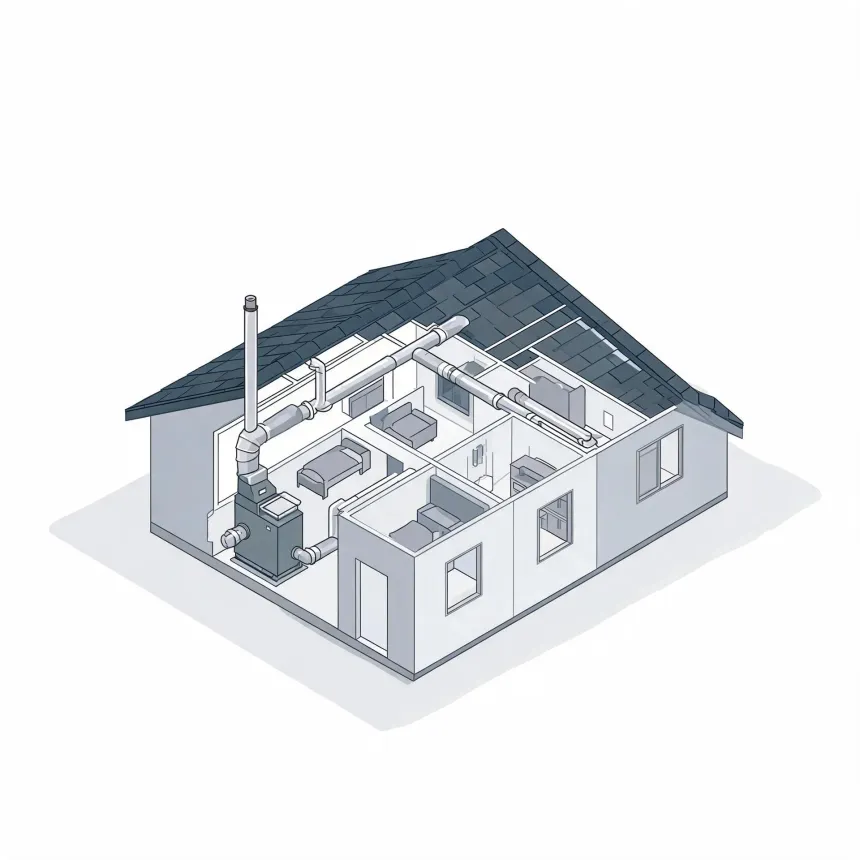
Isometric cutaway illustration of a single-story house showing interior rooms with furniture, ceiling ductwork, a furnace unit with a tall flue pipe, and a dark shingled roof.
Your furnace works hardest from November through March.

NOAA nClimDiv, 1991–2020 normals

The igniter is the part most likely to fail in a gas furnace.

A cracked or worn igniter won't light the burners at all, so the furnace blows cold air or doesn't start.

Eight months of heat a year wears a furnace down early

Heat runs October through May
Winter nights average 18°F
Climate zone 5A
Furnace Repair in Midland, MIHeat starts in October here, and the first cold snap is when a weak furnace shows it.

Eight months a year is most of the year, and that's the stretch when a worn igniter or a failing part finally gives out. Don't assume a quick reset or a new filter settles it for good. A furnace that struggled once after a storm or a cold snap will struggle again, often at a worse time. Have it checked properly now, while it's running, instead of waiting for the night it doesn't start at all. A tech who can look at it while it's working has a much easier time finding what's wearing thin than one called out after it's already quit.

After a storm, a working furnace still deserves a check

If your furnace or its outdoor power supply took a hit in the last storm, running fine today doesn't mean it came through clean. A furnace can keep firing on a part that's already damaged. Get it looked at now, before the next cold snap finds the weak spot for you.

Find a contractor
A gray residential gas furnace installed in an unfinished basement, surrounded by ductwork, a metal flue pipe, and a gas supply line.

A furnace with a problem doesn't fix itself by staying on

A furnace that's struggling doesn't fail all at once. A cracked heat exchanger gets a little wider with every heat cycle. A blower motor with worn bearings runs hotter and louder each time it kicks on, until it seizes. A pressure switch that's barely making contact will keep working, right up until the day it doesn't. None of these get better by running. The metal doesn't heal between cycles. Flipping the thermostat up and walking away just buys the problem more chances to finish what it started.

The sounds and smells tell you first

A furnace that bangs, rattles or squeals on startup is telling you something is loose, worn or out of line before it ever fails to heat. A burning smell that doesn't fade after the first few minutes, or a smell like rotten eggs, means stop running it and get it looked at. Short cycling, where the furnace fires up and shuts off again before the house warms, usually points to a flame sensor that isn't reading the fire right or a filter choking the airflow.

Uneven heat is a warning, not a quirk

One room staying cold while the rest of the house is fine usually means the ductwork or the blower isn't moving air the way it used to, and it's worth a look before the blower wears further. Air that comes out lukewarm instead of hot points to a burner not firing fully or a heat exchanger that isn't transferring heat the way it should. Waiting on either one doesn't make the fix easier, it just gives the worn part more time to fail completely.

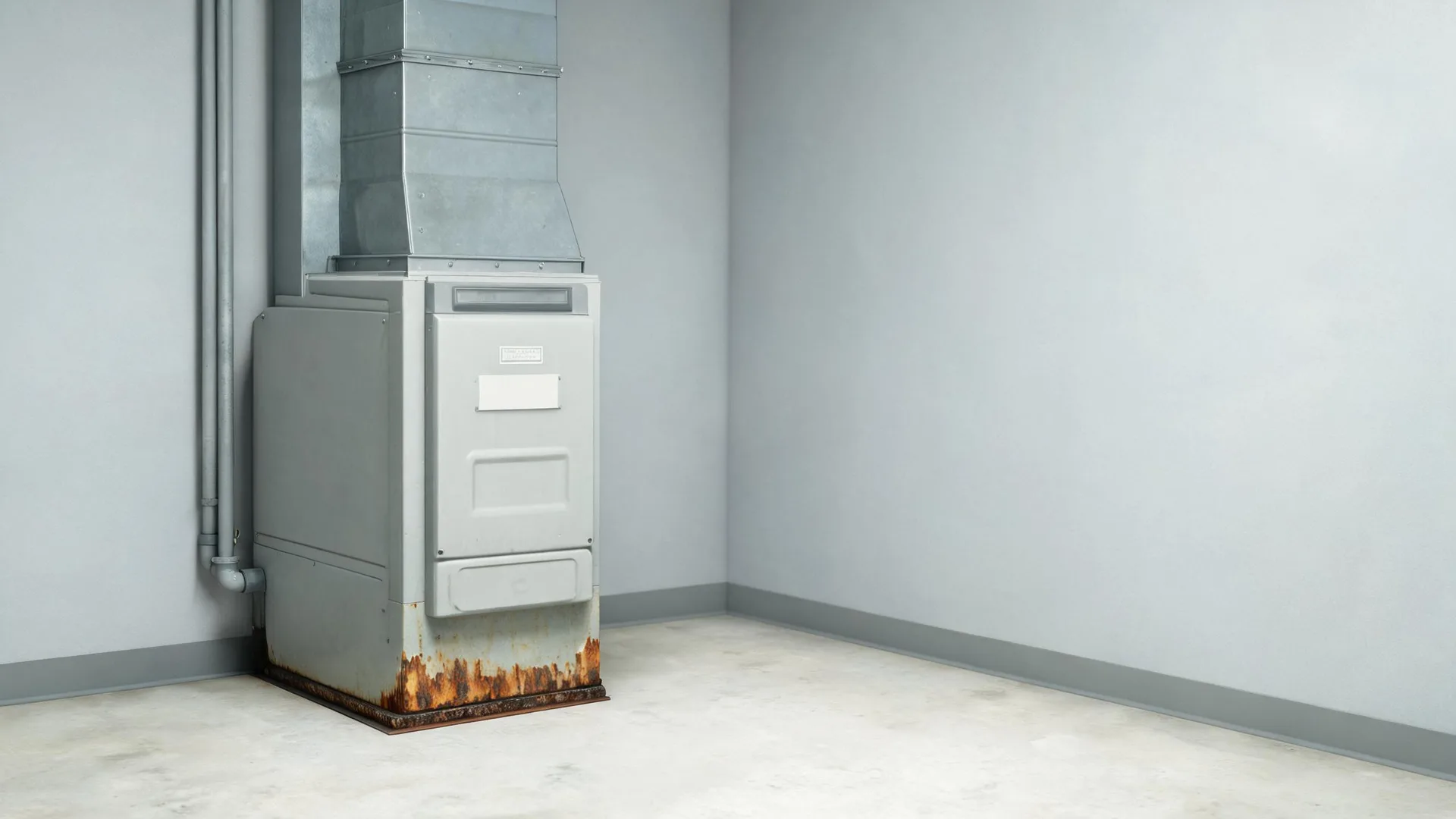
A gas furnace and sheet-metal air handler unit installed in an unfinished concrete basement.

A new furnace would cut about $150 a year off heating for a typical Midland County home.

  • A new high-efficiency furnace$610 a year
  • An older furnace$760 a year

Estimates for a typical Midland County home, compared with an older unit built to the previous federal minimum, from EIA household energy data, Michigan fuel prices and NOAA climate normals. Your home will differ.

Repair makes sense when one part has failed and the heat exchanger is sound.

Replacement makes sense when the heat exchanger is cracked or the furnace keeps needing parts.

Not every furnace problem means a new furnace. A cracked igniter or a failed pressure switch is a straightforward swap, and the furnace runs like normal once it's in. What changes the math is age combined with the part. A heat exchanger crack means replacement, full stop, because that part isn't sold on its own and isn't safe to patch. A blower motor or control board failing on an older unit is a different question, since the repair might run close to what the next few years of its life are worth. A tech should be able to tell you not just what broke but what that part failing says about the rest of the furnace. A single worn part on a unit that's otherwise been solid is just a repair. A second or third breakdown in a short stretch is the furnace telling you it's done being reliable.