



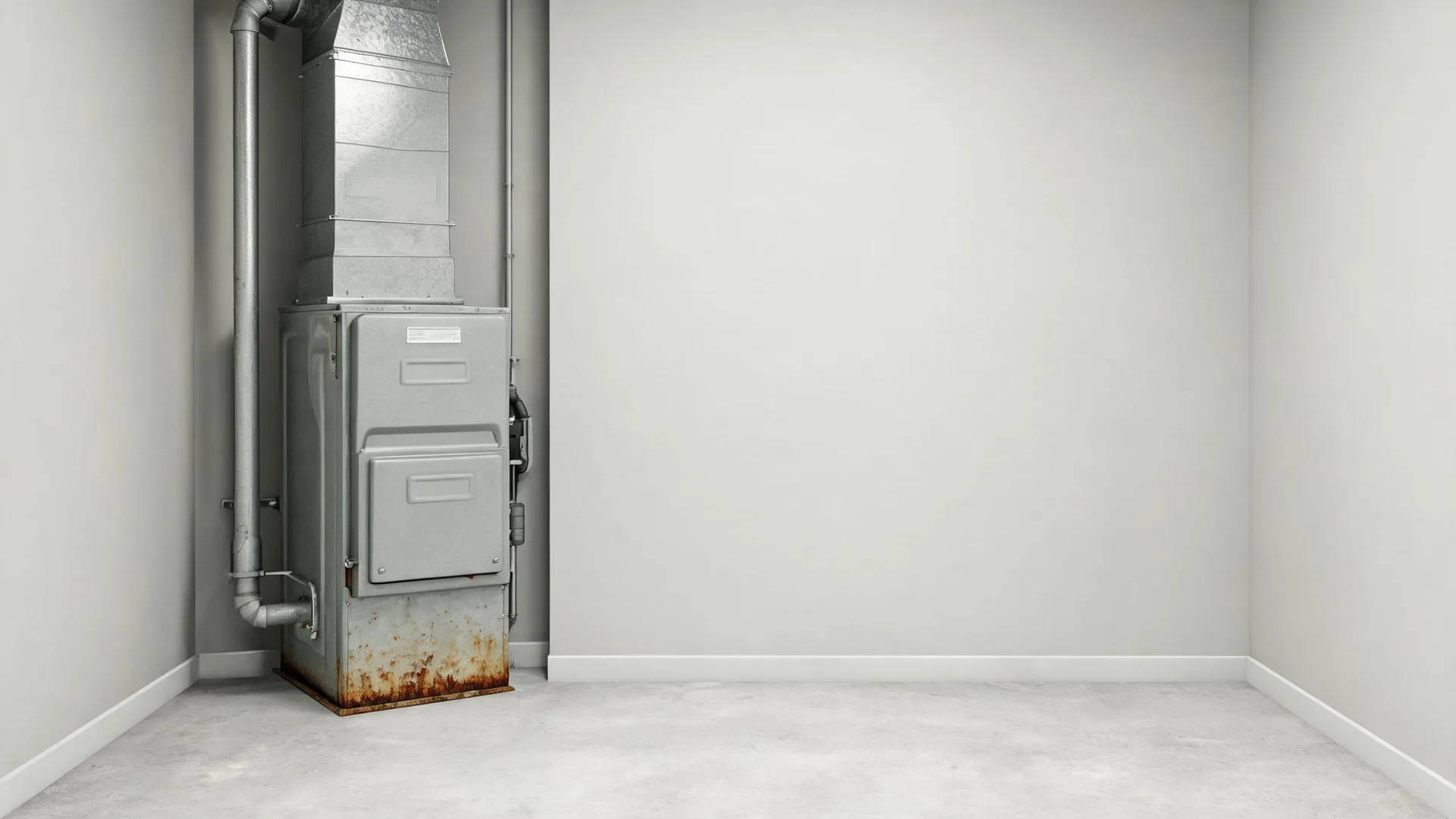
A gas furnace with sheet-metal ductwork and PVC pipes installed in an unfinished basement.

Furnace Repair in Howell, MI

Tell us about the job

Takes about a minute. No obligation.

RepairFurnace or heatingLivingston County, MI
Step 1 of 2

What ZIP code is the job in?

Livingston County sees its share of rough weather. Between 2015 and 2024 the county recorded 127 severe weather events, including 88 cases of damaging wind and 20 hail events. Two tornadoes touched down in that same stretch. Wind and hail don't just threaten the roof and siding. The outdoor part of a furnace and AC system sits exposed to all of it, and a hard enough hit can bend the cabinet or damage what's inside without stopping it from running. A unit that still turns on after a storm isn't necessarily fine.

8 months
October through May, your furnace is on duty
18°F
the average winter night it heats against
78%
of homes here heat with gas, so most furnaces here burn gas
16 winter storms
in ten years, the nights a failure hurts most
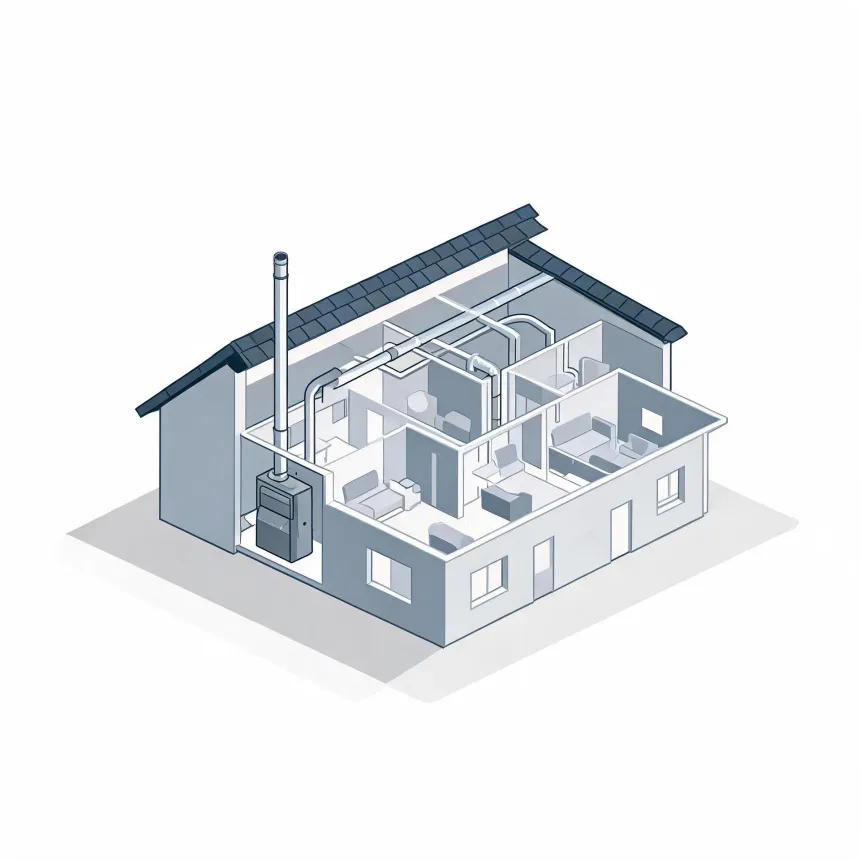
Isometric cutaway illustration of a single-story house in gray tones, showing interior rooms with furniture, ceiling ductwork, and an exterior furnace unit with a tall flue pipe.
Your furnace works hardest from November through March.

NOAA nClimDiv, 1991–2020 normals

Your furnace runs eight months a year here, October through May.

That much runtime wears parts down early, so a repair now needs to find the real cause, not just quiet the symptom.

Heat starts in October, and that's when a weak part gives out

Heat runs October through May
Winter nights average 18°F
Climate zone 5A
This county's homes skew newerHalf the homes in Livingston County were built in 1991 or later.

A furnace that's been running hard for a few months isn't shy about showing it. Short cycling, a burner that won't light on the first try, a blower that stays on too long: these are the kind of things that get worse, not better, on their own. Find the part that's actually failing before it takes something else with it. A technician checking a furnace that's stopped heating should trace the problem back to its cause, whether that's a cracked igniter, a dirty flame sensor, or a control board that's not reading the signal right. Patching over the symptom means the same call again in a few weeks.

If the last storm hit your outdoor unit, get it looked at now

A furnace that still fires up after a storm can be hiding bent fins, a cracked cabinet, or a loose connection inside. Those don't always show up as a problem right away. If wind or hail came through your property recently, have the unit checked before the next cold snap puts it to the test.

Find a contractor
A gray residential gas furnace installed in an unfinished basement, surrounded by ductwork, a metal flue pipe, and a gas supply line.

A newer furnace is worth fixing, not replacing

If your furnace came with the house, repair makes sense before replacement crosses your mind. A unit that's only a few years into a run this long has most of its life still ahead of it. Get the failing part fixed and it should keep going for years. Check the install date on the furnace itself or in your paperwork if you're not sure how old it is.

A small problem feeds on runtime

A cracked heat exchanger gets worse with every cycle because the metal keeps flexing as it heats and cools. A flame sensor coated in a thin film of oxidation reads weaker each time the burner fires, until it stops reading the flame at all. The longer the furnace keeps running with the fault in place, the more it compounds instead of holding steady.

Running it anyway can take out a second part

A blower motor forced to work against a clogged filter or blocked vent draws more current than it should, and that strain can burn out the motor windings. A limit switch that keeps tripping from restricted airflow is doing its job, but ignoring it and resetting the furnace again and again puts heat where the cabinet isn't built to hold it. One worn part left alone often damages the part next to it.

An unfinished basement featuring a forced-air furnace, exposed wooden ceiling joists, bare concrete walls, and miscellaneous items including cardboard boxes and coiled cables on the floor.

A new furnace would cut about $150 a year off heating for a typical Livingston County home.

  • A new high-efficiency furnace$600 a year
  • An older furnace$750 a year

Estimates for a typical Livingston County home, compared with an older unit built to the previous federal minimum, from EIA household energy data, Michigan fuel prices and NOAA climate normals. Your home will differ.

Repair makes sense when one part has failed and the heat exchanger is sound.

Replacement makes sense when the heat exchanger is cracked or the furnace keeps needing parts.

A diagnostic call starts before any panel comes off. A technician asks what the furnace was doing: did it stop outright, is it cycling fast, is the air coming out cool. Then they watch it run through a full cycle if it'll start at all, because some faults only show up once the blower kicks in or the burner's been going a few minutes. From there it's a sequence: check the thermostat call, check power to the control board, check the igniter or pilot, check that the flame sensor is actually reading a flame, check the pressure switch and the drafting. Each step rules something out. A tech isn't guessing at which part looks tired, they're following the furnace's own sequence of operation to find where it breaks. Once they find the failed part, a good one will also check what caused it to fail, because a flame sensor or limit switch can be a symptom of a dirty filter or blocked vent rather than the problem itself.