

An unfinished concrete basement containing a gas furnace with sheet-metal ductwork, utility shelving, and exposed overhead joists.

Furnace Repair in Hillsdale, MI

Tell us about the job

Takes about a minute. No obligation.

RepairFurnace or heatingHillsdale County, MI
Step 1 of 2

What ZIP code is the job in?

Hillsdale County saw 77 severe weather events between 2015 and 2024. Damaging wind caused 52 of those, hail hit the county 7 times, and three tornadoes touched down in that stretch. Add in 15 winter storms with heavy snow and ice, and that's a lot of chances for something to come loose or get struck on your furnace or its outdoor parts. Across Michigan, a third of households lost power for a day or more in 2024 alone. A furnace that took a hit during one of those events, or sat through a long outage, can keep running for a while before the problem shows up.

8 months
October through May, your furnace is on duty
19°F
the average winter night it heats against
15 winter storms
in ten years, the nights a failure hurts most
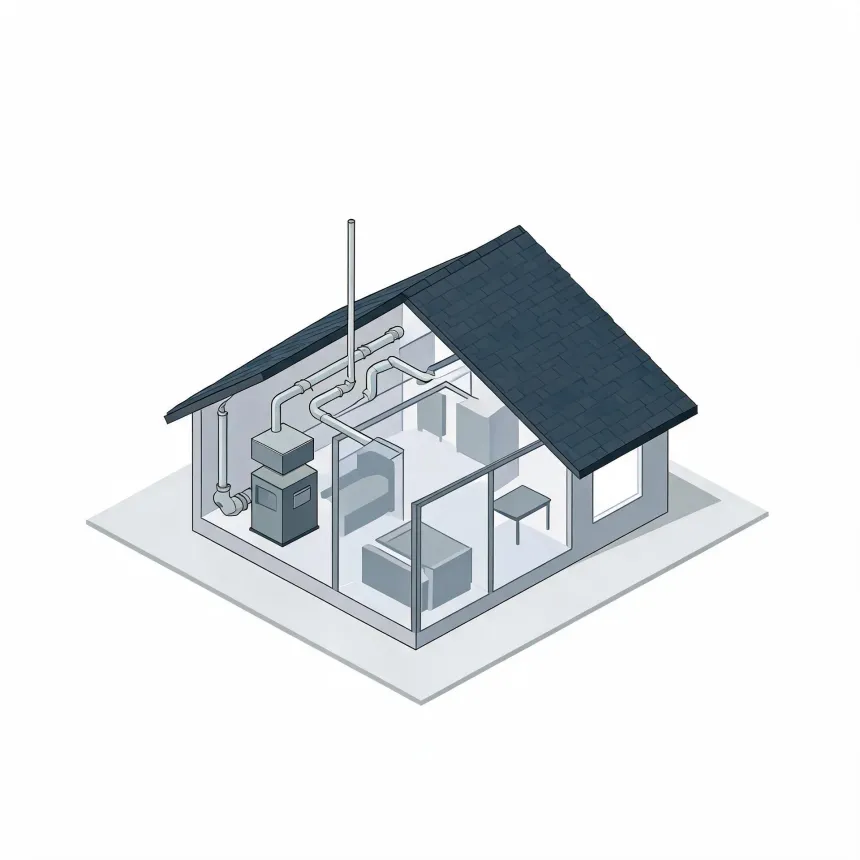
Isometric cutaway illustration of a small house with a dark shingled roof, showing an interior furnace unit, ductwork, and a flue pipe extending through the roof.
Your furnace works hardest from November through March.

NOAA nClimDiv, 1991–2020 normals

Your furnace runs about eight months a year here, October through May.

That much runtime wears parts down faster, so a repair now needs to find the real cause, not just quiet the symptom.

September is the month to catch a weak furnace before it has to work

Heat runs October through May
Winter nights average 19°F
Climate zone 5A

Half the homes in Hillsdale County were built in 1971 or earlier. A furnace that came with a house that age has likely been replaced at least once, maybe twice, and whatever is in there now still has a limit on how many winters it can run. That limit doesn't announce itself. A furnace can short cycle, run a weak flame, or struggle to keep up for a while before it fails outright, and a repair at that point might buy a season or it might not. If your furnace came with the house, or you don't know its age, that's worth finding out before you pay for a repair. The answer changes whether you're fixing a good machine or patching one that's already near the end.

If a storm got to your furnace, find out before it fails

If your furnace took a hit from wind, hail, or a winter storm sometime in the last few years, it may still be running on a damaged part. A furnace can limp along for a while before it quits for good. Have it looked at now, while it's a repair and not a no-heat call.

Find a contractor
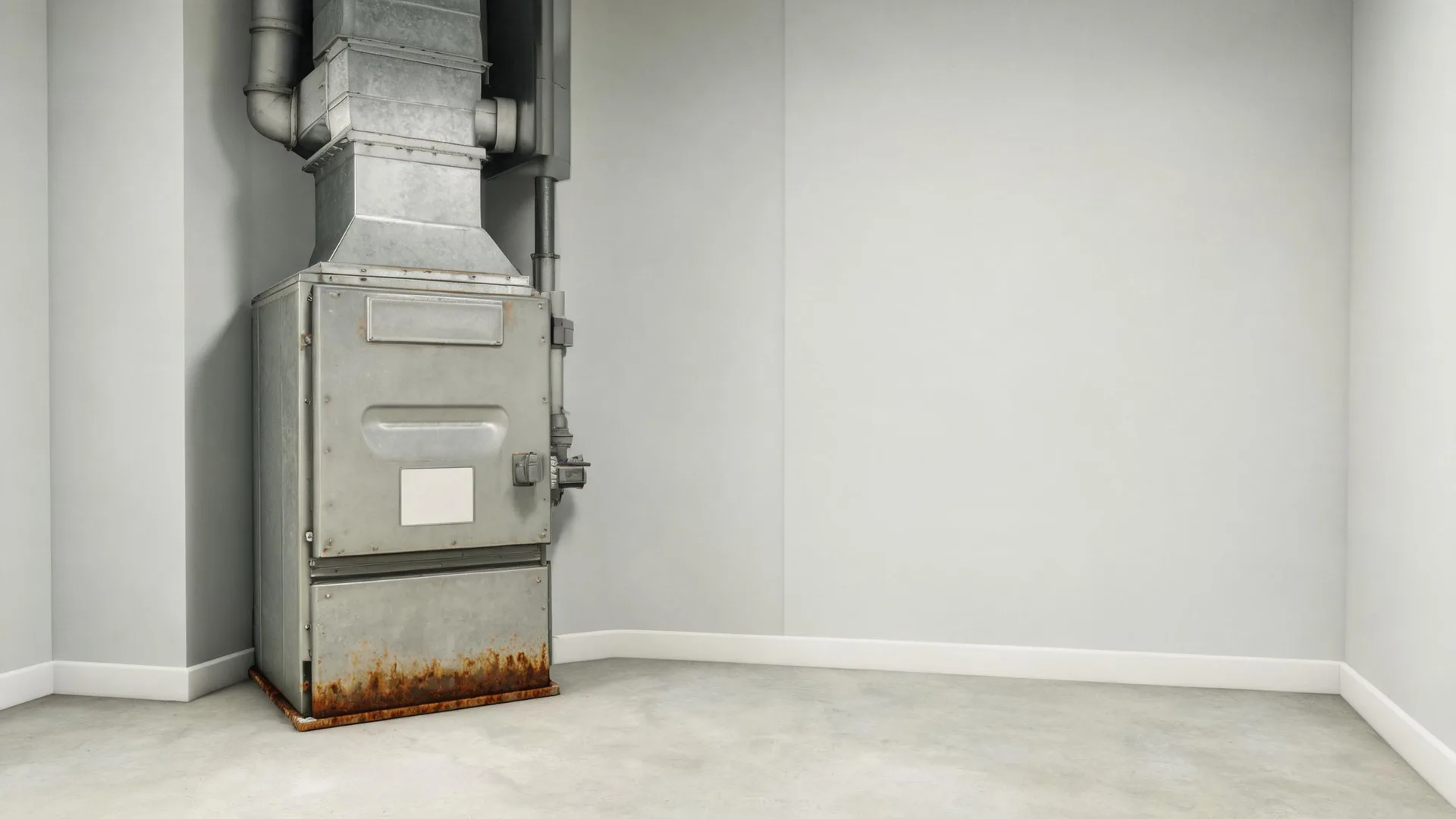
A gray residential gas furnace installed in an unfinished basement, surrounded by ductwork, a metal flue pipe, and a gas supply line.

Ask what the repair buys you, not just what it fixes

Ask whoever comes out for the age of the furnace and the two or three things most likely to fail on it next. That tells you what you're paying for. A repair on a unit with a few winters left is worth doing. A repair on one that's already on borrowed time might just be the last one before you need a new furnace anyway, and it's better to know that going in than after.

A small problem can turn into a cracked heat exchanger

A furnace that's short cycling or running a weak flame is already telling you something is wrong. Keep it running and whatever caused that, a clogged filter, a failing limit switch, restricted airflow, makes the burner work harder and run hotter than it should. That heat has to go somewhere. Over time it can warp or crack the heat exchanger, and that's a part that doesn't get repaired. It gets replaced, along with the furnace.

A cracked igniter or a loose wire won't wait for a better time

Some parts fail slow and some fail all at once. A hairline crack in an igniter gets a little worse every time it heats up and cools down, until one day it doesn't light at all. A loose wire at a pressure switch can run fine for weeks, then shake free the next time the blower kicks on. Running the furnace while a part is already compromised doesn't fix the timing. It just means the breakdown happens on its own schedule instead of yours.

An unfinished basement containing a gray HVAC furnace with ductwork, exposed wooden joists, a concrete floor, and miscellaneous clutter in one corner.

A new furnace would cut about $140 a year off heating for a typical Hillsdale County home.

  • A new high-efficiency furnace$590 a year
  • An older furnace$730 a year

Estimates for a typical Hillsdale County home, compared with an older unit built to the previous federal minimum, from EIA household energy data, Michigan fuel prices and NOAA climate normals. Your home will differ.

Repair makes sense when one part has failed and the heat exchanger is sound.

Replacement makes sense when the heat exchanger is cracked or the furnace keeps needing parts.

A repair decision really comes down to what else is likely to go wrong, not just what already has. A furnace is a collection of parts aging at different rates, and a tech who's seen the model before can usually tell you which ones are close behind the one that just failed. If the failed part was isolated, replacing it settles the matter. If it's the second or third repair in a short stretch, that's usually the furnace telling you it's running out of reliable parts, not just the one you're fixing. Heat exchangers, blower motors, and control boards cost enough on their own that pairing one of those with an older furnace changes the math. A furnace nearing the end doesn't fail all at once. It fails a little more each winter, and at some point another repair stops making sense next to the cost of starting over with a new one.