



A lit brick residential street at dusk showing a row of two-story homes with covered porches and mature trees.

Furnace Repair in Hastings, MI

Tell us about the job

Takes about a minute. No obligation.

RepairFurnace or heatingBarry County, MI
Step 1 of 2

What ZIP code is the job in?

Barry County saw 36 severe weather events between 2015 and 2024. Seventeen of those were damaging wind, enough to drive branches and debris into an outdoor unit sitting against the house. Four hail events in the same stretch mean a furnace system's outdoor coil has taken a hit more than once. None of that always shows up as a breakdown right away. A furnace or heat pump can keep running after its outdoor unit takes damage, and the strain just shows up later as a harder time keeping the house warm.

8 months
October through May, your furnace is on duty
19°F
the average winter night it heats against
53%
of homes here heat with gas, so most furnaces here burn gas
13 winter storms
in ten years, the nights a failure hurts most
Isometric cutaway illustration of a single-story house showing interior rooms, furniture, a dark furnace unit with a tall vertical flue pipe, and ductwork running under the pitched shingle roof.
Your furnace works hardest from November through March.

NOAA nClimDiv, 1991–2020 normals

Furnace here runs about eight months a year, October through May.

That long a run exposes a weak part fast, so a repair needs to find the actual cause, not just the symptom.

Eight months of heat starting in October finds the weak part fast

Heat runs October through May
Climate zone 5A
Winter nights average 19°F

A furnace that's been run hard for months doesn't fail at the main problem first. It fails at the weakest point, and that's often a part or connection that was already strained before the cold set in, maybe from a hit it took earlier in the year. A tech who just resets the system or swaps the obvious part can get it running again without ever finding that weak point. It'll show up again, usually on a worse night than this one. Ask whoever comes out what actually caused the failure, not just what part they replaced.

Storm damage to the outdoor unit doesn't always show up right away

If your outdoor unit has taken a hit from wind or hail this year, don't wait for it to fail outright. Get it looked at now, before the cold sets in and the furnace is running on a part that's already weak.

Find a contractor
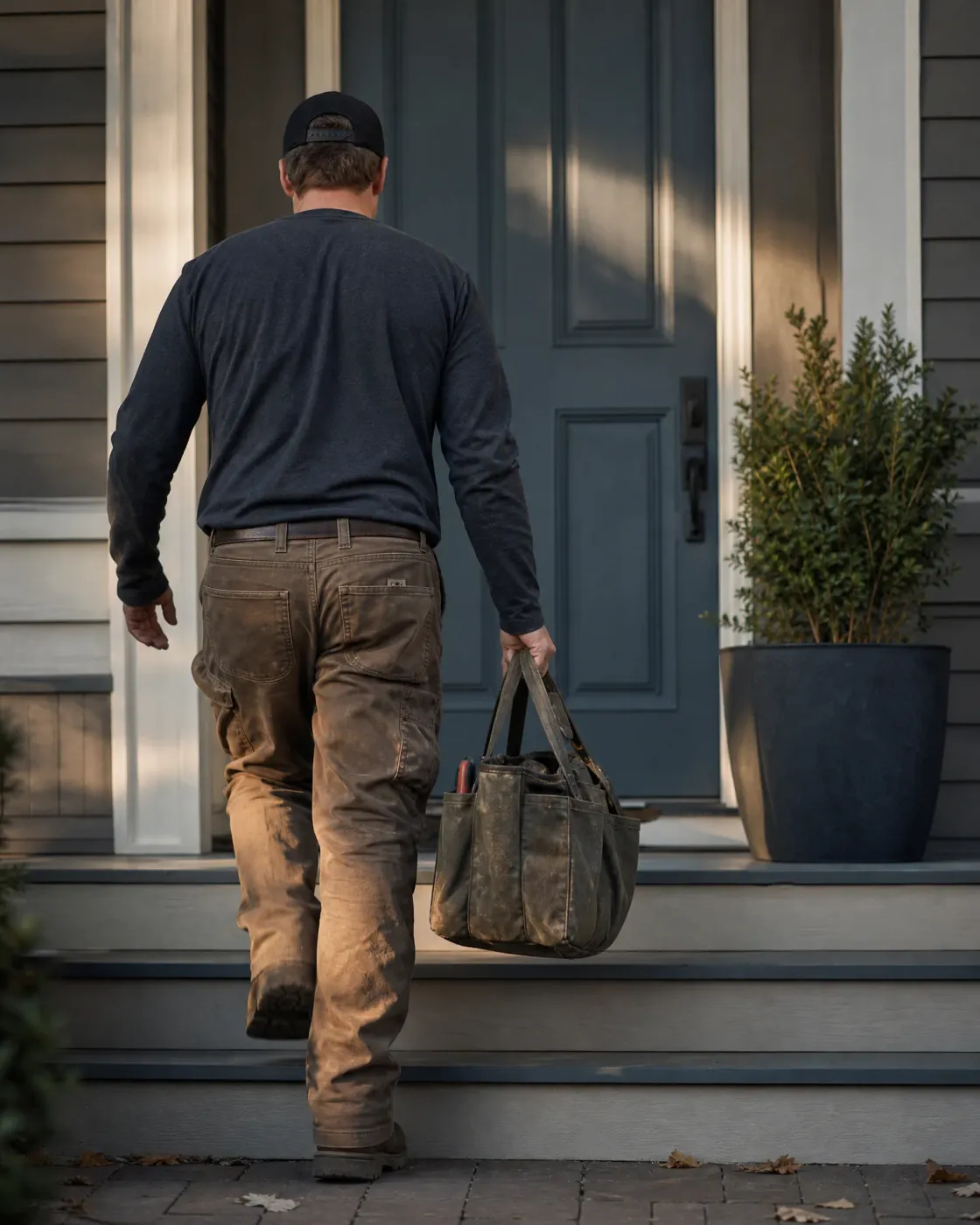
A man in a dark long-sleeved shirt, cap, and worn tan work pants climbs porch steps toward a dark blue front door, carrying a canvas tool bag.
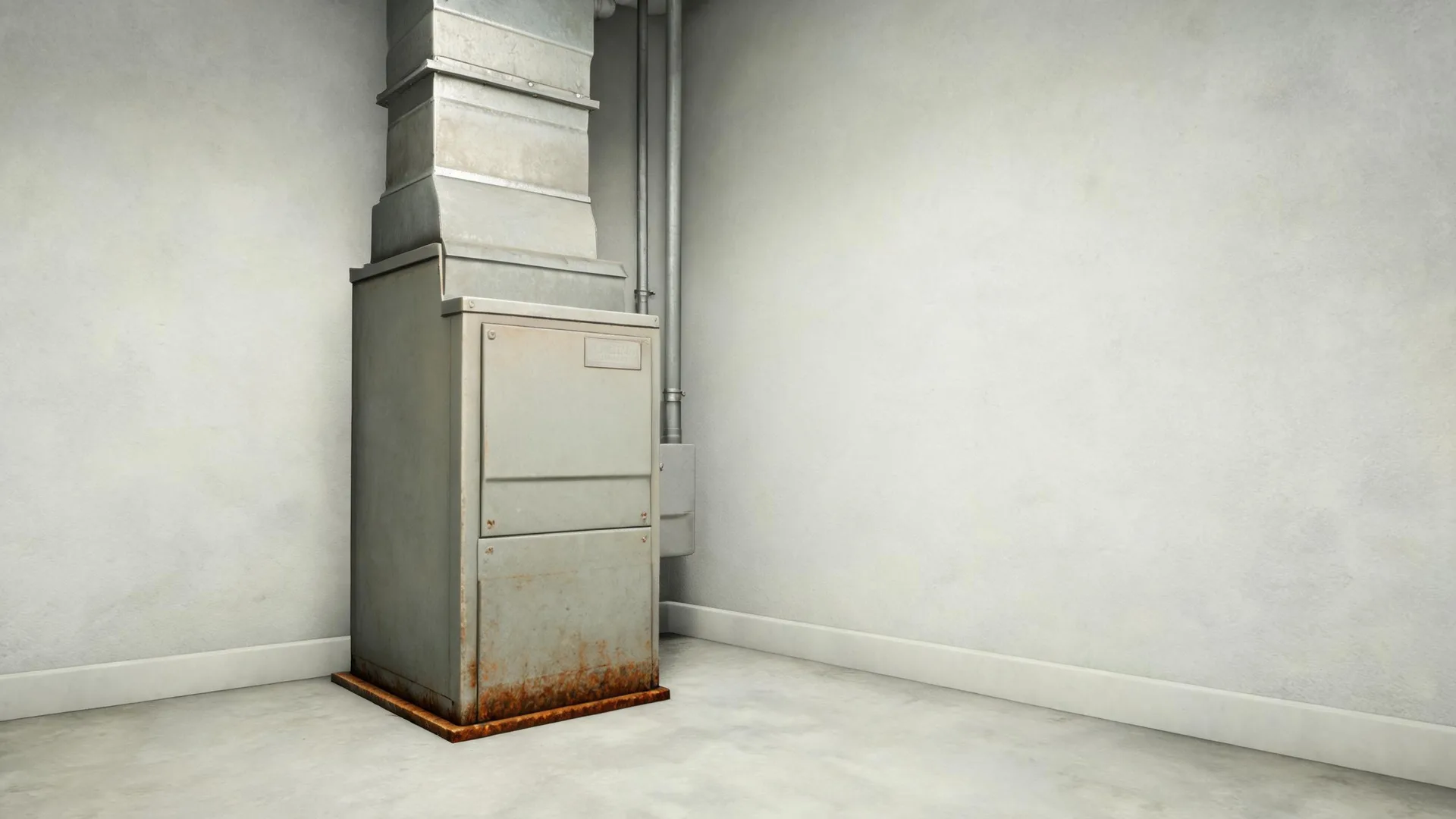
A gas furnace with attached ductwork, gas piping, and condensate lines installed in a concrete-block basement.

What actually gives out

Most furnace failures trace back to one part doing the dying: the igniter. It's a thin strip that heats up to light the gas, and it goes through a heat and cool cycle every single time the furnace fires. Eventually it cracks and stops glowing hot enough to catch the gas. After that, the usual suspects are the flame sensor, which gets a film of oxidation on it and starts telling the control board no flame is present when there is one, and the inducer motor, which pulls combustion gas through the heat exchanger and wears out at the bearings after years of running. Dirty filters cause their own share of trouble indirectly: airflow drops, the heat exchanger runs hotter than it should, and a limit switch trips to shut the burner down before anything cracks. None of these parts fail because a furnace is old. They fail because they've cycled on and off thousands of times, and each cycle is a little bit of wear that doesn't show up until the part finally quits.

The furnace short cycles or won't stop running

A furnace that fires up and shuts off within a couple minutes is usually fighting a flame sensor losing its signal or a limit switch tripping from heat it shouldn't be seeing. One that runs and runs without hitting the thermostat setting is often losing heat somewhere, or the blower isn't moving enough air to satisfy the call for heat. Either pattern means a part is already struggling, not just annoying you.

Listen for what changed, not just what's loud

A bang at startup usually means gas is pooling before it catches, often from a dirty burner or a igniter lighting late. A screech points to a motor bearing going dry. A rhythmic clicking that doesn't lead to ignition means the igniter is firing but the gas isn't lighting behind it. Any new sound is the furnace telling you which part is failing before it fails outright, so it's worth describing exactly what you heard and when.

An unfinished concrete basement containing a metal HVAC air handler, exposed wooden ceiling joists with sheet-metal ducts, a hanging bare bulb, copper pipes, and stacked cardboard boxes.

A new furnace would cut about $150 a year off heating for a typical Barry County home.

  • A new high-efficiency furnace$590 a year
  • An older furnace$740 a year

Estimates for a typical Barry County home, compared with an older unit built to the previous federal minimum, from EIA household energy data, Michigan fuel prices and NOAA climate normals. Your home will differ.

Repair makes sense when one part has failed and the heat exchanger is sound.

Replacement makes sense when the heat exchanger is cracked or the furnace keeps needing parts.

A furnace repair is worth making when the failure is a single part doing a predictable job: an igniter, a flame sensor, a blower motor. Swap the part and the furnace goes back to being a furnace. It gets harder to call when the heat exchanger is cracked, because that's not a part wearing out on schedule, that's the core of the unit failing, and once that's gone the rest of the system is just supporting a part that can't be fixed. The other thing worth asking is how many repairs this same furnace has needed in the last couple years. One failure is a part. Three failures on three different parts in the same season is a furnace that's used up most of what it had. A tech who's honest with you will tell you which kind of problem you've got, not just quote you a fix.