A row of illuminated two-story brick houses with front porches and mature trees photographed at twilight.

Furnace Repair in Flint, MI

Tell us about the job

Takes about a minute. No obligation.

RepairFurnace or heatingGenesee County, MI
Step 1 of 2

What ZIP code is the job in?

This county sees real storms

Genesee County logged 109 severe weather events between 2015 and 2024, including 71 with damaging wind and 17 with hail. Five tornadoes touched down in that same stretch. Winter added 16 more events of heavy snow, ice and blizzards.
Furnaces depend on power staying on

A gas furnace still needs electricity to run its blower and ignition. In 2024, 34% of Michigan households lost power for 24 hours or more. When the grid goes down in the middle of a cold snap, a furnace that was already struggling won't make it through.

8 months
October through May, your furnace is on duty
19°F
the average winter night it heats against
81%
of homes here heat with gas, so most furnaces here burn gas
16 winter storms
in ten years, the nights a failure hurts most
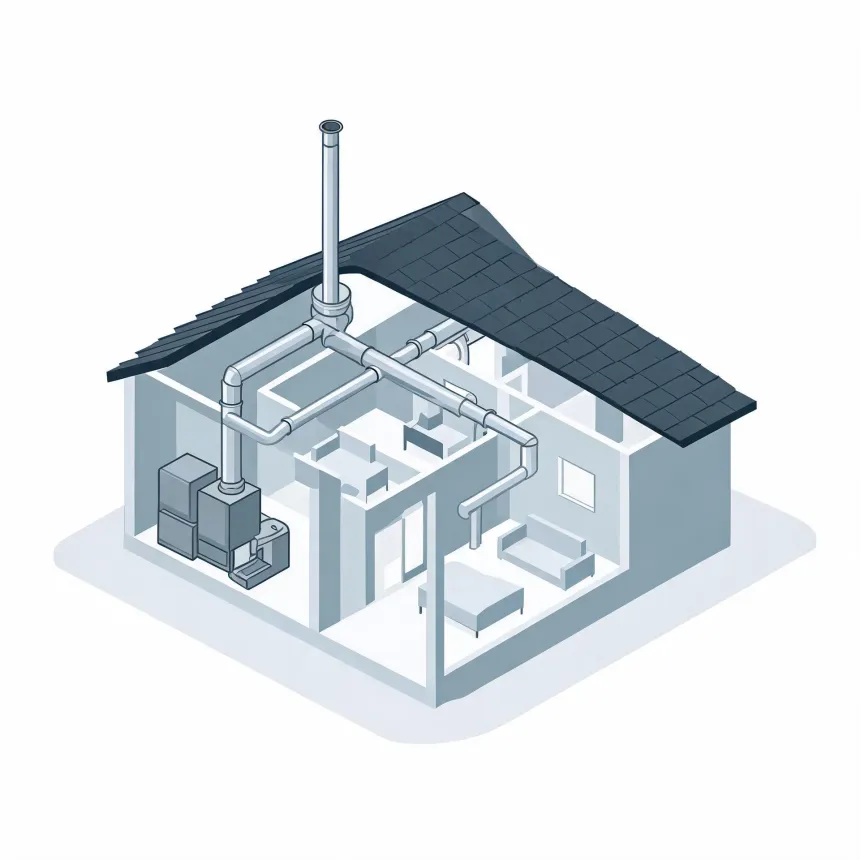
Isometric cutaway illustration of a small house showing a furnace unit connected to ductwork and a vertical flue pipe extending through the dark shingled roof, with sparse furniture in the rooms.
Your furnace works hardest from November through March.

NOAA nClimDiv, 1991–2020 normals

Furnaces in Genesee County start working in October and run through May.

A furnace with a weak part going into October is the one most likely to quit in the first hard cold.

Half the furnaces here are older too

Half the homes here were built by 1969
Climate zone 5A
Heat runs October through May

Eight months of heat a year is a long season for any furnace. From October through May, the blower and ignition system are cycling on and off most days, and that steady demand is what wears a part down before its time. A furnace that runs that long doesn't get much of a break to show you a small problem before it becomes a bigger one. If yours is making an odd noise, short cycling, or struggling to keep up, that's worth having a contractor look at now rather than waiting. Catching a weak part while it's still just weak is what keeps a repair a repair.

If the last storm got to your furnace, don't wait for it to fail

Hail and wind this bad can knock an outdoor unit around without killing it outright. If your furnace has been through a storm this year, or the power's gone out on it, have a contractor look it over now, even if it's still running. A unit that got knocked around and lost power in the same winter has two reasons to quit at once.

Find a contractor
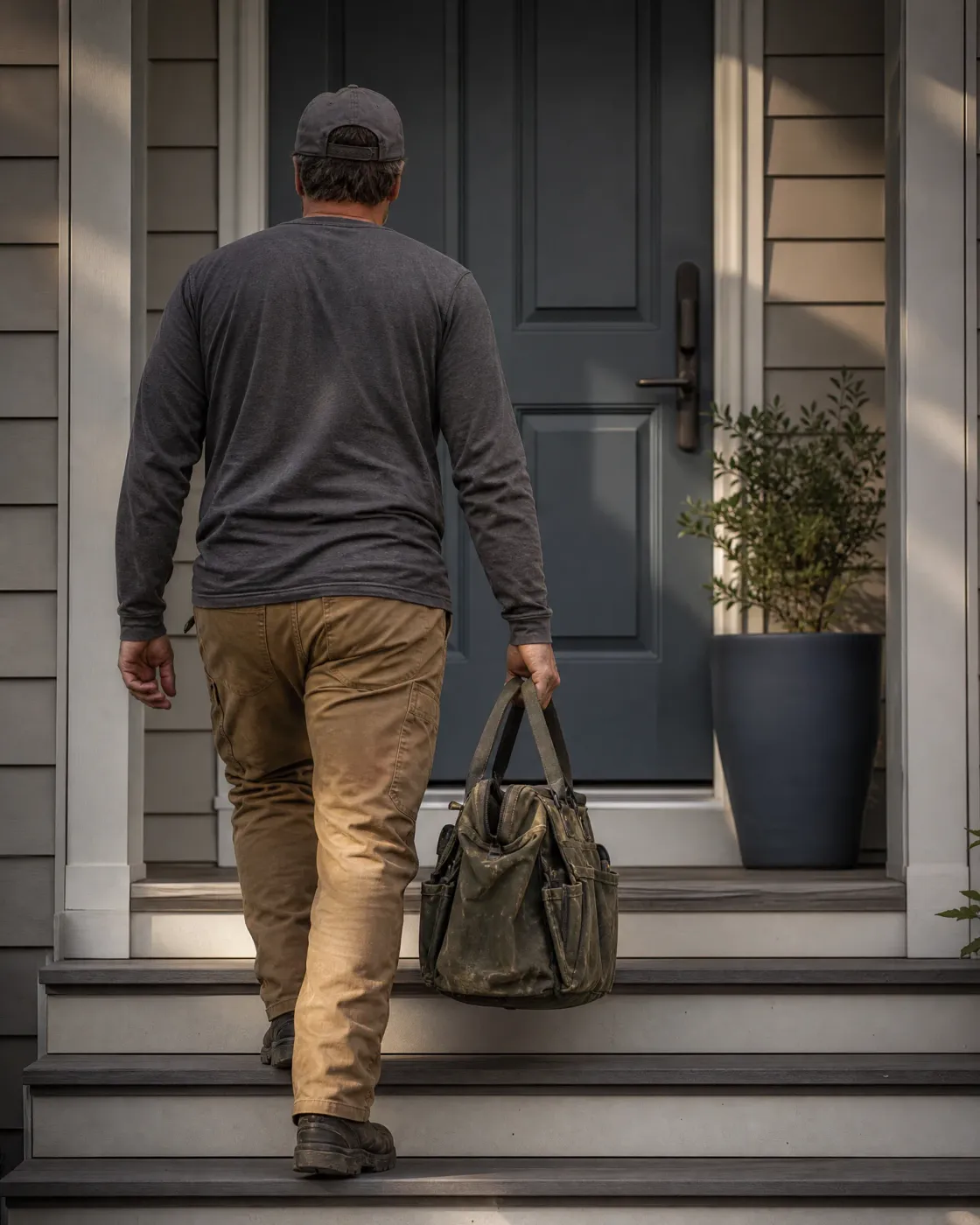
A man in a cap, gray long-sleeve shirt and tan work pants carries a worn canvas tool bag up porch steps toward a dark gray front door beside a potted shrub.
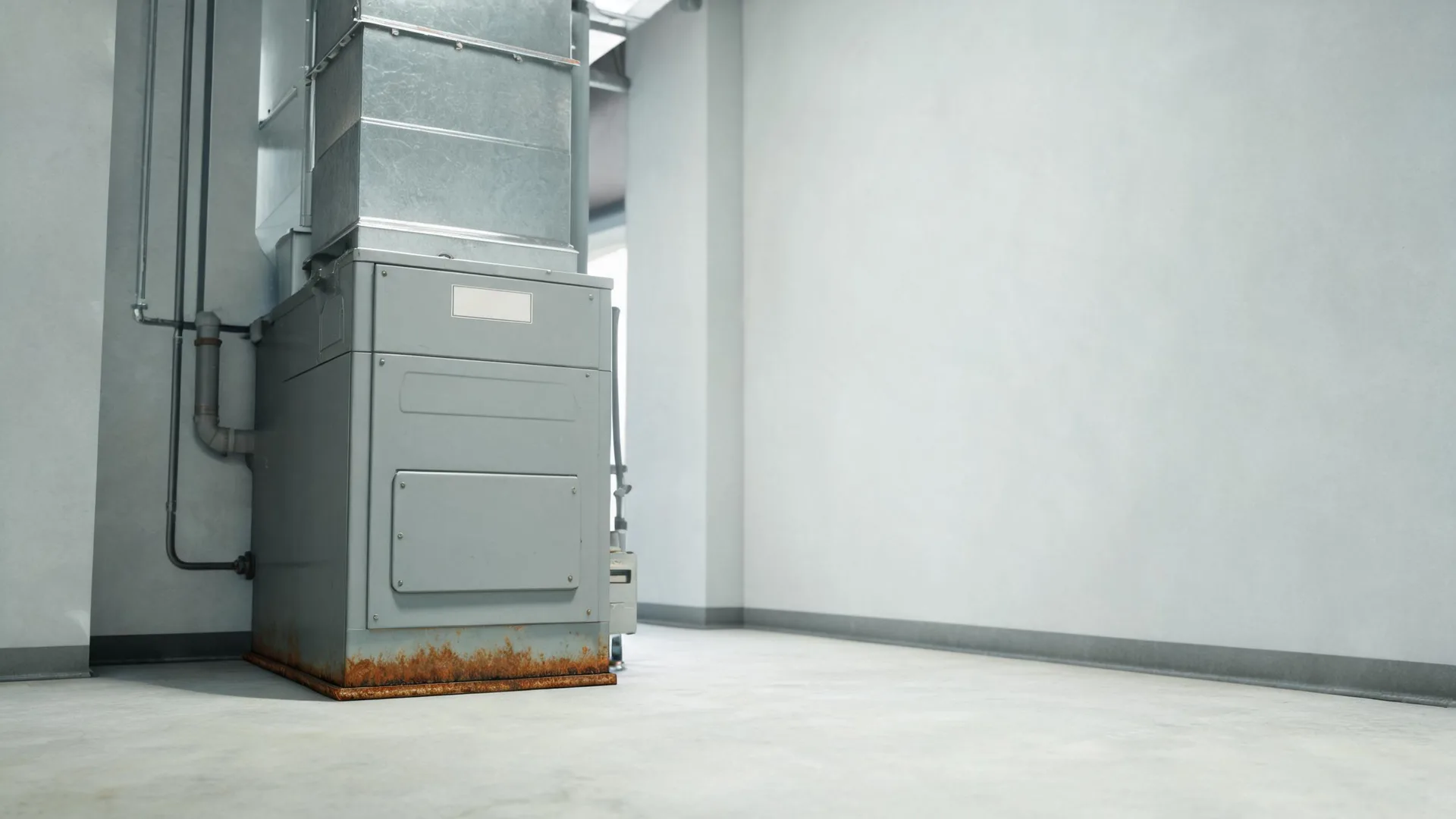
A gray residential gas furnace installed in an unfinished basement, surrounded by ductwork, a metal flue pipe, and a gas supply line.

This furnace has been running since before the cold hit

A furnace that runs eight months straight doesn't get looked at until it stops working, and by then the part that was weak in October has had all winter to get worse. A contractor checking it now is checking a machine that's already shown its hand. Odd noise, short cycling, a smell when it kicks on, that's the furnace telling you something before it tells you nothing at all.

A crack in the heat exchanger gets worse under heat

Metal expands every time the burners fire and contracts when they shut off. A hairline crack flexes with that cycle and opens wider each time. Left alone, it goes from a minor leak point to one that lets combustion gas into the air the blower moves through the house.

A failing part drags the others down with it

A blower motor that's starting to go draws more current to do the same job, and that extra heat shortens its own life further. A clogged igniter or dirty flame sensor makes the burners misfire, and every failed attempt to light is more strain on the control board. None of these fail in isolation if you let them run.

An unfinished basement featuring concrete block walls, exposed floor joists, a bare concrete floor, and a forced-air furnace with a large metal exhaust duct in the corner.

A new furnace would cut about $150 a year off heating for a typical Genesee County home.

  • A new high-efficiency furnace$600 a year
  • An older furnace$750 a year

Estimates for a typical Genesee County home, compared with an older unit built to the previous federal minimum, from EIA household energy data, Michigan fuel prices and NOAA climate normals. Your home will differ.

Repair makes sense when one part has failed and the heat exchanger is sound.

Replacement makes sense when the heat exchanger is cracked or the furnace keeps needing parts.

A repair makes sense when the part that failed is one part, and the rest of the furnace is doing its job around it. A new igniter, a new flame sensor, a new capacitor, these are simple swaps that bring a furnace back to normal once the bad part is out. Replacement starts to make more sense when the heat exchanger is cracked, since that's not a part you patch, or when the same furnace keeps bringing a contractor back for a different failure every season. A furnace that's been running fine for years and suddenly has one thing go wrong is usually worth fixing. One that's been nickel-and-diming you with small breakdowns for a couple of years is telling you it's done being reliable, even if each individual repair looks cheap on its own.