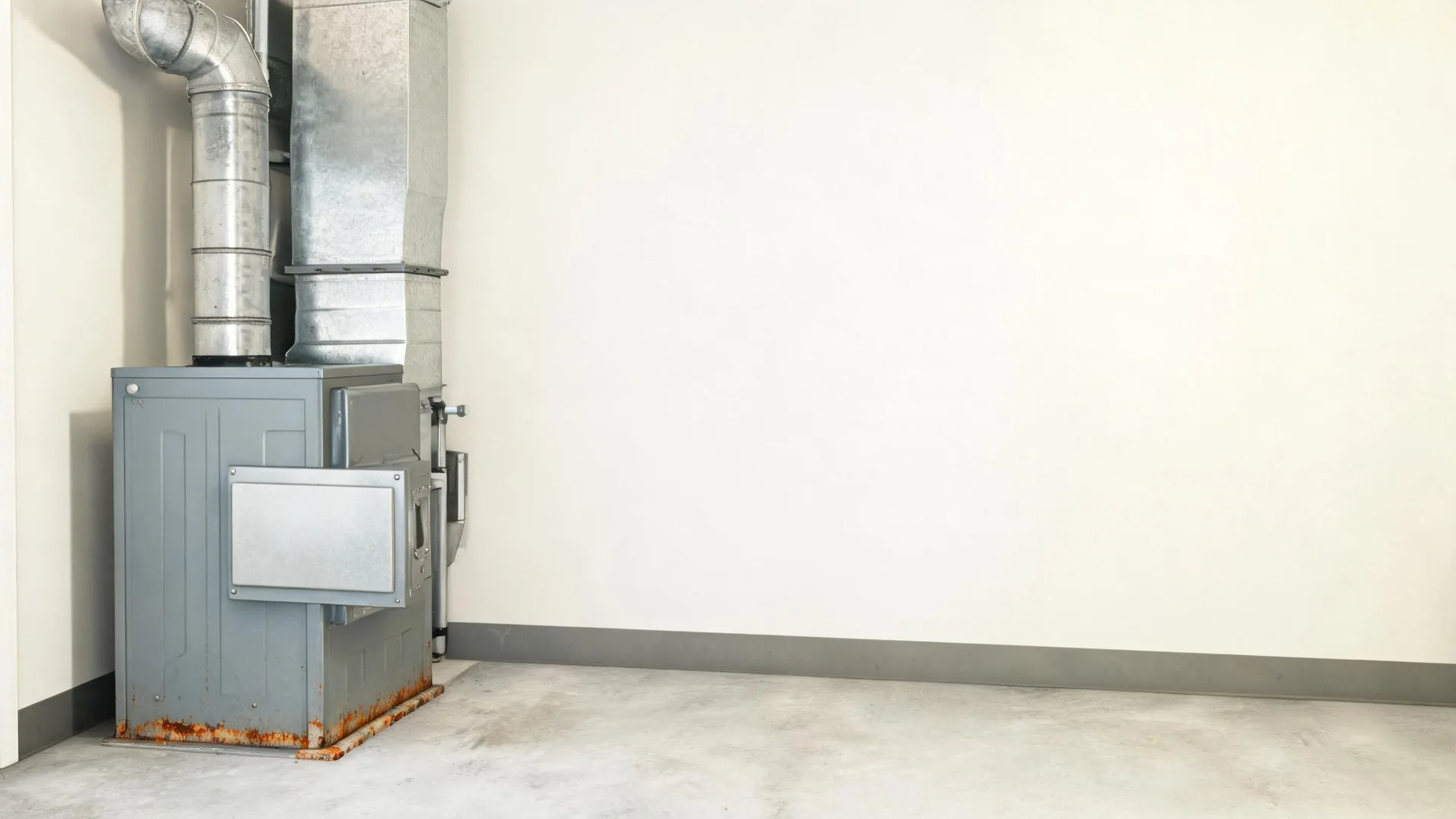
Nine months of heat a year
Furnaces in Delta County run from September through May. That's most of the year asking the igniter, the blower motor and the heat exchanger to cycle on and off, day after day.
Takes about a minute. No obligation.
Furnaces in Delta County run from September through May. That's most of the year asking the igniter, the blower motor and the heat exchanger to cycle on and off, day after day.
Overnight lows average 12°F through December, January and February, so your furnace runs hardest right when the cold is worst. A system under that kind of load shows problems sooner than one that gets a real break each year.

NOAA nClimDiv, 1991–2020 normals
Half the homes in Delta County were built in 1970 or earlier.
If your furnace came with a house that old, a repair call is as much about finding out what's left in it as fixing what broke.




Furnaces in Delta County start running in September. The first cold snap is when a weak igniter or a tired blower motor finally gives out, because the part sat untouched since spring and now has to work. If your furnace made it through last winter but struggled near the end, that same weak spot is still there waiting for September. Getting it looked at in August, before the heat goes on for good, means finding that out on your schedule instead of on a cold night in the months that follow.
A furnace that runs nine months a year, through lows around 12°F, wears in ways a quick look can miss. Have the actual cause found before anything gets fixed.
Find a contractorMost furnace problems announce themselves before the furnace quits outright. Warm air that isn't as warm as it used to be. A burner that takes a few tries to light instead of catching right away. A blower that keeps running after the house has reached temperature, or shuts off before it should. Short cycling, where the furnace starts and stops over and over instead of running a full, steady cycle, is one of the clearest signs something's wrong, and it's also the one that does the most damage if it's ignored, because every extra start is wear the igniter wasn't built to take. A burning smell the first time the furnace fires after sitting all summer is normal and clears on its own. A burning smell that lingers, or shows up out of nowhere mid-season, is not. Rattling, grinding or a boom when the burners light are the furnace telling you a part has come loose or isn't firing the way it should. None of these mean the furnace is done. They mean something specific inside it needs attention, and the longer it runs in that state, the more it tends to take a second part down with it.
Metal that's already split keeps flexing with every heat cycle, and the crack opens wider each time the furnace fires. A furnace in that state can still blow warm air, which is why people keep running it. That doesn't mean it's safe to leave alone.
A flame sensor coated with residue makes the furnace shut off early or short cycle. Short cycling means the igniter fires again and again over the course of a night instead of once, and each extra start wears it down a little more. A part that only needed cleaning can turn into a part that needs replacing, just by running a few more weeks.
Estimates for a typical Delta County home, compared with an older unit built to the previous federal minimum, from EIA household energy data, Michigan fuel prices and NOAA climate normals. Your home will differ.
Repair makes sense when one part has failed and the heat exchanger is sound.
Replacement makes sense when the heat exchanger is cracked or the furnace keeps needing parts.
A furnace that's acting up isn't automatically a lost cause. One that still runs isn't automatically fine either. What matters is which part actually failed. A control board, a blower motor, an igniter. These get swapped out on their own all the time, and the furnace goes back to normal. A cracked heat exchanger is a different question, because that's the part the whole cabinet is built around. When the failure is in a part that gets replaced on its own, repair makes sense almost regardless of what else is going on. When it's the heat exchanger or the cabinet rusting through, you're really asking whether the rest of the furnace has enough life left to be worth matching to a new one. A contractor who's opened the cabinet and seen what's actually failing can tell you which question you're in.