Storms come through often
Cass County logged 86 severe weather events between 2015 and 2024, including 47 damaging wind events, 12 hail events and 4 tornadoes. Winter added 22 more, counting the heavy snow, ice and blizzards.
Takes about a minute. No obligation.
Cass County logged 86 severe weather events between 2015 and 2024, including 47 damaging wind events, 12 hail events and 4 tornadoes. Winter added 22 more, counting the heavy snow, ice and blizzards.
A gas furnace still needs electricity to fire the igniter and run the blower. Across Michigan, 34% of households lost power for 24 hours or more in 2024. When the power goes out here, so does the furnace, gas or not.
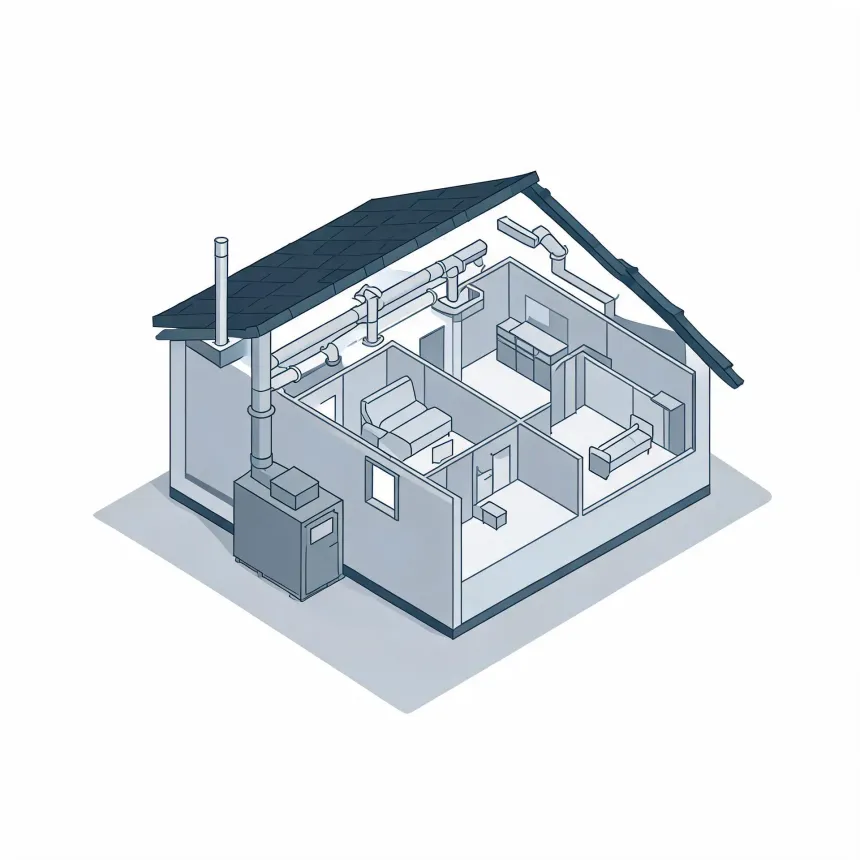
NOAA nClimDiv, 1991–2020 normals
Furnaces here start working in October and keep going through May.
A weak igniter or failing blower motor usually gives out in those first cold weeks, not mid-winter.



Eight months of heat a year is a long stretch for any furnace to carry. That's October through May, which means the blower and igniter are cycling on through the worst of what Cass County weather does. Twenty-two winter storms hit this county between 2015 and 2024, and each one means the furnace runs longer and harder to keep up. That kind of steady load wears a part down faster than it would somewhere milder. If your furnace is acting up, there's a good chance the real cause is just how much work it's been asked to do.
If your furnace sat through hail or high wind this year, a quick check after a storm is worth it even if it's still running. And if the power dropped out with the furnace off for a day or more, that's a reason to have it looked at before you need it again.
Find a contractorEight months of run time doesn't wear every part at the same rate. A furnace that's been cycling since October can lose an igniter one month and a blower motor the next, with nothing connecting the two except how much the unit has been asked to do. That's why a repair call should start with a real diagnosis, not a guess based on the last furnace someone worked on. Tell whoever comes out how the furnace has been running this year, not just what it's doing today. A part that's been struggling since the first cold snap tells a different story than one that failed overnight.
Make sure the thermostat is set to heat and the setting is above room temperature. Check the furnace switch, it looks like a light switch near the unit and it's easy to bump off. Look at the breaker panel for a tripped switch. If the furnace uses a standing pilot, see if the pilot light is out. None of this takes tools, and any one of them can be the whole problem.
Don't pull the furnace cover or reach into the burner compartment. Don't try to relight a pilot on a unit with an electronic igniter, it doesn't have one to light. If you smell gas, don't flip any switches at all, leave the house and call the gas company from outside. A filter is fine to check and swap if it's dirty, that part's safe and worth doing before anyone comes out.
Estimates for a typical Cass County home, compared with an older unit built to the previous federal minimum, from EIA household energy data, Michigan fuel prices and NOAA climate normals. Your home will differ.
Repair makes sense when one part has failed and the heat exchanger is sound.
Replacement makes sense when the heat exchanger is cracked or the furnace keeps needing parts.
A repair makes sense when the failure is one part doing one job. An igniter, a flame sensor, a blower motor. Swap the part and the furnace goes back to being a furnace that works. Replacement starts to make more sense when the heat exchanger is the problem, since that part isn't sold on its own and isn't meant to be swapped out. It's also worth asking how many separate repairs that furnace has needed over the past couple of years, not just what's wrong today. A unit that keeps failing in different spots is telling you something about its age that no single repair fixes. Age alone isn't the deciding factor, but a furnace that's already near the end of what it's built to last is a different case than one that's young and had one part give out early.