


A lit residential street at dusk featuring large two-story brick houses with glowing windows, mature trees, and a street lamp.

Furnace Repair in Caro, MI

Tell us about the job

Takes about a minute. No obligation.

RepairFurnace or heatingTuscola County, MI
Step 1 of 2

What ZIP code is the job in?

Tuscola County saw 87 severe weather events between 2015 and 2024. Most of that was damaging wind, 59 times in that span, along with 14 winter storms and 8 hail events. Wind and ice bring down branches and send debris into the outdoor unit, and hail dents the cabinet and can bend the fins. A furnace itself usually sits inside, away from the weather, but it still depends on power to run the blower and ignition. Statewide, over a third of households went at least a full day without power in 2024. A furnace that was already struggling is the one that fails when the power drops.

8 months
October through May, your furnace is on duty
18°F
the average winter night it heats against
14 winter storms
in ten years, the nights a failure hurts most
Isometric cutaway illustration of a single-story house showing interior rooms with furniture, a furnace unit connected to ductwork and a tall flue pipe extending through the roof.
Your furnace works hardest from November through March.

NOAA nClimDiv, 1991–2020 normals

Half the furnaces in Tuscola County are in houses built in 1971 or earlier.

A furnace that old was likely replaced once already, and the replacement has its own age to account for.

Eight months of heat a year wears a furnace down early

Heat runs October through May
Winter nights average 18°F
Climate zone 5A

Furnace season here starts in October, after sitting idle since some point last spring. That first stretch is when a weak part tends to show up, because the furnace goes from cold and off to running full cycles in a short span. An igniter or heat exchanger that was already failing often makes it through the off months without a complaint, then quits the first night it has to hold the house warm. By December the overnight low here averages 18 degrees, and there's no slack left for a furnace that's struggling. Having it looked at in September, before that first real cold hits, is what catches those parts while they can still be replaced on your schedule instead of theirs.

After the storms pass, get the furnace looked at before winter asks something of it

If hail or wind came through this year, get the furnace checked even if it's still running fine. A dent in the cabinet or a hit to the outdoor unit doesn't always show up as a problem right away, and you want that found before a cold night and a power blip both land on it at once.

Find a contractor
A gray high-efficiency gas furnace installed in an unfinished basement, surrounded by gas lines, a condensate drain, and sheet-metal ductwork.

Eight months a year is the real test of the fix

Eight months of heat a year is a lot of starts and stops on an igniter, a lot of cycles for a blower motor to get through. That's the wear this page already walked through. For a repair call, it changes what's worth asking. If something failed once, ask the technician why, not just what it takes to fix it. A part that gave out from eight months a year of work is doing the same job it'll do next winter, so a straight swap without knowing the cause can mean the same failure again in a year or two instead of lasting out the furnace's life.

A cracked heat exchanger spreads the damage

Heat moves through the exchanger in a steady cycle of expanding when the burner fires and contracting when it shuts off. A small crack gets wider every time that happens. Keep running the furnace and the crack can reach the point where it needs the whole exchanger replaced instead of patched, and exhaust can leak into the air the blower is pushing through the house.

A failing blower motor takes the furnace down with it

The blower motor has to push air across the heat exchanger to keep it cool while the burner runs. A motor that's worn, or a bearing going bad, can slow that airflow without stopping it, so the exchanger runs hotter than it should on every cycle. Left alone, that heat can warp the exchanger itself. What started as a motor problem ends as a much bigger repair.

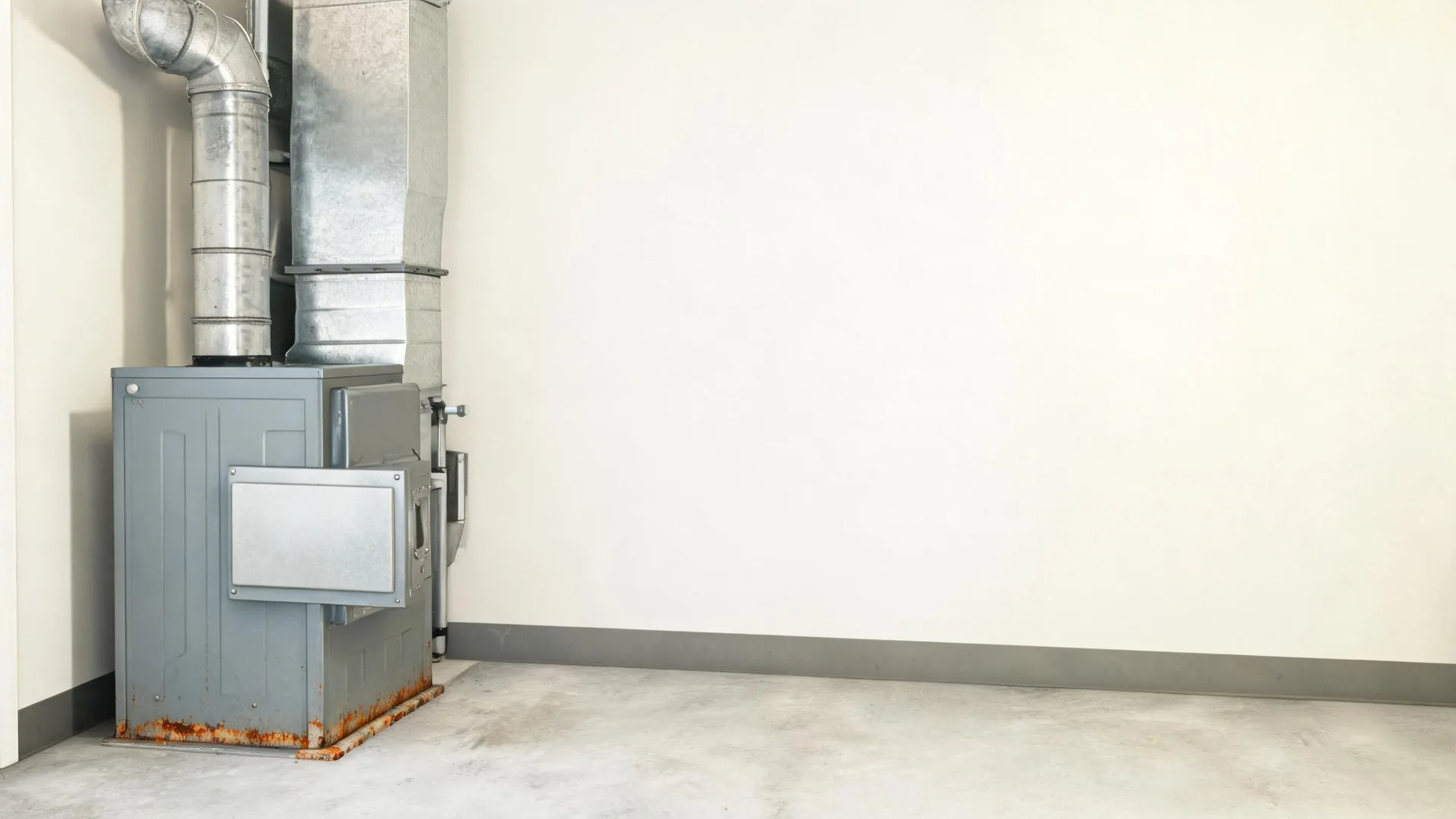
An unfinished basement containing a gas furnace with ductwork in the foreground and miscellaneous stored items along the far concrete wall.

A new furnace would cut about $150 a year off heating for a typical Tuscola County home.

  • A new high-efficiency furnace$610 a year
  • An older furnace$760 a year

Estimates for a typical Tuscola County home, compared with an older unit built to the previous federal minimum, from EIA household energy data, Michigan fuel prices and NOAA climate normals. Your home will differ.

Repair makes sense when one part has failed and the heat exchanger is sound.

Replacement makes sense when the heat exchanger is cracked or the furnace keeps needing parts.

A diagnostic visit starts before the panel comes off. The technician asks what you noticed, when it started, whether the furnace is short cycling or not firing at all or running but not keeping up. Then the cover comes off and they watch it run through a full cycle, because some problems only show up at ignition and others only show up once the blower kicks in. They'll check the flame, look at its color and shape, and test the igniter or pilot assembly. They'll pull the flame sensor and check it for buildup, since a dirty sensor can make a furnace shut off minutes after it starts. They'll check the blower motor and the belt or wheel for wear, and look over the heat exchanger for cracks or scorch marks. At the end you should get a straight answer on what's failing, what it takes to fix it, and whether it's worth fixing at all.