





A illuminated two-story red brick house on a quiet residential street at dusk, flanked by mature trees under a deep blue evening sky.

Furnace Repair in Ann Arbor, MI

Tell us about the job

Takes about a minute. No obligation.

RepairFurnace or heatingWashtenaw County, MI
Step 1 of 2

What ZIP code is the job in?

Washtenaw County saw 166 severe weather events between 2015 and 2024. Most of that was wind, 89 events, along with 60 hail events and 16 winter storms bringing heavy snow and ice. A furnace itself usually sits inside, out of the weather, but the system around it isn't. Ice and wind take down power lines, and a furnace with electronic ignition won't run without power even if the gas line is fine. If a storm knocked your power out for a stretch this year, it's worth having the furnace looked at, even if it fired right back up.

8 months
October through May, your furnace is on duty
19°F
the average winter night it heats against
75%
of homes here heat with gas, so most furnaces here burn gas
16 winter storms
in ten years, the nights a failure hurts most
Isometric line illustration of a cutaway building interior showing a furnace unit with a flue pipe and ductwork running along the ceiling, plus adjacent rooms with simplified furniture.
Your furnace works hardest from November through March.

NOAA nClimDiv, 1991–2020 normals

A furnace that short cycles or trips its limit switch is already telling you something is wrong before it quits for good.

Keep running it through that and a cracked heat exchanger or a worn blower motor can turn into a full system replacement.

Eight months of heat a year wears a furnace down early

Heat runs October through May
Winter nights average 19°F
Climate zone 5A
Built for an eight month winterFurnace season starts in October here, and whatever was already wrong shows up fast.

Eight months of run time a year means more cycles on the igniter, the blower motor, the limit switch, all of it. When something's already worn down, don't just reset it and move on. A furnace that's been tripping its limit switch or short cycling needs a contractor to find out why, not just get it running again for now. The parts that fail first are usually the ones that run the most, and here that's most of the year.

Lost power this year? Get the furnace looked at before it happens again

If your power went out this year, that's reason enough to have the furnace checked, even if it came back on fine. A lost cycle on an electronic ignition system can be the start of a pattern, not a one time thing.

Find a contractor
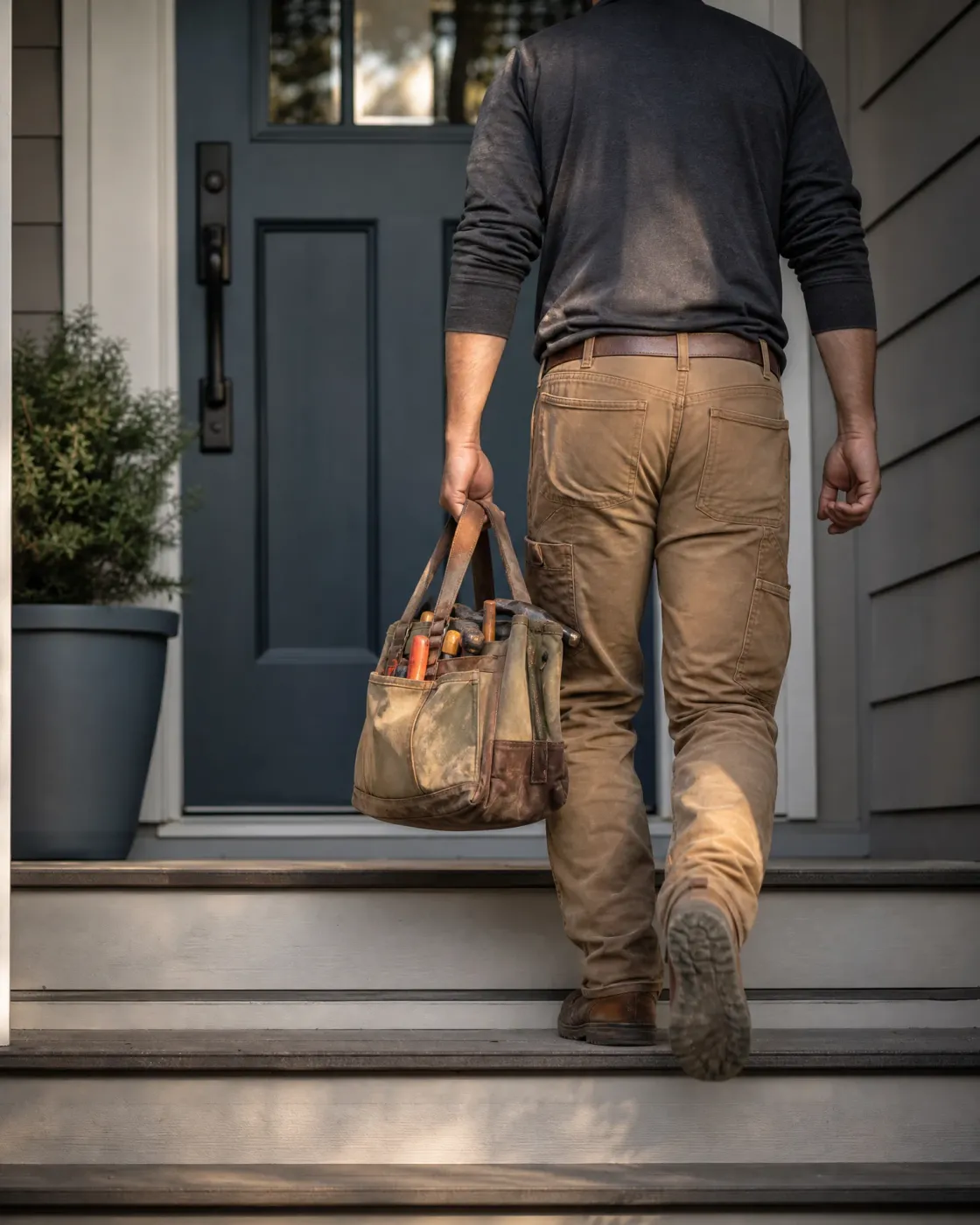
A person in a dark long-sleeve shirt and tan work pants, seen from behind, carries a canvas tool bag while stepping up porch stairs toward a dark blue front door.
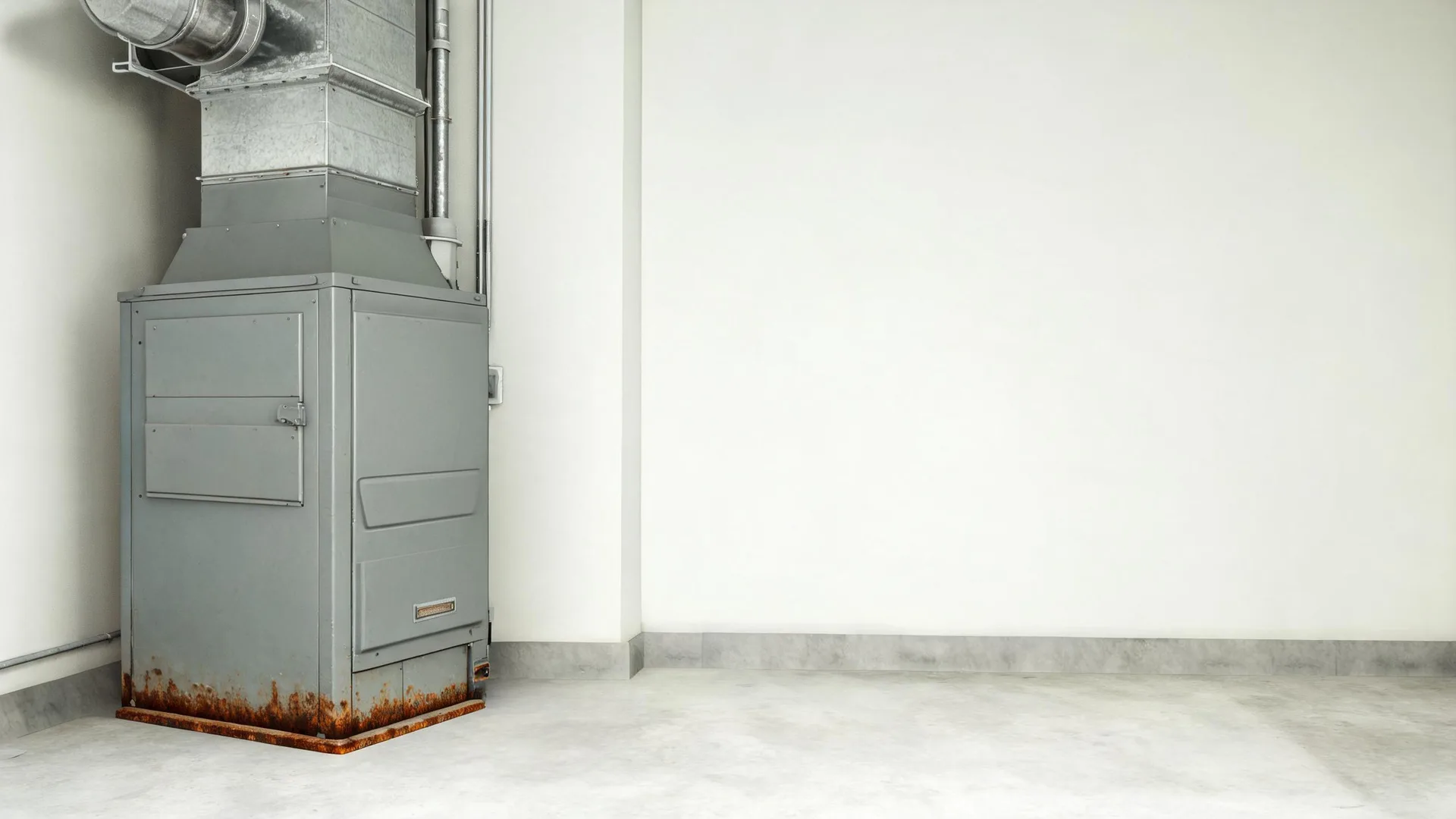
A gas furnace with attached ductwork, gas piping, and condensate lines installed in a concrete-block basement.

What actually wears out first

Most furnace failures trace back to a handful of parts, and they tend to go in a pattern. The igniter is usually first. It heats up and cools down every single cycle, and that repeated stress is what wears it out, so a furnace that won't light is often just that. Next is the flame sensor, a thin rod that tells the control board a flame is actually there. Once it gets a layer of coating on it, the board can't confirm ignition and shuts the gas off as a safety measure, even though the furnace is otherwise fine. The blower motor fails differently. Its bearings wear down over years of running, and you'll usually hear it before it quits, a grinding or squealing that gets worse over weeks. The limit switch and pressure switch are safety parts, not wear parts, but they trip for a reason. A dirty filter restricting airflow, a blocked vent, a failing inducer motor, any of those can make a switch trip even though the switch itself is fine. The part that matters most is the heat exchanger. It cracks from the same heating and cooling cycle that wears out the igniter, just slower, and a cracked exchanger is a safety issue, not a performance one. None of these fail out of nowhere. A furnace that short cycles, trips its limit switch, or takes longer than it used to on startup is already showing which part is going.

What's safe to check yourself

Look at the thermostat first. Make sure it's set to heat and the set point is actually above room temperature, and change the batteries if it uses them. Check the filter. A filter clogged with dust chokes airflow and can trip the limit switch or shut the furnace down entirely, and it slides out for a look without any tools. Check that the switch on the furnace itself, usually on the side near the door panel, hasn't been bumped off. Go to the breaker panel and look for a tripped breaker. Last, check the gas valve is turned to on if you can see it. All of this takes a few minutes and none of it requires opening the furnace up.

What to leave alone

Do not pull the burner compartment open or go near the heat exchanger. Do not try to relight a standing pilot if you don't already know the sequence. If the furnace trips its limit switch, resets, and trips again, stop resetting it. That switch is tripping for a reason, and running it through that cycle repeatedly can push a worn part into failing outright. The same goes for a furnace that smells like gas. Leave the house, don't flip any switches on the way out, and call the gas company before anyone calls a contractor.

An unfinished basement containing a metal furnace with ductwork, exposed wooden joists on the ceiling, cardboard boxes, a coiled cable, and a single hanging incandescent bulb.

A new furnace would cut about $140 a year off heating for a typical Washtenaw County home.

  • A new high-efficiency furnace$590 a year
  • An older furnace$730 a year

Estimates for a typical Washtenaw County home, compared with an older unit built to the previous federal minimum, from EIA household energy data, Michigan fuel prices and NOAA climate normals. Your home will differ.

Repair makes sense when one part has failed and the heat exchanger is sound.

Replacement makes sense when the heat exchanger is cracked or the furnace keeps needing parts.

Age is the first thing to weigh, but not the only one. A furnace in its first half of life is usually worth repairing almost every time, even for something like a cracked heat exchanger, because the rest of the system has plenty of life left to justify the part. One nearing the end is a different question. If the blower motor goes on an old unit, that same repair might just be money spent on a machine that's going to need something else next year. Frequency matters too. A furnace that's needed a service call every season for the last few years is telling you the repairs aren't fixing the underlying problem, they're just buying a little time between failures. Weigh the repair against the whole picture, not just whatever broke this time.