
A row of dark-painted single-story cottages with gabled shingle roofs behind a mowed lawn, a trimmed hedge in the left foreground and large leafy trees overhead under an overcast sky.

Furnace Repair in Allegan, MI

Tell us about the job

Takes about a minute. No obligation.

RepairFurnace or heatingAllegan County, MI
Step 1 of 2

What ZIP code is the job in?

Allegan County saw 62 severe weather events between 2015 and 2024. Damaging wind caused 31 of those, hail hit 9 times, and 17 were winter storms with heavy snow or ice. Five tornadoes touched down in that same stretch. Wind and hail reach the outdoor parts of a heating system too, not just the roof or the trees. A furnace that still fires up after a storm can have a cracked housing or loose wiring from the wind that shook it. If your system has been through one of these and seems fine, that doesn't rule out damage underneath.

8 months
October through May, your furnace is on duty
20°F
the average winter night it heats against
63%
of homes here heat with gas, so most furnaces here burn gas
17 winter storms
in ten years, the nights a failure hurts most
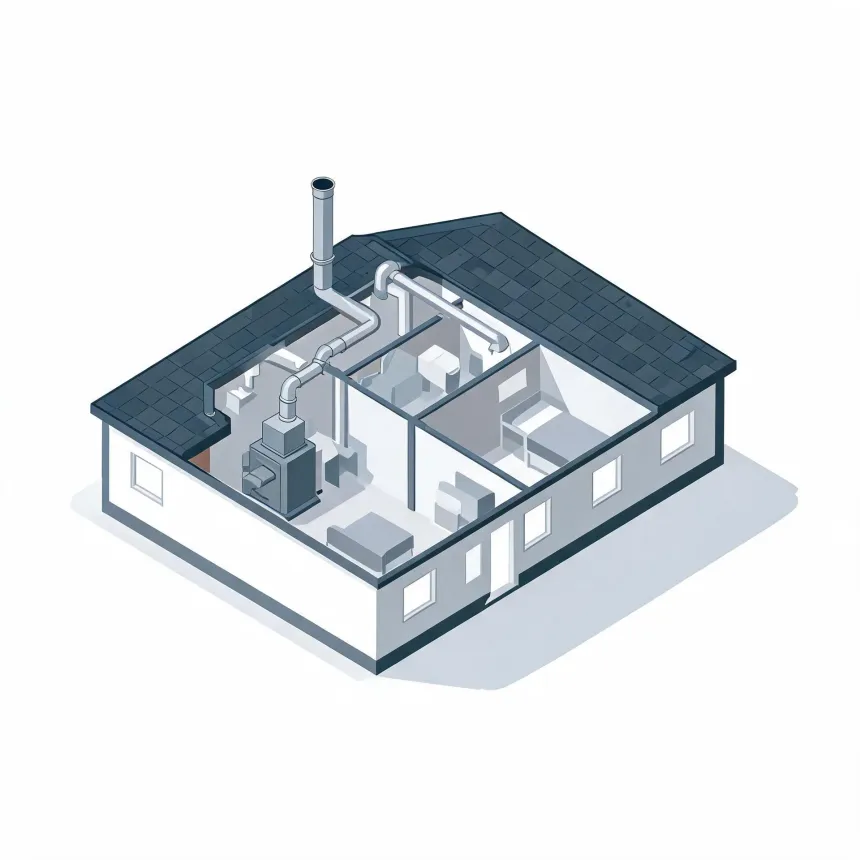
Isometric cutaway illustration of a single-story house with a dark shingled roof, showing interior rooms with furniture and a furnace connected to ductwork and a flue pipe extending above the roof.
Your furnace works hardest from November through March.

NOAA nClimDiv, 1991–2020 normals

Half the homes in Allegan County were built in 1982 or later.

A furnace in one of these houses has likely got years left in it, so a breakdown is usually a repair, not a replacement.

Furnace repair in Allegan starts in October, when the first cold snap finds the weak part

Heat runs October through May
Climate zone 5A
Winter nights average 20°F
Eight months of heat a year means more hours on every partHomes here run the furnace October through May, eight months of the year.

If your furnace came with a newer build, call a repair tech before you let anyone talk you into a new system. A cracked heat exchanger or a dead control board can happen to a five-year-old furnace the same as an old one, and most of the time the fix is a part, not a whole new unit. Ask what's actually failed before you ask what a replacement costs. Mobile homes are a different case. They make up about one in ten homes in the county, and they often run a furnace built specifically for that kind of ductwork and clearance. A repair tech working on one should know the difference going in, not figure it out on the first visit.

After a storm, have the furnace checked before you assume it's fine

If your furnace has been through a storm this year, worth having it looked at even if it still runs fine. A tech can check the housing and wiring in one visit and tell you if the wind did anything the pilot light doesn't show.

Find a contractor
A gray high-efficiency gas furnace installed in an unfinished basement, surrounded by gas lines, a condensate drain, and sheet-metal ductwork.

Eight months of runtime means little downtime to recover

A furnace here runs from October to May. That's the stretch covered above, and it means the parts inside are rarely off long enough to rest. When something goes wrong partway through that run, it's worth asking a tech to check the parts carrying that load rather than swap the first thing that looks worn. A repair aimed at the actual cause holds longer than one that guesses.

What a failing furnace sounds like

A furnace about to fail usually says so before it quits. Banging or booming at startup means gas is building up before the igniter catches it. A screech from the blower points to a worn motor bearing. Rapid clicking with no flame means the igniter or flame sensor is failing partway through its own test. A low hum with no ignition at all often means the control board isn't getting what it needs to start the sequence.

What to check before the tech arrives

Short cycling, where the furnace fires up and shuts off within a few minutes, usually comes from a dirty flame sensor or a clogged filter choking airflow. Weak heat from vents points to a failing blower motor or a duct problem rather than the burners themselves. Yellow burner flames instead of blue mean incomplete combustion, and that's worth shutting the system down for rather than waiting out. A furnace that won't stop running at all is often stuck on a bad thermostat signal or a relay that welded shut.

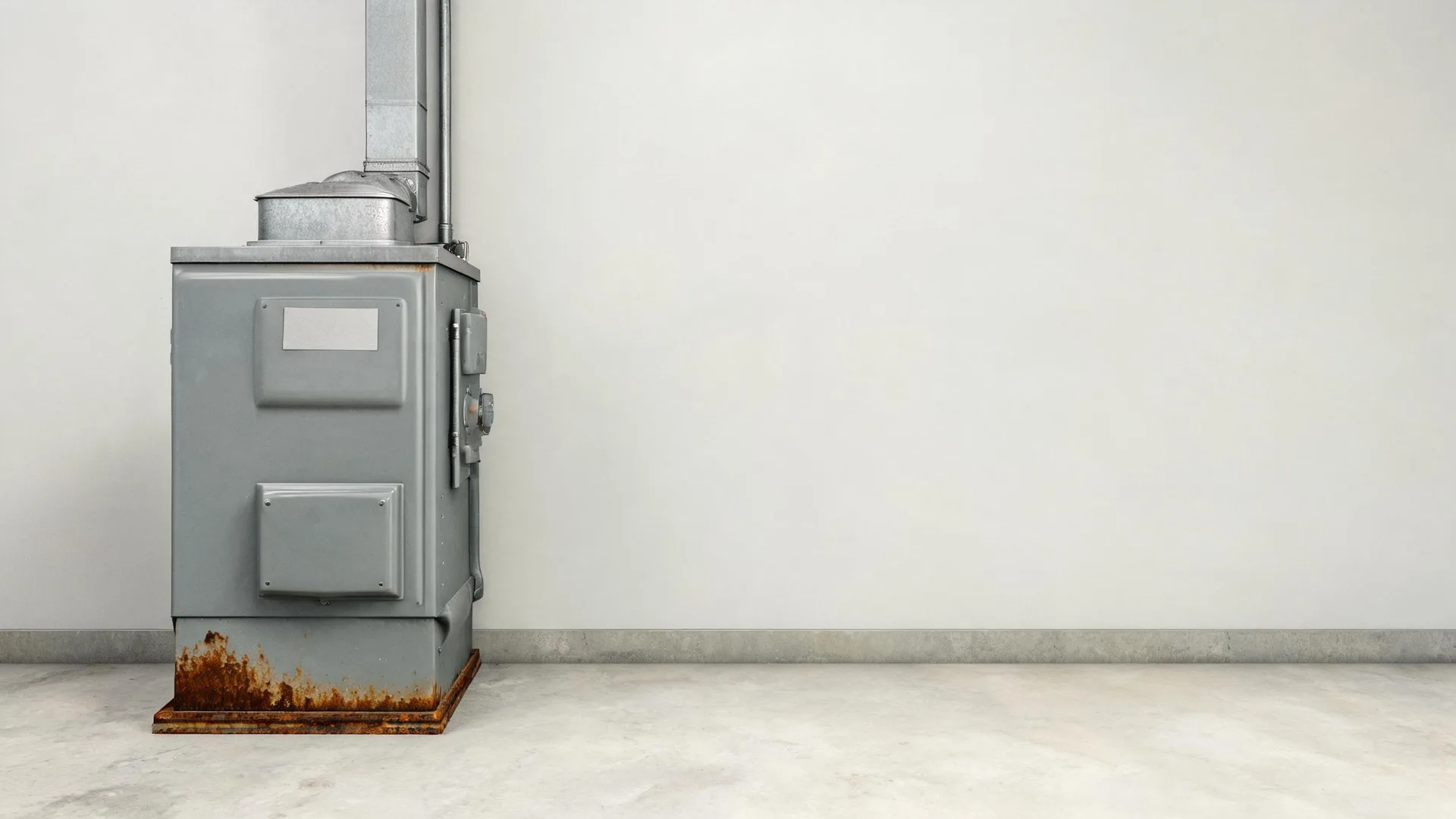
A gas furnace and sheet-metal air handler unit installed in an unfinished concrete basement.

A new furnace would cut about $140 a year off heating for a typical Allegan County home.

  • A new high-efficiency furnace$570 a year
  • An older furnace$710 a year

Estimates for a typical Allegan County home, compared with an older unit built to the previous federal minimum, from EIA household energy data, Michigan fuel prices and NOAA climate normals. Your home will differ.

Repair makes sense when one part has failed and the heat exchanger is sound.

Replacement makes sense when the heat exchanger is cracked or the furnace keeps needing parts.

A diagnostic visit starts before any panel comes off. The tech asks what the furnace was doing, when it started, and whether it's constant or comes and goes. Then the panels come off and the tech watches a full cycle start to finish: ignition, flame, blower kick-in, shutdown. A multimeter checks the control board and the safety switches along the way, since a part can look fine and still be out of range. The flame sensor and igniter get pulled and looked at directly, because carbon buildup or a hairline crack won't always show on a meter. Airflow gets checked at the filter and the return, since restricted air can mimic a dozen other problems. By the end the tech can usually point to the one part causing it, not just the symptom you called in about.