Lenawee County gets hit often
The county recorded 84 severe weather events between 2015 and 2024, including 60 damaging wind events, 11 hail events, a tornado, and 12 winter storms. That's a lot of chances for an outdoor unit to take a direct hit.
Takes about a minute. No obligation.
The county recorded 84 severe weather events between 2015 and 2024, including 60 damaging wind events, 11 hail events, a tornado, and 12 winter storms. That's a lot of chances for an outdoor unit to take a direct hit.
More than a third of Michigan households went at least 24 hours without power in 2024. A furnace with electronic ignition won't run without power, no matter how sound the rest of it is.

NOAA nClimDiv, 1991–2020 normals
Furnaces here start working in October.
A weak igniter or a cracked heat exchanger usually shows itself in those first cold weeks, not in the middle of January.


A furnace in Lenawee County runs about eight months a year, October through May. That's most of the calendar, not just a handful of cold weeks. The blower, the igniter, the heat exchanger all put in long hours most other places don't ask of them. Parts that would last a while on light use wear down faster under that kind of schedule. When something goes wrong this often, it's rarely random. It's usually the part that's been carrying the load the longest, and a proper diagnosis will find it instead of just patching over the symptom.
Problems tend to show up in the first weeks of the season, when the load hits a part that was already weak.
Find a contractor
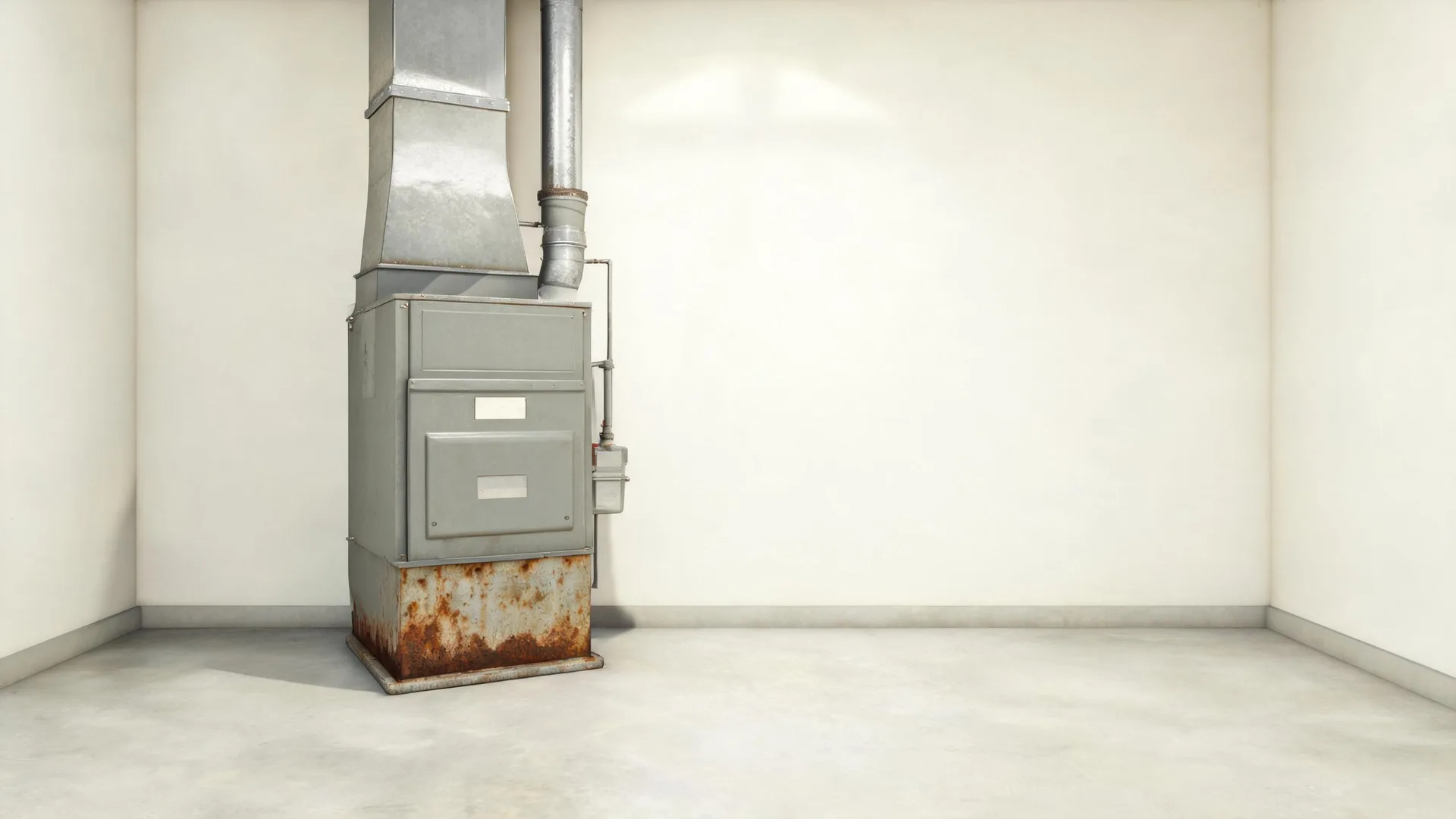
If your furnace came with the house, ask the contractor how old it is before paying for a big repair. A unit installed when the house was built, or carried over from one, can be well past the point where repair makes sense. Get the age confirmed and a straight answer on what's left in it. That's worth knowing before money goes into a part that won't outlast the cabinet around it.
Look at the thermostat before anything else. Make sure it's set to heat and the setting is above room temperature. Check the furnace switch, the one that looks like a light switch on or near the unit, and make sure it hasn't been bumped off. Check the breaker in the panel. Check the filter too. A filter packed with dust chokes airflow and can cause the furnace to shut itself off as a safety measure.
If the furnace is cycling on and off without heating, or you smell gas, or the flame looks yellow instead of blue, stop checking and call someone. Those point to a cracked heat exchanger, a gas leak or a combustion problem, and none of those are safe to work past. A homeowner can reset a switch or swap a filter. Opening the cabinet or working near the gas valve is a different job.
Estimates for a typical Lenawee County home, compared with an older unit built to the previous federal minimum, from EIA household energy data, Michigan fuel prices and NOAA climate normals. Your home will differ.
Repair makes sense when one part has failed and the heat exchanger is sound.
Replacement makes sense when the heat exchanger is cracked or the furnace keeps needing parts.
A repair is worth making when the part that failed is the only thing wrong with the furnace. A cracked heat exchanger is different. Once that cracks, the cabinet around it usually isn't far behind, and a contractor will often tell you straight that putting a new exchanger into an old furnace doesn't make sense. The same goes for a blower motor or control board failing on a unit that's already given you years of service calls. Each repair on its own looks small, but a furnace that keeps breaking in different places is telling you something about the whole system, not just the one part. A tech who's actually looked at it, opened the cabinet and checked the rest, can tell you whether you're fixing a furnace or just delaying the next call.