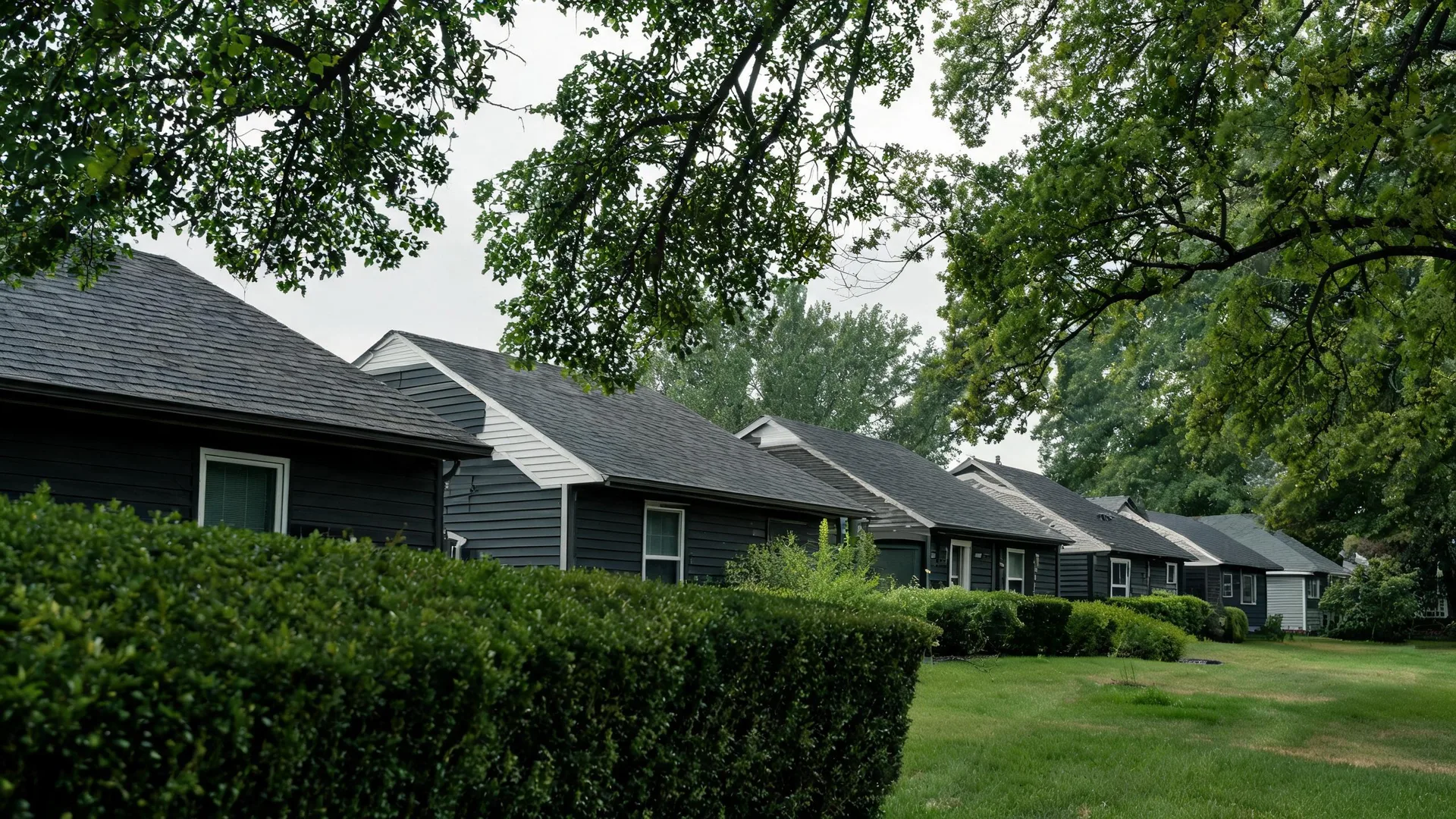
A row of dark gray single-story houses with asphalt shingle roofs behind trimmed hedges and a mown lawn, framed by overhanging tree branches under an overcast sky.

Furnace Maintenance in Saginaw, MI

Tell us about the job

Takes about a minute. No obligation.

Tune-up, service, or cleaningFurnace or heatingSaginaw County, MI
Step 1 of 2

What ZIP code is the job in?

Saginaw County sees its share of storms

Saginaw County logged 110 severe weather events between 2015 and 2024, including 79 with damaging wind and 17 with hail. A tune-up checks the furnace and the outdoor equipment before another year like that starts.

Power doesn't always come back fast

More than a third of Michigan households went at least a day without power in 2024. Gas furnaces still need electricity to run the blower and the controls, so an outage leaves the house without heat even though the gas is still there.

Furnaces here start working in October and keep going through May.

September is the month to get the furnace checked, before it has to run eight months straight.

Eight months of runtime wears parts down faster

Heat runs October through May
Winter nights average 19°F
Climate zone 5A
Most furnaces here burn gas73.5% of homes in Saginaw County heat with utility gas, and a few percent more with LP.

Half the homes in Saginaw County were built in 1968 or earlier. A furnace that old has usually been replaced at least once, but the ductwork, the gas line, and the electrical feeding it are often whatever the house started with. None of that is a problem by itself. It just means more places where a connection loosens or a part wears without showing it. A yearly check gives someone a reason to look at the whole run, not just the furnace cabinet, while the fix is still small.

Get the furnace checked before storm season finds the weak spot

A tune-up before fall gives someone a reason to look over the whole system, not just light the burner and move on. If an outage knocks out the blower or the controls, that's worth knowing before the cold sets in, not during it.

Find a contractor
A man in a cap, dark shirt and tan work pants walks up porch steps toward a gray front door, carrying a canvas tool bag, with a potted plant on the porch to the right.
A gas furnace with attached ductwork, gas piping, and condensate lines installed in a concrete-block basement.

Eight months is a long time to find out something's wrong

Get the furnace looked at before October, not after it starts running. A tune-up catches the igniter or blower wheel that's already worn thin while there's still time to fix it on a schedule, instead of during the first cold snap when every other furnace in the county is also calling for service.

The filter is doing more than cleaning air

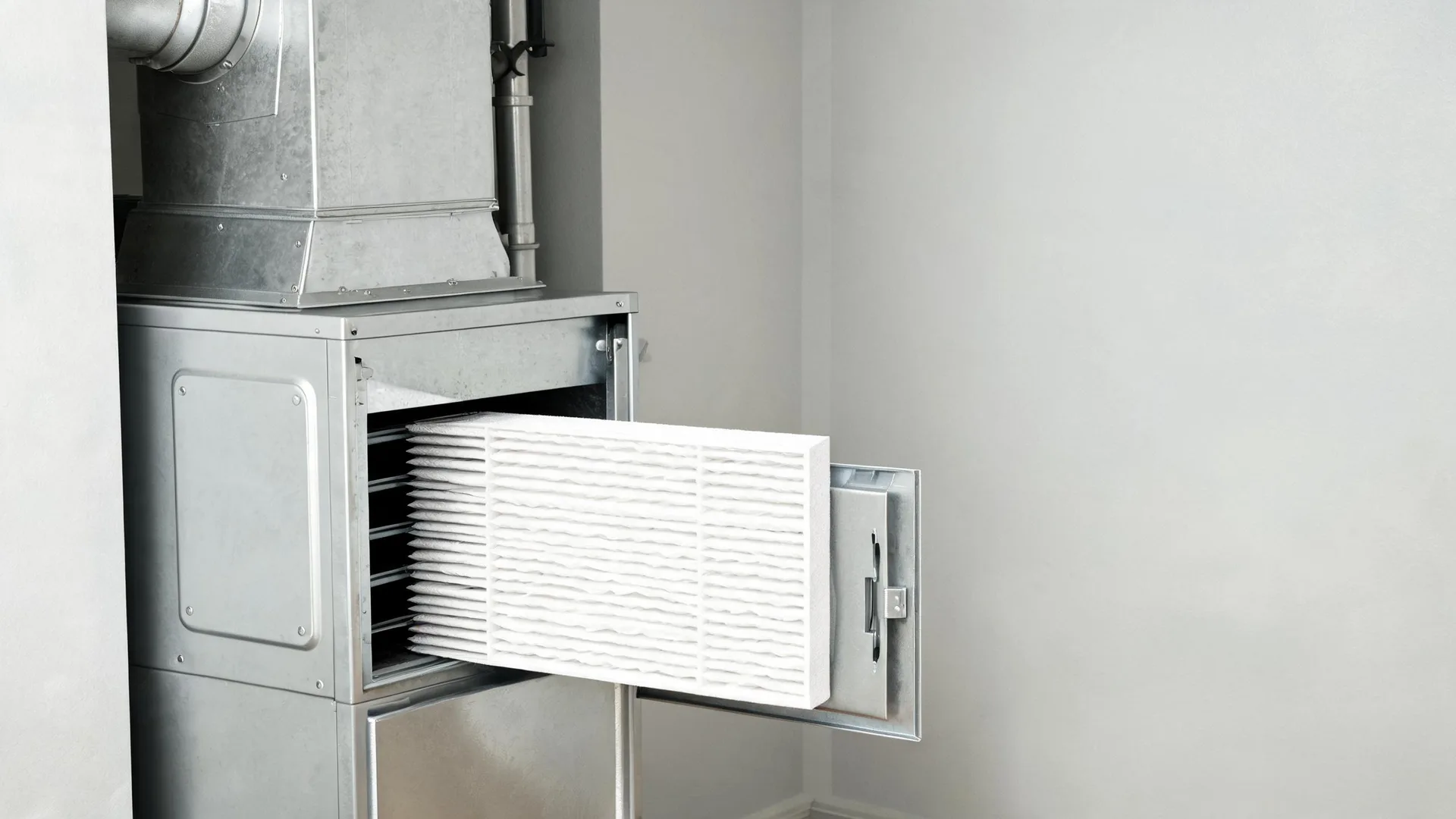
A dirty filter chokes off airflow across the heat exchanger. The blower has to work harder to push air through it, and the exchanger runs hotter than it should. Over time that heat can crack the metal, which is the one furnace problem that isn't just a repair. Checking the filter is the cheapest insurance there is on the whole system.

The flame sensor and igniter foul up quietly

Dust and soot settle on the flame sensor over a season of running, and once it's coated the sensor can't tell the burner is lit. The furnace shuts itself off as a safety measure, even though nothing is actually broken. Cleaning that sensor and checking the igniter is routine work during a tune-up, and skipping it is how a working furnace turns into a no-heat call.

A furnace usually tells you before it quits outright. A burner that used to light with one soft whump and now clicks several times before it catches is struggling to get gas and spark together at the same moment. A blower that cycles on and off more often than it used to is struggling to satisfy the thermostat, often because airflow is restricted somewhere in the run. Short cycling wears the igniter and the blower motor faster than a normal run would. A burner flame that's yellow or orange instead of steady blue means it isn't burning clean, and that's worth a look regardless of how the furnace is otherwise running. A smell of dust burning off at the start of a heating run is normal for the first hour. If that smell doesn't go away, or if it turns sharp or like scorched metal, that's the exchanger or the wiring, not dust. None of these mean the furnace is about to fail tonight. They mean something inside it is already worn, and a tune-up is where that gets caught before it decides the timing for you.

A furnace that's been running since 1968 or whatever year the house went up has been swapped out at least once by now. What usually doesn't get swapped out is the ductwork and the gas line and the wiring feeding it, and nobody thinks about any of that until it's the reason for a service call. A loose connection or a cracked duct joint doesn't announce itself. It just sits there, a little worse each year, until something downstream of it fails. Getting the furnace checked yearly is the one chance for someone to trace the whole run instead of just the cabinet, and catch whatever's wearing out while it's still a small fix.