

A illuminated two-story red brick house on a quiet residential street at dusk, flanked by mature trees under a deep blue evening sky.

Furnace Maintenance in Owosso, MI

Tell us about the job

Takes about a minute. No obligation.

Tune-up, service, or cleaningFurnace or heatingShiawassee County, MI
Step 1 of 2

What ZIP code is the job in?

Shiawassee County saw 63 severe weather events between 2015 and 2024. Damaging wind came through 39 times, there were 5 hail events, 5 tornadoes touched down, and winter storms hit the county 13 times. Statewide, 34% of Michigan households lost power for a day or more in 2024. A furnace does nothing for you without power to run the blower and the controls, so an outage that long turns a working furnace into a cold house. Hail and wind also matter if any part of the system sits outside. A tune-up is the time to have a contractor check for that kind of damage before cold weather asks the furnace to work.

Your furnace runs eight months a year here, October through May.

That long a stretch wears parts down before most people expect it, so a check before the cold sets in catches what the season would otherwise find for you.

Half the furnaces here are working through a house built in 1969 or earlier

Half the homes here were built by 1969
Climate zone 5A
Heat runs October through May

October is when this furnace starts working for real, not just a test cycle here and there. Book the tune-up in September, before it has to carry the house. A technician checking it cold, before that first long run, can catch a cracked heat exchanger or a weak igniter while there's still time to fix it without the house going cold in the meantime. Wait until October and you're asking a contractor to work on a furnace that's already running every day, on your schedule instead of theirs.

Get the outdoor unit checked before the cold sets in

A tune-up includes checking the outdoor parts of the system for whatever this year's storms left behind. Have that done before the furnace has to run every day.

Find a contractor
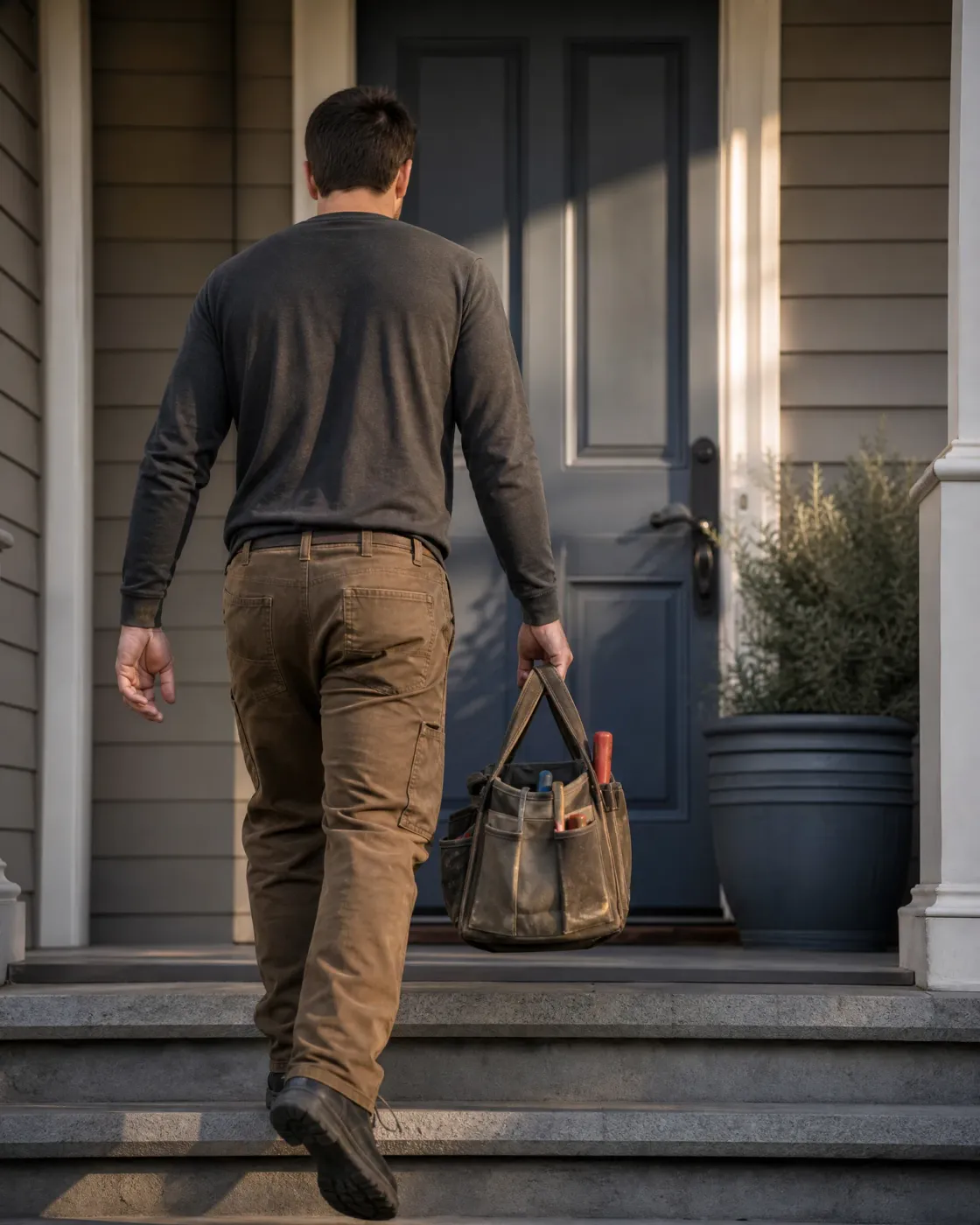
A man in a dark long-sleeved shirt and brown pants walks up concrete steps toward a dark blue front door, carrying a canvas tool bag with tools in it, beside a potted shrub.
A gas furnace with attached ductwork, gas piping, and condensate lines installed in a concrete-block basement.

The house's age doesn't tell you what the furnace needs. The furnace does

A furnace doesn't get easier to check just because the house is old. Years of running every winter wear down an igniter or a heat exchanger quietly, with nothing to see from the living room. A tune-up puts a technician at the furnace itself, not the walls around it, looking at the parts that actually fail. Catch that wear now and it's a small fix. Miss it and the furnace will find the coldest night to make its case.

The filter is doing more than cleaning air

A dirty filter chokes the airflow a furnace is built to move. The blower has to push harder to get air through it, and the heat exchanger behind it runs hotter than it should. That heat has nowhere to go fast enough, and over time it stresses the metal until it cracks. Changing the filter is the one thing that keeps that whole chain from starting.

The drain and the coil matter if this furnace has one

A high-efficiency furnace pulls extra heat out of the exhaust and drains off the condensation that forms. If that drain line clogs, the furnace can shut itself down rather than let water back up into places it shouldn't go. A technician clearing that line and checking the coil during a tune-up is why the furnace keeps running instead of locking out on its own.

Between tune-ups, the filter is the one thing worth checking yourself. Hold it up to a light. If you can't see through it, swap it. A furnace that's drawing air through a clogged filter is working harder than it needs to, and that strain doesn't wait for a scheduled visit to show up. Keep the area around the furnace clear too. Boxes, laundry piles, anything stacked near the cabinet can block the airflow it needs or get in the way of the flame sensor doing its job. Listen for changes. A new rattle, a burning smell that doesn't clear after the first few minutes of a cycle, a flame that looks yellow instead of blue. None of that is something to fix yourself. It's something to call about before the next scheduled check, not after.

Gas heats 60.2% of homes in Shiawassee County, more than any other fuel, and bottled or LP gas heats another 21.3%. That's most houses in the county burning fuel to make heat, not just moving it around like an electric system does. A gas furnace needs a flame to do that, and anything that burns needs somewhere for the exhaust to go. A tune-up is when a contractor checks the burner itself, the venting that carries exhaust out of the house, and the safety controls that shut the furnace down if something's wrong with either one. A new filter doesn't touch any of that. If your furnace runs on propane instead, the same checks apply. Electric furnaces, the kind in about one in ten homes here, don't have a burner or venting to worry about, but they're the minority in this county.