A row of dark-sided single-story houses with gray shingled roofs behind large leafy trees, a trimmed hedge at left and mown lawn with a narrow walkway in front.

Furnace Maintenance in Kalamazoo, MI

Tell us about the job

Takes about a minute. No obligation.

Tune-up, service, or cleaningFurnace or heatingKalamazoo County, MI
Step 1 of 2

What ZIP code is the job in?

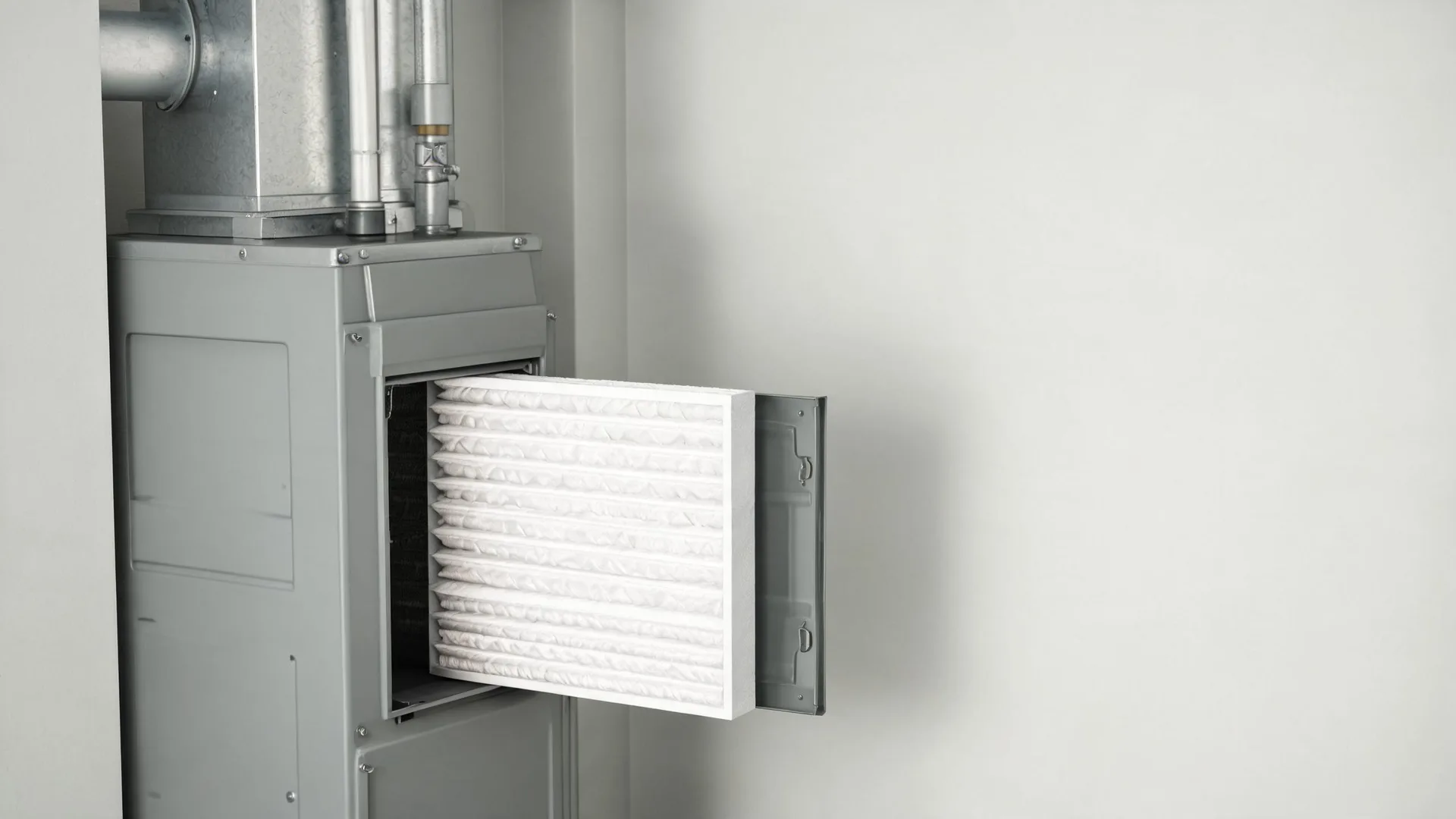
A dirty filter chokes the whole system

A clogged filter cuts the airflow a furnace needs to run right. The blower works harder to push air through it, the heat exchanger runs hotter than it should, and in bad cases the furnace shuts itself down on a high limit switch. A filter that gets checked and changed on schedule keeps air moving the way the furnace was built to handle it.

The flame sensor and burners need a clean read

A furnace reads its own flame through a small sensor near the burners, and that sensor can coat over with residue from normal combustion. Once it's coated, it can't tell the control board the flame is lit, and the furnace shuts off mid-cycle or won't stay running. Wiping it clean and checking the burners for soot or discoloration catches a problem before it turns into a no-heat call.

Gas heats 72.9 percent of homes in Kalamazoo County.

A furnace burning gas needs its burner, venting and safety controls checked every year, not just a new filter.

Eight months of heat a season puts a lot of hours on one machine

Heat runs October through May
Winter nights average 19°F
Climate zone 5A

Heat goes on in October here and stays on through May. That's eight months of runtime, more than half the year, longer than most places ever ask of a furnace. September is the one month before the load starts, and it's the month to get the furnace looked at. Wait until the first cold snap and the furnace is already working when anything wrong with it shows up. A check in September catches a weak igniter or a cracked exchanger before the furnace has to run on it night after night.

Get the burner and venting checked

Gas and oil systems need the burner, venting and safety controls checked, not just a new filter.

Find a contractor
A gray gas furnace with attached ductwork and piping installed in an unfinished concrete basement.

The season doesn't let up once it starts

Eight months of runtime wears parts down faster than a furnace that only has to run a few weeks a year. Once October comes, this one won't get a break until spring. A tune-up before then is the time to catch a part that's already worn thin, while there's still a chance to fix it on a schedule instead of on the coldest night of the year.

A cracked heat exchanger doesn't announce itself

Metal that heats and cools all winter eventually fatigues, and a crack in the heat exchanger can let combustion gas mix into the air moving through the house. There's no sound or smell most people catch on their own. A tech checks it with a camera or by watching flame behavior with the blower running, something a homeowner has no way to do from the thermostat.

A weak draft can go unnoticed until it fails

The inducer motor has to pull exhaust out at the right pressure before the burners are ever allowed to light. If that draft weakens, the furnace may still run, but it's pushing exhaust somewhere it shouldn't go. Measuring draft and checking the venting for blockage or corrosion is part of a tune-up precisely because a homeowner has no instrument in the house that would show it.

A quick tune-up checks that the furnace runs. A thorough one checks that it runs safely and will keep running. That means pulling the burners to look at the flame pattern, not just glancing at it through a window. It means measuring gas pressure at the manifold instead of assuming it's where it should be. It means checking amp draw on the blower motor to catch a motor that's starting to fail before it actually does. A thorough tech tests the limit switch and the flame sensor's response, not just whether the furnace fires on the first try. Anyone can change a filter and call it serviced. The real work is in the readings a homeowner never sees, and whether the tech writes them down to compare next year.

A full tune-up also means taking the furnace apart enough to see the parts that don't fail gracefully. The igniter gets inspected for hairline cracks, since it's the part most likely to fail cold and leave the furnace unable to start at all. The blower wheel gets checked for dust buildup, which throws it out of balance and strains the motor bearings over time. Electrical connections get tightened, because a loose wire at the control board causes intermittent failures that are hard to trace later. None of this shows up by looking at the furnace from across the room. It shows up when someone opens the cabinet and checks.