Weather here takes a toll
Genesee County logged 109 severe weather events between 2015 and 2024, including 71 bouts of damaging wind, 17 hail events and 5 tornadoes. More than a third of Michigan households went at least a day without power in 2024.
Takes about a minute. No obligation.
Genesee County logged 109 severe weather events between 2015 and 2024, including 71 bouts of damaging wind, 17 hail events and 5 tornadoes. More than a third of Michigan households went at least a day without power in 2024.
A gas furnace still needs electricity to run its blower and controls. When wind or ice knocks the power out, the furnace stops with it. Heavy snow and ice hit this county 16 times in that same stretch, which is exactly the weather that both knocks out power and makes a working furnace matter most.
Furnaces in Genesee County start running in October.
Book the tune-up in September, before the cold and the power troubles both show up.
Gas heats 81.3% of the homes in Genesee County. Electricity is a distant second at 13.2%, and LP gas and oil make up the rest. A gas furnace burns fuel to make heat, and that means a burner, a flue to vent the exhaust, and a set of safety controls that shut the system down if something isn't right. None of that is on a filter. A tune-up checks the burner flame, tests the venting, and confirms the safety controls will actually trip when they need to. Skip that part and a furnace can keep running with a problem nobody caught.
A tune-up before the cold hits is also when a contractor checks the furnace itself for anything the past few years of wind and hail left behind. Get it looked at before the power trouble starts, not after.
Find a contractor
Eight months of runtime already wore on these parts. Get them checked before the furnace has to run on a cold morning with ice on the lines. A tune-up now catches the igniter or flame sensor that's already struggling, while there's still time to fix it before the house needs the heat.
A heat exchanger can crack quietly and keep heating the house while it does it. The furnace runs, the air comes out warm, and nothing looks wrong. A tech pulls the burner compartment apart and inspects the metal directly, sometimes with a camera, because that crack won't show up as a smell or a sound until it's already let exhaust into the air you breathe.
The burner flame should burn steady and blue. A tech watches it under load, not just at a glance, because a flame that's yellow or lifting off the burner means the gas and air aren't mixing right. That shows up as soot inside the furnace long before it shows up as a problem you'd notice from the next room.
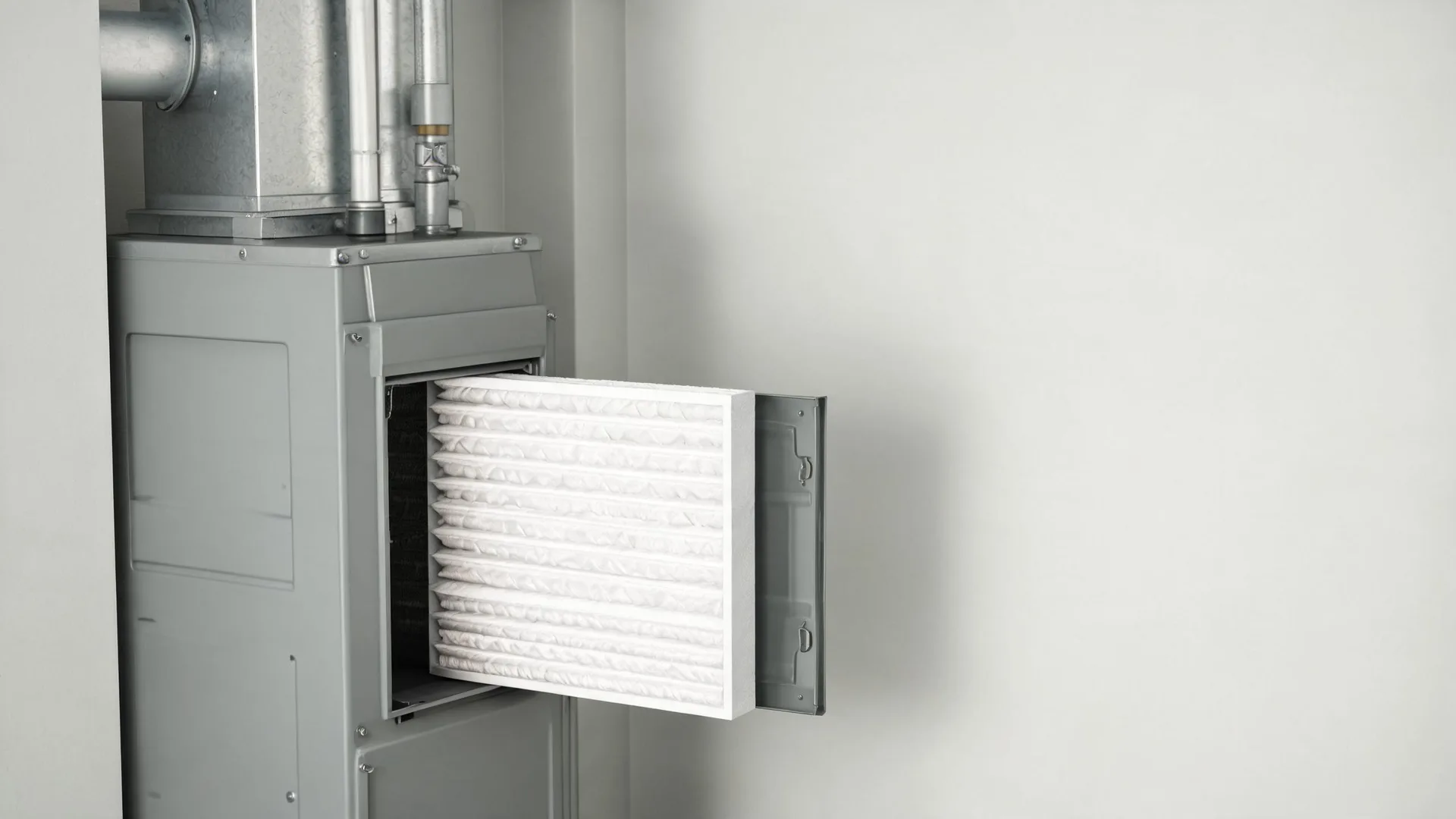
Between tune-ups, the filter is the one thing worth checking yourself. A dirty filter chokes airflow, and a furnace starved for air runs hotter than it should and works harder to push warm air through the house. Look at it once a month and hold it up to the light. If you can't see light through it, swap it. Keep the vents and registers clear of furniture and rugs so air can actually get back to the furnace. Beyond that, leave the cabinet closed. The burner, the flame sensor and the heat exchanger aren't something to check yourself, and pulling the furnace apart between visits does more harm than good.
Half the homes in this county were built in 1969 or earlier. A furnace that old has likely been swapped out at least once, but the ductwork and venting it ties into are often original to the house. A yearly check is how a contractor catches a connection that's drifted loose or a vent that's no longer sealed the way it should be, before that becomes the kind of problem you find out about the hard way. If your system came with the house, or you're not sure when it was last serviced, that's reason enough to get it looked at now rather than wait for a cold morning to tell you.