




Three illuminated two-story brick houses on a tree-lined residential street photographed at twilight, with warm window light and landscape uplighting visible against a deep blue evening sky.

Furnace Maintenance in Allegan, MI

Tell us about the job

Takes about a minute. No obligation.

Tune-up, service, or cleaningFurnace or heatingAllegan County, MI
Step 1 of 2

What ZIP code is the job in?

Allegan County saw 62 severe weather events between 2015 and 2024. That includes 31 damaging wind events, 9 hail events, and 5 tornadoes. Wind and hail find furnace venting and intake pipes on the outside of the house, and heavy debris after a storm can block them without anyone noticing. Across Michigan, over a third of households went at least a day without power in 2024, and a furnace that was already struggling won't restart clean once the power comes back. Having it looked at before storm season gets going means one less thing to worry about when the weather turns.

Furnace season starts in October here and runs through May.

Have the furnace checked in September, before it has to work.

Most furnaces here run on gas, and that means more to check than a filter

62.5% of homes heat with gas
Climate zone 5A
Heat runs October through May
Eight months of work wears a furnace downFurnace here runs about eight months a year, October through May.

Half the homes in Allegan County were built in 1982 or later, so a lot of furnaces here haven't logged that many years of use yet. A newer furnace still depends on the same things a yearly check covers: clean burners, a steady flame sensor reading, a blower pulling the airflow it was built for. Catching a small issue now is what keeps a furnace young instead of just new. Mobile homes make up a real share of the housing stock in the county too, and those furnaces are worth the same yearly look. A system with years ahead of it is worth keeping that way.

Get the furnace checked before storm season finds a problem for you

The vent pipe and intake on the outside of the house are what take the hit when wind or hail come through. A furnace check before storm season catches a blocked vent or a damaged line while it's still simple to fix, not after the power's out and the furnace won't restart clean.

Find a contractor
A man in a dark shirt and brown work pants, seen from behind, carries a worn canvas tool bag up porch steps toward a dark front door, with a potted shrub to the right.
A gray residential gas furnace installed in an unfinished basement, connected to sheet-metal ductwork and PVC pipes.

A young furnace stays young with a check every year

A yearly check on a newer furnace is quick work. The technician isn't hunting for years of wear, just confirming the burners are clean and the flame sensor and blower are doing what they're built to do. Catch a loose connection or a drifting sensor reading now, while it's a five-minute fix, and the furnace keeps running the way it did the day it was installed. Skip a few years of that and a newer system starts acting like an old one well before its time.

A dirty flame sensor shuts the furnace down

The flame sensor tells the control board a flame is lit. A coating of soot or oxidation builds on it over time and it stops reading right, so the board shuts the gas off as a safety measure. That shows up as a furnace that fires for a few seconds and quits, over and over. Cleaning that sensor is routine work during a check. Left alone, it's the most common reason a furnace stops running with no warning.
A neglected furnace fails when the weather turns on it

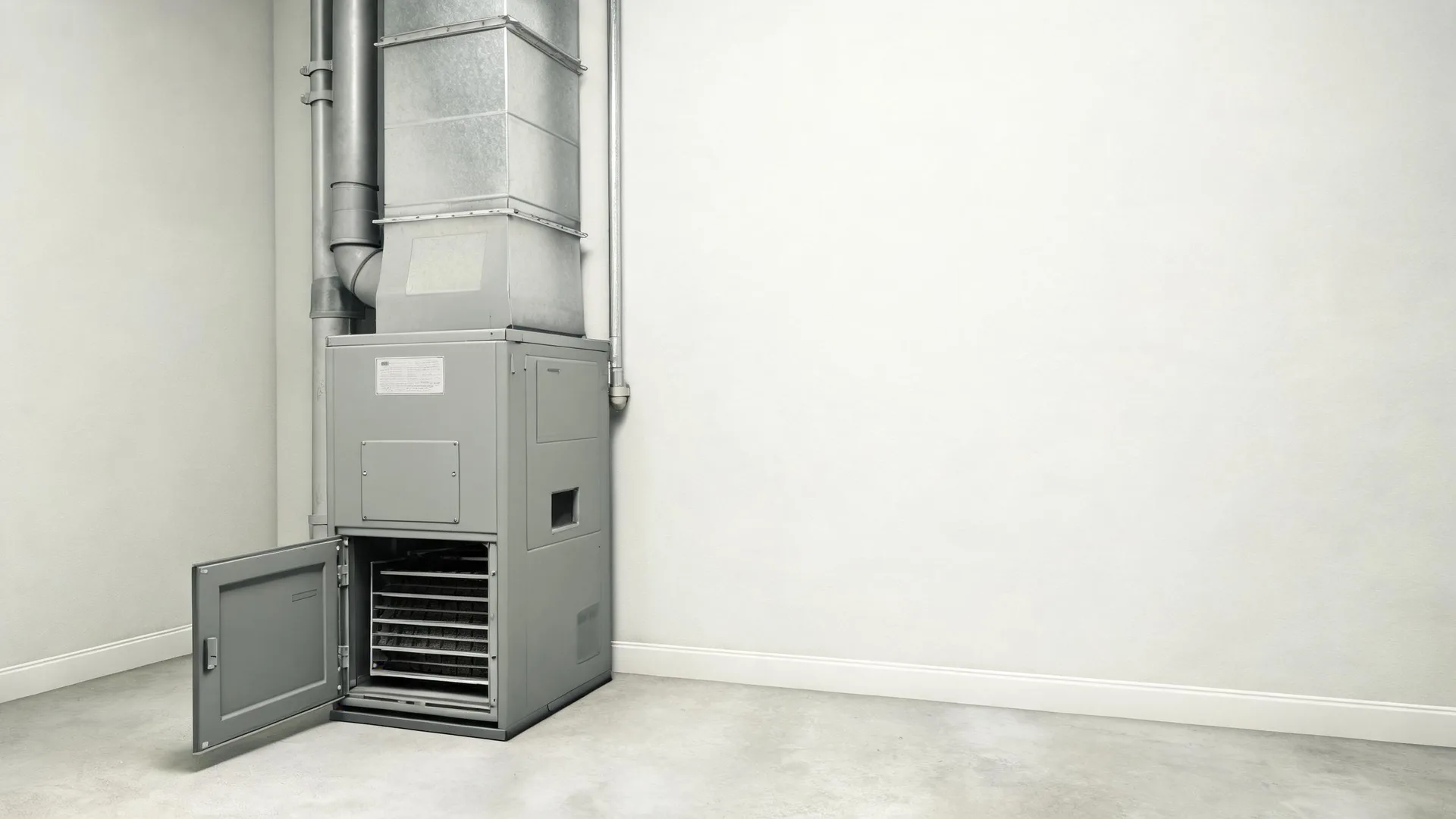
A furnace that's been skipped for a few years is already running on a dirty flame sensor, a slow blower, or burners that aren't firing even. It can still limp along most days. What it can't do is take a hard restart after a power cut or push through the coldest stretch of the year without a fault shutting it down. That's exactly when a homeowner finds out the furnace needed attention, because the furnace picks the worst day to prove it.

A tune-up gets inside the furnace in ways a homeowner never does. The technician pulls the burner compartment apart and looks at the flame itself, whether it burns even and blue across every burner or leans yellow and ragged on one. That flame shape says things about the gas pressure and the air mix that nobody sees from the next room. The heat exchanger gets a close look too, checked for hairline cracks that let combustion gases mix with the air the blower pushes through the house. A crack like that makes no noise and shows no sign until someone's looking for it with a light and a mirror. The technician also checks the draft, making sure exhaust is actually leaving through the vent pipe the way it's supposed to instead of backing up. None of that shows up on a thermostat or a utility bill until it's already a problem.

Eight months of run time wears parts down faster here, and that wear does not wait for a convenient moment to show itself. A furnace headed for trouble usually gives some warning first, a longer run to reach the set temperature, a burner flame that is not as steady as it used to be. A yearly check is when someone is actually looking for that warning instead of waiting to feel it on a cold morning. Getting it looked at before the season starts means the fix happens with the furnace off and nobody depending on it yet. Once October comes and the furnace is running most days, that warning sign is easy to miss until the furnace quits on its own.